

Why Your AC breaker tripping Escondido is a Serious Warning
My Guy is Proud to Be "Your Guy" for Your Home
Your breaker isn’t being annoying. It’s sending a warning that your air conditioner is pulling more power than it should, and in Escondido’s heat that can shut your cooling down fast.
If your air conditioning starts, runs for a bit, or clicks on and then trips the panel, the cause is usually one of a few issues. Airflow may be restricted, coils may be dirty, an electrical part may be weak, or the compressor may be struggling.
That matters because a breaker trip is often the first sign of a problem that grows worse with every hot afternoon.
Key Takeaways
- A tripped AC breaker in Escondido is a warning of overload from poor airflow, dirty coils, low refrigerant, or failing electrical parts like capacitors—don’t ignore it in the inland heat.
- Avoid repeated resets; one try after cooling down is okay, but more can damage the compressor and turn a simple fix into a costly AC repair.
- Start with easy checks: replace a clogged filter, clear debris around the outdoor unit, and note the trip timing (startup vs. after running) for faster pro diagnosis.
- Regular HVAC maintenance prevents most trips by keeping filters, coils, and electrical components in check before hot afternoons hit.
- Call a NATE-certified technician for full inspection including amp draws, refrigerant, and wiring—especially if it trips immediately or smells burnt.
A tripped breaker is a warning, not a random glitch
A circuit breaker protects your home from overloaded circuits. When it trips, it cuts power before wires overheat or equipment takes more damage. So if your AC keeps tripping the circuit breaker in Escondido, the system is telling you something is off.
Hot inland weather makes weak parts show up faster. Homes in Escondido, Vista, San Marcos, Carlsbad, Oceanside, and Fallbrook can all run into this, but Escondido’s warmer afternoons often push older systems harder, and even high-performance cooling systems react quickly to the heat.
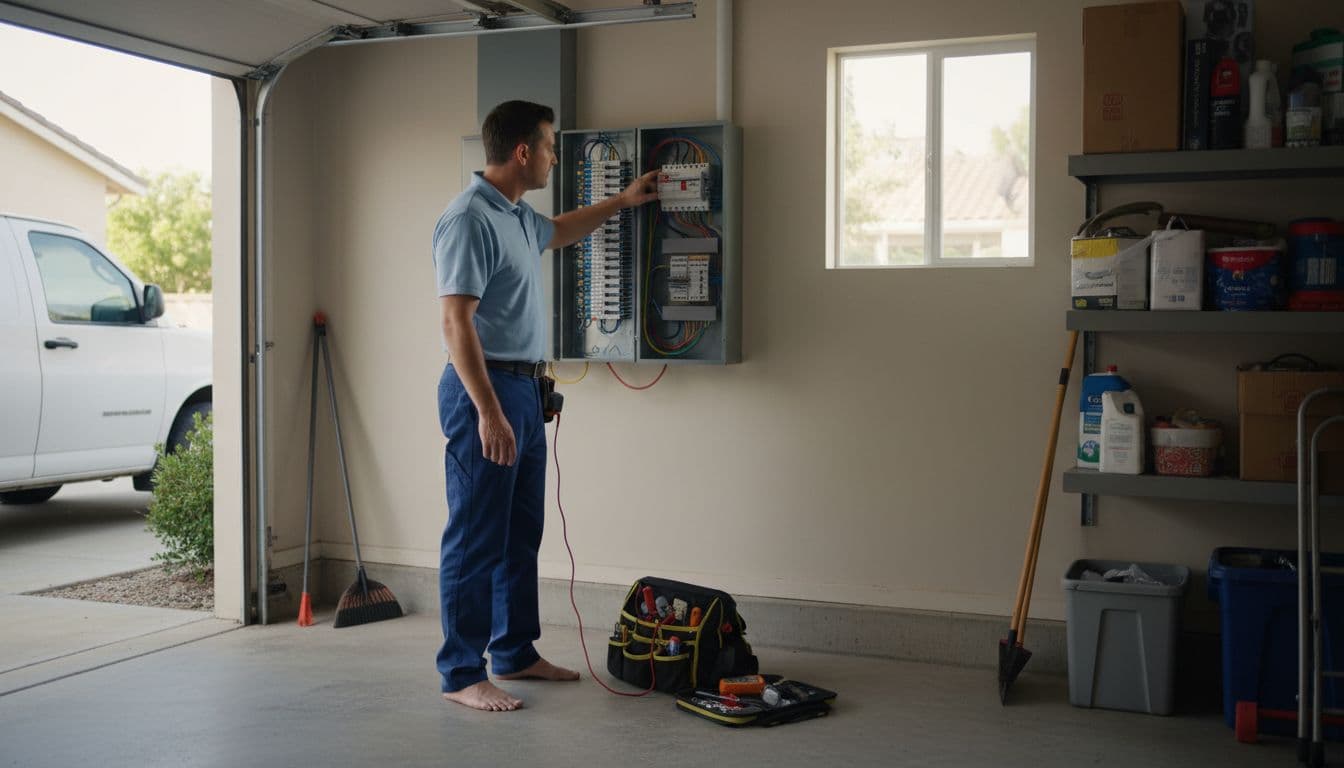
The timing of the trip gives a clue. If it trips the second the outdoor unit starts, that’s often an electrical fault or a part that can’t get the compressor moving. If it runs for 10 or 20 minutes first, the system may be overheating because airflow is poor or refrigerant is low.
This quick chart shows the pattern:
| When it trips | Common cause | What to do | | | | | | Right at startup | Weak capacitor, short, hard-starting compressor | Turn it off and schedule service | | After running awhile | Dirty filter, dirty coils, low refrigerant | Check airflow, then call for inspection | | Every reset trips again | Electrical fault or failing breaker | Leave it off |
The main mistake homeowners make is repeated resets. One reset after the unit cools is reasonable. After that, more resets can overheat wires, stress the compressor, and turn a modest ac repair into a larger one.
If the breaker trips twice in a short span, stop resetting it and leave the system off.
That one step can save the most expensive part of your air conditioner.
The airflow problems that make air conditioning work too hard
Many breaker trips start with airflow, not wiring. Your cooling system needs a steady stream of air across the indoor coil. When that airflow drops, the unit runs hotter and draws more amperage.
clogged air filter and blocked vents
A clogged filter is the most common example. When the filter fills with dust, pet hair, and lint, the blower has to work harder. At the same time, the evaporator coil can get too cold and start to freeze. Later, when the ice melts and the system keeps straining, the breaker may trip.
Closed supply vents can add to the problem. So can blocked return grilles, crushed ductwork, or furniture placed over a return opening.
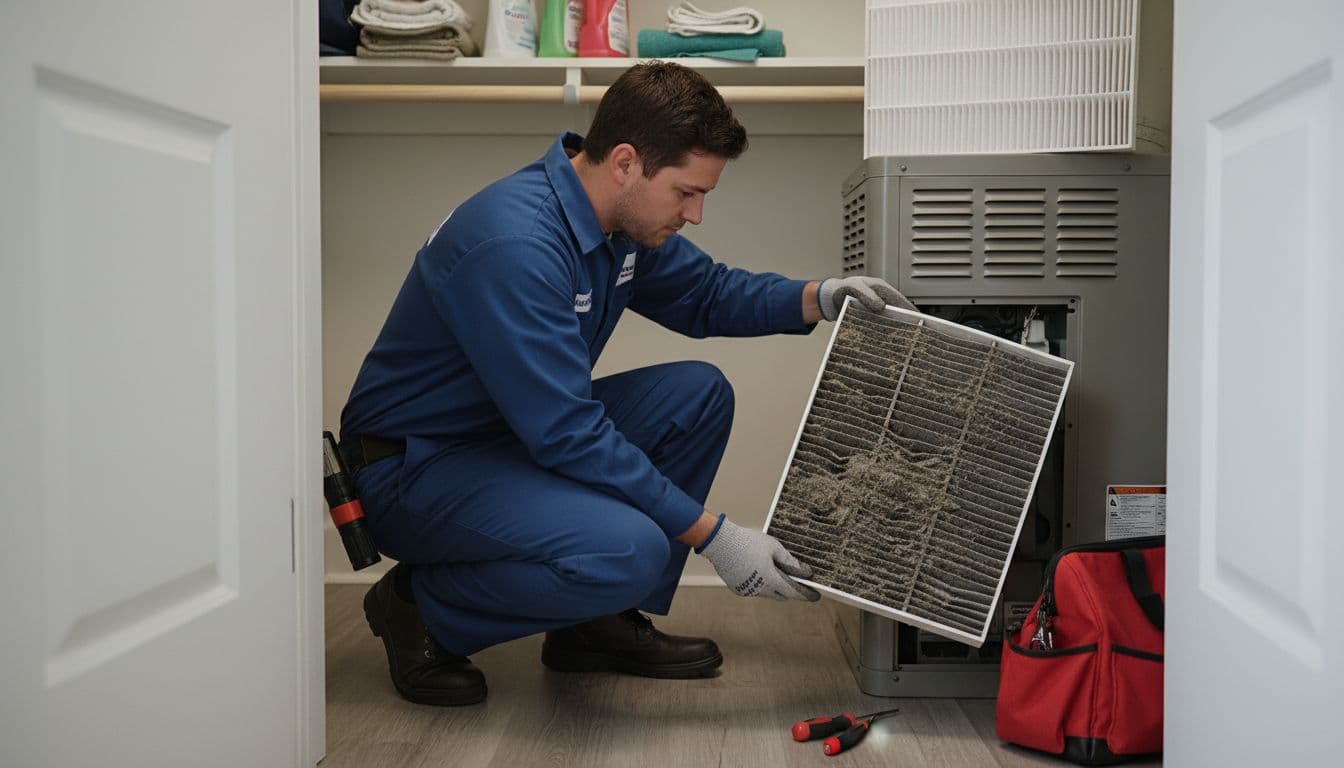
If you haven’t changed the filter in a while, start there. It’s one of the few checks most homeowners can do on their own. A clean filter won’t fix every issue, but it often fixes the easiest ones before they become a service call.
dirty condenser coils and refrigerant leaks
Outdoor condenser coils collect dirt, leaves, and cottonwood fuzz. Indoor evaporator coils collect grime over time too. When coils are coated, heat can’t move well. The system keeps pushing, the compressor runs hotter, and the breaker may trip as a safety response.
Refrigerant leaks can cause a similar pattern. The unit may cool poorly, run longer than usual, or freeze up. Then the compressor works under stress. As the Department of Energy’s air conditioner problem guide explains, dirty filters, dirty coils, and refrigerant issues are common sources of AC trouble.
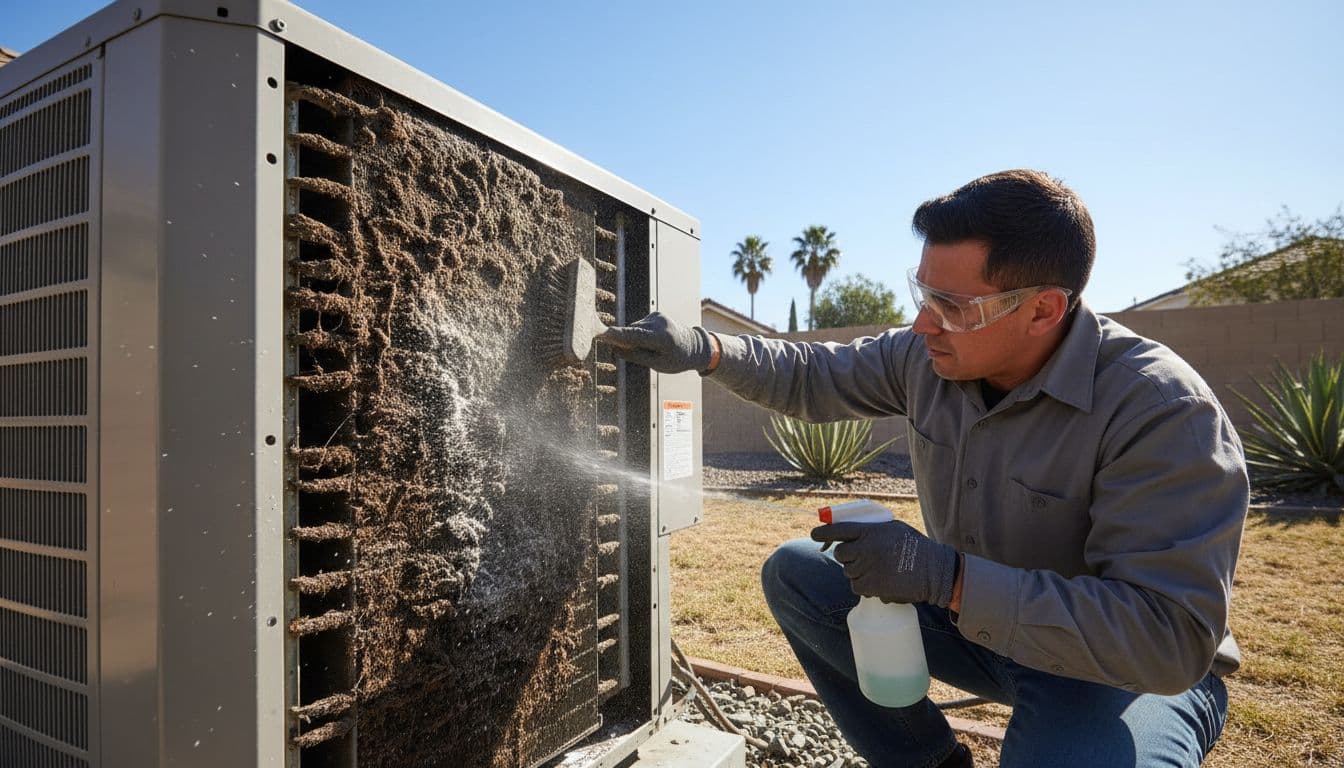
Refrigerant isn’t a DIY job. If levels are low, there’s usually a leak. A HVAC professional needs to find the leak, repair it, and charge the system to the right level.
This is one reason regular HVAC maintenance helps. Seasonal HVAC maintenance for air conditioner and heating systems keeps filters, coils, motors, and electrical readings in check before the hottest days arrive.
Electrical parts that often trigger breaker trips
Airflow problems are common, but electrical faults are often the reason a breaker trips right away. In those cases, the outdoor unit may hum, click, or try to start and then stop.
Weak capacitor or contactor
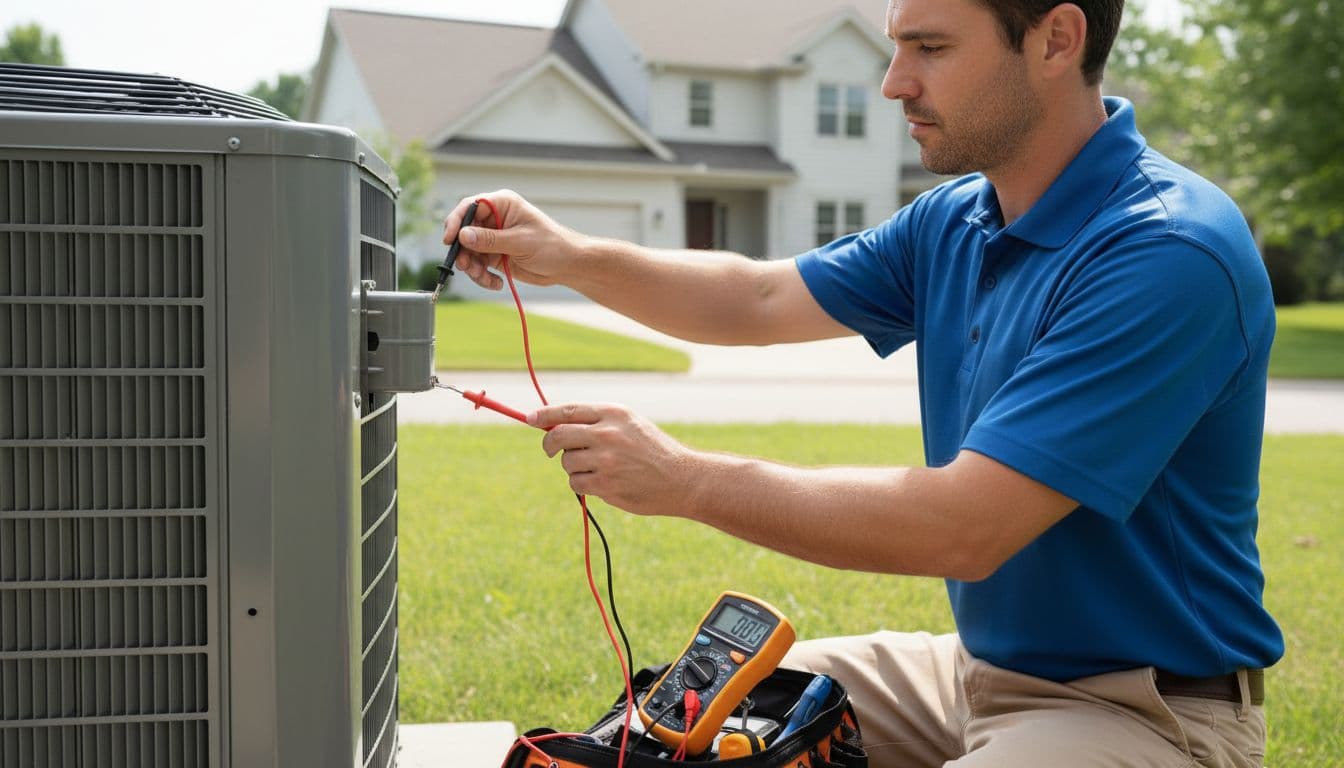
The capacitor gives the compressor and fan motor the boost they need at startup. When it gets weak, the unit draws more current while struggling to start. That extra draw can trip the breaker. In some cases, adding a hard start kit can help reduce the startup strain caused by a weak capacitor.
A worn contactor can do the same thing. Pitted contacts create resistance and poor electrical flow. The system may chatter, fail to start cleanly, or trip as soon as cooling kicks on.
Compressor or fan motor trouble
The compressor is the heart of the cooling cycle, and it’s also one of the most expensive parts in the system. A failing compressor that is locked up or pulling too many amps will often trip the breaker to protect the circuit.
A failing fan motor can create a similar chain reaction. When the fan slows down or stops, head pressure rises and the compressor overheats. Then the breaker trips even though the root cause is the fan motor.
Loose wiring or a weak breaker
Sometimes the issue is outside the unit itself. Loose wiring, a short circuit, ground fault, rubbed insulation, corrosion, or a weak breaker can all cause nuisance trips. Still, don’t assume the breaker is the only bad part. Breakers often trip because they’re reacting to another fault.
Most important, never replace it with a bigger breaker because the old one keeps tripping. Air conditioner circuit breaker sizing depends on the equipment label and the wire size. A larger breaker can let the circuit overheat before it shuts off.
If the system trips at startup, smells burnt, or buzzes at the outdoor unit, that points to same-day ac repair rather than trial and error.
What homeowners in Escondido should do next
A breaker trip doesn’t always mean the whole system is done. It does mean you should be careful with the next step.
Start with this order:
- Turn the thermostat to off.
- Reset the breaker once, then wait a few minutes.
- Replace a dirty filter and clear debris around the outdoor unit.
- Turn cooling back on and watch what happens.
If it trips again, stop there. Don’t keep testing it through the afternoon.
Write down the pattern instead, prioritizing electrical safety around the circuit breaker panel. Did it trip right away, after 15 minutes, or only during the hottest part of the day? Did you hear humming, clicking, or a loud buzz? That information helps an HVAC tech narrow the problem faster.
Also, pay attention to signs around the trip. Weak airflow, warm air from vents, ice on the line, a rattling condenser, or higher electric bills all point to a system that’s working harder than it should.
A good service visit usually includes amp draw testing, capacitor readings, refrigerant checks, coil condition, motor inspection, and a look at the breaker, wiring, and main service panel. Technicians should check for a dedicated circuit too, or recommend panel upgrades if the main service panel is outdated. That kind of full check matters because the symptom is electrical, but the cause may be airflow, refrigeration, or a failing component.
When the panel feels hot, the breaker won’t reset, or you smell burning, leave the system off and call right away. At that point, the safest move is emergency AC repair by a NATE certified technician, not patience.
Frequently Asked Questions
What should I do first if my AC breaker trips in Escondido?
Turn the thermostat off, reset the breaker once after waiting a few minutes, and check/replace the air filter while clearing debris from the outdoor unit. Watch if it trips again—note the timing and sounds like humming or buzzing. If it repeats, stop and call an HVAC pro to avoid damaging the compressor.
Why does the breaker trip right when the AC starts?
This often points to electrical issues like a weak capacitor, worn contactor, or struggling compressor pulling too many amps at startup. The breaker cuts power to protect wiring and equipment from overheating. Leave it off and schedule same-day AC repair rather than risking further strain.
Can a dirty air filter cause my AC breaker to trip?
Yes, a clogged filter restricts airflow, making the blower and coils work harder, which raises amperage and trips the breaker—especially after running awhile. Frozen coils from poor airflow add to the problem as ice melts and stress builds. Swap it out first; it’s a quick DIY step that fixes many issues.
Is it safe to keep resetting a tripped AC breaker?
One reset after the unit cools is reasonable, but repeated tries overheat wires, stress parts, and can ruin the compressor. Escondido’s heat amplifies the risk on older systems. Stop after two trips and get professional service to pinpoint the real cause.
When do I need emergency AC repair for a tripped breaker?
Call immediately if the panel feels hot, smells burnt, buzzes loudly, or won’t reset—signs of shorts, failing breakers, or locked compressors. Don’t wait through hot afternoons. A full tech inspection covers electrical, airflow, and refrigerant to restore safe cooling fast.
Conclusion
When you’re facing AC breaker tripping Escondido, the breaker is usually doing its job. The bigger issue is why the system is overheating, overworking, or pulling too much power.
For most Escondido homeowners, the cause comes back to airflow, dirty coils, low refrigerant, or a worn electrical part. Catch it early, and the fix is often much simpler than the damage caused by repeated resets.
The best next step is a consultation with a qualified electrical contractor or HVAC specialist, not another attempt to force the unit through one more hot day.