

Signs Your Escondido Furnace Needs Repair Before It Fails
My Guy is Proud to Be "Your Guy" for Your Home
A furnace rarely quits without warning. Most systems start dropping hints days or weeks before they stop heating your home the way they should.
If you’re weighing furnace repair in Escondido, the best move is to catch trouble early. As a family-owned business, we bring a personal approach to heating repair tailored to Escondido’s local climate needs. That can mean the difference between a small fix and waking up to a cold house with no heat at all. The tricky part is knowing which changes matter, and which ones need a service call now.
Key Takeaways
- Catch strange noises early: Banging, rattling, squealing, clicking, or humming signal issues like delayed ignition, loose parts, or blower problems—don’t wait for them to worsen.
- Address weak heat and short cycling: Uneven rooms, rising bills, or furnaces shutting off too soon often stem from dirty filters, weak blowers, or duct leaks, wearing the system down fast.
- Never ignore smells, rust, or soot: Gas, electrical, or musty odors, plus visible wear like yellow flames or corrosion, demand immediate pro attention for safety and efficiency.
- Call for repair on repeats or emergencies: If problems persist after basic fixes, your furnace is 12-15+ years old, or you smell gas/see CO alarms, schedule same-day service to avoid failure.
- Early action protects your whole HVAC: Furnace issues often link to AC problems; pros spot system-wide fixes for year-round comfort in Escondido homes.
Strange furnace noises are usually the first clue
Your furnace should sound familiar. A soft startup, steady airflow, and a gentle shutoff are normal. When those sounds change, pay attention.
A loud bang at startup often points to delayed ignition. Gas builds up, then lights all at once. That puts stress on the system and can damage parts over time. Rattling can mean a loose panel, a shaky blower wheel, or a failing motor mount. High-pitched squealing often comes from the blower motor or a worn belt on older units.
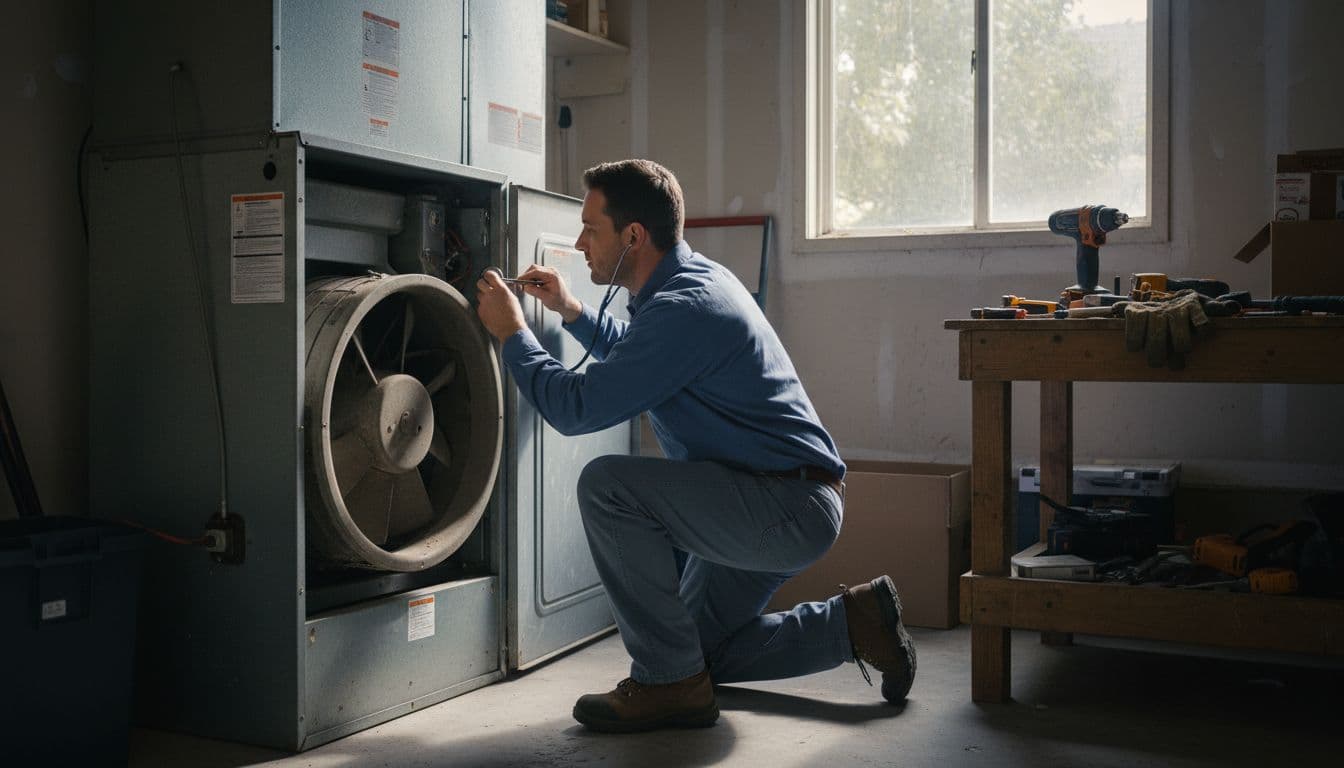
Clicking is another sound homeowners ignore too long. A few clicks during startup can be normal. Repeated clicking without full ignition is not. That can point to a bad igniter, flame sensor, or control issue. Meanwhile, a humming sound with no airflow may mean the blower isn’t starting when it should.
A furnace that suddenly gets louder is often asking for service before it asks for replacement.
Noise matters even more when it comes with other changes. If the furnace starts late, shuts off early, or blows cool air after making a strange sound, schedule heater repair. Those symptoms often travel together.
In the Escondido area, these furnace problems show up during the first colder stretch of the season in both residential and commercial settings. The unit has been sitting for months, then it has to work again. That first run can expose wear that built up quietly over time. If your furnace used to hum and now sounds like loose cookware in a cabinet, don’t wait for it to sort itself out. It usually won’t. Professional HVAC services can diagnose these noises accurately before they lead to bigger issues.
Weak heating and short cycling can point to deeper problems
Some furnace issues don’t sound dramatic. They feel subtle at first. One bedroom stays chilly. The living room gets warm, but the hallway never does. Then the thermostat keeps creeping higher because the house never feels quite right.
Uneven heat can come from several places. A clogged filter restricts airflow. A weak blower can’t move enough warm air. Leaky ducts dump heat into the attic, crawl space, or garage before it reaches your rooms, and duct cleaning may help resolve buildup issues. Sometimes the furnace itself overheats, then shuts off early to protect its parts. That pattern is called short cycling, and it can wear the system down fast.
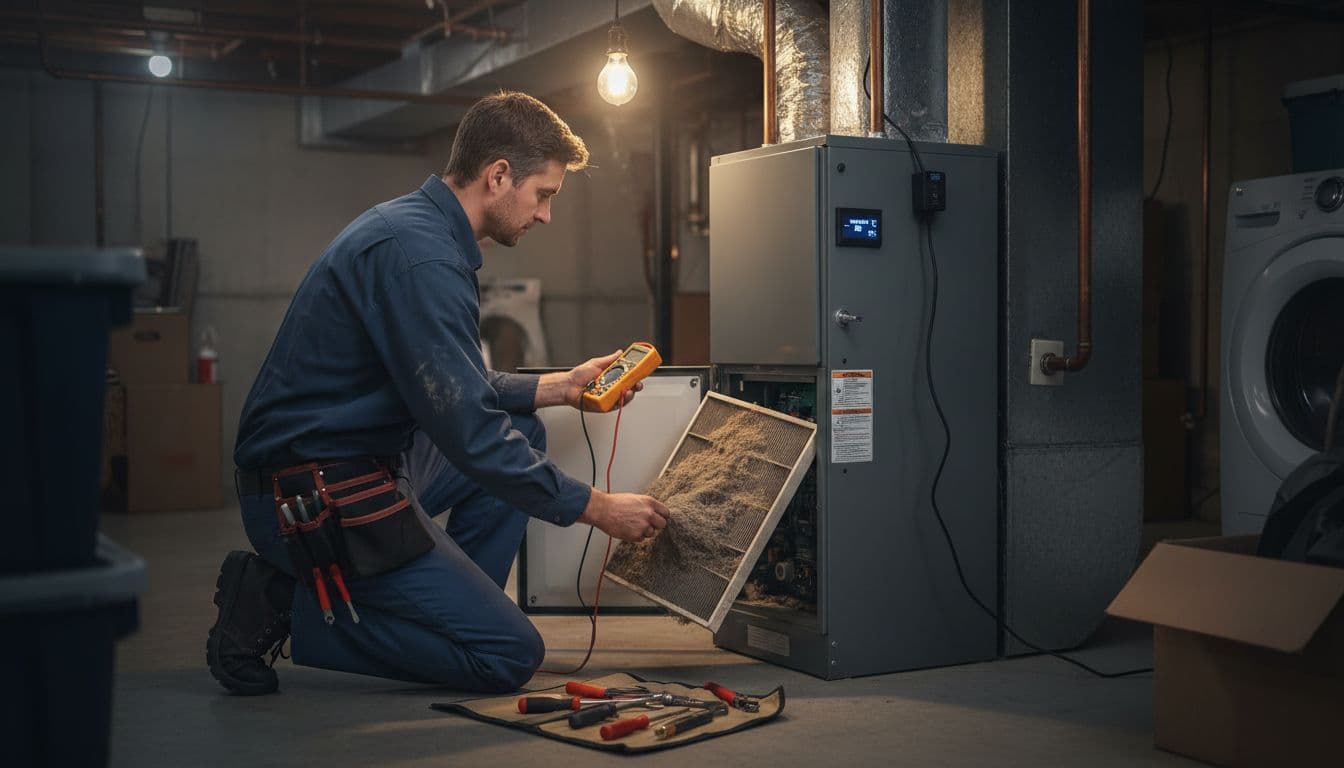
If your furnace turns on, runs for a few minutes, then stops before the house warms up, something is off. The cause may be simple, such as a dirty filter or thermostat issue. Still, if the problem keeps coming back after a filter change, it’s time for a closer look.
Higher utility bills can be another warning sign. When a furnace struggles, it often runs longer to do the same job and is no longer energy-efficient. You may not notice the sound, but you’ll notice the bill. A sudden jump in winter energy use, without a big weather change, can mean your heating system is losing efficiency.
This is where a full hvac diagnosis helps. The furnace may be the problem, but airflow, duct leaks, thermostat errors, and dirty components can create the same symptoms in your HVAC system. That’s also why homeowners who ignore winter airflow issues sometimes end up needing ac repair later. The same blocked filter or weak blower that hurts heating can also hurt cooling when summer arrives. Your air conditioning system and furnace share parts of the same HVAC system.
Smells, rust, soot, and visible wear should never be brushed off
Not every furnace warning is about heat. Sometimes you can see it. Sometimes you can smell it.
A light dusty smell during the first startup of the season is common. Dust burns off the heat exchanger and vents, then fades. A smell that sticks around is different. Musty odors can point to moisture or mold near the system, compromising your indoor air quality. Sharp electrical smells can mean overheating wires or damaged parts. If you ever smell gas, leave the home and call the gas company or emergency services from outside.
Visible signs matter too. Soot around the furnace cabinet or vent pipe can mean combustion problems. Rust on the unit, flue, or surrounding metal may point to moisture, venting trouble, or a crack that needs inspection by licensed and insured professionals. Water pooling near the furnace can also lead to corrosion, especially on high-efficiency systems with condensate lines.
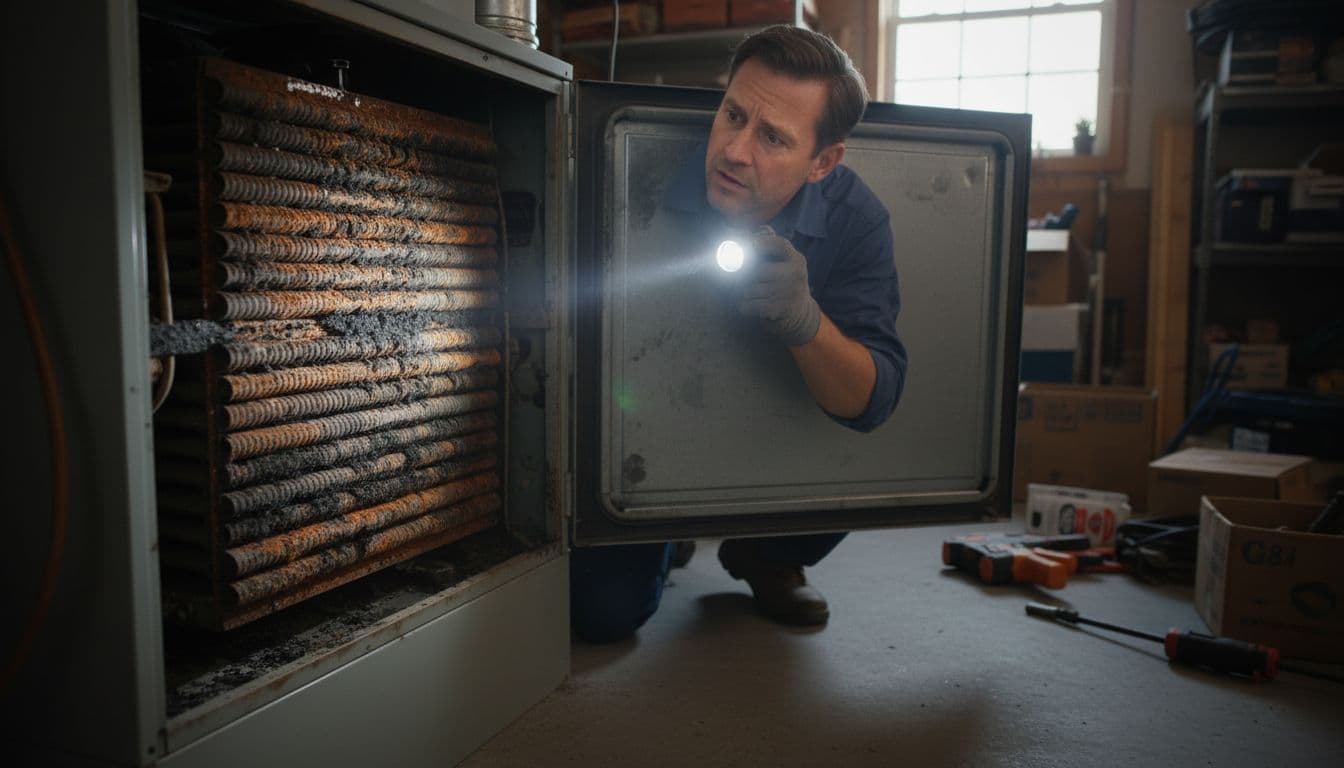
Take a quick look at the flame if your gas furnace has a visible burner view. A steady blue flame is usually a good sign. A yellow or flickering flame can point to combustion trouble and needs professional attention. You should also take a carbon monoxide alarm seriously every time. Turn the system off, get everyone out, and call for help.
Some homeowners keep using a furnace because it still “sort of works.” That’s risky when you can already see soot, rust, scorch marks, or repeated burner problems. Those are not cosmetic issues. They’re signs the system may be operating in a way it shouldn’t, and in severe cases with extensive rust or heavy soot, furnace replacement followed by furnace installation may be necessary.
In other words, trust the evidence in front of you. If the furnace looks worn, smells odd, or leaves marks where it didn’t before, book service before the next cold night puts more strain on it.
When to call for furnace repair in Escondido homes
A good rule is simple: if the problem repeats, call. Furnaces don’t usually heal on their own. Small issues often become larger repairs because the system keeps cycling under stress.
Age matters too. Once a furnace gets into the 12 to 15-year range, parts wear out more often. That doesn’t mean replacement is automatic. It does mean unusual behavior deserves faster attention. If you’ve reset the thermostat three times this week, changed the filter, and still have weak heat, schedule service.
Call for same-day service or emergency service if you notice any of these signs:
- The furnace won’t start, or it starts and shuts off right away.
- You smell gas, or your carbon monoxide alarm goes off.
- The breaker trips when the furnace runs.
- The system blows cold air during a heating cycle.
NATE-certified technicians from a trusted HVAC contractor can tell whether the issue is the furnace, the thermostat, the blower, or the duct system. That matters because comfort problems don’t always stay in one season. Many Escondido homeowners notice winter airflow trouble first, then see the same house struggle with air conditioning in summer. The same pattern shows up throughout North County, including nearby Vista, San Marcos, Carlsbad, Oceanside, and Fallbrook too.
If you use one company for heating and ac repair, that tech can often spot whole-system issues earlier. A dirty evaporator coil, blocked return, weak blower motor, or poor duct balance can affect both sides of your HVAC system. Fixing the cause early usually saves money and stress, and we offer a free estimate along with flexible financing options.
Regular maintenance helps, but it doesn’t replace paying attention. New noises, rising bills, uneven rooms, and visible wear are all repair signals. When your furnace starts acting differently, believe it.
Frequently Asked Questions
What strange noises mean your Escondido furnace needs repair?
Unusual sounds like loud bangs (delayed ignition), rattling (loose parts), squealing (worn belts/motors), repeated clicking (igniter issues), or humming without airflow (blower failure) are early warnings. These put stress on the system and can lead to breakdowns if ignored. Schedule service before they combine with weak heat or shutdowns.
Why is my home getting uneven heat or short cycling?
Clogged filters, weak blowers, leaky ducts, or overheating cause rooms to stay chilly while bills climb, as the furnace runs longer inefficiently. Short cycling—running briefly then stopping—wears parts fast. A full HVAC diagnosis checks filters, ducts, and thermostat for fixes.
What smells or visible signs require immediate furnace service?
Persistent musty, electrical, or gas smells (evacuate for gas), plus soot, rust, water pooling, or yellow flickering flames point to combustion, moisture, or safety risks. Dusty startup smell is normal but anything lasting isn’t. Pros inspect to prevent CO dangers or replacement needs.
When should I call for emergency furnace repair in Escondido?
Seek same-day help if it won’t start/shuts off immediately, you smell gas, CO alarms sound, or breakers trip. Repeating issues after filter changes or resets also warrant a call, especially in older units. NATE-certified techs diagnose furnace, ducts, and AC links quickly.
How do furnace problems affect my air conditioning?
Shared components like blowers, filters, and ducts mean winter airflow issues often hurt summer cooling too. Dirty coils or weak motors strain both systems, raising bills year-round. One trusted HVAC pro spots and fixes whole-system problems early.
Final Thoughts
Your furnace usually gives you a heads-up before it fails. The warning signs are often small at first, but they add up fast.
If your home has uneven heating, strange noises, odd smells, or a spike in energy use, don’t shrug it off. Catching furnace trouble early in Escondido often means a simpler repair, steadier comfort, and fewer cold-morning surprises. For long-term peace of mind, prioritize preventive maintenance and schedule an annual tune-up to sidestep future failures. We handle full heating and cooling needs, including heat pumps and mini split systems as reliable alternatives. With our satisfaction guarantee, you can count on top-quality service every time.