

AC Fan Not Spinning in Vista? Causes and Next Steps
My Guy is Proud to Be "Your Guy" for Your Home
Your house gets warmer, the thermostat is set correctly, and the outdoor unit sits there with a fan that won’t move. If your AC fan is not spinning in Vista, do not ignore it.
This problem can stem from a small electrical component, a burned out motor, or a simple power issue. Such issues are common in central air conditioning systems when they are pushed to their limits during the peak of summer heat. While some causes are safe to inspect on your own, others require professional AC repair before the compressor sustains permanent damage. In areas like Vista, Escondido, and San Marcos, these cooling failures tend to appear right when the season reaches its hottest point.
Key Takeaways
- Immediate Action Required: If your outdoor AC fan is not spinning but the unit is humming, turn the system off immediately at the thermostat to prevent expensive compressor damage.
- Common Culprits: While a faulty capacitor is a frequent cause of a non-spinning fan, issues can also stem from a defective contactor, motor failure, or electrical interruptions like tripped breakers.
- Prioritize Safety: Keep your DIY efforts limited to safe checks like inspecting the circuit breaker and clearing debris; avoid tampering with internal electrical components or attempting to force the fan blades to move.
- Professional Diagnosis: Because multiple issues often share the same symptoms, a trained HVAC technician is necessary to accurately test the system and determine if the solution is a minor part replacement or a more comprehensive repair.
Why a non-spinning AC fan matters
The outdoor fan in your condenser is essential for pulling heat out of your home. When that fan stops, it disrupts the refrigerant cycle and prevents the system from releasing heat the way it should. As a result, your air conditioning may blow warm air, run longer than normal, or shut down on a safety limit.
Sometimes the indoor part of the system still runs. That can fool you into thinking the problem is minor. Meanwhile, the outdoor unit may be overheating because it cannot dissipate the heat trapped within the condenser coils.
If you hear a hum from the condenser but the blades do not turn, the system may still be getting power. However, a fan that refuses to spin can quickly turn into a costly HVAC repair if the system continues to run, putting your unit at risk of compressor overheating.
If the outdoor unit hums and the fan does not move, turn the thermostat off and stop the system until an HVAC technician can check it.
That step matters because the compressor is the most expensive part of your system. A stuck fan allows pressure and heat to build up rapidly. In other words, a small issue can quickly become a major repair bill if the system is not addressed promptly.
Common reasons your AC fan won’t spin
Many Vista homeowners expect the condenser fan motor to be the problem. Sometimes it is, but several other parts can stop the fan first.
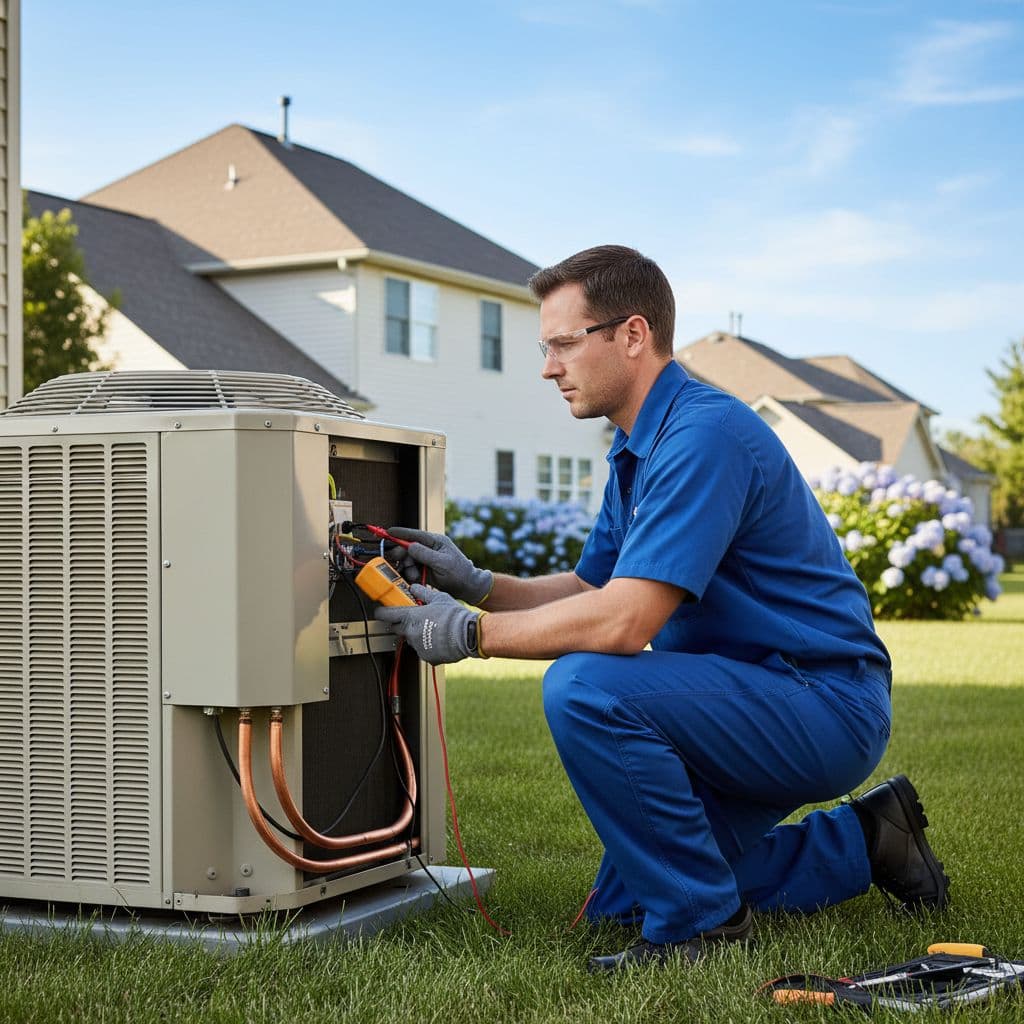
A faulty capacitor is one of the most common causes. The run capacitor provides the necessary startup jolt the fan needs to begin spinning. When it weakens, the motor may hum, start slowly, or not start at all. This often happens after long stretches of hot weather because heat wears the part down.
A defective contactor can also stop the fan. The contactor is the switch that sends power to the outdoor unit. If it sticks, burns, or wears out, the fan may not receive the power it needs. You might hear clicking, or you might hear nothing at all.
Then there is the condenser fan motor itself. Motors age, bearings wear out, and wires can fail. If the condenser fan motor is overheating, it may stop and restart later, which can make the problem seem random. A motor near the end of its life often gets noisy before it quits.
Voltage issues are another possibility. A tripped breaker, a disconnect box problem, or a thermostat signal issue can all keep the fan from running. In some cases, the breaker trips because another part is already failing, so resetting it once may not solve the real problem.
A dirty system can add to the trouble. Leaves, dust, or clogged coils force the unit to work harder. Over time, that extra strain can shorten the life of the capacitor and motor. This is one reason routine HVAC system maintenance is essential, even when the system still cools.
Finally, the fan may stop because the unit is overheating. Some systems shut the fan or the whole condenser down to protect major components. That may sound helpful, but it still means the system needs a proper diagnosis.
DIY checks before calling for air conditioner repair in Vista
You can do a few safe checks before scheduling professional service. The key word is safe. Your condenser uses high voltage, so this is not the time to remove panels or test wires.
Start with these steps:
- Check the thermostat settings. Set it to cool and drop the temperature a few degrees below room temperature. If the indoor blower motor runs but the outdoor fan stays off, the problem is likely outside.
- Look at the circuit breaker. If you have a tripped breaker, reset it once. If it trips again, stop there. Repeated trips often point to a deeper electrical issue.
- Inspect the outdoor shut-off box. Many condensers have a disconnect box mounted nearby. If it was pulled during yard work or service, the unit will not run, which can help you rule out simple power supply issues.
- Perform an air filter replacement if the filter is dirty. A clogged filter does not usually stop the outdoor fan by itself, but it can strain the whole system. It also hurts airflow and cooling.
- Clear debris and obstructions around the unit. Remove leaves, weeds, and anything blocking airflow. Give the condenser open space so it can breathe.
You should also listen closely. A humming sound with no fan movement often points to a capacitor or motor problem. A clicking sound may suggest a contactor issue. Silence can mean a power problem, thermostat issue, or failed control.
Do not perform the stick test by trying to spin the blades with a screwdriver or a piece of wood. Some homeowners do this after seeing the fan hesitate. While it may seem harmless, it can damage the fan blades, injure you, or hide the real fault for another day. Using a stick to force the fan blades to move can also cause permanent motor damage.
If the unit smells burnt, trips the breaker, or makes a grinding sound, skip DIY and call for AC repair right away.
When it’s time to bring in an HVAC technician
A professional HVAC technician can test the capacitor, confirm voltage, inspect the contactor, and check whether the condenser fan motor is drawing too much amperage. These diagnostic steps are essential because several different failures often present the same external symptoms.
This quick chart shows the most common situations:
| What you notice | Likely cause | Best next step |
|---|---|---|
| Fan hums but does not spin | Weak or failed capacitor | Turn system off and schedule service |
| Breaker keeps tripping | Electrical fault or failing motor | Stop resetting and call a technician |
| Fan starts, then stops | Overheating condenser fan motor | Get the unit tested soon |
| Outdoor unit is silent | Power, thermostat, or contactor issue | Check settings, then book service |
| Warm air indoors | Condenser problem or low airflow | Shut system off if fan is stuck |
The main takeaway is simple: symptoms can overlap. A faulty capacitor and a failing motor may look almost identical until a trained HVAC technician uses specific diagnostic tools to test the system for voltage issues. Professional testing is the only way to ensure your cooling efficiency is fully restored and that the system is operating safely.
This is also where a full HVAC inspection helps. If your cooling system struggles during the summer and your heating system has been acting up in the winter, the issue may be bigger than one fan. A local pro can tell you whether you need a minor part, a deeper repair, or a long-term plan for unit replacement.
How to prevent the problem from coming back
Most fan failures do not come out of nowhere, as the warning signs are often small at first. You may hear a louder startup, notice weaker cooling in the afternoon, or see the condenser fan motor struggle as the outdoor unit turns on and off more often.
Consistent HVAC system maintenance can catch these signs early. During a professional tune-up, a technician can test the capacitor, inspect wiring, clean the condenser coil, and check motor performance. That kind of service helps your air conditioning run better during high heat in Vista and nearby Oceanside or Carlsbad.
At home, keep the air filter clean and ensure the space around the outdoor unit remains clear of debris or overgrown plants. Also, pay attention to changes in sound. When your system starts acting differently, it is usually trying to tell you something before a total failure occurs.
Final thoughts
When an outdoor fan stops spinning, the smartest move is to shut the system off and avoid extra damage. A stuck fan may stem from a minor issue, but it can put major stress on your central air conditioning system if you keep it running. In some cases, the lack of movement suggests a deeper electrical failure or a control board malfunction that requires professional attention.
Safe checks can rule out a few simple problems. After that, a proper diagnosis saves time, protects the compressor, and helps you avoid guesswork. If you are ready to get your system checked, you can Book Online to have a qualified HVAC technician in Vista inspect your unit today.
FAQs
Can I run my AC if the outside fan is not spinning?
No. Turn it off at the thermostat immediately. If the compressor continues to run while the fan is stationary, heat will quickly build up and cause significant internal damage, leading to a much more expensive repair.
Is a faulty capacitor an expensive repair?
Usually, replacing a capacitor is one of the more affordable AC repair jobs. The real financial risk comes from waiting too long to address the issue, as a failing part can strain the motor or compressor and lead to premature system failure.
Why does my fan spin only when I push it?
That symptom almost always points to a weak or failing capacitor. Even if you can get it started manually, do not try to keep doing that. The condenser fan motor still requires professional service, and attempting to manually spin the blades can be dangerous and could result in injury or further damage. Listen for any unusual grinding noises when the fan finally engages, as these can indicate mechanical wear.
Can a dirty filter cause this problem?
A dirty filter does not typically stop the outdoor fan by itself. However, it significantly reduces airflow, which can cause the system to work harder, raise overall system stress, and potentially lead to a frozen evaporator coil that complicates your HVAC problems.
Should I repair or replace the unit?
That depends on the age of the system, the overall condition of the motor and compressor, and the total repair cost. If your unit is older and experiencing repeated cooling or heating issues, replacing the system may be a more cost-effective long-term solution than investing in another repair.