

AC Hissing Vista Homes: What the Sound Means
My Guy is Proud to Be "Your Guy" for Your Home
A hissing AC can get your attention fast, especially on a hot Vista afternoon. Most homeowners know what a normal air conditioning hum sounds like, so when that soft hum turns into a persistent hissing noise, it feels wrong for a reason.
Sometimes the sound is harmless and brief. Other times, it points to a refrigerant issue, an airflow leak, or a pressure problem that needs prompt AC repair in Vista. The key is knowing where the noise comes from and how long it lasts.
Key Takeaways
- Distinguish between normal and abnormal: A brief, intermittent hiss during system startup, shutdown, or mode switching is often normal pressure equalization, but a steady, persistent, or worsening hiss usually signals a mechanical or refrigerant issue.
- Identify the source: A hiss originating from the outdoor unit often points to refrigerant leaks or pressure problems, while a hiss from indoor vents or return grilles is frequently caused by leaking air ducts or restricted airflow.
- Watch for warning signs: If the hissing sound is accompanied by warm air blowing from vents, icing on lines, or unusually high energy bills, it indicates a serious system failure that requires professional repair.
- Prioritize professional service: Refrigerant leaks and internal valve failures require specialized diagnostic tools and expertise; avoid attempting DIY repairs on sealed components to prevent further damage or safety hazards.
- Perform simple checks first: Before calling for service, ensure your air filter is clean and your vents are unobstructed, as these simple maintenance steps can resolve many minor airflow-related noises.
What a hissing air conditioner usually tells you
Not every hiss means your system is in trouble. Air conditioning systems move air and refrigerant under pressure, so a short release like sound can happen during normal operation.
For example, some systems make a brief hiss when they shut off and pressures start to balance through the process of pressure equalization. If your unit is a heat pump, a short hiss can also happen when it switches between cooling and heating modes. That kind of sound usually lasts a few seconds, not several minutes.
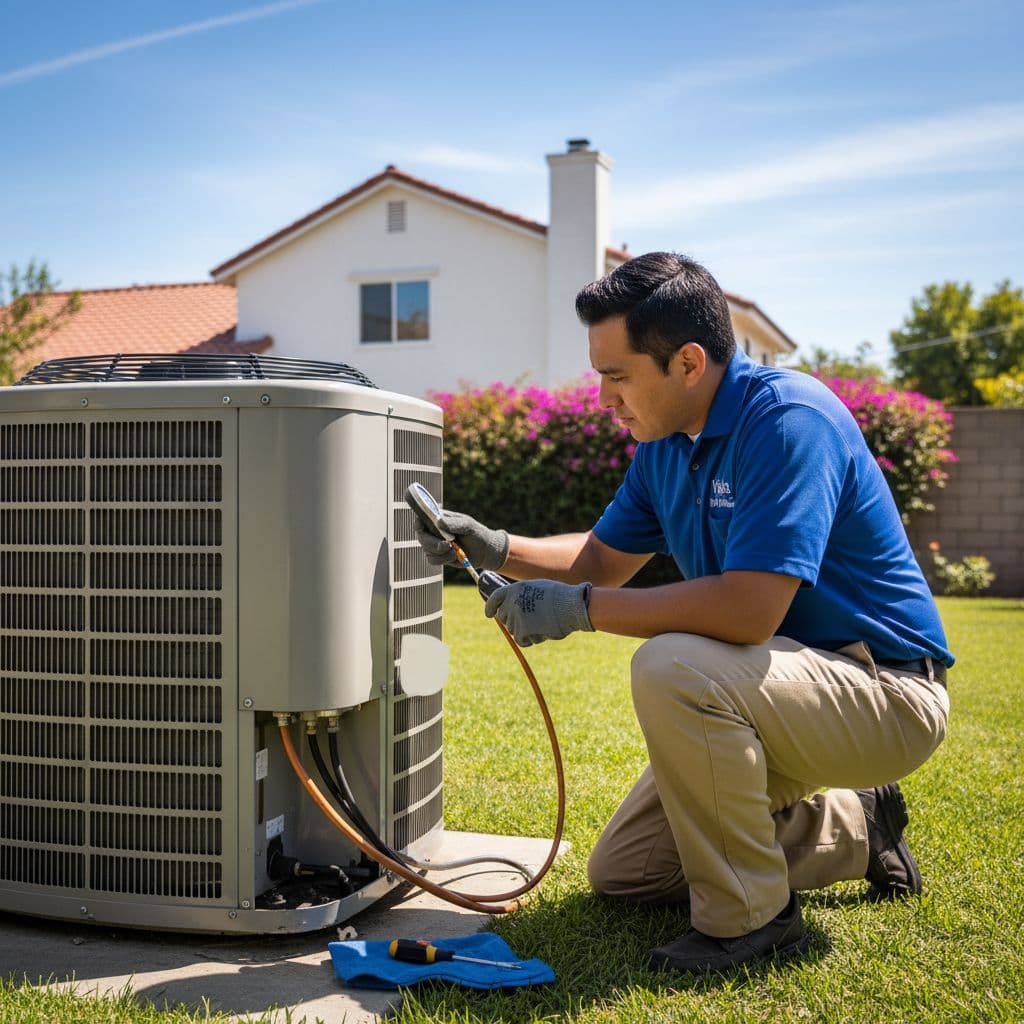
An HVAC technician checks an outdoor condenser during a noise diagnosis.
The bigger concern is a hiss that keeps going, gets louder, or comes with other symptoms. If the system is blowing warm air, icing up, cycling too long, or raising your energy bills, the sound is more than a nuisance. It is a warning.
Location matters too. A hiss from the outdoor unit often points to refrigerant or pressure issues. A hiss from inside, near a vent or return grille, may be escaping air rather than refrigerant. Many Vista homeowners describe leaking air ducts as a hiss, even though that sound is often closer to a whistling sound.
A short hiss once in a while may be normal. A steady hiss that repeats often usually isn’t.
Because Vista homes rely on cooling for long stretches of warm weather, even a small problem can grow fast. A system that loses refrigerant or airflow will not work less hard on its own. It will usually work harder, and that means more wear on the HVAC system.
Common reasons an AC hisses in Vista homes
The sound alone does not provide a full diagnosis, but a few causes appear more frequently than others.
Refrigerant leak in your cooling system
This is one of the most common concerns when homeowners search for AC hissing in Vista. Refrigerant runs through a sealed loop of lines and coils. If a refrigerant leak develops, often on the evaporator coil, pressurized refrigerant gas or liquid refrigerant can escape with a noticeable hiss.
You may also notice weak cooling, longer run times, or ice forming on the refrigerant line. In some cases, there can be an oily residue near the site of the leak. Since refrigerant handling requires specialized tools and professional licensing, this is never a DIY repair.
Leaking air ducts or air handler gaps
Not every hiss is related to refrigerant. Conditioned air can escape from leaking air ducts, loose connections, or gaps around the air handler. This issue tends to happen more in older homes or in systems with attic ductwork that has shifted over time.
When this happens, the system may still cool the house, but it will do so inefficiently. One room may feel fine while another stays warm, and the unit runs longer than it should. The sound often originates from a wall, ceiling vent, closet unit, or attic access area.
An internal valve leak or pressure issue
This is less common, but more urgent. If a thermostatic expansion valve fails, the system may hiss loudly as the refrigerant flow becomes restricted or unstable. An internal valve leak caused by abnormal compressor pressure can also create that kind of sound.
If the hiss is sudden, strong, and paired with poor cooling, turn the system off and call for professional service.
Your system is doing something normal, briefly
A quick hiss at startup or shutdown is not always a cause for concern. Some newer systems make slight pressure noises during normal cycles. Heat pumps can also produce brief sounds when changing modes during mild Vista mornings or evenings.
The difference is duration. Normal sounds are short and repeat in a predictable way. Trouble sounds tend to linger, worsen, or appear alongside noticeable performance problems.
What you can safely check before calling for AC repair
A few basic checks can help you describe the issue clearly. They may even solve a minor airflow problem. Still, don’t open sealed components or touch refrigerant lines beyond a visual check.
- Check the clogged air filter. If it is packed with dust, airflow drops and strange noises can follow. Replace it if it looks dirty.
- Listen for the exact source. Stand near the outdoor unit, then near indoor vents and the air handler. Try to tell whether the hiss is coming from escaping air or from the equipment itself.
- Look for ice or weak airflow. Ice on the copper line, warm air from vents, or low airflow often points to a bigger system issue.
- Notice when the sound happens. Does it start only at shutdown, or does it continue while the system runs? That detail helps a technician narrow things down faster.
If you find a closed vent, a crushed filter, or a loose return grille, fixing that may reduce the noise. However, if the system still hisses after a new filter and open airflow, move on to professional service. Scheduling regular AC maintenance can help prevent these issues from escalating into costly repairs.
Don’t keep testing it for hours. A struggling air conditioner can turn a small repair into a larger one, especially during a hot spell.
When a hissing sound means you need professional AC repair
Some symptoms mean it is time to stop guessing. If your air conditioning is hissing and any of the signs below show up, call a trained technician:
- The unit blows warm air
- Cooling is weak throughout the house
- Frozen coils appear on the line or unit
- The hiss lasts more than a few seconds
- The outdoor unit sounds louder than usual
- Your thermostat setting and room temperature do not match
A refrigerant leak is the biggest reason not to wait. Low refrigerant does not simply make the house less comfortable. It can strain the compressor, which is one of the costliest parts in the system.
The same goes for pressure-related problems. If a valve is releasing because the system is under stress, the unit needs real testing, not guesswork. Safe repairs involve checking pressures, temperatures, electrical parts, and airflow together. One issue can trigger another, leading to more extensive damage.
Vista homeowners often deal with dusty conditions, clogged filters, and long cooling seasons. Those factors do not always cause a hiss by themselves, but they can push a weak unit over the edge. Regular maintenance of your HVAC system is the best way to prevent a refrigerant leak and ensure your home stays cool all season long.
How technicians track down the source of the hiss
A good diagnosis starts with the sound, but it does not stop there. The technician will usually check where the noise originates, when it occurs, and whether the system is cooling properly.
If a refrigerant leak is suspected, the next step often involves taking pressure readings to monitor high side pressure and performing AC leak detection. Technicians may use specialized tools, such as UV dye, to pinpoint even the smallest punctures in the coil, line set, or fittings. If the sound points toward airflow issues, the technician will thoroughly inspect duct connections, the filter area, the blower motor, and any visible leaks in the supply or return lines.
That level of detail matters because hissing sounds can be deceptive. What sounds like a mechanical issue with the outdoor condenser might actually be a simple duct gap inside the home. Similarly, what seems like a standard airflow leak might turn out to be a complex refrigerant issue. Reliable HVAC services rule out potential causes systematically instead of guessing.
For homes with heat pumps, the technician will also carefully inspect the reversing valve, as these systems handle both cooling and heating cycles. While a short hiss during a mode change can be normal, a repeated or loud sound indicates a potential fault that requires attention.
Conclusion
Dealing with an AC hissing in Vista is a situation that should not be ignored. While some sounds are brief and harmless, a steady hiss often indicates an underlying issue that could impact your comfort. The most important clue is whether the sound occurs occasionally or is consistent and tied to poor cooling performance in your home.
It is worth noting that while a car air conditioner might hiss due to similar pressure changes, a home HVAC system is a more complex setup that requires professional AC maintenance to stay efficient. If the noise persists, the safest move is to schedule a professional inspection before the problem spreads to other parts of your unit. When you are ready to address the issue, you can Book Online to have an expert resolve the problem before the next hot day puts extra stress on your system.
FAQs
Is it normal for my AC to hiss for a few seconds after it turns off?
Yes, it is often normal. A short hiss can occur as a result of pressure equalization inside the system after the unit cycles down. If the sound persists for a long time, happens frequently, or is accompanied by weak cooling, your system likely needs professional attention.
Can a dirty filter cause a hissing sound?
It can certainly lead to airflow restrictions that manifest as a hissing or whistling sound, particularly near your returns and vents. A clogged air filter is a common issue that is easy to check, and you should always replace it before assuming the worst about your system.
What is the difference between a hissing noise and a shrieking noise?
A hissing noise is often related to airflow or refrigerant, whereas a shrieking or squealing sound can indicate a mechanical failure. A loud shrieking sound is frequently caused by dangerously high compressor pressure or a failing motor component, which requires immediate intervention from a qualified technician.
Should I keep running my AC if it is still cooling?
Only keep it running for a short time while you attempt to identify the problem. If the hissing noise is steady, your cooling performance drops, or ice appears on the coils, shut the unit off and schedule professional AC repair. Continuing to operate a damaged system can lead to more severe and costly repairs.
Does a heat pump hiss in winter too?
It can. A heat pump may make a brief hiss when switching modes or during a defrost cycle. Since a heat pump handles both heating and cooling, those short, intermittent sounds are typically normal. However, long or excessively loud hissing during winter operation is not normal and should be inspected.