

Why Your AC Not Turning On Oceanside Residents Should Know
My Guy is Proud to Be "Your Guy" for Your Home
Nothing feels longer than a warm Oceanside afternoon when the outdoor unit stays silent. You set the thermostat, wait for the familiar hum, and get nothing but still air and rising indoor heat.
If you need AC repair Oceanside because your system won’t start, the problem could be simple, or it could point to a part that needs professional attention. A few safe checks can save time, but some issues require a trained HVAC technician right away.
Key Takeaways
- Perform safe initial checks: Before calling a professional, verify your thermostat settings, inspect the circuit breaker, and ensure the outdoor disconnect box is switched on.
- Avoid risky repairs: If you hear buzzing or clicking, smell burning, or the breaker trips a second time after resetting, stop immediately; some internal components hold dangerous electrical charges.
- Coastal challenges: Oceanside’s salt air accelerates corrosion on wiring and electrical contactors, making routine professional maintenance essential to prevent premature system failure.
- Professional expertise is required for electrical faults: If basic troubleshooting fails, issues like faulty capacitors or contactors require a licensed technician to safely diagnose and resolve the problem.
Why an outdoor AC unit won’t turn on in Oceanside
When the outdoor unit won’t start, power is the first thing to check. A tripped breaker, a shut-off disconnect near the unit, dead thermostat batteries, or a clogged condensate line can all stop the system.
Oceanside homes also face a specific coastal challenge. Salt air corrosion can speed up wear on electrical parts, especially contactors and wiring connections. Over time, that environmental damage can keep the machinery from getting the signal or power it needs to function correctly.
In many cases, the indoor and outdoor parts of your HVAC system tell an important story. If the indoor blower runs but the outside unit does not, the issue often sits outside. If both units stay off, the fault may be with power, thermostat settings, or a safety switch near the indoor equipment.
This quick chart shows the most common patterns homeowners see:
| What you notice | Likely cause | Best next step |
|---|---|---|
| Thermostat is blank or system is fully dead | Power issue, breaker, thermostat batteries | Check breaker and thermostat first |
| Indoor fan runs, outdoor unit stays silent | Faulty capacitors, condenser repair, disconnect | Schedule AC repair |
| Unit clicks or hums but won’t start | Weak capacitor or failing motor | Turn it off and call for service |
| System shut down after water backed up indoors | Float switch tripped by drain clog | Check drain line or call HVAC service |
| Breaker trips again after reset | Electrical short, compressor issue | Stop resetting and get help |
The takeaway is simple. Some no-start problems are minor, but repeated shutdowns usually point to a real repair need.
DIY checks before you call for AC repair
A few homeowner troubleshooting tips are safe and worth trying. They can rule out the easy stuff before you book service, and they help you explain the problem clearly when you call.
Start with the thermostat. Make sure the thermostat settings are correct, specifically that the unit is set to cool and the target temperature is lower than the room temperature. If the screen is weak or blank, replace the batteries if your model uses them.
Next, check the electrical panel. If the circuit breaker has tripped, reset it once. Then wait to see if the outdoor unit starts. If the breaker trips again, stop there. That usually means the problem is deeper than a simple reset.
Then look outside at the disconnect box near the condenser. Homeowners sometimes switch it off during yard work or after a previous repair. If it was turned off, restore power and test the system again.
These steps are usually the safest place to start:
- Lower the thermostat by at least 3 to 5 degrees.
- Check the HVAC breaker and reset it one time only.
- Confirm the outdoor disconnect is on.
- Replace a dirty air filter if airflow looks weak.
- Check for standing water near the indoor air handler.
- Clear leaves, weeds, and debris from around the condenser.
A clogged drain line can surprise people. Many systems have a float switch that shuts off cooling when water backs up, which helps prevent ceiling or closet damage. In that case, the outdoor unit may stay off until the drain issue is fixed. Additionally, check for ice buildup on the coils, as this is often caused by restricted airflow.
If a breaker trips twice, stop resetting it. That points to an electrical fault, not a simple setting issue.
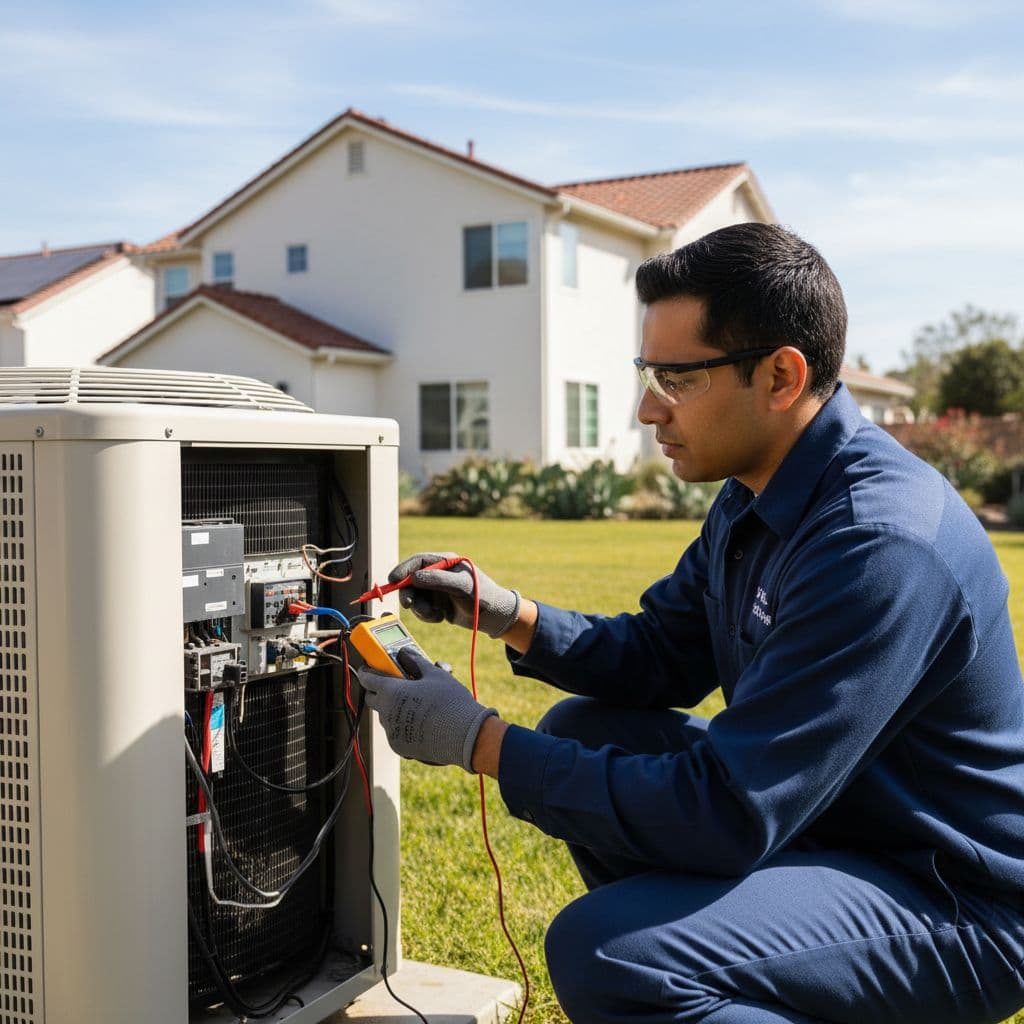
Avoid opening electrical panels on the condenser. Capacitors can hold a charge, even when the system is off. If the unit hums, clicks, or smells burnt, skip the DIY route and look for professional ac repair oceanside.
When a professional HVAC repair technician should take over
Some symptoms point to a repair that requires specialized tools, electrical testing, and high voltage safety procedures. A good rule is this: if the easy checks do not solve the problem, do not keep forcing the system to start. When the issue persists, rely on licensed technicians to investigate the root cause.
When the unit is getting power but still won’t start
Faulty capacitors are one of the most common reasons an outdoor AC unit will not turn on. The capacitor provides the necessary surge to help the fan motor and compressor start. When it weakens, the system may hum, click, or try to start and fail. Ignoring this component can eventually lead to permanent compressor failure.
The contactor is another common trouble spot. This part acts like a switch between the thermostat and the condenser. If it burns, sticks, or corrodes, the outdoor unit may never receive the signal to run. In Oceanside, salt air corrosion can accelerate both of these issues. Damage on electrical terminals and contact points may build slowly, then cause a total system failure on a hot day.
When the issue could damage the system
If the breaker trips each time the AC starts, the compressor or internal wiring may be at fault. That is not a trial and error problem. Repeated resets can strain parts and increase the eventual repair bill.
A professional diagnosis is much safer than DIY efforts when dealing with a complex HVAC system. A technician can accurately test voltage, capacitor strength, contactor function, motor draw, and system safety switches. This is critical because air conditioning and heating often share controls, power paths, and thermostat settings. A fault in one part of the HVAC system can affect more than just your cooling.
Call for service if you notice any of these signs:
- The outdoor unit is silent while the thermostat calls for cooling.
- The unit hums but the fan does not spin.
- You smell burning, see melted wire insulation, or hear loud buzzing.
- You notice unusual noises coming from the unit.
- The breaker trips again after one reset.
- Cooling comes and goes during the day.
For homeowners, the smart move is clear. Use safe checks for simple problems, then let a licensed HVAC pro handle the electrical diagnosis.
How to prevent repeat air conditioning shutdowns near the coast
Prevention matters more in Oceanside and throughout North County because the coastal environment is particularly hard on outdoor equipment. Salt, moisture, and windblown debris can shorten the life of exposed parts significantly.
Regular AC maintenance helps catch trouble before the hottest day of the season. Scheduling routine service not only protects your system but also lowers your monthly energy bills and ensures better cooling performance. During a standard tune-up, licensed technicians will verify the refrigerant levels to identify a potential refrigerant leak, inspect your ductwork leaks, and thoroughly clean your evaporator coils. A fall visit for heating is also useful, since the same thermostat and shared controls must remain reliable when cool weather arrives.
Homeowners can help between service visits. Replace filters on schedule, keep plants trimmed back, and keep the outdoor unit clear. Give the system breathing room so heat can effectively leave the coil instead of building up around it.
It also helps to pay attention to small warnings. Longer start times, weak cooling, or random breaker trips often show up before a full shutdown. Catching those early can turn a major repair into a simple service call.
For many homes, the best plan is basic and steady. Clean filters, a clear outdoor unit, and routine HVAC service go a long way in keeping your home comfortable year round.
Conclusion
When an outdoor condenser won’t start, begin with basic safety checks. Issues like incorrect thermostat settings, a dirty air filter, or drainage blockages can all prevent your system from running without any prior warning.
If the system still fails to activate, or if the breaker continues to trip, the problem has likely moved beyond a simple fix. In these instances, a professional can help you decide whether it is more cost-effective to repair or replace older equipment, ensuring you avoid a major breakdown. Preventing a minor fault from escalating protects your investment and keeps your home comfortable.
If your air conditioning isn’t turning on in Oceanside and the simple checks did not resolve the issue, we are here to help. We offer emergency service and same-day AC repairs for Oceanside residents to get your system back up and running fast. Book Online to schedule your appointment.
FAQ
Why is my outdoor AC unit not turning on while the indoor fan still works?
That usually means the thermostat is calling for cooling, but the outside unit cannot start. A failed capacitor, bad contactor, tripped disconnect, or corroded wiring are common causes. This is one of the most frequent hvac repair calls in Oceanside homes.
Can I reset my air conditioner myself?
You can reset the circuit breaker one time and check the thermostat settings. After that, stop if the breaker trips again or the unit hums without starting. Repeated resets can make an HVAC problem worse.
Does coastal air in Oceanside damage AC equipment?
Salt air can speed up corrosion on outdoor electrical parts and metal surfaces. That does not mean every unit will fail early, but it does mean routine service matters more near the coast than it might inland.
What is short-cycling and why does it matter?
Short-cycling occurs when your air conditioner turns on and off too frequently. This prevents the system from completing a full cooling cycle, which negatively impacts your home’s humidity control. If your system is turning on and off rapidly, you should contact a professional to prevent excessive wear on your equipment.
Should I have my heating checked if the cooling system has an electrical issue?
It depends on the problem, but it is often a good idea. Many heating and cooling systems share a thermostat, control wiring, and electrical components. A full HVAC check can catch related issues before the season changes.