

AC Clicking Noise in Oceanside Homes: What to Check First
My Guy is Proud to Be "Your Guy" for Your Home
An AC clicking noise in Oceanside homes can sound like a minor annoyance, but it is a symptom that should not be ignored. In many local residences, these sounds become noticeable on the first hot day when the system should be cooling your home without a fuss.
While a single click is a common part of the system startup process, repeated clicking sounds, blowing warm air, or an air conditioner that fails to start altogether points to a mechanical issue worth investigating early. A few safe DIY steps can help you distinguish between a simple reset and a deeper electrical fault before you decide to schedule professional AC repair.
Key Takeaways
- Distinguish Normal Startup from Trouble: A single click during system startup is typically normal, but persistent or repeating clicking, humming, or a failure to cool indicates an electrical or mechanical fault.
- Perform Safe Preliminary Checks: Before calling a technician, rule out simple issues like dead thermostat batteries, clogged air filters, blocked vents, or a tripped circuit breaker.
- Avoid Running a Faulty System: If your AC clicks repeatedly without starting or is accompanied by burning smells or buzzing, turn the system off immediately to prevent permanent damage to the compressor.
- Address Environmental Factors: Oceanside homes face unique challenges due to salt air, which can accelerate corrosion on electrical contacts, making regular maintenance essential for preventing premature system failures.
What an AC clicking noise in Oceanside usually means
A central air conditioning system makes a few normal sounds as it starts and stops. One click from the thermostat, followed by a click at the outdoor unit, often means the system is doing its job.
The concern starts when a persistent clicking noise keeps repeating, or when the sound comes with a delay, a hum, or no cooling at all. That pattern often points to a faulty contactor, a weak capacitor, a thermostat issue, or a loose electrical connection. In plain terms, the system is trying to turn on and cannot complete the cycle.
Where the sound comes from matters. If the clicking noise is near the thermostat, the issue may be weak batteries, a faulty control unit, or low-voltage wiring. If it comes from the outdoor unit, the problem may sit in the contactor or another control part inside the system. When the indoor unit clicks from the closet or attic, the air handler or furnace control board may be involved.
The same controls that manage air conditioning often work with your heating setup, too. That means a problem in one part of the HVAC system can affect the other side later.
If the unit clicks again and again without starting, shut it off and stop testing it. That sound often means an electrical part is trying and failing.
In Oceanside, this matters even more during warm spells. A system that struggles to start may keep pulling power while giving you less cooling. As a result, you get more wear, higher bills, and more stress on the compressor.
DIY checks before you call for AC repair
You can rule out a few simple problems without taking anything apart. Performing a regular maintenance check is the best way to prevent complex issues from developing. Keep these troubleshooting steps safe and simple. If the issue moves beyond the thermostat, filter, circuit breaker, or visible debris, it is time to contact a professional for reliable air conditioner service.
This quick chart helps you match the noise with the first safe check.
| Where the click happens | Common cause | Safe first step |
|---|---|---|
| Near the thermostat | Weak batteries or wrong setting | Replace batteries and confirm Cool mode |
| At the return grille or indoor closet | Dirty filter or poor airflow | Replace the filter and open blocked vents |
| Outside at the condenser | Debris, loose panel, or stuck contactor | Clear leaves and look for obvious loose screws |
| At the breaker panel | Power issue | Reset the circuit breaker once if it tripped |
| During short on-off cycles | Airflow problem or control fault | Turn the unit off if the filter change fails |
If the easy fix does not stop the clicking within one cooling cycle, move to a service call.
Start with the thermostat. Make sure it is set to Cool and the temperature is lower than the room temperature. If the screen looks dim or blank, replace the batteries first. A weak thermostat can click as it calls for cooling, yet fail to send a clean signal to the system.
Next, check the air filter. A clogged filter can choke airflow and make the system overheat or start short cycling. That does not create every clicking sound, but it can trigger odd starts and stops. If the filter looks gray, dusty, or packed with pet hair, replace it immediately.
Then walk through the house and look at the vents. Closed supply vents, blocked returns, or furniture pushed against grilles make the blower work harder than it should. Open the vents and clear the space around the return.
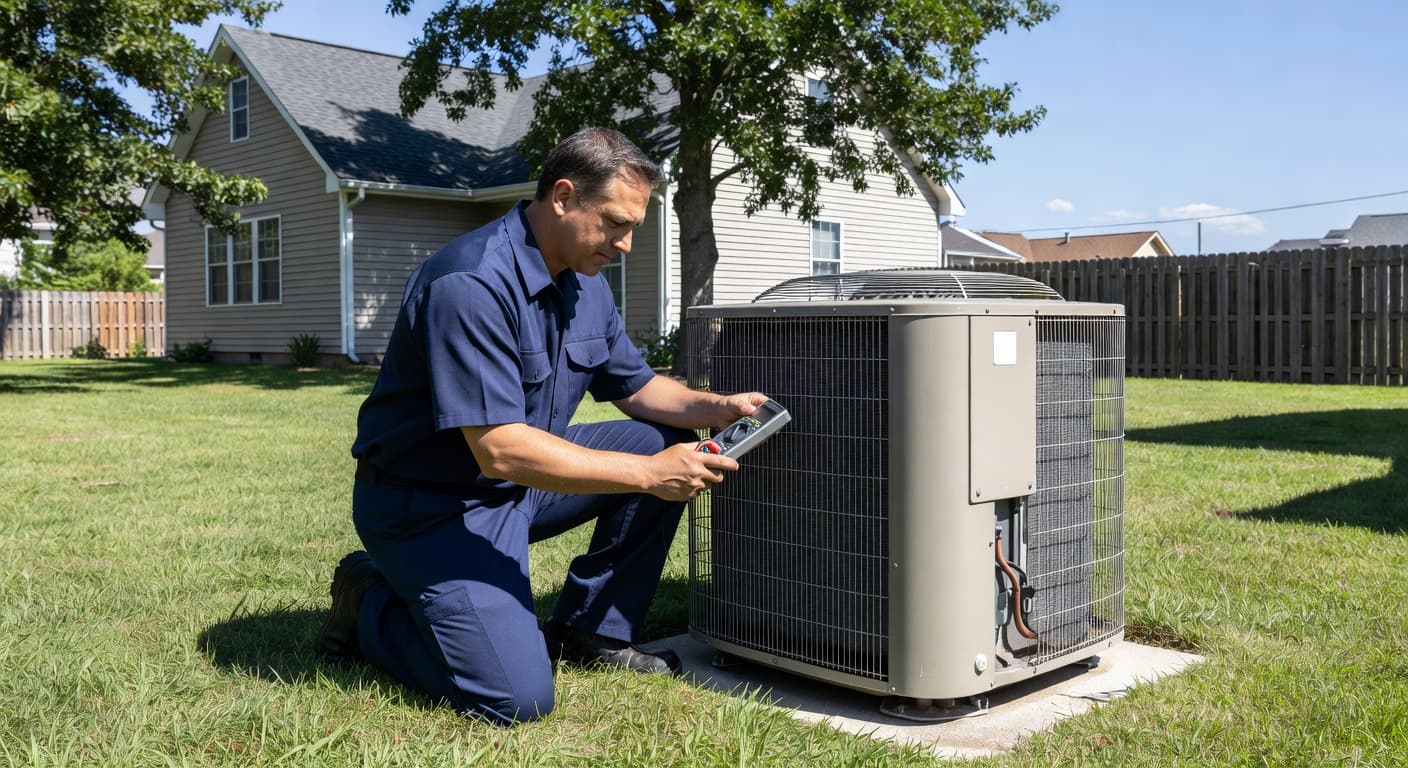
Outside, inspect the condenser from a safe distance. Remove leaves, grass, and yard waste around the unit. Check for debris near the fan blades or the fan motor, as these components need a clear path to operate correctly. A loose top panel or side panel can tap or click as the unit starts. If you can tighten an obvious exterior screw without opening the cabinet, that is fine. Leave the electrical compartment alone.
Finally, check the electrical panel. If the breaker has tripped halfway, reset it once. If it trips again, stop there. Repeated trips mean the issue is not a simple nuisance and requires an expert.
When the clicking means you need a technician soon
Some sounds cross the line from annoying to risky. Any abnormal clicking with no startup is a warning sign. So is clicking paired with a humming compressor, a loud buzzing sound, a fan that refuses to spin, a burning smell, or the AC shutting off abruptly.
If these symptoms occur, turn the system off at the thermostat. If the unit continues trying to start, shut off the breaker as well. Continued attempts to power up can overheat electrical parts and strain the compressor.
A professional repair is necessary because an HVAC technician will check complex components like the contactor, capacitor, control board, evaporator coil, and loose wiring. These parts are not safe for DIY repairs, as they carry stored electricity and high voltage even after the system stops running.
In many Oceanside homes, the trouble often stems from a faulty contactor. This part clicks because the magnet pulls in, but the contacts may be pitted or stuck. A weak capacitor can cause similar symptoms, where the unit tries to start, clicks, hums, and then gives up. Loose wiring can also cause intermittent clicking, which is one reason the problem may seem to come and go.
The indoor side matters, too. If the clicking comes from the air handler or furnace cabinet, the issue may involve the blower relay or control board. Since the same equipment often supports both cooling and heating, a full HVAC inspection makes more sense than treating the noise as a single, isolated part failure.
Why Oceanside systems often show this problem earlier
Coastal air is notoriously tough on outdoor equipment. Salt in the air accelerates corrosion on metal parts and electrical contacts, especially when the condenser sits near the beach or in a breezy yard. Over time, those corroded contact points can lead to loud noises as the system struggles to engage. These mechanical problems are a common side effect of our unique environment, and in some cases, a refrigerant leak can place additional strain on the system, leading to further audible signs of distress.
Oceanside homes also run cooling systems through long warm stretches. More run time means more starts, more stops, and more wear on internal controls. If you have a heat pump, the same system may handle winter heating as well. That keeps the contactor and other controls cycling throughout the year.
Many homeowners do not notice a failing component until the first heat wave hits. The AC may seem fine in mild weather, then start clicking once the demand rises and the system works harder to keep the home cool. Because of this, scheduling a professional maintenance check is the best way to avoid the early failure of a costly compressor. A yearly inspection of airflow, electrical connections, and coil condition often catches minor issues before they turn into a frustrating no-cool afternoon.
Simple upkeep helps between visits. Change the filter on schedule, keep the outdoor unit clear of debris, and pay attention when a sound changes. A single new click can be the first warning that your system needs professional attention.
Final thoughts
One clean click at startup can be normal. However, repeated clicking is different, especially when the system delays, hums, or fails to maintain your target temperature.
Start with the safe checks first, such as inspecting your thermostat, air filter, vents, circuit breaker, and outdoor debris. Monitor your unit through the next cooling cycle to see if the issue persists. If the clicking continues, professional repair is the smart next step, as technicians can quickly diagnose complex problems like short cycling or loose wiring.
If your system is still clicking after you have performed these basic checks, use Book Online to get it inspected before a small control issue turns into a full system breakdown.
FAQs
Is one click when my AC starts normal?
Yes, a single click during the system startup process is often normal. You may hear the thermostat engage the outdoor unit to begin cooling. As long as cold air follows and the system runs steadily, that sound is typically not a cause for concern.
Can a dirty filter cause clicking?
It can certainly contribute to the issue. A dirty filter restricts airflow, which frequently leads to short cycling or unnecessary stress on your equipment. While the click itself usually originates from a control component, restricted airflow often causes the underlying problem to appear much sooner.
Should I reset the circuit breaker if the AC is clicking?
You can attempt to reset the circuit breaker once if it is only partially tripped. However, if the switch trips again, stop immediately and contact a professional. A breaker that trips repeatedly usually indicates a significant electrical fault rather than a simple reset issue.
Why does my thermostat click, but the air conditioner does not turn on?
This behavior suggests that your thermostat is sending a signal for cooling, but the system is failing to respond. Common culprits include dead batteries, low voltage, a faulty contactor, or a failed capacitor.
Can I keep running my air conditioner if it keeps clicking?
If the clicking persists and the unit struggles to turn on, you should power it off immediately. Running the system while it is failing can cause severe wear on the compressor and significantly increase your repair costs. A proactive service visit is almost always more affordable than waiting for a complete system failure.
Does salt air affect air conditioning units in Oceanside?
Yes, it does. Salt air can corrode metal components and electrical contacts on your outdoor unit over time. This environmental factor is a primary reason why coastal homes benefit from consistent HVAC maintenance and immediate attention whenever an unusual sound occurs.