

Safe DIY AC Condenser Cleaning for Escondido Homes
My Guy is Proud to Be "Your Guy" for Your Home
A dirty outdoor AC unit can make your house feel hotter than it should, even when the thermostat says otherwise. In Escondido, dry weather, wind, and yard debris give your condenser plenty to collect.
Performing a careful AC condenser cleaning Escondido can help improve airflow and cooling performance. Still, the safe version of this job is gentler than many homeowners expect, and knowing where to stop matters as much as knowing where to start.
Key Takeaways
- Prioritize Safety: Always turn off power at the outdoor disconnect and the circuit breaker before beginning any maintenance to prevent electrical hazards.
- Use Gentle Techniques: Avoid pressure washers or harsh tools; use a gentle garden hose spray and manual removal to clear debris without bending delicate metal fins.
- Maintain Clearances: Keep a 2-foot breathing space around the condenser unit to ensure proper airflow and heat dissipation.
- Know When to Stop: Perform only light cleaning tasks and contact a professional for issues like electrical faults, refrigerant leaks, or internal mechanical failures.
Why Escondido condensers get dirty so fast
Your condenser is the outdoor part of the air conditioning system that releases heat from inside your home. When the metal condenser coils around that unit get packed with dust, leaves, and grass clippings, heat cannot escape as easily. Then the system runs longer, struggles in the afternoon, and may use more power.
Escondido homes deal with long cooling seasons, dry soil, and plenty of airborne debris. Even a tidy yard can send dust into the coil over time. Add shrubs, mulch, pet hair, or recent landscaping work, and the buildup gets worse.
Some homeowners rinse the top grille and call it done. The real trouble is usually on the coil surface, where thin fins trap dirt in a tight pattern. Proper coil cleaning is necessary because air still moves through them, but not enough for strong cooling when the day gets hot.
That strain does not always cause an instant breakdown. However, it can push the system harder than needed, and that extra stress is not great for the compressor or fan motor. You may notice longer run times, warmer rooms late in the day, or a jump in utility bills.
Outdoor maintenance is also different from regular filter replacement. Both jobs matter. A clean filter helps indoor airflow, while a clean condenser helps the system dump heat outside. Good HVAC upkeep includes both, as it boosts energy efficiency and restores cooling efficiency for a more comfortable home throughout the year.
Get ready before you start a DIY cleaning
Start with the thermostat. Switch it to “off” so the system won’t kick on while you’re working. Then shut off power at the outdoor disconnect box. If you’re not sure the unit is fully off, turn off the matching breaker too.
Turn off power before you remove a panel or reach near the fan.
Pick a cooler part of the day if you can. Early morning is easier than standing next to a hot metal cabinet in direct sun. Also keep kids and pets away from the area until the job is finished and the unit is back together.
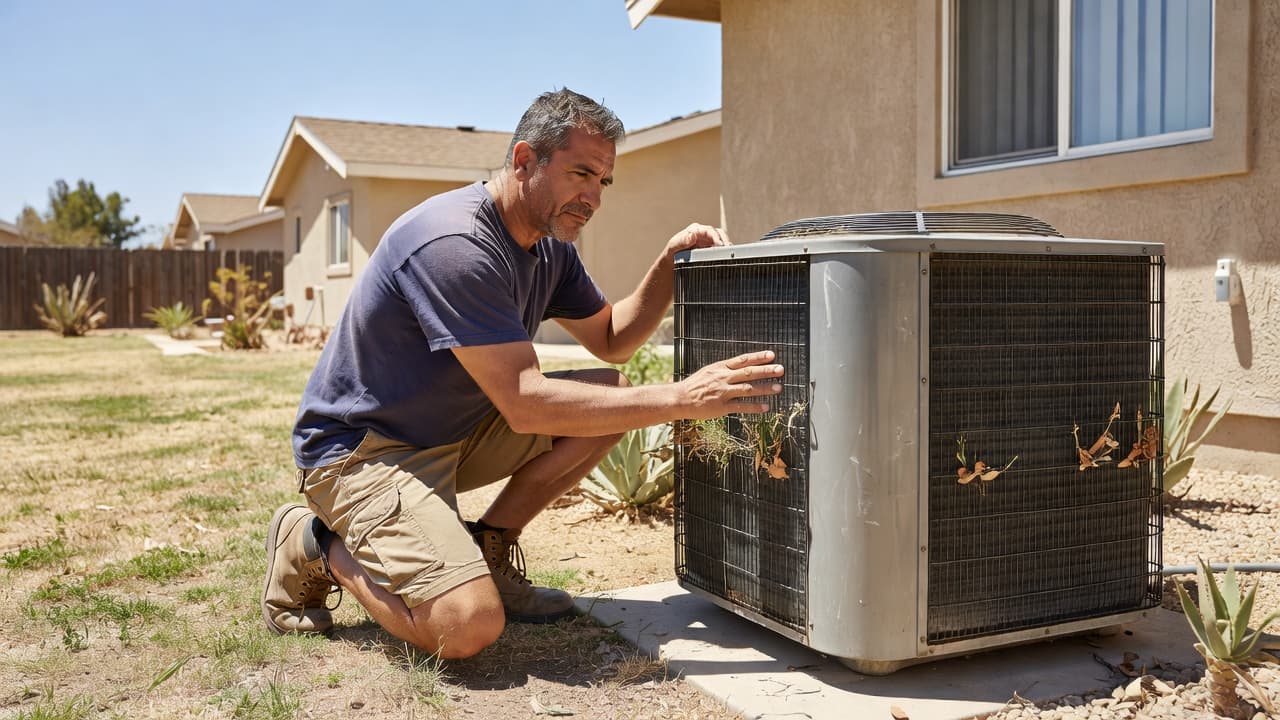
Now clear the space around the condenser. Perform regular debris removal, move patio items, and trim plants so there is open room around the cabinet. About 2 feet of breathing space is a good target for most homes. Better clearance helps improve airflow, ensuring the air conditioning unit performs efficiently after you have finished your HVAC maintenance services.
For most DIY jobs, the tool list stays short. Work gloves, closed-toe shoes, a garden hose with a gentle spray, and a basic screwdriver are enough. Skip pressure washers, stiff wire brushes, and harsh cleaners unless the unit manual clearly allows them.
Take a good look before you touch anything else. If you see chewed insulation, insect nests inside the cabinet, oil marks, broken panels, or badly crushed fins, stop there. Those signs point to professional AC repair Escondido or professional HVAC service, not a simple homeowner rinse.
If you plan to lift the top grille, take a quick photo first. That makes reassembly easier. Still, don’t open any access panel that exposes wiring or electrical parts. Safe AC condenser cleaning in Escondido homes should stay on the visible, low-risk side of the unit.
How to clean the condenser without damaging it
The goal is simple: remove loose debris and perform a thorough coil cleaning by washing the fins gently enough to ensure they stay straight. A condenser does not need brute force. In fact, too much pressure can create the damage you are trying to prevent, hindering your HVAC system performance.
Most homeowners can handle a light cleaning by following these steps:
- Remove loose debris from the base and outer cabinet with gloved hands.
- Vacuum or sweep around the pad, but keep hard attachments away from the fins.
- If the top grille lifts easily and the fan wires have slack, set it down carefully nearby.
- If the grille does not lift easily, leave it in place and clean from the outside only.
- Spray the fins with low-pressure water, working from top to bottom.
- If inside access is safe and easy, rinse from the inside out for a better flush.
- Keep the hose nozzle several inches back so the water stays soft and wide.
- Let the unit drain, reassemble every panel, then restore power after 15 to 30 minutes.
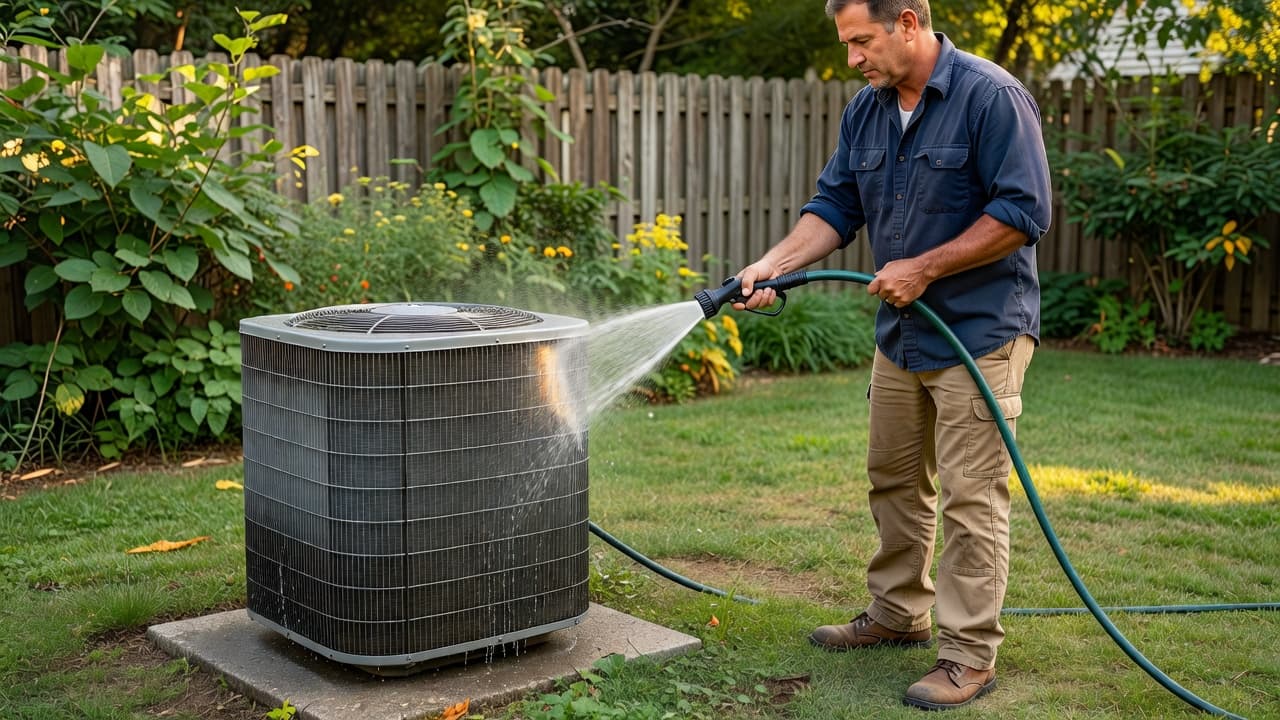
A few details make a big difference. Never aim a narrow jet straight into the fins. Those thin aluminum blades bend fast, and once they fold over, airflow is restricted, which reduces your energy efficiency. If only a few fins are bent, leave them alone unless you have the correct fin comb and know how to use it.
Avoid soaking the disconnect box or any wiring area. Also, do not rest the fan assembly upside down on its wires if you remove the top. Set it gently to the side, and do not pull or twist anything to make it fit.
After you turn the system back on, give it a little time. The outdoor fan should spin smoothly, and the process of restoring cooling efficiency should be noticeable as indoor air begins to feel cooler within a normal cycle. A clean condenser can help, but it will not fix every cooling problem.
If the house still will not cool well, the issue may be elsewhere. A clogged indoor filter, low refrigerant, a weak capacitor, a failing fan motor, or duct leaks can all look like a dirty condenser at first. DIY cleaning is helpful, but it has limits.
When you need AC repair, not more cleaning
Some warning signs indicate that your unit requires professional AC repair in Escondido rather than a simple DIY cleaning. If the unit hums but will not start, trips the breaker, blows warm air, or clicks repeatedly, stop testing it. Repeated resets will not solve an electrical fault and could cause further damage.
Contact a professional if you notice a frozen coil, smell something burning, or see the fan blade wobbling. These symptoms point to deeper mechanical trouble beyond dirty exterior coils. The same applies if you notice loud buzzing, damaged wiring, or if your cooling performance remains poor shortly after you finish a cleaning.
Licensed technicians are the only ones who should handle sensitive components. They are trained to inspect electrical capacitors, contactors, wiring, and refrigerant levels, which are critical for system performance. A professional service visit can also uncover internal issues like dirty evaporator coils, restricted air duct cleaning needs, or poor indoor air quality caused by airflow blockages.
Year-round care significantly improves your system lifespan. Your summer cooling check and fall heating service work together to ensure efficiency, especially if your home uses a heat pump. Well-maintained equipment, steady airflow, and timely repairs put less stress on your entire HVAC system.
This advice is essential for homeowners throughout Escondido and nearby North County communities. Keep your DIY efforts limited to basic exterior cleaning, clearing debris, and simple visual checks. Once the task involves electrical components, sealed parts, or recurring performance issues, scheduling a professional cleaning is the safer and more cost-effective move.
A simple cleaning goes a long way
The smartest DIY rule is easy to remember: clear the area, cut the power, and use gentle water rather than high pressure. That kind of careful cleaning helps your condenser breathe again without putting you or your system at risk.
If your cooling performance still feels subpar after a thorough cleaning, don’t wait for the next heatwave to force the issue. A professional AC tune-up is often the next logical step to ensure your system is running at peak efficiency. To guarantee consistent comfort throughout the year, many homeowners find that enrolling in a professional maintenance plan provides the best long-term care for their equipment. You can Book Online for expert air conditioning and heating help whenever the job goes beyond safe DIY tasks.
FAQs
How often should I clean my outdoor condenser in Escondido?
A light cleaning once each spring is a smart baseline. If your yard is dusty, you have pets, nearby landscaping, or a lot of wind-blown debris, check it again in mid-summer. A quick visual check every month during the cooling season helps you catch buildup early, serving as an essential part of your proactive HVAC maintenance services to keep your unit running efficiently.
Can I use a pressure washer on the condenser?
No. Pressure washers can flatten delicate cooling fins and drive water into sensitive electrical components where it does not belong. A garden hose with a soft, wide spray is the safer choice for DIY condenser cleaning, whereas professional cleaning uses specialized tools and non-corrosive chemicals to safely reach deep into the coil.
Will cleaning the condenser lower my electric bill?
It can, if dirt on the coil is making the system run longer than needed. Better airflow helps the unit shed heat more easily. Still, cleaning will not fix high bills caused by low refrigerant, duct leaks, an old system, or other AC repair needs. If you are managing a business property, be aware that commercial coil cleaning is often required more frequently to handle the heavier workload of larger systems.
Is DIY condenser cleaning the same as a full HVAC tune-up?
No. DIY cleaning only covers the outdoor unit and the space around it. A full HVAC tune-up checks electrical parts, refrigerant performance, airflow, controls, and other items that impact your overall HVAC system performance. Many homeowners also choose to pair their seasonal tune-up with professional air duct cleaning to ensure the best indoor air quality and efficiency throughout the home.