

Furnace Short Cycling in San Marcos Homes: DIY Checks
My Guy is Proud to Be "Your Guy" for Your Home
A furnace that starts, runs for a minute or two, then shuts off can leave your house feeling colder than a system that never kicked on at all. In many residences, furnace short cycling San Marcos homeowners experience points to an issue that requires immediate attention.
This common form of furnace short cycling wastes fuel, adds unnecessary wear to key components, and often pushes energy bills higher than expected. It can also make mornings feel quite uncomfortable, as rooms never receive enough steady heating to maintain a consistent temperature.
Before you assume your heating system is failing, check the simple things first. The timing of those short bursts often provides valuable clues about the underlying cause.
Key Takeaways
- Recognize the pattern: Short cycling occurs when a furnace repeatedly starts and stops in short, inefficient bursts, which increases energy bills and puts unnecessary strain on critical components.
- Prioritize airflow: The most common cause of rapid cycling is restricted airflow, which triggers safety switches; always start by checking for clogged air filters, closed vents, and blocked return grilles.
- Troubleshoot safely: Before calling a pro, perform simple DIY checks like replacing filters, verifying thermostat settings, and checking for external vent obstructions, but never ignore safety warning signs like gas odors or carbon monoxide alarms.
- Know when to call a professional: If basic maintenance does not resolve the issue, professional diagnosis is required to address internal failures like faulty flame sensors, broken limit switches, or incorrect furnace sizing.
What furnace short cycling looks like in a San Marcos home
A normal heating cycle usually lasts long enough to raise the room temperature in a steady way. If your system shuts down after only a few minutes, only to start again shortly after, you are likely dealing with furnace short cycling. This frequent start-stop behavior, often called rapid cycling, indicates that something is off within your system.
You might notice warm air for a moment, followed by cool air from the vents while the house still feels chilly. Some homeowners hear the furnace click on over and over, especially in the early morning. Others spot the problem on the thermostat, because the set temperature never seems to stick.
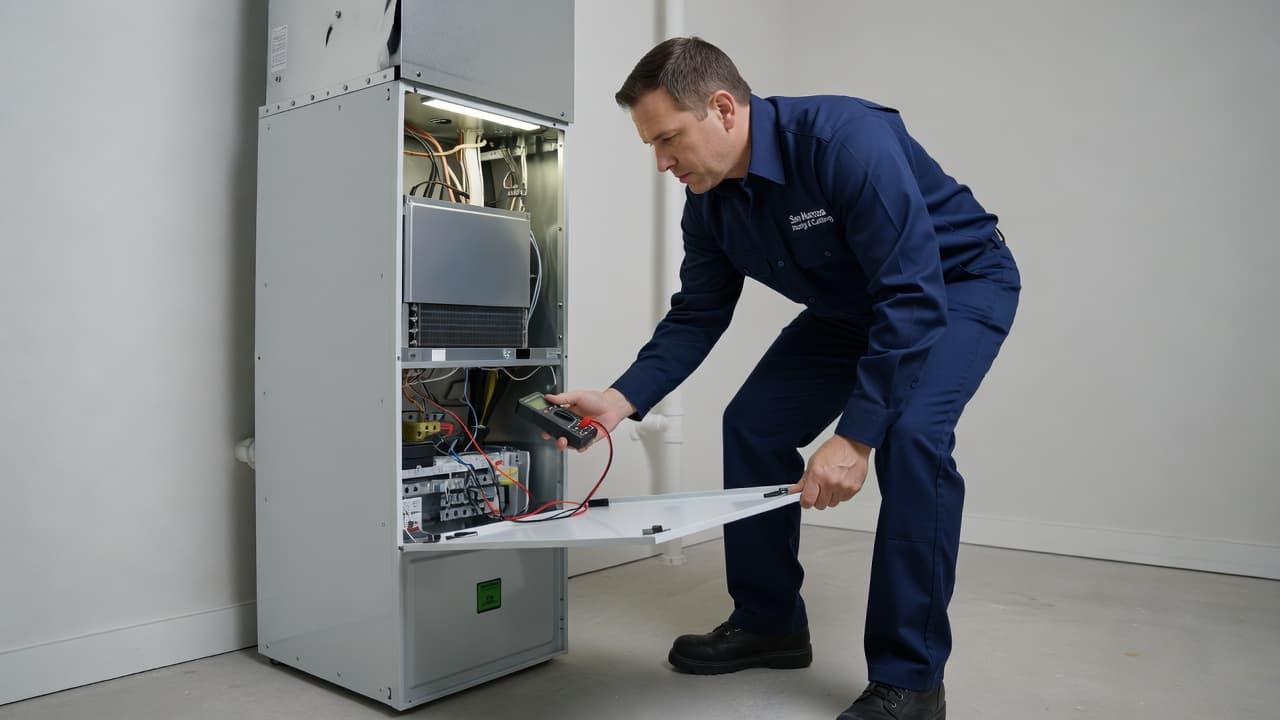
This is not only a comfort issue. Every time the furnace starts, the igniter, blower, and control board go through another cycle. More starts usually mean more strain on your equipment. Over time, that can turn a small airflow issue into a situation where you need to call a professional HVAC technician, as neglecting these symptoms often leads to a costly furnace repair.
San Marcos weather can make the problem easy to miss at first. A cool morning may call for heat, but a mild afternoon can hide the symptom for hours. By the time you realize the house still feels uneven, the furnace may have been short cycling all day.
Watch for these clues:
| Sign you notice | What it often means |
|---|---|
| Furnace runs 1 to 3 minutes | The system may be overheating or losing flame signal |
| Rooms heat unevenly | Airflow or thermostat trouble may be involved |
| Utility bills climb | Repeated starts burn more fuel |
| Furnace restarts quickly | The thermostat still wants heat, but the unit keeps shutting down |
The pattern matters. A furnace that never stays on long enough to do its job is telling you something, even if it still produces heat.
Why short cycling happens
The most common cause of furnace short cycling is restricted airflow, which leads to rapid overheating within the system. When a furnace cannot move enough air across the heat exchanger, internal temperatures rise too quickly, triggering a safety switch that shuts the system down to prevent damage.
A clogged air filter is the most frequent culprit behind this chain reaction. Closed supply vents, blocked return grilles, or furniture pushed against returns can also create this bottleneck. In these cases, the furnace generates heat, but the home does not allow that heat to circulate properly.
Thermostat issues are another frequent cause. If your thermostat placement is poor, such as being located near a sunny window, a warm lamp, or a supply vent, it can register a false temperature reading and turn the furnace off prematurely. Furthermore, low batteries or loose wiring can lead to erratic cycling.
Some causes are more complex and difficult to diagnose. A dirty flame sensor may fail to confirm that the burners remain lit, or a malfunctioning limit switch might trip before the heating cycle is complete. Venting problems, pressure switch faults, or an oversized furnace can also lead to the frustration of repeated short runs.
This guide helps you separate simple home fixes from technical issues that require professional attention:
| Common cause | What you may notice | DIY or pro? |
|---|---|---|
| Clogged air filter | Furnace gets hot fast, airflow feels weak | DIY |
| Blocked returns or closed vents | Some rooms feel stuffy while others are cold | DIY |
| Poor thermostat placement | Odd temperature swings or incorrect readings | DIY first |
| Dirty flame sensor | Unit starts, then shuts off almost immediately | Pro |
| Faulty limit switch | System cycle ends abruptly | Pro |
| Oversized furnace | Short cycles occurring since initial installation | Pro |
If your furnace keeps shutting down early, do not keep raising the thermostat. That often adds unnecessary strain to the heat exchanger without fixing the root cause.
DIY checks you can try before calling for furnace repair
Start with safety. If you smell gas, see soot around the furnace, or hear your carbon monoxide alarm, turn the system off and get help right away.
If there are no safety warnings, move through these simple furnace troubleshooting steps in order.
- Check the thermostat settings. Make sure it is set to heat and the fan is on auto, not on. If it uses batteries, replace them. Then raise the set temperature a few degrees and watch one full cycle.
- Inspect the air filter. If it looks gray, packed with dust, or bent out of shape, replace the clogged air filter. Dealing with dirty air filters is the most common DIY fix for furnace short cycling in San Marcos homes.
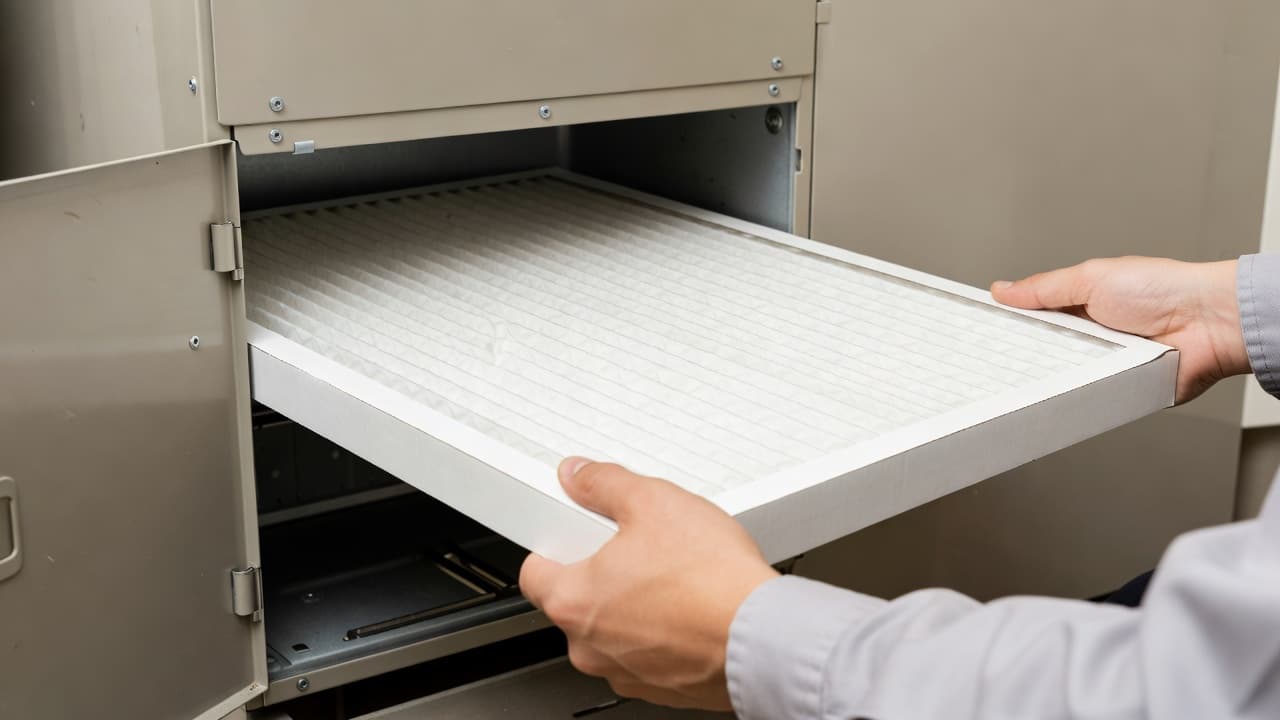
3. Open air vents and clear returns. Walk room to room and check supply registers. Then make sure return grilles are not covered by rugs, boxes, or furniture. A furnace needs free airflow on both sides to operate efficiently. 4. Look at the furnace area. Keep storage, laundry, and dust away from the cabinet. For high-efficiency units, glance outside at the vent pipes and clear away leaves or debris if you can do it safely. 5. Try one reset only. If the furnace locked out after repeated failures, turning power off at the service switch for about 30 seconds may reset the board. Do this once, then observe. Repeated resets only hide the real issue. 6. Watch the startup sequence. Listen for the thermostat click, the blower motor start, and the burner ignition. If the flame starts but the unit shuts down almost at once, that often points to a faulty flame sensor or other control problems.
These checks work because many heating problems start with basic airflow or control issues. The same filter that makes a furnace overheat can also hurt air conditioning performance in summer. If you have had weak cooling, poor airflow, or recent ac repair concerns, the whole HVAC system may need a closer look as part of your annual maintenance.
A clean filter and correct thermostat setting solve more service calls than most homeowners expect. Still, if your system continues experiencing furnace short cycling after these steps, the problem likely sits deep inside the unit or within the duct system.
When short cycling points to a bigger HVAC problem
Persistent furnace short cycling usually means your heating system needs a professional diagnosis. An HVAC technician may test the limit switch, clean and measure the flame sensor, check blower speed, inspect venting, and confirm a safe temperature rise across the system. They will also look for a cracked heat exchanger, which is a serious safety concern because it poses a risk of carbon monoxide exposure.
Sometimes the root problem involves more than just the furnace. Undersized return ducts, dirty evaporator coils, or blower issues can choke airflow through a shared HVAC system. This is critical because your furnace and air conditioning equipment rely on many of the same pathways to function efficiently.
Older San Marcos homes, and properties with later additions, are often more prone to airflow imbalances. A room added over time may receive a supply vent but not enough return air. The heating system then works harder, heats up faster, and shuts down sooner than it should.
A brand-new unit can also struggle with these issues. If a furnace installation results in a unit that is too large for the square footage of the home, it may heat the area around the thermostat too quickly and switch off before the rest of the house reaches the desired temperature. In that case, simple adjustments will not solve the fundamental sizing issue.
Shut the system off right away if you smell gas, see black soot, or your carbon monoxide alarm goes off.
If the basic DIY checks do not resolve the issue, you likely need professional San Marcos furnace repair, rather than another thermostat adjustment.
Final thoughts
Furnace short cycling is more than just a minor household nuisance. It typically indicates that your heating system is overheating, losing its flame signal, or receiving incorrect data from the thermostat. Whether you rely on a gas furnace or an electric unit, delicate safety sensors are often what trigger the immediate shutdown to prevent damage.
Start with the safe, simple tasks, especially checking your air filter, registers, and thermostat settings. If those steps do not stop the pattern, a professional heating diagnosis is the smart next step to protect your equipment.
If your unit still shuts off too soon, Book Online and get the issue checked before the repeated stress of furnace short cycling leads to excessive wear or a total system failure.
FAQs
Can a dirty filter really cause short cycling?
Yes. A clogged air filter restricts airflow, which can cause your furnace to overheat. When that happens, the high-limit safety switch shuts the burners down early to protect the unit. After the system cools, it tries to restart. Regularly replacing dirty air filters is one of the most effective ways to prevent this cycle from repeating.
How long should a furnace cycle normally last?
There is no single perfect number, as factors like outdoor temperature, insulation, and thermostat settings all play a role. However, a healthy heating cycle typically runs long enough to warm the home steadily. If your heating cycle lasts only a minute or two before turning off, it is a clear warning sign of a mechanical issue.
Is short cycling bad for the furnace?
Yes. Frequent starts put extra wear on the igniter, blower motor, and control board. It also leads to higher energy bills because the system never settles into an efficient run. If your heating system is constantly cycling on and off, it is time to contact a professional for furnace repair to avoid further damage to the internal components.
Should I keep adjusting the thermostat if the house feels cold?
No. Repeatedly raising the thermostat will not fix short cycling. It often causes the furnace to work harder while the underlying problem remains unresolved.
Can the same issue affect cooling later on?
Often, yes. Airflow problems in a shared HVAC system can hurt both heating and cooling performance. A clogged filter, weak blower performance, or blocked return vents can show up during the winter months first, then lead to air conditioning complaints when warm weather returns.