

Managing High Indoor Humidity in Escondido: AC DIY Checks
My Guy is Proud to Be "Your Guy" for Your Home
When your house feels sticky even with the air conditioner running, your comfort levels drop fast. Dealing with high indoor humidity in Escondido can make a cool room feel warm, heavy, and difficult to sleep in.
For many local homeowners, the cause is not just the weather. Your air conditioning system might be short cycling, moving air poorly, or failing to remove enough moisture, which directly impacts your indoor air quality and the comfort of the air your family breathes. Start with these safe DIY checks to address the problem, then decide if it is time to call for professional HVAC help.
Key Takeaways
- Recognize the signs of humidity: A cool house that feels clammy, persistent musty odors, or condensation on vents are clear indicators that your AC is failing to dehumidify effectively.
- Perform simple DIY maintenance: You can often improve moisture removal by switching your thermostat fan setting to ‘AUTO,’ replacing a clogged air filter, and ensuring supply and return vents are clear of obstructions.
- Monitor your system’s performance: If your unit short-cycles or runs constantly without reducing indoor moisture, it may be incorrectly sized or experiencing airflow issues that prevent the evaporator coil from doing its job.
- Know when to call a pro: Persistent high humidity, visible ice on lines, or weak airflow require a professional HVAC technician to address deeper problems like refrigerant leaks, duct issues, or damaged internal components.
Why humidity gets worse even with the AC on
Your air conditioner cools and dehumidifies at the same time, but only when it runs the right way. Warm indoor air passes over a cold evaporator coil, which allows for proper airflow so that moisture levels can be reduced as water collects on the coil and drains away.
Trouble starts when the cycle is too short. An oversized unit can cool the thermostat fast and shut off before it pulls enough water from the air. That leaves the house cool, yet clammy.
The thermostat fan setting can make it worse. When the fan is set to ON, it keeps blowing between cooling cycles. Some of the moisture sitting on the coil can go back into the air. In many homes, switching the fan to AUTO helps right away.
Short cycling can also happen when afternoon sun hits the thermostat wall or supply air blows straight onto it. Then the thermostat satisfies too soon while back rooms stay damp. In older homes across San Diego County, return leaks, poor ventilation, and thin attic insulation can add to the temperature swing.
Escondido homes can still deal with high indoor humidity even though inland air often feels dry. Morning marine air drifts inland, people cook and shower, and tight windows hold moisture inside. In coastal areas such as Carlsbad and Oceanside, the issue feels stronger because the relative humidity starts at a higher baseline.
If your home feels cool but damp, the system may be lowering temperature without removing enough moisture.
Air leaks matter too. A leaky return duct can pull humid attic or garage air into the system. A clogged filter or dirty coil can slow airflow, which hurts dehumidification. The result is the same: a lower temperature and poorer comfort.
Signs your AC is tied to the humidity
You can often spot an air conditioning humidity problem without special tools. The clues show up in the way the home feels, smells, and cycles through the day.
- Bedroom sheets feel damp or cool in a clammy way at night.
- Supply vents blow air, but rooms still feel muggy.
- Windows or metal vent grilles collect light condensation.
- A musty smell appears soon after the system starts, which may signal the growth of mold and mildew.
- Humidity feels worse when the thermostat fan stays on all day.
A hygrometer can confirm what your skin already notices by accurately tracking moisture levels in your home. If indoor humidity sits above 60% for long periods, comfort drops and the risk of damage to your home increases.
Take readings in the late morning and again in the evening. If numbers climb after showers, cooking, or laundry, indoor moisture loads are part of the story. If they rise every time the AC fan runs, the cooling system is playing a bigger role.
Still, not every moisture problem is an HVAC problem. Water stains under a sink, a wet wall, or dampness in one room may point to plumbing or roof leaks, and you should always check for hidden mold that may be thriving behind these areas. A bathroom that always stays damp may need better exhaust. When the whole house feels sticky, the cooling system is a stronger suspect.
This is why homeowners in Vista, San Marcos, and Fallbrook sometimes report cold air, bad comfort. The AC is cooling, but it is not drying the air enough.
DIY AC checks homeowners can do safely
Start with the easy items. These checks will not fix every cause of high indoor humidity in Escondido homes, but they can rule out common issues quickly. Stay with visual checks and simple maintenance only. Leave electrical work, sealed panels, and refrigerant issues to a trained technician.
- Set the fan to AUTO. If the fan is on “ON,” switch it to “AUTO” and give the system a day. This lets water drain off the indoor coil instead of blowing moisture back into your rooms.
- Check the air filter. Pull the filter and hold it up to the light. If it looks gray, packed, or hard to see through, replace it. A dirty filter restricts airflow, which prevents the evaporator coil from effectively removing moisture from the air.
- Open blocked supply vents and clear return grilles. Closed vents do not save money, and they can negatively impact airflow throughout the house. Move rugs, furniture, and curtains away from return grilles so the system can pull air evenly from every room.
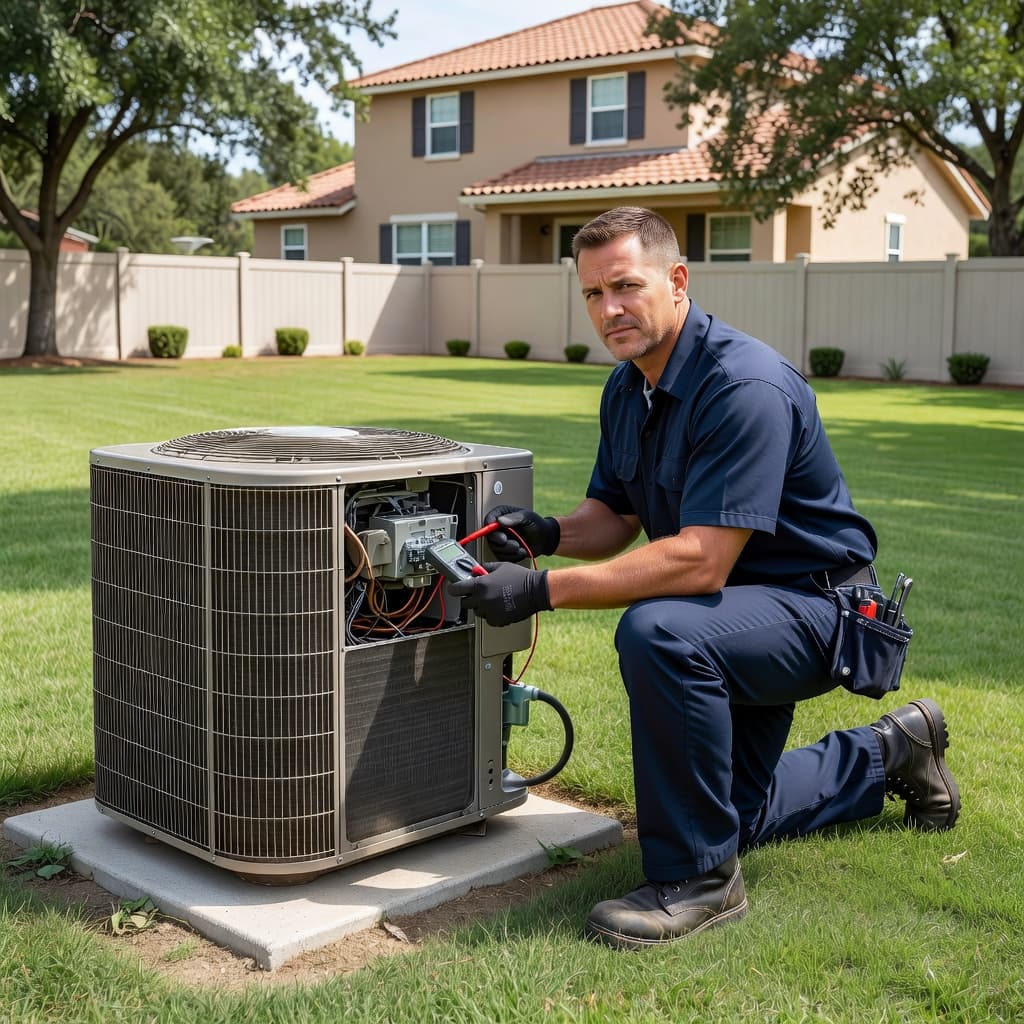
4. Watch how long the system runs. A healthy HVAC system usually needs more than a few minutes to cool and dry the house. If it blasts on, shuts off fast, and repeats, the unit may be oversized or the thermostat may be in a poor spot. Short cycles also leave less time for the coil to collect water. 5. Look for simple drainage problems. If your indoor unit is in a closet or garage, check for water around it. A clogged condensate drain can stop moisture from leaving the system. If you spot algae or slime near the drain outlet, mention it during your next service visit. Do not open sealed panels or handle electrical wiring. 6. Check the outdoor unit and the house around it. Leaves, weeds, and stored items can crowd the condenser. Keep the area clear so heat can leave the system. Indoors, use exhaust fans during showers and run the range hood when cooking, because daily moisture loads add up quickly. 7. Measure humidity in two or three rooms. Using a hygrometer can tell you whether the problem is whole house or limited to one area. These digital sensors are inexpensive and much more helpful than guessing. Write down the reading, thermostat setting, and time of day. Those notes provide valuable data if you need to schedule AC repair later.
If the air feels better after these steps, keep watching the pattern for a week. If nothing changes, the issue is likely deeper than a DIY fix.
When high humidity points to AC repair
Some problems require specialized tools and professional training. If humidity levels remain high after you perform basic checks, your system likely requires professional ac repair or a comprehensive HVAC inspection.
Low refrigerant, a dirty evaporator coil, or the wrong blower speed can significantly reduce moisture removal. Furthermore, leaking ducts can pull humid, untreated air into the system. An oversized air conditioner can also cool the house too fast, which is a common issue in homes where equipment was replaced without an accurate load calculation.
It is important to watch for signs that require expert attention, such as weak airflow, warm supply air, ice on the refrigerant line, recurring drain issues, or a system that runs almost nonstop. These symptoms do not resolve on their own. In time, they can lead to skyrocketing power bills and premature compressor failure. Furthermore, persistent moisture is a serious concern because it fosters the growth of indoor pollutants and VOCs. If left unaddressed, this damp environment can trigger asthma and allergies or exacerbate existing respiratory issues for your family.
Some homes need more than standard cooling to maintain comfort. If the moisture load remains high because of leaky ducts, aging windows, or excessive indoor moisture, a technician may suggest duct sealing, airflow adjustments, or installing a whole-home dehumidifier. If you notice signs of structural damage throughout your home, you may even need professional testing and mold remediation services. A service visit can help distinguish between complex HVAC issues, hidden plumbing leaks, or poor attic ventilation.
The same airflow trouble that prevents proper cooling can also hurt heating performance in winter. If one side of the system struggles, the rest often follows. A qualified technician can evaluate your air conditioning, refrigerant charge, drain function, thermostat settings, and duct condition during a single visit.
For homeowners in Escondido and nearby cities, including Vista, San Marcos, Carlsbad, Oceanside, and Fallbrook, the goal is simple: dry, steady comfort. Your system should effectively cool the home and remove excess moisture, rather than leaving rooms feeling cold and clammy.
A cooler house should not feel damp
When indoor air feels sticky, start with the basics. Checking your fan mode, filter condition, airflow, drainage, and system run time can reveal a lot about your home environment without needing a professional toolkit. Proper moisture control is essential for your comfort, as it prevents that heavy, damp feeling while significantly improving your overall indoor air quality.
If those initial checks point to a persistent system issue, professional HVAC service is the next move. You can Book Online for expert help with persistent humidity, general air conditioning performance, or professional AC repair. A dry home feels cooler, cleaner, and much more comfortable for your family.
FAQs
Why does my house feel humid when the AC is running?
The system may be cooling the air without running long enough to remove much moisture. An oversized unit, poor airflow, dirty filter, or fan set to “ON” can all cause that damp feeling.
Is AUTO better than ON for the thermostat fan?
In many humid homes, yes. AUTO lets the fan run only during a cooling cycle, so water can drain off the indoor coil. ON keeps air moving all the time and can push some moisture back into the house.
Can a dirty filter raise indoor humidity?
Yes, it can. Low airflow keeps the evaporator coil from removing moisture well. A packed filter can also make the system work harder, which hurts comfort and may lead to more repair issues, such as the growth of mold spores on damp coils or within your ductwork.
Is high indoor humidity common in Escondido?
It can be. Even inland homes deal with moisture from showers, cooking, laundry, air leaks, and seasonal marine air. Proper ventilation is essential for keeping indoor moisture in check, regardless of the external weather conditions. While coastal cities like Oceanside and Carlsbad often feel humidity sooner, Escondido homes are not immune.
When should I stop DIY checks and call for help?
Call if humidity stays high after basic checks, if you see ice or water around the unit, or if airflow is weak. Those signs point to a system fault that needs proper HVAC testing, not guesswork.