

AC Power Outage: What Escondido Homes Should Check
My Guy is Proud to Be "Your Guy" for Your Home
The power comes back on, but your air conditioner stays silent. For residents dealing with an AC power outage in Escondido, that silence can feel worse than the outage itself, especially during a sweltering afternoon.
While SDG&E power restoration is the essential first step for homeowners throughout San Diego County, it is not always the end of your utility troubles. Most post-outage air conditioning problems start with something simple, such as a tripped breaker or a built-in system delay. Still, some issues point to a more significant HVAC problem that requires fast professional attention. If you are struggling with a cooling system that will not start, these checks can help you figure out exactly what to do next.
Key Takeaways
- Perform Simple Checks First: Before assuming a mechanical failure, verify your thermostat settings, check for tripped breakers, and ensure your system is not simply in a built-in restart delay following a power restoration.
- Use Safe Reset Procedures: When troubleshooting, follow a systematic approach: turn the thermostat off, reset the appropriate breakers, wait at least five minutes for pressure to equalize, and then restart the system.
- Recognize Signs of Damage: If your system exhibits repeated breaker trips, smells of burning, or makes unusual clicking sounds, avoid further reset attempts, as these are indicators of electrical or component damage that require professional repair.
- Prioritize Future Protection: Protect your HVAC investment by installing surge protectors and scheduling regular maintenance to identify weak components that are most vulnerable to power fluctuations during an SDG&E outage.
Start with the simple checks inside your home
Begin at the thermostat. Make sure it is set to cool and the temperature is lower than the room temperature. If the screen is blank, replace the batteries if your model uses them.
Next, check your electrical panel. For your own public safety, always ensure your hands are dry and you are standing on a dry surface before touching any breakers. Many systems use more than one breaker. The outdoor condenser may have one breaker, while the indoor furnace or air handler has another. After a North County power outage, one breaker can trip while the other stays on, which leaves part of the system working and part of it dead.
Also look for the indoor power switch near the furnace or air handler. It often looks like a light switch, and it can get bumped by mistake. If your system has a condensate safety switch, a full drain pan can also shut cooling off, even though the thermostat still looks normal.
This quick chart can help narrow it down.
| What you notice | Likely cause | Safe first check |
|---|---|---|
| Thermostat is blank | Breaker off or dead batteries | Reset breaker once, replace batteries |
| Indoor fan runs, outdoor unit is off | Condenser lost power | Check outdoor breaker or disconnect |
| System clicks but doesn’t start | Safety delay or control issue | Wait 5 to 10 minutes |
| Breaker trips again | Electrical fault | Stop and call for service |
If your home has central heating and cooling, remember that the cooling side still depends on indoor components. A furnace control board, blower, or low-voltage fuse can keep the whole air conditioning system from starting.
Give the system a few minutes before assuming it failed. Many units have a built-in delay after power returns.
The same first checks apply whether you live in Escondido, Vista, San Marcos, Carlsbad, Oceanside, or Fallbrook. Start simple, then move to the reset steps if everything looks normal but the system still won’t run.
Safe DIY steps to reset your AC after a power outage
Before you begin any troubleshooting, it is important to verify that the power supply to your neighborhood is fully stable. You should check outage status updates with San Diego Gas & Electric to confirm that service has been fully restored. Reviewing current outage information helps rule out lingering grid fluctuations that could cause your system to cycle improperly if you attempt a reset too soon.
If the thermostat is on and the breakers look normal, a basic reset may bring the system back. Keep it simple and stay on the safe side. You should not remove access panels or touch wiring.
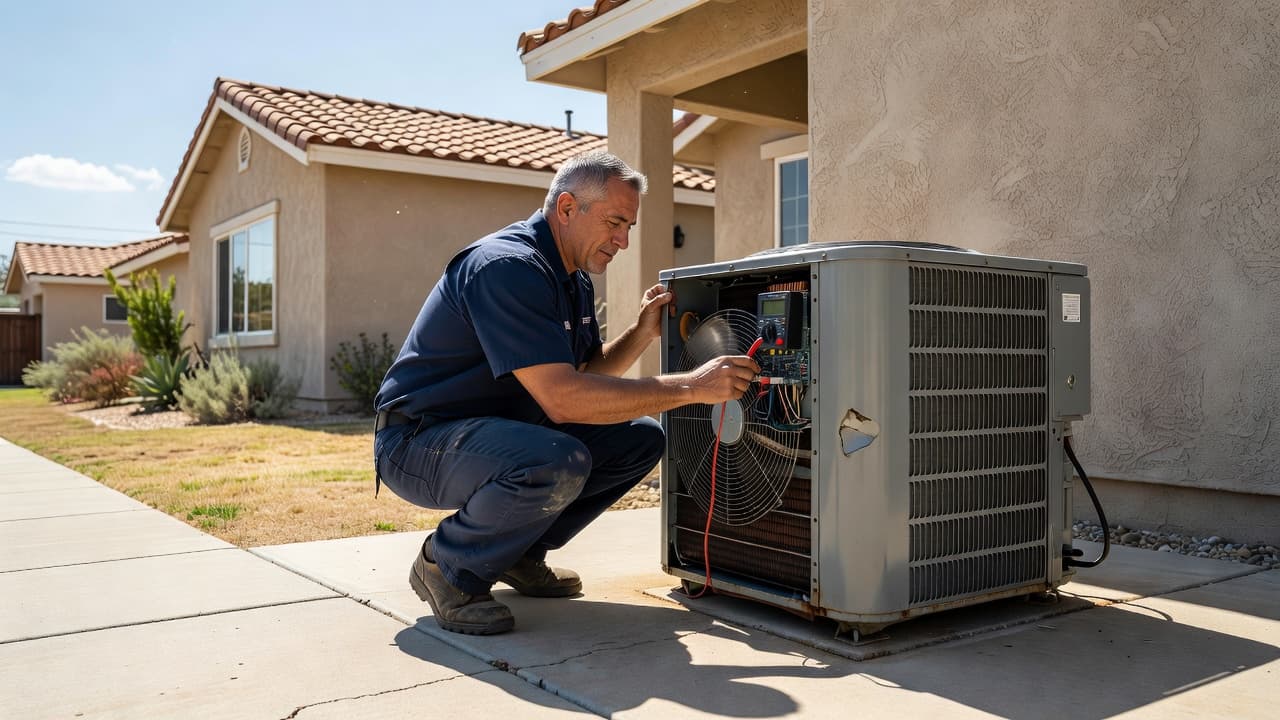
Use this DIY process:
- Turn the thermostat to “off.”
- Switch off the breaker for the outdoor unit and the indoor furnace or air handler.
- Wait about one minute.
- Turn both breakers back on.
- Wait another five minutes, then set the thermostat to “cool.”
That short pause matters because some compressors need time to equalize pressure before they restart. If you rush it, the unit may hum, click, or shut itself back down.
While you wait, check your air filter. A clogged filter won’t usually cause a shutdown right after an outage, but it can make the system struggle once it restarts. Open supply vents should also stay open, especially in the hottest rooms.
If you have a smart thermostat, give it time to reconnect. Some models reboot slowly after power loss. Others may lose schedules or Wi-Fi, which can make it look like the HVAC system failed when the thermostat simply needs a minute.
If a breaker trips twice, stop resetting it. A real fault is likely present.
You can also check the outdoor disconnect box if you already know what it is and how it works. If you are unsure, leave it alone. A safe reset ends at the thermostat and breaker panel. Anything beyond that moves into AC repair territory.
Signs the outage caused a bigger HVAC problem
Sometimes the outage is only the trigger. The real problem is an aging part that failed when power dropped, surged, or came back unevenly. While we often think of simple outages, sudden electric power shut-offs can be especially hard on aging electrical components. That happens often with capacitors, contactors, blower boards, and compressor-related parts.
Pay attention to what the system does after you restore power. If the indoor fan runs but the air isn’t cool after 15 minutes, the outdoor unit may not be starting correctly. If the condenser hums but the fan doesn’t spin, turn it off. If you hear repeated clicking, smell something burnt, or see the breaker trip again, stop there. When calling for service, providing specific power outage details can often help a technician understand if a surge caused the damage, as utility companies often track these fluctuations in your local area.
Homes with split systems can also have issues on the indoor side. A blown low-voltage fuse on the furnace board can kill communication between the thermostat and the Carlsbad air conditioning system. In other cases, the condensate float switch cuts cooling because the drain line backed up during humid weather.
Warm air from the vents is another clue. The blower may run, but the cooling cycle may never start. That can point to a bad capacitor, a contactor that won’t pull in, or a compressor that needs diagnosis.
When that happens, it’s time for professional AC repair in Escondido. A trained tech can test voltage, inspect controls, and tell whether the issue is electrical, mechanical, or related to the refrigerant side of the system.
If the outage happens at night, during extreme heat, or in a home with health concerns, faster help matters. In that case, 24/7 emergency HVAC repairs make more sense than waiting and hoping the unit recovers on its own.
How to lower the risk next time
Power outages are hard on home systems, but a few habits can reduce the chance of a repeat shutdown. The biggest one is surge protection. A whole-home surge protector helps, and a dedicated protector for the outdoor condenser adds another layer of defense.
Prioritizing electric reliability and safety through regular maintenance also makes a significant difference. A yearly check of the capacitor, contactor, drain line, blower, and thermostat wiring can catch weak parts before the next outage exposes them. While grid standards are overseen by the California Public Utilities Commission, homeowners should take responsibility for their own equipment. If your system already struggles to start, a power interruption can be the final push that leads to a breakdown.
Local conditions matter, too. Inland homes in Escondido, San Marcos, and Fallbrook often run cooling harder during late summer. Coastal homes in Carlsbad and Oceanside may deal with salt air around the outdoor unit. In both cases, routine HVAC service helps the system recover more smoothly after a blackout.
It also helps to label your breakers now, before the next outage occurs. Know which switch controls the condenser and which one powers the furnace or air handler. That small step saves time when the house heats up fast.
Conclusion
When your air conditioning stops after a blackout, start by checking your thermostat settings, the electrical breakers, and the system’s built-in restart delay. If the unit continues to trip the power, blows warm air, or makes unusual mechanical sounds, avoid forcing it to run, as this may lead to further damage.
If you are struggling with an AC power outage in Escondido or the surrounding areas and the system remains unresponsive, please Book Online for a professional inspection. Taking care of small issues now can prevent the need for a much larger, more expensive HVAC repair later. To stay ahead of future disruptions, consider signing up for local power outage alerts so you can prepare your home before the electricity cuts out.
FAQs
How long should I wait before restarting my AC after a power outage?
Wait at least five minutes after power returns. Many systems have a built-in delay, and the thermostat may need a minute to reboot. If you shut the breakers off for a reset, give the system another five minutes after turning them back on before calling for cooling. If the power loss was part of a Public Safety Power Shutoff, ensure the grid is fully stabilized before attempting to run your high-voltage appliances.
Why is my thermostat on, but the outdoor unit won’t start?
That usually means the indoor side has power but the condenser does not. Check the breaker panel first and see why your thermostat says cool on but the AC won’t start. Also, look for a tripped outdoor disconnect or a safety issue inside, such as a float switch. If the breaker keeps tripping, the problem likely needs professional AC repair. If your neighborhood is currently undergoing a de-energization event, the system may simply be waiting for a consistent electrical feed to resume normal operation.
How can I track when my power will be back on?
To stay updated, visit your utility provider’s online outage center. You can view their real-time power outage map to see the current status of your grid and check for the estimated service restoration time. If you received a planned power shutoff alert, you can also review the provider’s website to confirm the planned shutoff reason, which helps clarify if the interruption is due to equipment maintenance or weather-related safety measures.
Can a power outage affect the furnace too?
Yes, it can. In many homes, the AC and furnace work together. The furnace control board, blower, or low-voltage fuse may keep the cooling system from running, even during summer. The same can happen with an air handler in homes that do not use a furnace for heating.
Is it safe to reset the breaker more than once?
No. One reset is reasonable after an outage. A second trip points to a real electrical or component issue. Repeated resets can stress the system and create a bigger problem, especially if the compressor is struggling to start.
My system runs, but the house still isn’t cooling. What should I check?
Start with the filter, thermostat setting, and outdoor unit. If the indoor fan runs but the outdoor section stays off, the system cannot cool the home. If both sides run but the air feels warm, the unit may have a failed part that needs professional diagnosis. If the system remains down during an intense heatwave, look up local cooling centers in Escondido where you can stay safe until your HVAC technician arrives.