

AC Grinding Noise in Temecula Homes: Safe DIY Checks
My Guy is Proud to Be "Your Guy" for Your Home
An AC grinding noise in Temecula homes is not just background hum. It is a warning. When metal starts rubbing inside your air conditioning system, damage can build fast.
That does not mean every strange sound calls for panic. However, it does mean you should stop, listen, and perform a few safe checks before running the unit again. In a place where a Temecula summer can settle in for weeks at a time, knowing what you can check yourself makes a big difference.
Key Takeaways
- Recognize the Warning: A grinding noise is a mechanical indicator that internal components are failing; immediate action is required to prevent further damage to motors, blowers, or the compressor.
- Prioritize Safety: Always turn off the thermostat and power at the breaker before attempting any inspections; never attempt to disassemble mechanical components, touch wiring, or reach into sealed units.
- Perform Basic Checks: Before calling a pro, verify that air filters are clean, return vents are unblocked, and the outdoor condenser is free of exterior debris and sitting level.
- Know When to Stop: If the grinding persists after basic cleaning, if you smell burning, or if the unit continues to trip breakers, cease operation immediately and contact a professional to avoid costly repairs.
What a grinding AC noise in Temecula homes often means
A healthy A/C should hum, click, and move air. It should not sound like metal scraping, crunching, or a rough growl. When homeowners hear a grinding noise, the problem usually comes from a moving part that has shifted, worn out, or started to fail.
First, figure out where the sound comes from. If it starts outside, the issue may be in the outdoor condenser unit. That could mean a fan motor with worn motor bearings, a bent fan blade, or debris caught where it shouldn’t be. If the sound comes from inside, look toward the air handler or the furnace cabinet, where the blower wheel and blower fan motor sit.
This quick guide helps sort the noise from the risk level.
| Where you hear it | What it sounds like | Likely cause | What to do |
|---|---|---|---|
| Outdoor unit | Metal-on-metal grinding | Fan motor bearings, blade contact, debris | Shut it off and inspect from outside only |
| Indoor cabinet | scraping noises at startup | Blower wheel rubbing, worn blower motor | Turn system off and avoid repeat testing |
| Whole system vibrates | Deep grinding with hard starts | Compressor or mounting problem | Stop use and call for service soon |
The tricky part is that one sound can point to more than one issue. A blower wheel can scrape because of loose components. A fan motor can grind because its motor bearings are dry. A compressor can sound rough because internal parts are wearing out. All three need different repairs, but the sound alone tells you one clear thing, something mechanical in your air conditioning system isn’t happy.
In many homes, the same blower handles both cooling and heating. So if the noise starts in summer, it may affect your furnace when cold weather returns. That is why a grinding sound deserves attention sooner, not later.
Safe DIY checks before you call for HVAC service
Some checks are safe for homeowners. Others are not. If you smell burning, see smoke, or keep tripping a breaker, skip DIY and move straight to a pro.
Before you inspect anything, turn the thermostat to off. Then shut off the system at the breaker if you are going near the equipment.
- Check the air filter first. A clogged filter usually does not create grinding by itself, but it can strain the blower motor and reduce system efficiency. If the filter looks gray, packed with dust, or bent inward, replace it and note the size for the next change.
- Open the return and supply vents around the house. Closed vents raise pressure in the system. That extra strain can make an existing blower problem louder. Make sure furniture, rugs, and curtains are not blocking airflow.
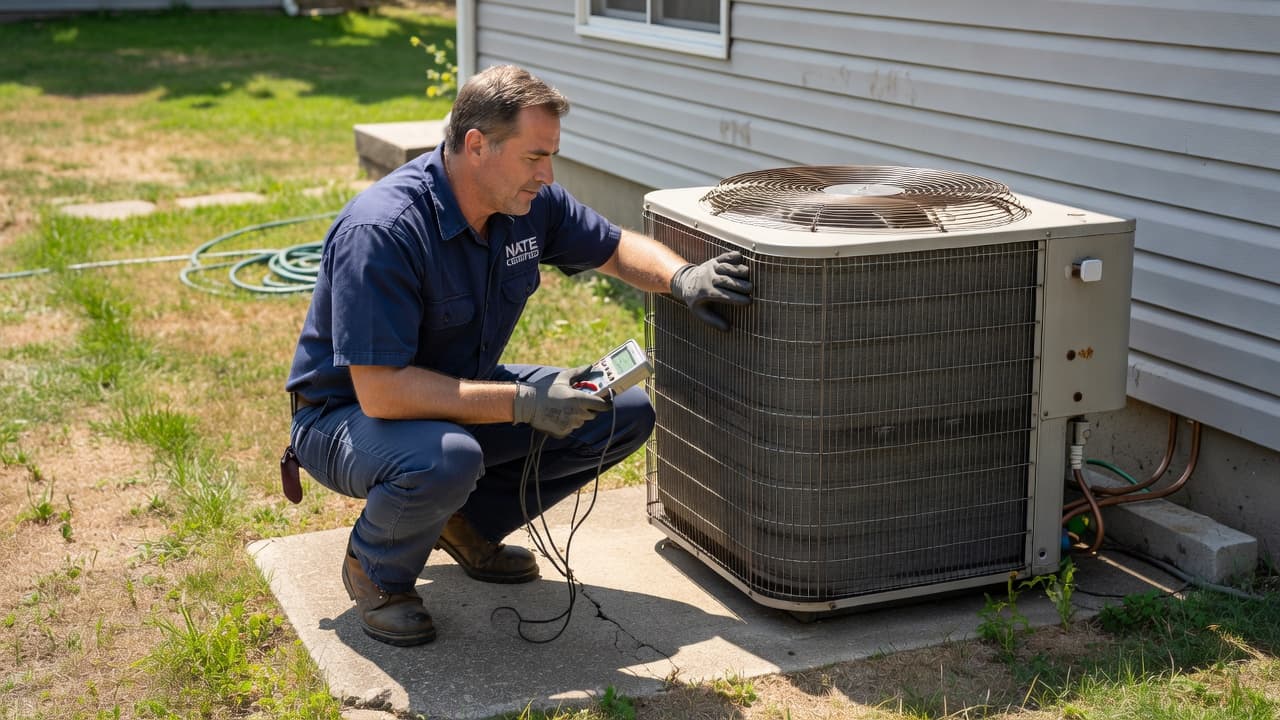
- Look at the outdoor condenser from the outside only. Leaves, twigs, seed pods, and loose trash can get pulled against the fan guard. Remove visible debris by hand after power is off. Do not reach through the grille or remove any sealed panels.
- Check the pad under the outdoor unit. If the condenser has shifted and now sits unevenly, the fan assembly can vibrate harder than normal. A slight tilt is not always a crisis, but a visibly sunken corner is a sign to stop running it.
- Look for obvious rub points. A bent top grille, loose screw, or damaged fan guard can let metal parts touch when the unit starts, leading to unusual noises. You do not need to take the system apart to spot that kind of issue.
- Restore power and listen to one short test cycle. Stand back. If the sound is gone after a new filter and debris cleanup, keep monitoring. If the grinding returns right away, turn the system off again.
Most HVAC service calls start after these basic checks. They are simple, safe, and worth doing. If you want a fuller picture of what a professional visit covers, take a look at comprehensive air conditioning services.
A good DIY check stays outside the machinery. If you need tools to reach a moving part, it is no longer a safe homeowner task.
Do not remove motor covers. Do not touch wiring. Also, do not test the unit over and over to see if it clears up. A brief restart is enough. After that, repeated grinding only raises the chance of internal damage and a bigger repair bill.
When a grinding A/C noise turns into an HVAC repair
A persistent grinding sound is no longer a watch and wait problem. It becomes a necessary HVAC repair call when the system gets louder, cooling performance drops, or the unit struggles to start. These signs often point toward a failing motor, a rubbing blower wheel, or underlying compressor problems.
Pay attention to timing. If the noise starts the second the blower kicks on, the issue may be indoors. If it begins when the outdoor fan starts, look to the condenser side. If the whole system shudders and hums with a harsh grind, the problem may be deeper.
Turn the unit off right away if you notice any of these signs:
- The noise gets worse within minutes
- Airflow from vents turns weak
- The outdoor fan stops spinning
- The cabinet vibrates hard
- You smell hot metal or burning insulation
A shared blower matters here, too. In many split systems, the blower lives in the same cabinet as the furnace. That means one bad motor can hurt both your summer cooling and your winter heating performance. If you suspect severe internal damage, contact professional technicians before the system sustains further stress.
If a grinding noise starts suddenly and grows louder during the same cycle, shut the system down.
Some situations cannot wait until morning. If your home is heating up fast and the system fails after hours, 24/7 emergency AC repair services make sense. Fast action can stop a simple motor failure from turning into a total compressor failure, and that difference often means a much lower bill.
How to lower the odds of future grinding noises
The long cooling season in Temecula puts significant wear on moving parts, and the local dust does not help the situation. Over time, that combination can turn a minor mechanical issue into a loud, persistent problem.
Start with the basics. Check your air filter every month during the intense Temecula summer. Keep at least two feet of space clear around the outdoor unit, and remove leaves, weeds, or any debris that could be pulled toward the fan guard. Additionally, listen to your system during startup once in a while. A new, rough sound is much easier to address when it first appears.
Consistent AC maintenance helps because a technician can identify problems you cannot see from the outside. That includes checking worn fan bearings, loose blower fan blades, weak capacitors, damaged mounts, and motors that are beginning to struggle. These inspections are essential for inland homes, as well as for residents in nearby areas like Escondido, Vista, and San Marcos, where systems often run for long, strenuous stretches.
If your system already has a history of odd noises, do not wait for the next heatwave. A seasonal inspection or professional AC repair services in Escondido can catch a small issue before it spreads to the blower, compressor, or electrical components. Investing in regular service is the most effective way to protect your long term home comfort.
Final thoughts
A grinding noise coming from your unit is one of the clearest signs that your air conditioning system requires mechanical attention. While checking filters, vents, and visible debris is manageable for most homeowners, internal components like motors and blades are not suitable for DIY repairs.
The safest move is simple. Always shut off the system immediately if you hear persistent sounds, perform the basic checks outlined above, and stop if the problem continues. When you face complex issues that exceed your comfort level, our professional technicians are ready to assist. You can Book Online today to ensure your system is serviced before a small noise turns into a major, costly repair.
FAQs
Can I keep running my AC if it makes a grinding noise?
No. A grinding noise usually indicates that internal parts are rubbing together or that a motor is failing. Continuing to run your system can lead to severe damage to the blower, fan motor, or compressor, and these significant repairs will cost much more than an early professional service call.
Can a dirty filter cause grinding?
A dirty filter rarely causes grinding on its own. However, it can put unnecessary strain on the blower, which may make an existing issue sound louder. Replacing the filter is a good first step for system health, but it will not fix worn-out bearings or a loose blower wheel.
Is the problem usually in the indoor unit or the outdoor unit?
It can be either one. If the sound comes from a closet, attic, or garage cabinet, the blower area is a likely source. If it comes from outside, look at the condenser fan area first. A brief listen during startup often helps narrow down the cause of these scraping noises.
Does the same advice apply in nearby cities like Fallbrook, Poway, or San Diego?
Yes. The same safety steps apply in Temecula and nearby areas. Turn the system off, check the filter, inspect for visible debris, and avoid opening mechanical sections. While climate and total run time may differ, the safety rules remain the same for all homeowners.
Can a summer grinding noise affect my furnace later?
Yes, it can. In many homes, the blower motor sits in or near the furnace cabinet and works for both cooling and heating cycles. If that motor is failing in July, it may result in poor airflow when you eventually switch to heat. Scheduling regular AC maintenance can help catch these motor issues before they affect your heating performance.