

Duct Repair vs Replacement in Older San Diego Homes
My Guy is Proud to Be "Your Guy" for Your Home
Cold air shouldn’t disappear before it reaches your living room. In many older San Diego homes, the real problem isn’t the condenser, heat pump, or furnace. It’s the ductwork hidden in a hot attic, tight crawlspace, or forgotten soffit. Healthy, sealed ducts are the foundation of energy efficiency and indoor air quality, yet older systems often fail to provide either. Without a tight seal, your system may pull in dust, insulation fibers, and allergens from attics and crawlspaces, significantly compromising your indoor air quality.
When you compare duct repair vs replacement, the right move depends on more than age alone. Damage, layout, airflow, insulation, and past remodels all matter. To maximize your energy efficiency and ensure your vintage home runs comfortably year-round, you need to start with what these older systems usually get wrong.
Key Takeaways
- Assess Condition, Not Just Age: Duct performance depends on the structural integrity, layout, and insulation quality of the system; older systems often require inspection for leaks, sagging flex duct, or improper sizing.
- Duct Repair vs. Replacement: Targeted repairs, such as sealing leaks with mastic or reconnecting loose sections, are cost-effective for localized issues, while full replacement is often necessary for widespread deterioration or fundamentally flawed system design.
- HVAC Synergy: Ductwork and comfort equipment must function as a cohesive unit; replacing an A/C or furnace without addressing leaking or undersized ducts will likely result in continued comfort issues and wasted energy.
- Signs of Duct Trouble: Symptoms like inconsistent temperatures between rooms, high energy bills, excessive dust near vents, or musty odors suggest your ductwork may be pulling in contaminants from attics or crawlspaces.
Why older San Diego homes struggle with ductwork
Many houses in San Diego County were built before today’s sealing and insulation standards. In Escondido, Vista, San Marcos, Carlsbad, Oceanside, Fallbrook, Poway, and San Diego, it is common to find a mix of original metal ducts, newer flex duct, and add-on sections from later remodels.
That patchwork often results in damaged ductwork. Joints dry out, hanging straps loosen, and flex duct can sag or kink. Over time, conditioned air escapes through leaky ducts into the attic instead of the bedroom, so your air conditioning runs longer and your heating cycle works harder.
Older layouts also miss how families use homes now. A converted garage, opened-up kitchen, or added room changes airflow needs. Meanwhile, the A/C system may still push air through ducts sized for a smaller floor plan.
Sometimes homeowners call for AC repair because one room will not cool. Other times they blame the furnace because winter mornings feel uneven. Yet the equipment may be fine, while the duct system is leaking, disconnected, or poorly balanced.
Local weather adds another layer. Coastal homes in Carlsbad and Oceanside can hide duct problems until the first warm spell, where older, poorly sealed systems can become breeding grounds for mold and mildew due to trapped condensation. Inland homes in Escondido, Poway, and Fallbrook usually reveal these issues faster, because hotter attics and longer cooling cycles expose every weak point, ultimately leading to high energy bills for the household.
Start with a full HVAC duct inspection
A high-quality ductwork inspection goes well beyond the vents you can see. Your HVAC technician should thoroughly evaluate accessible ducts, supply boots, return air paths, insulation, airflow and circulation, and static pressure. This level of detail is vital because weak airflow can stem from leaks, poor system design, or an improperly sized HVAC system.
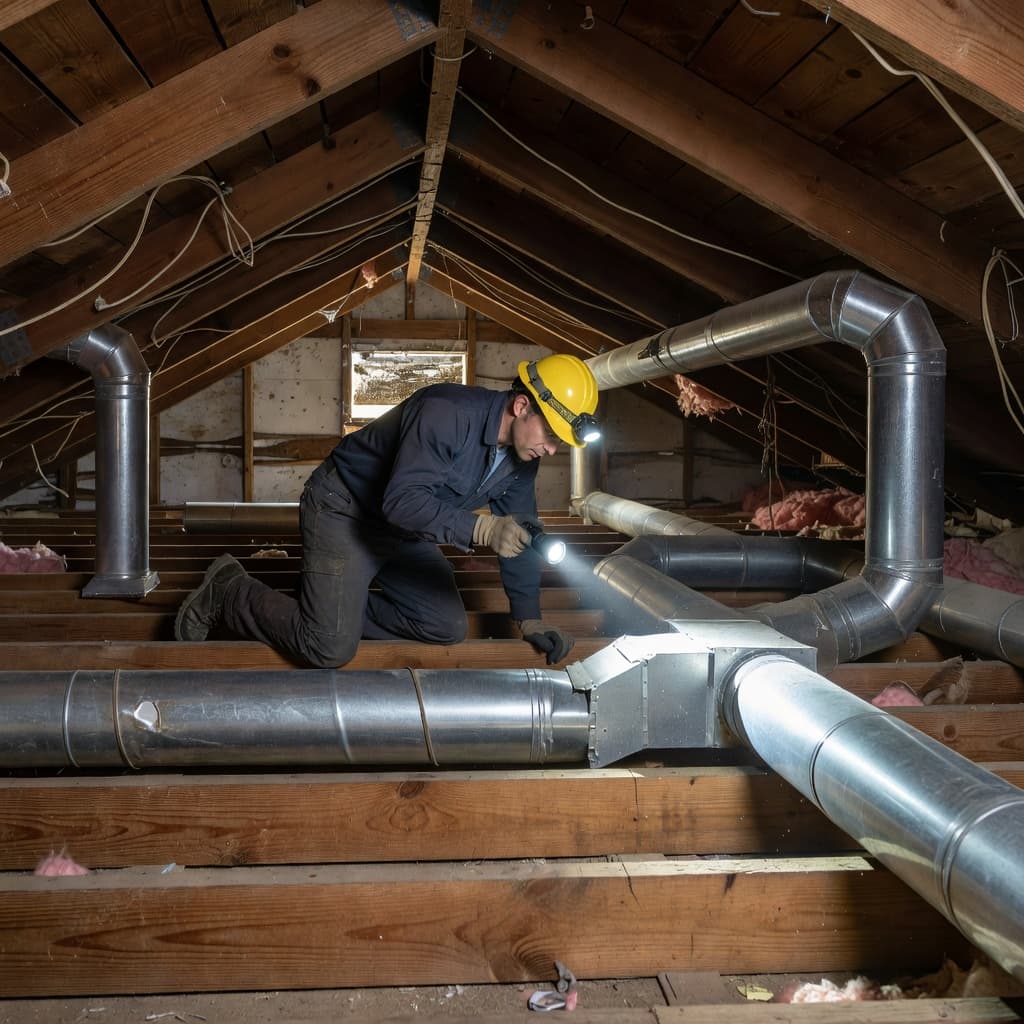
The goal of this process is simple: determine whether the problem is isolated to a specific area or if it is built into the entire HVAC system. A few loose connections typically call for a targeted repair. However, crushed runs, undersized returns, or widespread air loss often point toward the need for a full replacement.
Reliable contractors also examine how the ductwork interacts with your comfort equipment. If the air handler, A/C, or furnace cannot move air efficiently through the existing layout, comfort issues will continue to persist. In other words, the ducts and the HVAC system must function as one cohesive unit.
If you would like a safe homeowner level starting point, review how to check your ductwork for air leaks. That can help you describe symptoms clearly before you schedule a professional service call.
A small leak can be repaired. A failing duct network usually should not be patched room by room.
When duct repair is the better choice
Repair makes sense when the bones of the system are still solid. If the duct layout is correct and the damage is limited, a targeted fix can restore comfort without the cost of full replacement.
Common repair work includes duct sealing with high-quality mastic sealant, reconnecting loose sections, replacing short damaged runs, sealing around ceiling boots, and re-supporting sagging flex duct. In many homes, professional duct sealing solves noisy airflow, excessive dust, or rooms that suffer from uneven heating or cooling.
This quick comparison helps sort the issue.
| What the inspection finds | Repair usually works | Replacement is usually smarter |
|---|---|---|
| A few accessible leaks | Yes, if the rest of the ducts are sound | No, unless leaks are widespread |
| Minor damage to one branch | Yes | No |
| Loose boots or poor sealing at registers | Yes | No |
| Crushed, brittle, or torn ducts in many areas | Sometimes as a short-term fix | Yes |
| Undersized or poorly routed duct design | Rarely | Yes |
| Major remodel changed room layout | Rarely | Yes |
Repairs also work well when your A/C or furnace still has life left and the issue with uneven heating or cooling is a recent development. If the problem showed up after someone was in the attic, a disconnected duct may be the whole story.
AC repair cost is another reason homeowners start here. Repair usually costs less upfront and causes less disruption. Still, cheap fixes can add up fast when the same old ductwork keeps failing in new places.
When replacement makes more sense
Air duct replacement becomes the definitive solution when the duct system itself is the primary problem. If large sections are deteriorated or suffer from improper duct sizing, repair will not resolve these fundamental design flaws. This is common in older homes that were expanded over time. A house may have received new air conditioning equipment years ago, but the duct network never caught up. The result is familiar: one bedroom bakes, the back addition feels stale, and the system runs long without much payoff.
Full replacement is also worth serious thought when you are already changing major equipment. If you are installing a new A/C, heat pump, or furnace, that is the cleanest time to ask whether the old ducts can support proper airflow. Furthermore, if your older system contains asbestos insulation, a full air duct replacement is often required for safety and regulatory compliance. New equipment connected to failing ducts still wastes comfort and energy, so viewing replacement costs as an investment in long term performance and energy savings is a smart move.
A proper redesign may include shorter runs, better insulation, larger returns, or new register locations. Those changes matter when rooms have never felt right, even after past ac repair visits.
A contractor who handles duct repair and replacement in Escondido can check sizing, insulation, return air, and layout together. The goal is not new ductwork for its own sake. The goal is balanced airflow, lower waste, and rooms that feel normal again.
Replacement often pays off when two or more rooms stay uncomfortable in both cooling and heating seasons, dust builds up fast near vents, ducts are torn or crushed in multiple places, and the house still feels uneven after service calls. In those cases, patching one section at a time rarely fixes the whole problem.
Questions to ask before you approve the work
A solid estimate should explain what failed and why. Ask for attic photos, airflow readings, and a clear statement about whether the problem is leakage, bad sizing, poor return air, or a mix of all three. If you are dealing with persistent leaks in inaccessible areas, ask your technician if they provide Aeroseal services. This technology is highly effective at sealing leaks from the inside out, which is often the best solution for complex ductwork systems in older homes.
If replacement is recommended, ask what changes in the new layout. Better duct design may include shorter runs, improved insulation, added return air, or different register locations. That matters because new ducts should fit the house you live in now, rather than the floor plan from 1978.
In older homes, access matters too. A low bid that ignores tight crawlspaces, damaged boots, or code updates may grow after work starts. Finally, ask what results are realistic for your home. You should expect significant energy savings, quieter operation, shorter runtimes, and much improved indoor air quality for your family.
Safe DIY checks before you call
You can identify many signs of damaged ducts without needing to cut into your walls or ceilings. Start at your registers by holding a tissue near the supply vents. Compare the airflow from room to room and make a note of which spaces feel weak.
Next, look for subtle clues throughout your home. Dust collecting around a vent, rattling grille screws, or a musty attic smell when the air conditioning turns on can all point to duct trouble. Many homeowners assume that air duct cleaning is the solution for this odor, but it is often a sign of leaky ducts pulling in insulation fibers and debris from your attic. During the heating season, weak airflow can also make your furnace seem underpowered even when the unit itself is functioning correctly.
If you can safely view the attic from the access opening, use a flashlight to inspect the area. Look for obvious disconnections, crushed flex duct, or missing insulation. Do not crawl across joists unless you are familiar with the space, and remember that using old cloth duct tape is never a permanent or effective repair for damaged systems.
Final thoughts
Older ductwork can often hinder the performance of even the most efficient HVAC system. When damage is localized, professional duct restoration can successfully restore airflow and household comfort. However, when the design is flawed or the materials are failing throughout the entire network, choosing replacement usually saves more money and frustration in the long run. Making the right decision regarding duct repair vs replacement is key to ensuring your home stays comfortable year-round.
If your air conditioner or furnace struggles to keep rooms at an even temperature, consider having your ducts inspected before investing in additional equipment. You can Book Online to schedule a professional evaluation for your San Diego area home today.
FAQs
Should I replace ducts when I replace my A/C or furnace?
Not always, but it is the right time to ask. If the existing ducts are well-sized, sealed, and insulated, they may stay. If they are old, leaky, or undersized, new equipment will not solve the airflow problem on its own.
How long does ductwork last in an older home?
Rigid metal ducts can last for decades if they stay sealed and dry. Flex duct often ages faster, especially in hot attics or when it sags between supports. If moisture has accumulated, leading to mold and mildew growth, air duct replacement is sometimes the only way to fully remove contaminants and restore healthy indoor air quality. Condition matters more than the calendar.
Can bad ducts raise my energy bills?
Yes. Leaks, poor insulation, and airflow restrictions force your air conditioning and heating system to run longer. That wasted runtime results in high energy bills and uneven comfort at the same time.
Will duct replacement fix every hot or cold room?
It can fix rooms affected by poor airflow, leaks, or bad duct design. Still, comfort problems can also come from insulation gaps, sun exposure, old windows, or equipment sizing. A proper inspection separates duct issues from the rest.
Can I repair air ducts myself?
You can spot symptoms and maybe see obvious damage, but permanent duct repair usually needs professional duct sealing, proper support, and airflow testing. A bad DIY patch can hide a larger problem and make the A/C or furnace work harder, so professional-grade materials and expertise are essential.