

What Size Air Conditioner Fits Your Home?
My Guy is Proud to Be "Your Guy" for Your Home
A lot of homeowners buy an air conditioner the same way they buy a refrigerator: bigger sounds safer. With home cooling, that logic can cost you money, years of equipment life, and the home comfort you expect from a high quality system.
Determining the right air conditioner size Escondido homeowners need depends on more than just square footage. In Escondido CA and nearby cities, factors like sun exposure, insulation quality, ductwork integrity, ceiling height, and even your window types can shift the answer. Before you replace your A/C, it helps to know what size means and how it impacts your home.
Key Takeaways
- Bigger air conditioning equipment is not better if it short cycles and leaves rooms with uneven temperatures.
- A/C unit size is measured in tons and BTUs rather than how large the outdoor equipment appears to be.
- Square footage is only a starting point, because insulation, windows, ductwork, and local climate patterns change the overall cooling load.
- Homes in Escondido, Vista, San Marcos, Poway, and Fallbrook often require a different cooling calculation than homes located in coastal areas like Carlsbad or Oceanside.
- A professional HVAC load calculation is the most reliable way to choose new equipment and avoid frequent AC repair visits in the future.
Why the wrong size causes so many comfort problems
An oversized central air conditioning system cools the house too fast. While that may sound beneficial, it often creates the exact problems homeowners complain about most, including hot and cold spots, noisy starts, higher utility bills, and a unit that turns on and off all day.
That stop-and-go pattern is called short cycling. Because the unit shuts off quickly, it does not move air long enough to even out room temperatures or maintain consistent energy efficiency. It also puts extra wear on motors, contactors, and compressors. As a result, some homes end up needing AC repair earlier than expected, even when the equipment is fairly new. Note that if your system seems to be running constantly without cooling, you should also rule out issues like refrigerant leaks, which can mimic sizing problems.
A system that is too small has the opposite problem. It runs for long stretches, struggles on hot afternoons, and may never quite hit the thermostat setting. Long run times are not always bad, as an energy-efficient unit should work steadily on the hottest days of the year. Trouble starts when the unit falls behind every afternoon, even after maintenance and filter changes.
If you have a split system, the indoor side matters too. The outdoor condenser, indoor coil, blower, and the ductwork must all work as a matched set. If the blower or the air distribution system is incorrect for the cooling load, your comfort will suffer, even if the outdoor unit has the right tonnage.
Square footage gets you close. A real load calculation gets you the right answer.
How air conditioner size is measured
Most residential air conditioners are sized in tons. One ton of cooling is equivalent to 12,000 BTUs per hour. Therefore, a 2-ton unit moves about 24,000 BTUs of heat per hour, while a 3-ton unit moves about 36,000 BTUs.
That number refers to heat removal capacity rather than physical weight. Many homeowners hear the term 3-ton unit and picture a massive machine. In practice, the most important factor is determining how much heat your home gains throughout the day and how quickly your system can remove it.
This quick table shows common starting points before a full sizing calculation based on the total square feet of your home:
| Rough home size | Common starting size |
|---|---|
| 600 to 900 sq. ft. | 1.5 tons |
| 900 to 1,200 sq. ft. | 2 tons |
| 1,200 to 1,500 sq. ft. | 2.5 tons |
| 1,500 to 1,800 sq. ft. | 3 tons |
| 1,800 to 2,100 sq. ft. | 3.5 tons |
| 2,100 to 2,400 sq. ft. | 4 tons |
| 2,400 to 3,000 sq. ft. | 5 tons |
Use that table as a rough filter, not a final buying guide. A tight, shaded house can require significantly less cooling than a leaky home located further inland.
This is why guessing based on floor space alone often leads to improper equipment replacement. When homeowners search for professional AC installation in Escondido, it is important to remember that the precision of the sizing work matters just as much as the equipment brand. Even a high-end system will perform poorly if it is not sized correctly, which is why choosing a company that prioritizes professional installation is essential for your long-term comfort.
What changes the right AC size in Escondido and nearby cities
A qualified HVAC contractor should always perform a precise load calculation, often using the Manual J process, to determine your home cooling requirements. This professional assessment accounts for insulation, windows, air leakage, shade, orientation, occupancy, appliances, and ceiling height. Relying on these professional metrics is far more reliable than simply replacing your old unit with one of the same tonnage.
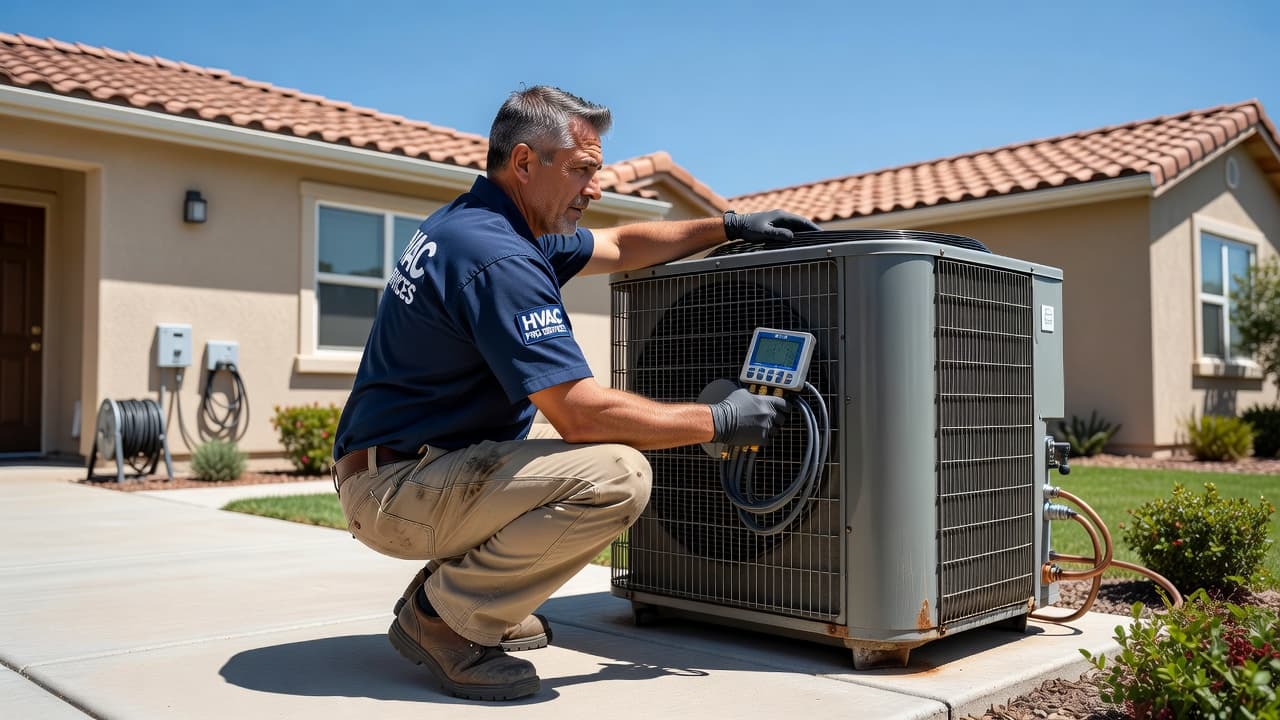
Local climate also plays a significant role in sizing. While coastal areas like Carlsbad and Oceanside benefit from marine influence that softens peak heat, inland communities like Escondido CA, Vista, San Marcos, Poway, and Fallbrook typically endure hotter afternoons and longer warm spells. Consequently, the same floor plan may require a different cooling setup depending on its specific geographic location.
Sun exposure also impacts the final cooling requirements. A west-facing wall with large windows gains significant heat late in the day. Furthermore, inadequate attic insulation, recessed lights, and poorly sealed ductwork can quietly increase the thermal load on your home. In two-story properties, upstairs rooms often reveal sizing or airflow deficiencies first, as heat naturally rises and attic gain exerts the most pressure on those upper levels.
Existing equipment can also be misleading. Your previous system may have struggled to cool your home because it was incorrectly sized during its original installation. Sometimes, repeated service calls only address symptoms rather than the root cause. If you are comparing replacement options, a comprehensive review of your ductwork, blower capacity, and return air systems is just as vital as the condenser itself. This is why many homeowners contact professional HVAC services instead of purchasing equipment based on tonnage alone.
DIY checks before you replace your A/C
You cannot perform a full load calculation from the kitchen table, but you can gather useful details before calling an HVAC company.
- Measure the cooled square footage, room by room, and note any finished additions or enclosed patios.
- Count large west or south facing windows, then note whether they are single pane or upgraded.
- Write down ceiling heights, because vaulted rooms add more air volume than standard 8 foot ceilings.
- Track comfort patterns for a week, including hot rooms, short cycling, weak airflow, and afternoon runtime.
Those notes help a technician spot patterns faster. They also keep the conversation focused on the home, not only on the old unit’s model number.
A few warning signs point toward oversizing. Your system blasts cold air, shuts off quickly, and then restarts soon after. Some rooms get cold while others stay warm. Filters stay fairly clean because airflow time is short, yet the house never feels consistently comfortable.
Undersizing looks different. The unit runs most of the afternoon, certain rooms lag behind, and the thermostat finally reaches setpoint only after sunset. Still, low airflow, dirty coils, duct leaks, and refrigerant issues can mimic a sizing problem. If you find yourself repeatedly calling for AC repair for the same comfort complaint, ask whether the system was ever sized correctly in the first place.
If you are replacing your central air conditioning or looking into a high efficiency heat pump, mention your goals early. When discussing a new system, ensure you ask about the SEER rating, as choosing an energy-efficient model can qualify you for valuable SDG&E rebates. It is also wise to inquire about available maintenance plans and verify that your technician is NATE-certified to guarantee the installation is performed correctly. A new condenser paired with an older furnace blower can limit airflow and reduce performance. In other homes, a ductless setup or zoning change may solve the problem better than upsizing the main system.
Conclusion
The best A/C size is the one that matches your house, not the one that sounds strongest on paper. In most homes, true home comfort and long-term energy savings come from the right load calculation, solid airflow, and matched equipment, rather than simply opting for extra tonnage.
If you are weighing the costs of an AC repair against a full system replacement, it is vital to get the sizing question answered before you spend more money. Homeowners in Escondido, Vista, San Marcos, Carlsbad, Oceanside, Fallbrook, Poway, and San Diego can Book Online for a professional consultation to ensure your next AC installation uses accurate data that perfectly fits your home.
FAQs
Can I size an air conditioner by square footage alone?
Square footage provides a general starting point, but it misses too many critical factors. Insulation, window area, sun exposure, duct leakage, and ceiling height all influence the cooling load. Two homes with the same footprint can require very different equipment to maintain comfort.
Is a 3-ton unit enough for a 2,000 square feet house?
Sometimes yes, and sometimes no. A well-insulated coastal home may do fine with less cooling capacity than an older inland home that faces significant afternoon sun. That is why a professional load calculation is far more accurate than rule-of-thumb sizing.
Does the furnace affect air conditioner performance?
Yes, in many split systems it does. The furnace cabinet often contains the blower that moves cooled air through the house. If the blower, coil, or the internal ductwork is mismatched, the outdoor unit may never deliver the level of comfort you expect.
Can duct problems make the AC seem like the wrong size?
Absolutely. Leaky or undersized air distribution systems can starve rooms of airflow and make a correctly sized unit appear weak. This is one reason why quality HVAC service in San Diego County often includes thorough inspections of the ductwork and overall airflow before a technician recommends a larger system.
Should I replace the system if it keeps needing AC repair?
Not always. If the issue is a faulty capacitor, contactor, thermostat, or a dirty coil, a simple repair may be enough to restore performance. However, if the system is older, uncomfortable, and repeatedly requires AC repair during the intense heat of an Escondido or Vista summer, total replacement and proper sizing may be more cost-effective in the long run.