

Should You Cover an Outdoor AC Unit in Winter Escondido?
My Guy is Proud to Be "Your Guy" for Your Home
An outdoor air conditioner cover can look like smart protection when cooler weather arrives. Yet for most homes, covering an outdoor AC unit in winter isn’t necessary, and the wrong cover can create problems that rain and leaves never would.
In Escondido, winter weather is usually mild, but rain, windblown debris, and occasional cold nights still affect outdoor equipment. The right choice depends on whether you have a central A/C condenser or a heat pump that runs during the heating season.
Key Takeaways
- Most outdoor condenser units are designed to withstand the elements throughout the year without requiring a full winter cover.
- Using a sealed cover can trap moisture inside the unit, which promotes unwanted corrosion, mildew, and pest infestations.
- If your system functions as a heat pump, it should never be covered during the winter months because it may be required for heating.
- Clear away fallen leaves, trim nearby vegetation, and use a breathable top cover only if falling debris is a significant concern for your equipment.
- Scheduling professional HVAC maintenance is the best way to identify and resolve potential issues before the summer heat places a heavy load on your cooling system.
The Short Answer for Escondido Homeowners
If you are trying to decide whether you should cover outdoor AC unit winter Escondido style, the general recommendation is no. Modern air conditioners are engineered to withstand rain, fluctuating temperatures, and constant outdoor exposure. Their internal components, including cabinets, coil fins, and electrical systems, are built to function reliably in an outdoor environment.
A full plastic or fabric cover often causes more harm than good. These materials can easily trap moisture, which remains stagnant beneath the cover. This damp, shaded environment becomes a breeding ground for rust, mold, and various pests like insects or rodents seeking a winter shelter.
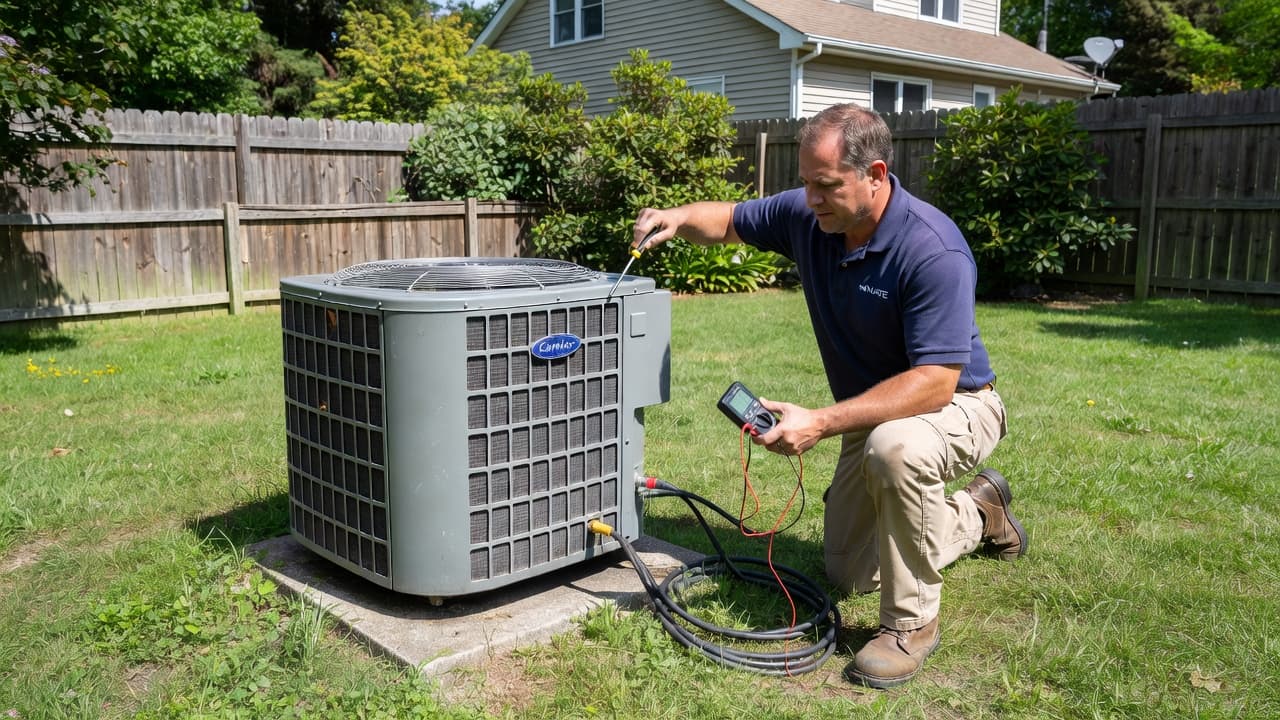
Your outdoor condenser unit serves a vital role during the summer by releasing heat pulled from your home. It features durable metal panels and an exposed coil because the system requires consistent, free airflow rather than a sealed enclosure.
However, a heat pump requires different considerations. While a heat pump looks very similar to a standard air conditioning condenser, these systems are designed to run during the winter months to provide warmth. Covering a heat pump can block essential airflow and cause significant damage if the unit kicks on unexpectedly. Because many San Diego County homes utilize this technology, always confirm your specific equipment type before deciding how to protect it.
A clean, uncovered condenser usually fares better than a tightly wrapped one.
Why a Full AC Cover Can Cause Damage
A full AC cover keeps out leaves, but it also changes the environment around the unit. Rainwater and morning condensation can collect beneath a cover that encompasses the entire system. Because sunlight and airflow cannot dry the cabinet, metal components stay damp longer than they should.
Rust and corrosion are slow problems that may affect cabinet screws, electrical connections, coil supports, and the fan assembly over time. A cover does not usually create major damage in one winter, but repeated seasons of trapped moisture can shorten the life of parts.
Mice and pests are another concern, as they often seek protected spaces during the colder months. A snug cover provides a dark, secure place for these creatures to settle, increasing the risk of a rodent infestation. These animals can chew through wire insulation and leave nesting material near sensitive electrical components.
Wind also plays a role in potential damage. A loose cover can flap against the delicate condenser coils or pull at the metal grille. Thin aluminum fins bend easily, and once they are damaged, they restrict airflow and force your air conditioning system to work harder when the warm weather returns.
A decorative enclosure can lead to similar issues, particularly airflow restriction. Solid walls placed too close to the condenser unit block the necessary intake of air. If you want to hide the equipment, use an open-sided screen that allows for ample clearance, and be sure to keep nearby plants and shrubs trimmed back.
Winter AC Care You Can Handle Yourself
A few simple DIY tasks are the best way to winterize AC unit systems without wrapping the entire machine like patio furniture. First, turn off the electrical disconnect only if you have a traditional air conditioner that will not operate at all during the winter. The disconnect is usually a small electrical box mounted near the unit.
Do not turn off a heat pump unless an HVAC technician specifically tells you to do so. Your thermostat may call for the heat pump during a cool Escondido night, even if your home also has a furnace as backup heating.
Use this seasonal routine instead:
- Clear debris from the top and sides. Remove falling debris such as leaves, twigs, seed pods, and loose dirt by hand. Keep the area around the condenser open to ensure proper airflow.
- Trim nearby growth. Cut back shrubs and vines so they do not press against the coil or block airflow. Leave clear space around the equipment to prevent moisture buildup.
- Inspect the unit after storms. Look for fallen branches, damaged panels, or debris packed into the grille that could restrict airflow.
- Check the pad and drain area. The concrete or composite pad should remain stable. Water should drain away instead of pooling below the unit, which can lead to ice formation.
- Use a top cover only if needed. A mesh top cover placed across the top can keep heavy debris out while allowing air to circulate. Always remember to remove it before operating the system.
Avoid pressure washing the condenser coils. High pressure water can bend the delicate fins and force dirt farther into the unit. A gentle rinse with a garden hose is safer when the system is off, though winter cleaning is rarely urgent unless significant debris has built up.
Do not attempt to straighten bent fins with a screwdriver. A fin comb matched to the coil spacing works much better, but severe damage calls for professional AC repair.
When a Top Cover Makes Sense
If you are looking for top-only protection for your system, a lightweight solution can be useful in a few situations. Homes situated beneath pine trees, eucalyptus, or other heavy leaf-producing trees often collect a thick layer of falling debris on the fan grille. A breathable mesh top cover effectively limits that buildup without sealing the entire cabinet, which prevents the internal moisture issues associated with full wraps. Alternatively, a simple piece of plywood top placed over the unit and weighted down with a brick is a common DIY method to deflect sticks and leaves.
Long periods away from home can also justify a cover for a standard central air conditioning system. Before leaving, confirm that the system is not a heat pump and that no one will need it for heating. When using these covers, always ensure you are using breathable material to allow airflow and prevent mold. Secure the covering firmly so that heavy winds cannot lift it or cause it to flap against the condenser.
Full covers may suit a disconnected unit during a lengthy renovation, but only if the equipment will not run and the cover allows moisture to escape. Even then, periodic checks are essential because a cover is not a set-it-and-forget-it solution.
For typical Escondido homes, routine cleanup is usually enough. The dry season does not require special wrapping, and winter rain is simply part of the outdoor conditions your condenser was built to handle.
Maintenance Finds Problems Before Summer
Winter is the ideal time to schedule professional HVAC maintenance, especially before the first heat wave of the year. During a visit, an HVAC technician can inspect your wiring, capacitors, and electronic components to ensure everything is in working order. They will also clean the condenser coils, check refrigerant performance, examine the blower, and test thermostat operation. These experts can also confirm whether your specific outdoor unit is a standard AC condenser or a heat pump.
Regular service helps separate normal seasonal weathering from an issue that requires immediate attention. Grinding sounds, frequent breaker trips, weak cooling, ice on refrigerant lines, or damaged coil fins all deserve a professional visit. Waiting until the first 90-degree day arrives can easily turn a minor repair into an urgent one.
Homeowners who need help with seasonal inspections can schedule professional AC maintenance services in Escondido. A complete visit also looks at the indoor side of the equipment, which affects comfort just as much as the outdoor unit.
If your furnace handles winter heating, it also deserves attention before those cool nights arrive. A furnace inspection can identify ignition, airflow, or safety concerns while the rest of your HVAC system remains idle.
Final Thoughts on Covering Your Condenser
Your outdoor unit does not need a winter coat to survive the season. For most homes, keeping the area clear of debris and ensuring proper airflow offers far better protection than installing a full outdoor air conditioner cover.
If you are using a heat pump for warmth during the colder months, remember that it needs to run year-round, so it should never be covered while in use. Ultimately, maintaining a healthy, efficient HVAC system is the best strategy to ensure your equipment lasts for years to come. For dependable, year-round service in Escondido, schedule a professional inspection before the changing weather puts your system to work. You can Book Online whenever it is convenient for you.
FAQs
Should I cover my outdoor AC unit when it rains?
No. Outdoor condensers are designed to endure winter weather protection naturally. A full cover during rainy conditions can trap moisture inside the unit, which leads to corrosion and electrical issues. Keeping the unit uncovered is usually the safer choice for your equipment.
Can I put a tarp over my A/C unit?
A tarp is not a good long term option because it blocks essential airflow and holds condensation. If you are worried about falling debris like leaves or twigs, use a breathable outdoor air conditioner cover designed for the top of the unit. These covers also help keep out mice and pests that might otherwise seek shelter inside the cabinet during the colder months.
How do I know whether I have a heat pump?
The easiest way to identify a heat pump is to set your thermostat to heat on a cool day and listen for the outdoor unit. If the fan and compressor run while your home is heating, you have a heat pump. Check the manufacturer label on the side of the unit or ask an HVAC technician if you are still unsure.
Should I shut off my AC breaker for winter?
You can safely shut off the outdoor disconnect for a traditional central air conditioner that will not be used during the season. However, do not shut off the power to a heat pump, as it may be needed to provide heating when temperatures drop throughout the winter.