

Yellow Furnace Flames: A Carbon Monoxide Safety Warning
My Guy is Proud to Be "Your Guy" for Your Home
A furnace flame serves as an early indicator of your unit’s performance. Yellow furnace flames often signal incomplete combustion, a process that can release hazardous levels of carbon monoxide into your living space.
Do not ignore a flame that appears yellow, orange, lazy, or uneven. Your unit might still be running, but your heating system requires prompt professional attention to ensure the safety of everyone in your home.
Key Takeaways
- A healthy gas furnace should typically produce a steady, mostly blue furnace flame during operation.
- Persistent yellow furnace flames or an orange flame often indicate incomplete combustion, which significantly increases the risk of dangerous carbon monoxide buildup.
- Leave your home immediately and contact emergency services if a carbon monoxide alarm sounds or if anyone in the household feels sick.
- Homeowners can perform simple checks on air filters, alarms, and outdoor vents, but any burner repairs require a qualified HVAC professional.
- Regular furnace maintenance is essential to catch combustion and venting issues early, ensuring your system remains safe for winter use.
What Yellow Furnace Flames Can Tell You
For your heating system to run efficiently, natural gas must be mixed with the precise amount of oxygen to ensure clean combustion. When your furnace operates as intended, you should see a steady, blue furnace flame that remains stable and even across the burner assembly.
While a brief color shift can occur during the initial ignition, yellow furnace flames that persist require professional attention. This change in color typically indicates an improper air-to-fuel ratio, which prevents the fuel from burning completely. As a result, the flame produces glowing soot particles and often develops a flickering flame pattern that signifies inefficient combustion.
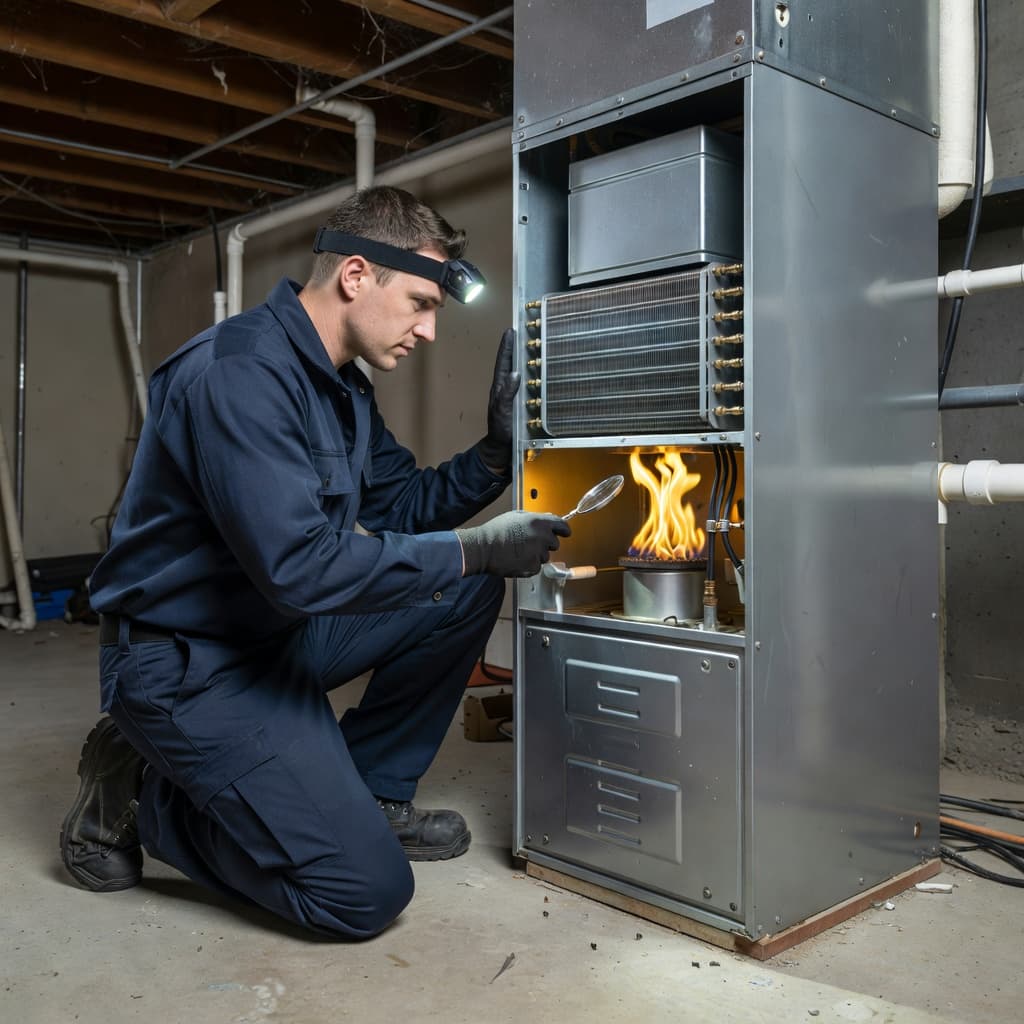
It is important to remember that a yellow flame is a general warning sign rather than a specific carbon monoxide test. A furnace might display a blue flame while still experiencing hidden venting issues or a cracked heat exchanger. However, persistent yellowing is a red flag that your burners, air intake, or gas pressure may need adjustment.
Pay close attention to your unit for other warning signs. Excessive soot buildup near the burner compartment, dark staining around nearby registers, a rumbling sound during start-up, or a stale odor often point to combustion problems. Because carbon monoxide is odorless, you should never rely on your sense of smell to detect a leak.
Modern heating systems often use electronic ignition instead of a traditional standing pilot light. If your unit includes a viewing window, check the flames periodically without opening the service panels. If the flame color or shape appears abnormal, turn your thermostat to the off position and schedule a professional inspection immediately.
Carbon Monoxide Risks and When to Leave the House
Carbon monoxide, or CO, is a colorless and odorless toxic gas produced when fuel burns incompletely. In an enclosed home, this gas can build up to dangerous levels very quickly. If a furnace suffers from poor combustion or damaged venting, it may release this byproduct into your living spaces rather than exhausting it safely outdoors.
Early symptoms of exposure often resemble the flu. Headache, dizziness, nausea, weakness, confusion, chest pain, and shortness of breath are all common warning signs. Infants, older adults, pregnant individuals, and those with heart or breathing conditions are especially vulnerable and may become ill faster than others.
Use this quick guide when you notice a potential furnace problem:
| Warning sign | What to do |
|---|---|
| Yellow or orange flame on burners | Turn off the furnace and schedule professional HVAC service |
| Carbon monoxide detector sounds | Get everyone outside immediately and call 911 or the fire department |
| Soot around the furnace or vents | Stop using the furnace until a technician performs an inspection |
| Headache or dizziness indoors | Move to fresh air and seek emergency medical help if symptoms persist |
If a carbon monoxide detector sounds, do not search the house for the source. Get all people and pets outside first.
Once you are safely outside, call 911, the fire department, or your gas utility’s emergency line. Do not re-enter the building until emergency responders confirm it is safe to do so. Additionally, do not turn lights, electrical switches, or appliances on or off if you suspect a gas leak.
While a carbon monoxide detector serves as a vital backup, it is not a replacement for regular furnace maintenance. Test each device monthly using the integrated test button. Note that this button verifies the electronic components rather than the air quality in your home. Always check the expiration date on the back of the unit, as these devices have a limited service life determined by the manufacturer.
Common Reasons a Furnace Flame Turns Yellow
Dirty burners are a common cause of flame discoloration. Over time, dust, rust, and debris can accumulate on the burner ports, altering how gas exits the system. When this occurs, the flame loses its clean blue shape and may begin to roll, flutter, or burn unevenly.
Combustion air problems can lead to similar issues. A furnace requires a consistent supply of fresh air to function, and a clogged air intake can prevent the system from burning fuel properly. Blocked intake openings, crowded utility closets, lint buildup, or debris located near exterior vent terminations can severely limit the necessary airflow.
Exhaust problems also play a significant role in furnace performance. Proper ventilation is essential for safety, as older furnaces typically vent through metal flues, while high-efficiency units rely on PVC intake and exhaust pipes. Corrosion, loose joints, crushed piping, bird nests, or landscaping near an outdoor termination can disrupt the entire combustion process.
Other possible causes include:
- Incorrect gas pressure or a malfunctioning gas valve
- Misaligned burners or damaged burner components
- A cracked heat exchanger or other compromised internal components
- A furnace that was installed with an improper vent configuration
A problem with the heat exchanger does not always result in yellow flames. However, it can allow dangerous combustion gases to mix with the air circulating throughout your home. This is why a certified technician should inspect the entire heating system rather than treating the flame color as the only diagnostic factor.
For homeowners needing an Escondido HVAC professional, reliable furnace repair services can identify the root cause without guessing. A proper diagnosis often includes a combustion analysis, gas pressure checks, a thorough vent inspection, burner cleaning, and testing for carbon monoxide.
Safe DIY Checks Before Calling for Service
When dealing with gas appliances, DIY safety has strict limits. You can complete a few basic checks, but you should never remove burner assemblies, alter gas lines, clean gas orifices, or bypass furnace safety switches. These actions can easily create a fire, gas leak, or carbon monoxide hazard, which is why professional furnace repair is the safest route if your system is malfunctioning.
First, turn the thermostat to off if you see persistent yellow flames. Let the furnace cool before looking around the outside of the cabinet. Do not repeatedly restart the unit just to watch the flame color.
Next, inspect the air filter. While a clogged filter does not typically cause a yellow burner flame, it restricts airflow and hinders energy efficiency, which leads to separate heating problems. Replace the filter with the correct size and rating for your system, and write the replacement date on the frame.
Then, look at accessible exterior intake and exhaust openings. Remove leaves, loose dirt, and other visible debris from the area around them. Do not reach into pipes, dismantle vent sections, or climb onto a roof to inspect a flue.
You can also check your carbon monoxide detector units. Replace batteries when required by the manufacturer, test each unit, and replace expired alarms. California homes with fuel-burning appliances, fireplaces, or attached garages have specific carbon monoxide alarm requirements, so confirm your home meets all local rules.
A furnace safety visit should be separate from a cooling repair call when possible. If you schedule a San Diego AC repair appointment during warm weather, ask about a heating inspection before the first cold evening. Air conditioning equipment may share ducts and controls with the furnace, but combustion testing requires its own careful, professional review.
What a Professional Furnace Inspection Should Include
A trained HVAC technician begins by assessing the burner flame and reviewing the systems that directly influence its stability. This includes checking the gas supply, burner condition, ignition sequence, combustion air, exhaust venting, and various safety controls to ensure everything operates within manufacturer specifications.
Technicians often use a combustion analyzer to measure oxygen, carbon dioxide, and carbon monoxide levels within the flue gases. By evaluating these metrics, they gain a clear picture of the combustion process to ensure fuel is burning cleanly and efficiently. They also inspect the heat exchanger for cracks or corrosion, as some defects require specialized camera equipment or pressure testing to identify.
Annual service is particularly beneficial before the heating season begins. Dust can easily settle in burners during the months when the furnace sits unused, and outdoor vent terminations can become obstructed due to wind, rain, landscaping work, or pest activity.
Scheduling a professional inspection for your heating system is the most effective way to prevent avoidable mid-winter breakdowns. During the visit, the technician will clean internal components, verify safe operation, and provide an expert recommendation on whether a simple repair or a full replacement makes the most sense based on the age and condition of your equipment.
Keep the Flame Blue and the Home Safe
A blue flame indicates complete combustion, which means your system is operating efficiently and safely. Conversely, yellow furnace flames are a significant safety hazard that signals poor combustion and a potential carbon monoxide risk. If you notice a change in your flame color, turn off the system immediately and evacuate the house if your carbon monoxide alarm sounds or if anyone feels unwell.
If your system shows signs of trouble, such as yellow flames, soot buildup, unusual odors, or inconsistent heat, do not continue to run the equipment. Reach out to a qualified technician to schedule a professional inspection to identify and resolve the underlying issue. You can Book Online to have your heating system restored through a thorough professional inspection.
FAQs
Can I use my furnace if the flame is yellow?
You should not run a heating system that exhibits yellow furnace flames. Turn the unit off immediately and contact a professional for an inspection. Continued operation can lead to significant equipment damage and increases the risk of carbon monoxide exposure in your home.
What color should a gas furnace flame be?
A properly functioning gas furnace should produce a stable, mostly blue furnace flame. While a small amount of yellow at the very tip is occasionally normal, a predominantly yellow or orange flame indicates an issue with combustion that requires prompt service from a professional.
Can a dirty filter cause yellow furnace flames?
While a dirty filter restricts airflow and strains your heating system, it is rarely the direct cause of yellow burner flames. These issues typically stem from improper gas pressure, burner deposits, blocked venting, or problems with the pilot light and combustion air intake.
Will a carbon monoxide detector detect a furnace problem?
A carbon monoxide detector is designed to alert you once gas levels reach a dangerous threshold, but it cannot diagnose the underlying cause of a combustion issue. To ensure your safety, you should rely on both working CO alarms and routine maintenance performed by a qualified HVAC technician to catch potential problems before they become hazardous.