

AC Popping Noises Carlsbad Homes Should Check Safely
My Guy is Proud to Be "Your Guy" for Your Home
A sharp pop from your air conditioner can make an ordinary warm afternoon feel uncertain. AC popping noises Carlsbad homeowners hear often come from normal expansion, but some point to a loose part, blocked airflow, or an electrical problem that needs prompt attention. If you notice an air conditioner popping noise, the sound’s timing matters.
A pop during startup and shutdown differs from repeated snapping near the outdoor unit, and HVAC popping noises can range from harmless to serious. A safe check can help you describe the problem clearly. Start with the simple observations below, then leave sealed equipment and electrical components to a trained technician.
Key Takeaways
- A single pop as cooling starts or stops often comes from thermal expansion as metal ducts react to temperature shifts.
- Repeated popping, burning smells, weak airflow, or a tripped breaker calls for professional air conditioner repair.
- Homeowners can safely check filters, vents, thermostat settings, and visible debris near the outdoor unit.
- Never open the condenser’s electrical panel or attempt refrigerant, capacitor, or wiring repairs.
- Carlsbad’s coastal salt air can speed up corrosion around outdoor A/C equipment.
AC Popping Noises Carlsbad Homeowners Can Recognize
Your cooling system changes temperature fast. Metal ductwork, sheet-metal cabinet panels, and plastic drain components all expand and contract as cooled air begins moving because of thermal expansion. That movement may create one or two short pops. If it happens only at the beginning or end of a cooling cycle, and comfort remains normal, it usually isn’t an emergency.
Duct pops are more common when supply vents are closed, a filter is clogged, or airflow is restricted, leading to noticeable sheet metal flexing as air pressure changes. Pressure builds in the ducts, then thin metal flexes with a sound much like a lid snapping into place. Older homes can have loosely supported ducts that amplify the noise through a ceiling or wall cavity.
However, a loud air conditioner popping noise from the outdoor condenser deserves more caution. A failed electrical part, such as a contactor, can make a distinct snapping sound when the system tries to start. Because the unit stores high voltage and electrical components can retain a charge after power is off, don’t remove access panels to investigate.
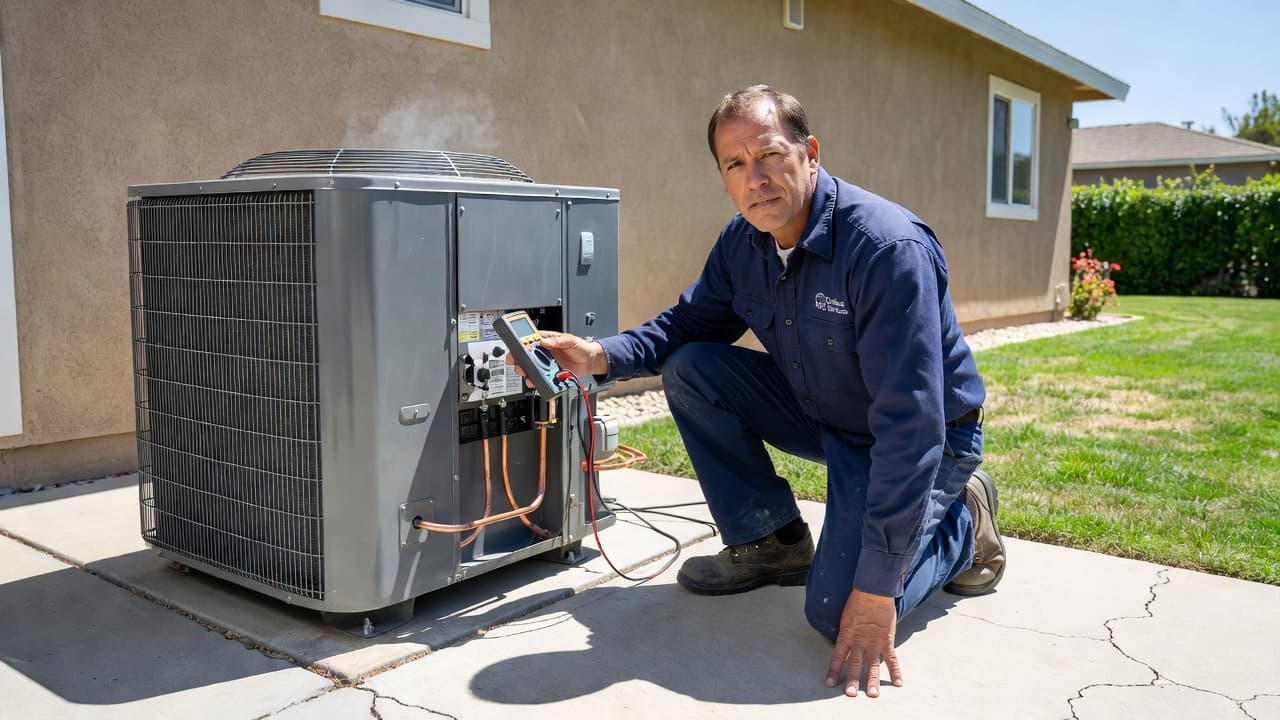
Carlsbad homes also face a coastal condition that inland systems don’t always see. Salt-laden air can corrode cabinet screws, coil fins, wiring connections, and metal brackets, which often triggers ductwork popping sounds as the housing shifts. A loose or corroded panel may rattle or pop as the unit runs, but a qualified HVAC technician can spot that wear before a small noise turns into a no-cooling call. Regular local hvac services in Carlsbad can address these issues early.
A noise that begins with reduced cooling or an electrical odor is a repair issue, even if the system still runs.
Safe DIY Checks Before You Schedule AC Repair
Start indoors, where the safest clues are often easiest to find. Turn the thermostat to “off” before handling the filter or looking closely at the equipment. You don’t need to dismantle anything to gather useful information.
Use this short sequence to separate a routine airflow issue from a sound that needs ac repair.
- Check when the pop happens. Listen from a safe distance during start-up, while the system runs, and after it shuts down. Note whether the sound comes from a ceiling vent, the indoor cabinet, or the outdoor unit. Record a brief video if you can do so safely.
- Inspect the air filter. Pull out the filter and hold it toward a bright light. If you can’t see light through most of it, replace it with the correct size and airflow rating to resolve air filter restrictions. A filter installed backward can also cause reduced airflow, so follow the arrow on its frame.
- Open supply and return vents. Furniture, rugs, and closed registers can increase duct pressure. Open the vents in rooms you use and clear space around the large return grille. Don’t close multiple vents to force more cool air into one room.
- Look at the thermostat. Adjust your thermostat settings by setting the fan to “auto,” not “on,” and make sure the temperature setting is below the room temperature. If batteries power your thermostat, replace weak batteries. A thermostat issue won’t usually create a pop, but it can cause frequent cycling that makes normal duct noises more noticeable.
- Walk around the outdoor unit without opening it. Clear dry leaves, grass clippings, patio items, and loose branches from the area around the condenser. Keep plants trimmed back so air can move freely. Look for obvious panel damage, but don’t push on panels, reach through the grille, or spray electrical areas with water.
A clean filter and open vents may settle a minor duct pop within a cycle or two. If the noise continues after those checks and you find yourself wondering when to request air conditioner repair, don’t keep restarting the system to test it. Frequent starts place extra strain on the compressor and electrical controls.
Match the Sound to the Urgency
Popping is a broad description, so listen for changes in rhythm, location, and performance. This guide helps you decide what can wait and what should stop the system.
| What you hear or notice | Likely concern | Best next step |
|---|---|---|
| One brief pop at start-up or shutoff | Duct or cabinet expansion | Check filter and vents, then monitor |
| Popping near a ceiling vent | Duct pressure or loose duct metal | Open vents and arrange service if it persists |
| Repeated snapping or cracking sounds outside | Electrical control or loose panel | Turn cooling off and schedule a technician |
| HVAC popping noises followed by humming but no cooling | Start component or compressor trouble | Shut system down and request service |
| Pop with burning odor, smoke, or breaker trip | Electrical hazard | Turn off cooling and call for urgent help |
If smoke appears or you smell melting plastic, turn the thermostat off. If you can do so safely, switch off the air conditioner’s breaker. Do not reset a breaker that trips again. Keep people away from the outdoor unit until a qualified professional checks it.
Some homeowners mistake refrigerant issues for popping. Refrigerant problems more often show up as poor cooling, evaporator coil ice, or issues involving refrigerant in compressor components. Refrigerant work requires licensed equipment and should never be a DIY project.
When a Carlsbad HVAC Technician Should Take Over
Call for service when pops are loud, repeat several times per cycle, or come from the outdoor unit. Also arrange help if airflow drops, rooms stay warm, the system short-cycles, or the electric bill climbs without a change in weather.
An experienced HVAC technician can perform a professional inspection to check duct pressure, blower operation, cabinet fasteners, the contactor, capacitor, the blower motor, and compressor controls. Those checks require meters, safe shutdown procedures, and access inside equipment panels. The same caution applies to a combined system where the furnace blower moves cool air in summer and warm air during the heating and cooling season.
For homes near Carlsbad Village, Tamarack, La Costa, Aviara, or Bressi Ranch, salt exposure and windblown debris can add wear around the condenser. Carlsbad CA AC repair services can inspect those conditions and identify whether the sound is a harmless panel movement or a failing part that requires air conditioner repair.
Don’t wait for a complete breakdown when the sound changes quickly. A system that pops once after a hot day is different from one that snaps repeatedly and struggles to cool. The second situation needs a professional diagnosis before it damages the compressor or creates an electrical risk.
Keep Popping Noises From Returning
Consistent system maintenance keeps airflow steady and catches loose hardware early. Replace disposable filters on the schedule recommended for your home, especially during heavy summer use. Households with pets, construction dust, or frequent open windows may need more frequent filter checks to maintain high system efficiency.
Keep the space around the condenser clear. During a visual check, look for rust, bent cabinet panels, loosen duct connections, condensation or drainage issues, and vegetation pressing against the unit. Watch out for water leaks around the base, and avoid bending coil fins or removing the top grille, since the fan assembly and wiring sit underneath.
Comprehensive air conditioner maintenance gives an HVAC professional a chance to tighten panels, verify electrical connections, check blower performance, and examine ductwork. It also prepares the system for both cooling and winter heating. Homeowners looking for more practical guidance can review these Carlsbad AC repair DIY and professional tips.
Conclusion
Most popping sounds come from normal temperature changes in ducts or equipment panels. Still, AC popping noises Carlsbad homeowners hear alongside weak cooling, repeated snapping, or burning odors need a trained set of eyes.
When dealing with persistent HVAC popping noises or strange cracking sounds, a clean filter, open vents, and a quick outdoor visual check are safe first steps. For a sound that continues or worsens, Book Online and get the system checked before the next hot spell.
FAQs
Is one popping sound from my AC normal?
One brief pop when the system starts or stops is often normal. Ducts and cabinet panels change shape slightly as temperatures shift. Monitor it, especially if the sound gets louder or if you notice an air conditioner popping noise repeating frequently.
Why does my A/C pop when I close bedroom vents?
Closing vents creates air pressure changes in the duct system. Thin metal can flex under that pressure and make a popping sound. Keep most supply vents open, then address uneven room temperatures with a professional airflow assessment.
Should I hose down the outdoor unit if it is popping?
A gentle rinse of the exterior coil can be part of normal maintenance, but it won’t fix an electrical pop. Turn the thermostat off first, avoid electrical boxes, and don’t use a pressure washer. Repeated snapping needs service rather than more water.
Can a dirty filter cause AC noises?
Yes. Air filter restrictions limit airflow and may increase duct pressure or strain the blower motor. Replacing the filter is a safe, low-cost check, but it won’t repair a loose electrical connection or failing hardware causing reduced airflow.