

Outdoor AC Unit Clearance: Space Your Condenser Right
My Guy is Proud to Be "Your Guy" for Your Home
Your air conditioning unit can’t shed heat if shrubs, fencing, or patio clutter crowd the outdoor unit. Maintaining proper outdoor AC unit clearance keeps air moving through the condenser coil, helps the system cool efficiently, and leaves room for safe service.
A few inches can make a real difference, especially during a hot San Diego County afternoon. Before you trim landscaping or build a screen, check the space around your equipment.
Key Takeaways
- Leave a minimum clearance of 24 inches on all sides of most outdoor unit models.
- Keep the area above the unit open, usually maintaining a vertical clearance of at least 60 inches above the cabinet unless the manufacturer states otherwise.
- Follow the clearance measurements in your specific unit’s installation manual if they differ.
- Trim plants, remove debris, and keep fences far enough away for service access.
- Call a qualified HVAC contractor for professional service if the unit freezes, makes new noises, or struggles to cool after you clear the area.
Why Outdoor AC Unit Clearance Matters
The outdoor cabinet of your system is an HVAC condenser. It releases heat collected from inside your home, then sends cooled refrigerant back indoors to continue the air conditioning cycle. Its fan pulls outdoor air through the condenser coil and pushes warmer air upward.
When a hedge presses against the unit, proper air circulation drops. The compressor then works longer and harder to move heat, which leads to higher energy consumption and reduced compressor life.
Poor clearance also makes routine maintenance harder. A technician needs room to remove panels, inspect electrical connections, wash coils, and test refrigerant performance. A condenser boxed in by a fence might look tidy, but it can turn a simple tune-up into a difficult service visit.
A unit can look clean from the front while its rear coil is packed with leaves or pressed against landscaping. Clearance needs to surround the entire cabinet.
In coastal areas such as Carlsbad and Oceanside, salt air and moisture already put pressure on outdoor metal components. Keeping space around the HVAC condenser makes it easier to spot corrosion, drainage issues, and debris before they become larger repair bills.
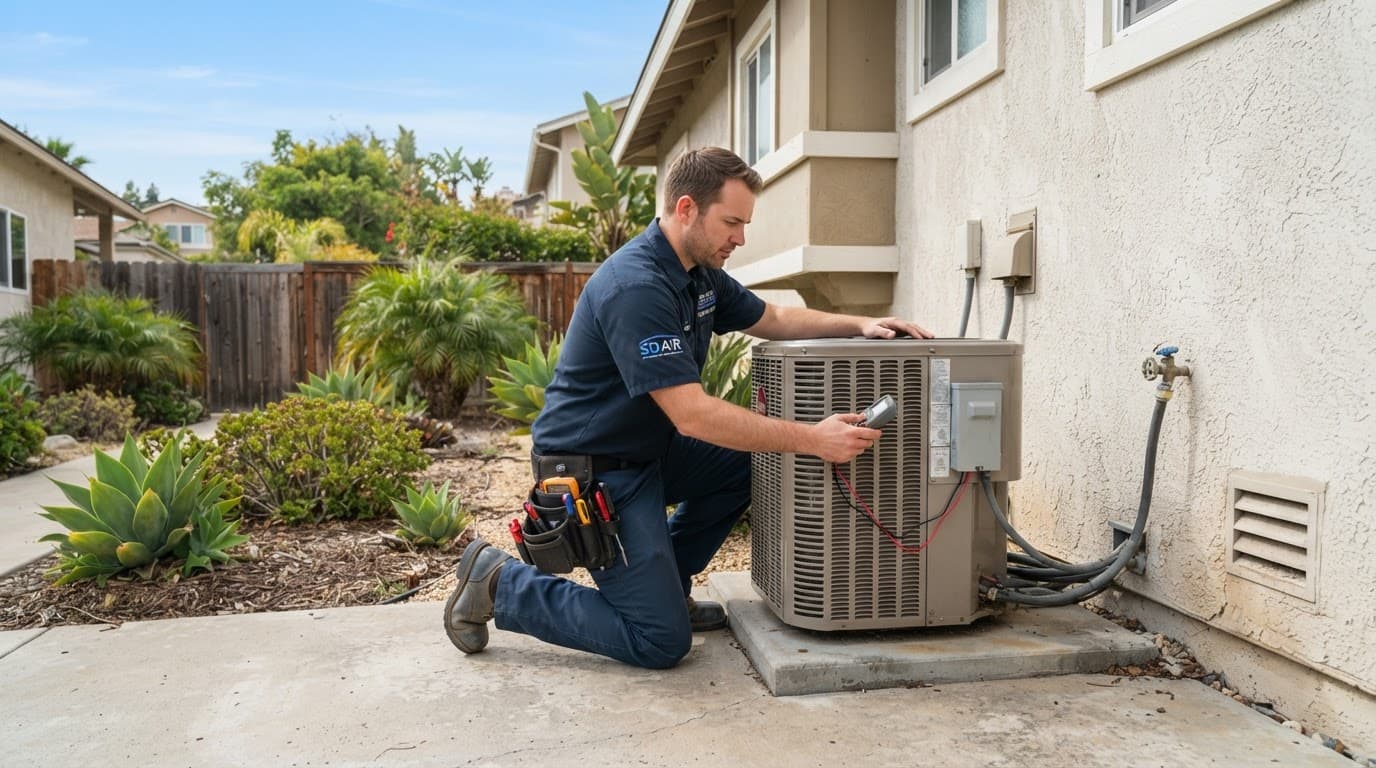
Outdoor AC Unit Clearance: The General Rule
Most residential central air conditioners need at least 24 inches of clear space on all sides, establishing a safe minimum clearance so the fan can draw air through the condenser coil without pulling in its own hot exhaust.
Above the unit, allow at least 60 inches of unobstructed space. Because the top discharge fan vents hot air vertically, maintaining proper vertical clearance prevents a low deck, roof overhang, solid cover, or dense tree branch from trapping heat around the system.
However, the manufacturer’s manual always takes priority. Some compact units, side-discharge models, and heat pumps have different side or rear requirements. Carrier, Trane, Lennox, Rheem, and Mitsubishi all publish model-specific installation instructions that detail strict manufacturer requirements. Find the model number on the data plate and check the matching manual before changing a fence or planting bed.
Use these figures as a practical starting point:
| Area around the unit | Common minimum clearance | Why it matters |
|---|---|---|
| Side clearance and rear | 24 inches | Supports coil airflow and debris removal |
| Top of the unit | 60 inches or more | Lets hot discharge air rise away |
| Service-access side | 30 to 36 inches | Gives technicians room to open panels |
| Shrubs and groundcover | 24 inches after trimming | Stops leaves and branches from blocking the coil |
These are working guidelines, not a substitute for your equipment manual. If your installation guide calls for more room, use the larger measurement.
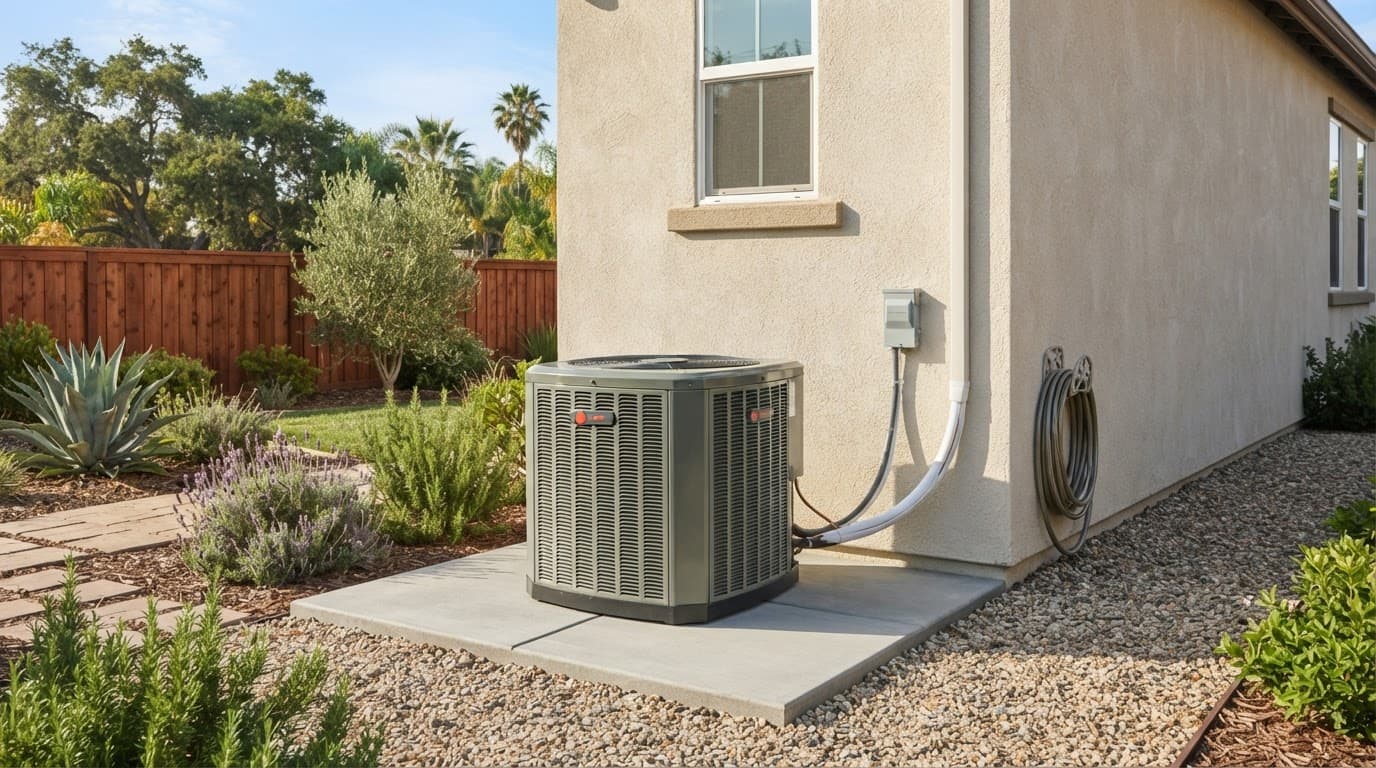
Clearance Problems That Sneak Up on Homeowners
Landscaping changes slowly, which is why many clearance problems go unnoticed. A small shrub planted two feet away can grow into the coil within a season or two. Poor unit placement often stems from letting ivy weave through the grille, while mulch and grass clippings collect at the base.
Privacy screens create another common issue. A screen can work if it has wide airflow gaps and sits far enough from the cabinet. Solid panels placed close to the condenser act like a wall around a hot appliance. They also limit access for AC repair.
Watch for these warning signs around your outdoor unit:
- Bushes, vines, or ornamental grasses touch the cabinet or lean into the grille.
- A barbecue, storage bin, hose reel, or patio furniture sits near the coil.
- Roof runoff pours onto the unit or creates mud and standing water around the pad.
- A low branch hangs over the fan guard.
- Restricted airflow makes the system run for long periods, which drives up your operating cost while rooms still feel warm.
Dry leaves are especially troublesome in Fallbrook and Poway, where wind can pile debris against the equipment. After a windy day, a quick walk-around can prevent your outdoor unit from drawing loose material into the coil and straining the entire air conditioning unit.
A condenser should also sit level on a stable pad. Soil erosion, roots, and poor drainage can tilt the pad over time. A slight slope may not stop operation immediately, but a noticeably uneven unit deserves a professional inspection.
What You Can Safely Do Yourself
Homeowners can handle basic clearing and cleaning without opening the electrical cabinet or touching refrigerant lines. First, turn off the thermostat. Then switch off power at the outdoor disconnect or breaker before working near the outdoor unit.
Start with a gentle cleanup:
- Pull leaves, weeds, and loose debris away from the base and surrounding area.
- Trim shrubs back to restore the recommended side clearance and protect the condenser coil.
- Use a garden hose on a gentle setting to rinse the outside of the coil from top to bottom.
- Keep the spray straight, not angled through the fins, because bent fins restrict airflow.
- Check the pad for settling and clear nearby drain paths.
Don’t use a pressure washer, metal brush, or chemical coil cleaner unless a technician directs you to. High pressure can flatten delicate aluminum fins, and harsh cleaners can damage the coil or nearby surfaces.
Avoid covering the condenser tightly in winter. Southern California’s mild weather rarely calls for a sealed cover, and trapped moisture can encourage rust. If leaves are a concern, clear them regularly instead.
For a more detailed local routine, see these San Marcos AC repair and DIY clearance tips. Basic upkeep preserves proper airflow for your air conditioner, but it doesn’t replace annual professional maintenance.
When a Clearance Issue Needs HVAC Service
Clearing the space around your unit won’t repair every cooling problem. A dirty coil may share symptoms with a failing capacitor, low refrigerant, damaged fan motor, or electrical fault, which ultimately impacts your system cooling capacity. If the breaker trips, the unit hums without starting, or ice forms on refrigerant lines, shut the system off and arrange service.
Frozen equipment needs special care. Restricted airflow can cause the indoor evaporator coil to freeze, yet refrigerant problems can do the same, and persistent restricted airflow can severely damage internal parts. Running a frozen system can strain the compressor, which is usually the most expensive component to replace.
In San Diego, dependable HVAC service also matters for homes with a heat pump. The same outdoor cabinet may handle both cooling and heating, so blocked airflow can affect comfort during cooler evenings as well. Traditional systems need attention, too, because a furnace and air conditioner often share the same indoor blower and ductwork.
Professional maintenance includes more than rinsing the exterior. A qualified HVAC contractor can check temperature split, electrical readings, condensate drainage, coil condition, blower performance, and the condition of the disconnect for your HVAC condenser. That broader inspection helps separate a simple airflow issue from a repair that needs prompt attention.
Plan Landscaping and Screens Around the Condenser
You don’t need to leave your condenser in a bare patch of dirt. Thoughtful landscaping can hide it without limiting performance, especially when you prioritize smart unit placement. Choose low-growing plants that mature outside the required clearance zone, and leave a direct path to the service panel.
A louvered screen can also work when it sits several feet away and doesn’t block the top discharge. Make sure your setup follows the manufacturer requirements and installation instructions, because air circulation relies on an open path into the sides and out the top. Place your screen where it improves the view from a patio or window, but don’t build an enclosed box.
Keep downspouts pointed away from the unit. In addition, don’t place sprinklers where they repeatedly soak the cabinet. Regular irrigation can speed corrosion and carry soil onto the coil fins.
If you are replacing a failed system, ask the installer about location before the new equipment goes in. Moving a condenser away from a narrow side yard or dense planting area may cost more upfront, but it can improve access for future maintenance and AC repair.
Final Thoughts
Good outdoor AC unit clearance protects airflow, equipment life, and your comfort. Keep at least two feet open around the cabinet, leave ample room overhead, and follow your model’s manual when it calls for more space.
Maintaining proper airflow keeps your air conditioner running efficiently when summer temperatures rise. If your unit still struggles after a basic cleanup, Book Online for a professional inspection.
FAQs
How much space should be around an outdoor AC unit?
Most residential units need at least 24 inches of open space around the sides and rear to maintain a proper minimum clearance. The top typically needs 60 inches or more of open space. Check your manufacturer’s installation manual because exact requirements vary by model.
Can I put a fence around my air conditioner?
Yes, but a fence needs airflow gaps and enough distance from the condenser. Keep it outside the manufacturer’s required boundary, and leave enough service clearance for a technician to access the panels. A solid fence placed too close can recirculate hot air.
Can plants grow near an AC condenser?
Plants can grow nearby if you trim them often and keep them at least two feet from the cabinet. Avoid vines, dense hedges, and trees that drop heavy leaves or sap. Mature plant size matters more than its size on planting day.
Does an outdoor unit need clearance in winter?
Yes. A winter heat pump relies on the outdoor unit for heating, and even cooling-only condensers need clear access for maintenance. Remove leaves and avoid tight covers that trap moisture against the cabinet.
Should I call for AC repair if my unit is blocked by debris?
Clear loose debris first after turning off power. If cooling remains weak, the unit freezes, or it makes unusual sounds, schedule professional AC repair. Those symptoms often point to a problem caused by restricted airflow, which may go beyond simple blockage.