

AC Delay Mode: What It Means and When to Call
My Guy is Proud to Be "Your Guy" for Your Home
Your thermostat says “Delay,” but the house still feels warm. That pause can be unsettling during a San Diego County heat wave, especially when you expect cool air right away.
In most cases, a thermostat delay on your air conditioning unit is simply a normal AC delay mode compressor-protection feature, not a breakdown. However, a delay that lasts too long or repeats often can point to a problem that needs attention.
Key Takeaways
- AC delay mode usually provides anti-short-cycle protection that prevents the compressor from restarting too quickly after it stops.
- Most delays feature a thermostat delay lasting about 3 to 5 minutes, although timing varies by brand and model.
- A thermostat setting change, power interruption, or brief cooling cycle can activate the delay across your cooling system.
- Don’t repeatedly switch the A/C on and off while waiting, since that can strain the equipment.
- Call for HVAC service if the unit never starts, blows warm air, frequent breaker trips occur, or the system makes unusual noises.
What AC Delay Mode Means on Your Thermostat
AC delay mode is a short waiting period before the outdoor unit starts. A built in compressor protection timer triggers this safety pause while refrigerant pressures settle. The indoor blower may run during that time, or the entire system may appear idle. Either way, the delay gives refrigerant pressures time to balance before the compressor turns back on.
The compressor is the outdoor unit’s hard-working motor. It needs a brief pause after shutting down. If it starts again while pressure remains high, it can draw excessive electrical current and put stress on parts such as the compressor, capacitor, and contactor.
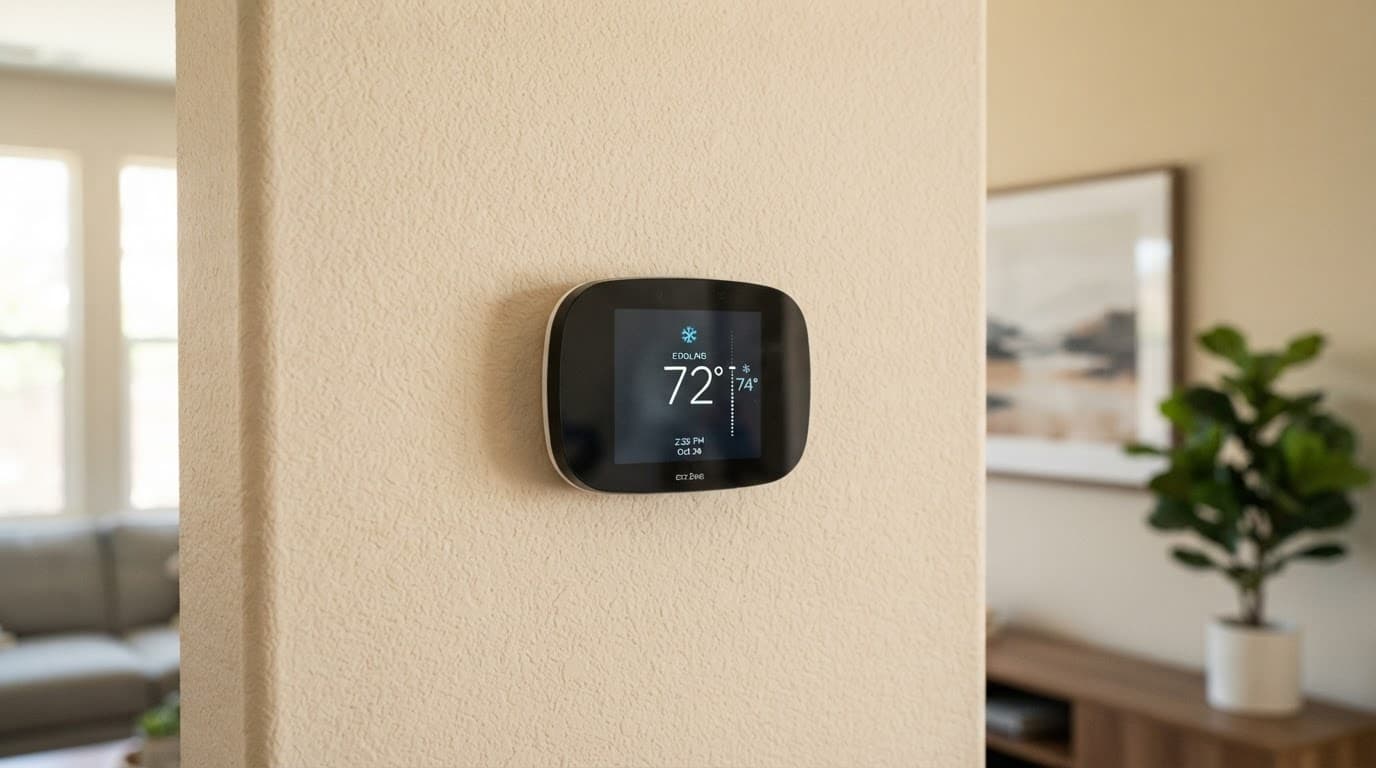
Many modern thermostats display messages such as “Delay,” “Waiting,” “Cool On,” or a blinking snowflake. When you see a wait or delay status on the screen, those messages often point to the same protective pause.
A delay commonly appears after you:
- Change thermostat settings from heating to cooling.
- Adjust the temperature several degrees lower.
- Restore power after an outage or a power interruption.
- Turn cooling off, then back on within a few minutes.
- Have a smart thermostat reconnect after an update or Wi-Fi interruption.
The message should clear on its own. Once the pause ends, the outdoor unit should start and deliver cool air through the vents soon afterward.
A brief delay protects expensive equipment. Repeated delays without a completed cooling cycle deserve closer attention.
Why Your Air Conditioner Needs a Restart Pause
A residential air conditioning system moves refrigerant between the indoor evaporator coil and the outdoor condenser coil. When a cooling cycle ends, pressure inside that sealed system does not instantly balance.
The built-in delay avoids a hard restart and prevents short cycling. Without it, the compressor may start under a heavy load. That can lead to humming, breaker trips, overheating, or premature wear on your HVAC equipment.
A built-in delay timer often controls that timing. Some systems also rely on a programmed thermostat delay. Because of that, changing thermostat brands doesn’t always remove the pause.
A delay after a power failure is especially common. Your home may regain electricity before the outdoor condenser is ready to run. Give the equipment time before deciding something is wrong.
Older equipment can also have a separate time-delay relay. Newer systems may use communicating controls. The purpose stays the same: protect the compressor before it starts.
If your cooling system is operating normally after the wait, AC delay mode is doing its job. It becomes a concern when the wait keeps restarting, the condenser never turns on, or indoor temperatures keep rising.
Safe DIY Checks Before You Request AC Repair
Start with basic thermostat troubleshooting to make sure your system is ready. Confirm it is set to “Cool” and that the temperature setpoint is at least a few degrees below the room temperature to initiate a cooling call. Then leave it alone for five minutes. Repeatedly pressing buttons can restart the protection timer.
Next, check the basics that don’t require opening equipment:
- Inspect the air filter. A clogged filter restricts airflow and can cause the evaporator coil to freeze. Replace a disposable filter if it looks gray, packed with dust, or bowed inward.
- Check the electrical panel. Look for a tripped breaker labeled AC, condenser, or air handler. If you notice that breaker trips repeatedly, it needs professional diagnosis.
- Look at the outdoor unit. Remove leaves, grass clippings, and loose items around the outdoor unit. Keep shrubs and furniture away so air can move through the condenser coil.
- Check supply vents and return grilles. Open closed vents and make sure furniture, curtains, or rugs are not blocking airflow.
- Listen after the delay ends. A normal condenser makes a steady fan and compressor sound. Loud buzzing, repeated clicking, grinding, or a hum with no startup are warning signs.
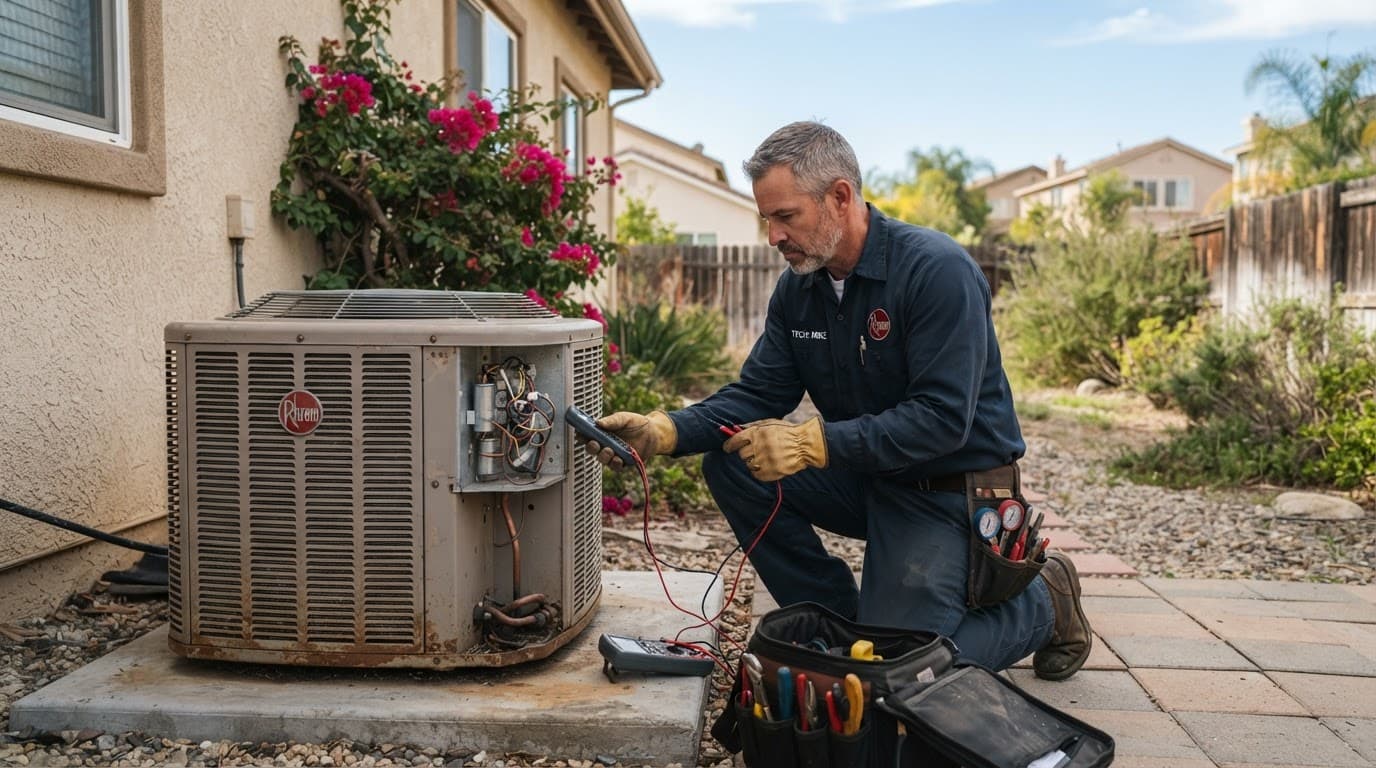
Don’t remove the condenser access panel or touch electrical components. Capacitors can hold an electrical charge even after power is off. Avoid adding refrigerant yourself as well. Refrigerant work requires proper tools, training, and handling procedures.
For a system that repeatedly pauses but still struggles to cool, professional HVAC services in Escondido can identify the cause without guesswork.
When AC Delay Mode Means You Should Call a Technician
A normal delay is short and ends with cool air. A service call makes sense when the pause is part of a larger pattern.
Use these signs to separate a normal wait from a likely malfunction:
| What you notice | What it may indicate | What to do |
|---|---|---|
| Delay clears within a few minutes and cool air follows | Normal compressor protection | Let the system run |
| Thermostat stays on “Delay” for 10 minutes or longer | Thermostat delay, control, or electrical problem | Schedule service |
| Indoor fan runs, but outdoor unit stays silent | Failed capacitor, contactor, wiring, or power issue | Turn cooling off and call |
| Breaker trips after a restart attempt | Electrical fault or compressor problem | Do not keep resetting it |
| Ice forms on refrigerant lines or indoor coil | Airflow restriction or refrigerant issue | Shut system off and call |
| Burning smell, smoke, or loud electrical buzzing | Potential electrical hazard | Turn system off and seek urgent help |
A thermostat can cause the issue, but it is not always the source. Weak batteries, loose wire connections, incorrect installer settings, or a failing thermostat can interrupt cooling commands. Still, the outdoor unit may have its own problem.
For example, a weak capacitor can prevent the compressor from starting after the delay ends. A failing contactor may click without sending reliable power. Low airflow can freeze the indoor coil, and the system may begin short cycling or cycling unpredictably, which puts severe wear on your air conditioning and other delicate HVAC equipment.
If your A/C stops working during extreme heat, avoid pushing it through repeated restarts. Turn it off at the thermostat and use emergency AC repair when the unit will not cool, shows electrical warning signs, or leaves vulnerable household members without safe indoor temperatures.
Keep Delays From Turning Into Repeat Problems
You cannot and should not disable the normal restart delay. You can, however, reduce the issues that make it appear more often through consistent preventative maintenance.
Replace filters on schedule, especially during dusty or high-use months. Keep the outdoor unit clear, and don’t make large thermostat changes every few minutes. A steady setting gives the equipment time to complete a full cooling cycle while maximizing overall energy efficiency.
While waiting out system delays, you can reduce cooling demand and maintain comfort by using a ceiling fan, adjusting window coverings to block direct sunlight, and checking for proper air sealing around doors and windows.
Seasonal tune-ups also matter. A technician can check electrical connections, test the capacitor, clean coils, confirm drain flow, and inspect refrigerant performance. For broader improvements, considering insulation upgrades or scheduling a comprehensive home energy assessment can yield lasting energy savings and peak operational energy efficiency. Those checks support both summer cooling and winter heating, particularly in homes where the same HVAC system works with a furnace.
For homes in Carlsbad, Oceanside, Vista, San Marcos, Poway, Fallbrook, and nearby communities, an annual tune-up can catch small electrical and airflow problems before the hottest days arrive.
A Short Delay Is Usually a Good Sign
A brief AC delay mode message means your system is protecting its compressor. Give it several minutes, confirm the thermostat is set correctly, and watch for cool air.
When the message lingers or comes with breaker trips, strange sounds, ice, or warm air, stop restarting the system. If you experience a prolonged wait or delay accompanied by these warning signs, a qualified technician can find the fault and protect the equipment from further damage.
If your cooling delay does not clear, Book Online to get your home comfortable again.
FAQs About AC Delay Mode
How long should AC delay mode last?
Most air conditioner delays last about 3 to 5 minutes while the compressor protection timer does its job. The exact timing depends on the thermostat, control board, and the built-in delay timer. If the system remains in delay for more than 10 minutes, or never starts cooling, schedule a service visit.
Can I bypass AC delay mode?
You should not bypass it because anti-short-cycle protection is vital for modern air conditioning. The delay protects the compressor from a high-pressure restart, which can damage expensive components. Leave the thermostat on its cooling setting and allow the timer to finish.
Why does my thermostat say delay after a power outage?
A power outage interrupts the cooling cycle. When power returns, the thermostat or outdoor controls may enforce a restart pause to protect the compressor. If frequent electrical interruptions occur, you can review your system efficiency during a home energy assessment. If cooling does not return after the wait, check the breaker once and then call for AC repair.