

How Coastal Salt Air Corrodes Outdoor AC Units
My Guy is Proud to Be "Your Guy" for Your Home
A sea breeze can feel great on a warm afternoon, but it can be hard on the equipment that cools your home. Coastal AC corrosion Carlsbad homeowners see often starts as an invisible salt film on the outdoor condenser unit.
When salt air corrosion takes hold, the damage may begin long before your system stops cooling. A unit can look normal from the patio while corrosion weakens coil fins, electrical connections, and the cabinet behind the panels.
Salt exposure doesn’t mean an A/C system is doomed. It does mean regular care matters more near the coast.
Key Takeaways
- Coastal salt air forms a conductive film on outdoor AC units, speeding up corrosion on coils, electrical connections, and cabinets.
- Warning signs of corrosion include white powdery buildup on aluminum fins, rust on screws, and higher electric bills due to decreased efficiency.
- Homeowners can reduce salt buildup through routine, low-pressure fresh water rinses every month or two after turning off power at the disconnect.
- Professional maintenance at least once a year helps catch hidden electrical damage, refrigerant leaks, and component wear before emergency repairs are needed.
How Coastal Salt Air Corrodes Outdoor AC Units
Ocean spray and airborne salt travel farther than many homeowners expect because of regular coastal air exposure. Wind carries tiny chloride particles inland, where they settle on the outdoor equipment. Morning marine layers, fog, and dew add moisture in high-humidity areas, turning that residue into a conductive film.
That film speeds up salt air corrosion. Aluminum coil fins can develop white, chalky oxidation. Steel screws, fasteners, and cabinet seams may show reddish-brown rust. Copper tubing can also corrode, especially where moisture stays trapped against other metals.
Heat makes matters worse. An operating condenser pulls large volumes of outdoor air through its system. That airflow continually brings salty particles into the cabinet, where they can collect on outdoor condenser coils and electrical components.
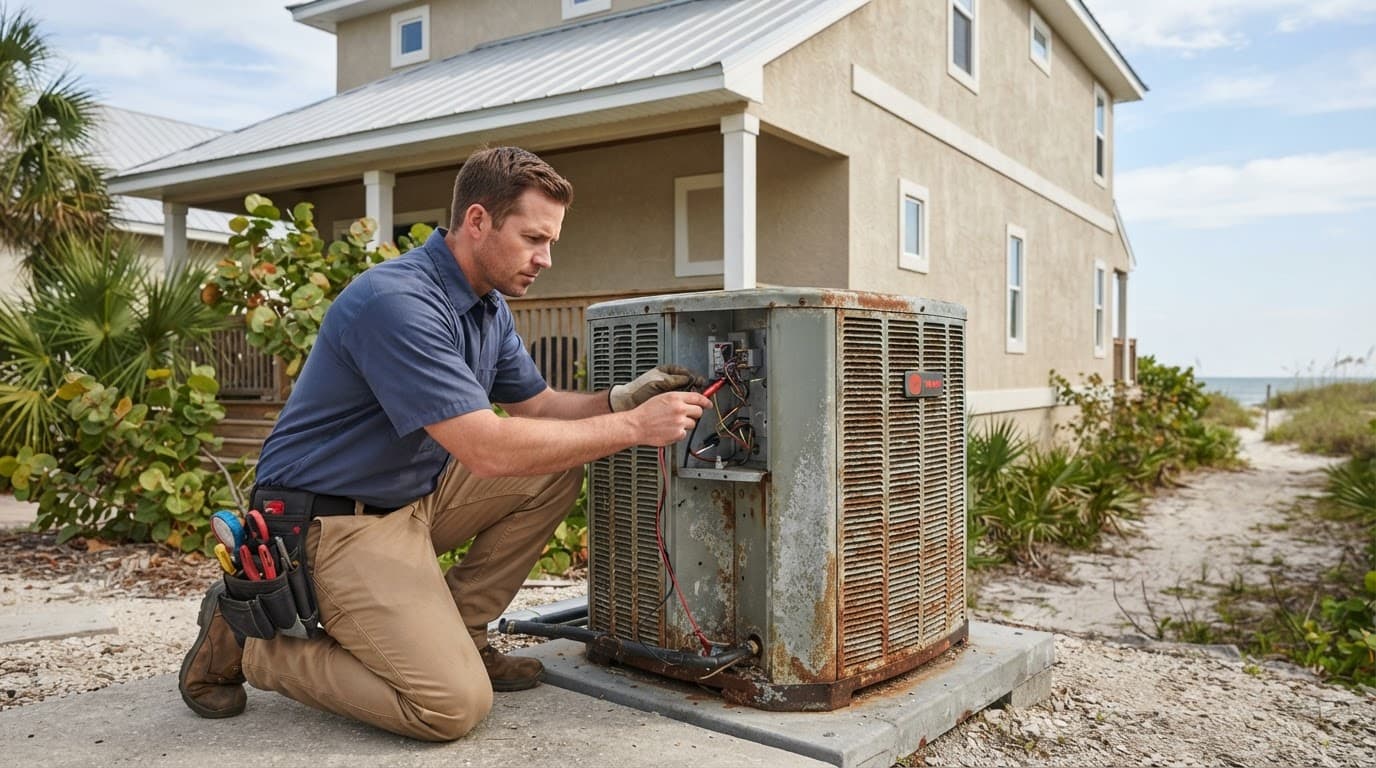
The condenser coil releases heat from your home into outdoor air. When corrosion bends, flakes, or blocks its thin metal fins, heat can’t move as freely. Your air conditioning unit then runs longer to reach the thermostat setting, putting extra strain on coastal HVAC systems.
Salt residue becomes more damaging when it stays damp. Shaded equipment, clogged coils, and poor drainage can keep that corrosive film active for hours after fog or dew arrives.
Distance from the shoreline matters, but it isn’t the only factor. Homes exposed to prevailing winds, bluff-top properties, and locations near lagoons may receive heavy salt exposure. Even inland neighborhoods in Carlsbad, Oceanside, and Vista can deal with salt-laden air during certain weather patterns.
Coastal AC Corrosion Carlsbad Homeowners Should Watch For
Corrosion often appears gradually. Catching it early can prevent preventive AC maintenance from becoming an urgent AC repair call during a heat wave.
Look over the unit from the outside, with the power left alone and all access panels closed. Warning signs include:
- White powdery buildup, pitting on the aluminum coil fins, and general rust and corrosion.
- Rust around screws, cabinet corners, base pans, or the fan guard.
- Peeling paint, bubbling coatings, or dark stains beneath the condenser.
- Fins that look flattened, brittle, or packed with dirt and debris.
- A unit that runs longer than usual, makes new noises, or struggles to cool.
Some damage stays hidden behind panels. A technician can inspect electrical terminals, contactors, capacitor connections, refrigerant tubing, and the coil itself. Green or blue discoloration near copper is worth attention, since it may point to moisture-related corrosion.
A higher electric bill can also be an early clue. As the coil loses its ability to reject heat and energy efficiency drops, the compressor works harder and pulls more power. That added strain can shorten the life of parts that haven’t corroded at all.
Homeowners in San Marcos, Escondido, and Poway may face less salt exposure than beachside homes. Still, dust, irrigation overspray, and coastal winds can create similar trouble when they build up on an outdoor unit.
The Parts Most Likely to Fail First
When protecting coastal HVAC systems, outdoor condenser coils are usually the first concern because they have so much surface area. Their aluminum fins and coils are thin and easy to damage. Corroded fins reduce airflow, while severe coil corrosion can eventually cause refrigerant leaks.
Electrical connections are another weak point. Salt and moisture can corrode terminals and wiring connections, raising electrical resistance. A failing contactor may chatter or stick. Corrosion around a capacitor can contribute to poor starting performance, although only testing can confirm the actual cause.
The cabinet and base pan matter too. Rusted panels may loosen or create openings for pests and moisture, especially if the unit lacks protective stainless steel hardware. If the base pan deteriorates, the condenser can lose stable support. Vibration then adds stress to refrigerant lines and fan components.
This is why coastal HVAC service should look beyond a quick temperature check. A capable inspection considers the coil, cabinet, fan, wiring, drainage, refrigerant lines, and overall operating pressures.
| Component | What salt exposure can cause | Why it matters |
|---|---|---|
| Condenser coil | Pitting, condenser fins and tubes deterioration, and refrigerant leaks | Reduced cooling and costly repairs |
| Electrical terminals | Oxidation and poor connections | Starting problems or intermittent shutdowns |
| Cabinet and fasteners | Rust and failed coatings | Loose panels and structural wear |
| Fan assembly | Corroded hardware and imbalance | Noise, vibration, and motor strain |
The key takeaway is simple: surface corrosion can signal deeper wear. A close inspection is safer than judging a condenser by its outer appearance alone.
DIY Care That Reduces Salt Buildup
Homeowners can reduce salt accumulation without opening the electrical compartment or using harsh chemicals. Routine coastal maintenance, such as rinsing away accumulated salt deposits, helps protect your equipment. Start with a visual check every month or two, especially after strong onshore winds, foggy stretches, or storms.
First, turn off power to the air conditioning unit at the outdoor disconnect. Then use a gentle gardenhose spray to rinse the exterior and exposed coil surfaces from the top down. Use low pressure only. A pressure washer can flatten fins and drive water into places it doesn’t belong.
Keep plants, mulch, patio furniture, and stored items at least a couple of feet from the equipment. The condenser needs open airflow on all sides. Trim back shrubs before branches rub the cabinet or shed leaves into the coil.
Avoid these common mistakes:
- Don’t use bleach, acidic cleaners, or household degreasers on the coil.
- Don’t brush thin aluminum fins aggressively or scrape corrosion with metal tools.
- Don’t cover a running unit or wrap it tightly for long periods.
- Don’t attempt refrigerant work, electrical repairs, or panel removal yourself.
A purposemade coil cleaner may be appropriate in some cases, but product instructions and equipment requirements vary. When buildup is heavy or fins look damaged, professional maintenance is the safer choice. Regular AC maintenance plans give a technician time to clean the unit correctly, and investing in preventive AC maintenance helps identify corrosion before summer demand rises.
When Cleaning Isn’t Enough
Rinsing helps remove fresh deposits, but it can’t restore metal that has already pitted or repair a leaking coil. Call for service if the system blows warm air, trips a breaker, freezes up, makes grinding sounds, or cycles on and off repeatedly.
A technician can test the system, clean the coil with suitable products, tighten connections, check the capacitor, and inspect refrigerant lines. If corrosion has caused a leak, the technician can explain whether a repair makes financial sense for the unit’s age and condition.
For coastal AC corrosion Carlsbad residents, local familiarity matters. A service visit should account for the home’s exposure, not treat every outdoor unit like an inland installation. Air conditioning repair in Carlsbad can address corrosion-related performance issues before a hot afternoon turns into a no-cooling emergency.
Replacement may be the better path when corrosion has damaged several major components or the coil has failed on an older system. Ask about anti-corrosion coatings, protective coil coatings, Gold Fin condensers, and other corrosion-resistant materials that withstand a harsh corrosive environment.
Your cooling system also shares electrical infrastructure and maintenance needs with heating equipment. If you use heat pump systems or ductless mini split systems, those outdoor units work during both cooling and heating seasons. A traditional furnace stays indoors, yet a full HVAC visit can still catch airflow or electrical issues that affect year-round comfort.
Build a Coastal Maintenance Schedule
Coastal HVAC systems benefit from more frequent attention than a unit in a dry inland yard. A light rinse after periods of salty fog helps remove deposits before they sit on the coil. During peak cooling season, listen for changes in run time and check the outdoor area for debris as part of your regular coastal maintenance.
Schedule professional maintenance at least once a year to protect your equipment. Homes near the beach, open water, or strong onshore winds may benefit from twice-yearly visits. Spring service prepares the system for warm weather, while fall service can find damage after a long season of coastal exposure.
Technicians should measure operation, inspect electrical components, clean accessible coil surfaces, clear debris, and document corrosion. These steps safeguard your overall system lifespan. Keep service records as well, because they make it easier to track whether rust or coil damage is progressing over time.
Protect Your Outdoor Unit Before Salt Takes Its Toll
Salt air corrosion doesn’t cause an immediate failure, but repeated exposure can wear down an outdoor condenser unit piece by piece. Routine rinsing, clear airflow, and professional inspections keep minor damage from becoming a major issue, ultimately helping to preserve your system lifespan.
The strongest defense against coastal wear is early attention. A well-maintained unit uses less effort to cool your home and gives you more time to plan any needed repair.
If your condenser shows rust, reduced cooling, or unusual sounds, Book Online before summer heat puts extra stress on the system.
FAQs
How often should I rinse an AC unit near the coast?
A gentle fresh-water rinse every month or two is a practical starting point. Increase the frequency after storms, heavy fog, or sustained ocean winds. Always switch off power at the disconnect first, and use low water pressure.
Can I spray a rust inhibitor or protective coating on my condenser?
Only use products approved for HVAC equipment and the specific materials in your unit. Professional application of anti-corrosion coatings and factory marine-grade components can help, but random coatings can trap moisture, reduce heat transfer, or void a manufacturer’s warranty. A technician can recommend appropriate protection after inspecting the condenser.
Does coastal corrosion affect a new air conditioner?
Yes. New equipment featuring high SEER2 ratings and variable-speed operation can still collect salt deposits, although proper placement, maintenance, and approved protective features can slow the damage. Starting care early is easier than correcting advanced corrosion later.
Is rust on an outdoor AC cabinet always a serious problem?
Small spots on a fastener or exterior panel don’t always mean immediate failure. However, rust should prompt a closer inspection because it can reveal ongoing moisture and salt exposure. Deep rust, loose panels, or damage near the base pan needs prompt service.