

High AC Electric Bill San Diego: Safe DIY Checks
My Guy is Proud to Be "Your Guy" for Your Home
If an electric bill in San Diego shows a sudden jump, check the details before assuming the worst. A heat wave during the summer months, usage during peak hours, higher energy consumption, or air conditioners working harder can all raise the total.
San Diego electricity costs are already high, so a few extra cooling hours can make a painful difference. Check the bill, your habits, and the equipment in that order.
Key Takeaways
- Compare billing days, total kWh, daily usage, rate plan, and peak-hour charges before assuming an A/C problem caused the higher bill.
- Safe checks include replacing a clogged filter, reviewing thermostat schedules, opening vents, clearing return grilles, removing debris around the outdoor condenser, and sealing obvious air leaks.
- Time-of-use rates can make late-afternoon and evening cooling especially expensive, so shift flexible appliances outside peak hours and use modest pre-cooling when practical.
- Constant runtime, weak airflow, uneven temperatures, short-cycling, ice, water, unusual sounds, or repeated breaker trips may indicate a need for professional HVAC diagnosis.
- CARE and FERA may help eligible customers, while rooftop solar and properly sized battery storage can reduce purchases; portable solar generators generally cannot replace central A/C.
High AC Electric Bill San Diego: Start With the Bill
Start by comparing this month’s electric bill with the same month last year, not just last month. Check billing days, total kilowatt-hours (kWh), rate plan, monthly usage, and average daily use. Then review the usage chart for changes in energy consumption and power consumption.
A bill covering 35 days instead of 28 can look alarming, even when daily use barely changed. A generic average electric bill isn’t enough for comparison. A changed pricing structure can raise costs despite similar total kWh. Check baseline rates and charges during peak hours before blaming usage alone.
A San Diego household may see a higher bill after a short heat wave because it used more energy during more expensive hours.
Hot inland days in Escondido, Poway, and San Marcos strain cooling systems more than mild coastal afternoons in Carlsbad or Oceanside. If your thermostat ran most of the day, that added runtime should appear in your daily usage pattern.
San Diego Gas & Electric’s electricity rates sit well above the national average. Delivery costs, transmission charges, wildfire mitigation, undergrounding projects, and grid investments all affect what customers pay. Your utility provider may handle delivery, while San Diego Community Power may supply generation. The generation charge is only one part of the bill.
Safe DIY Checks Before You Call for HVAC Service
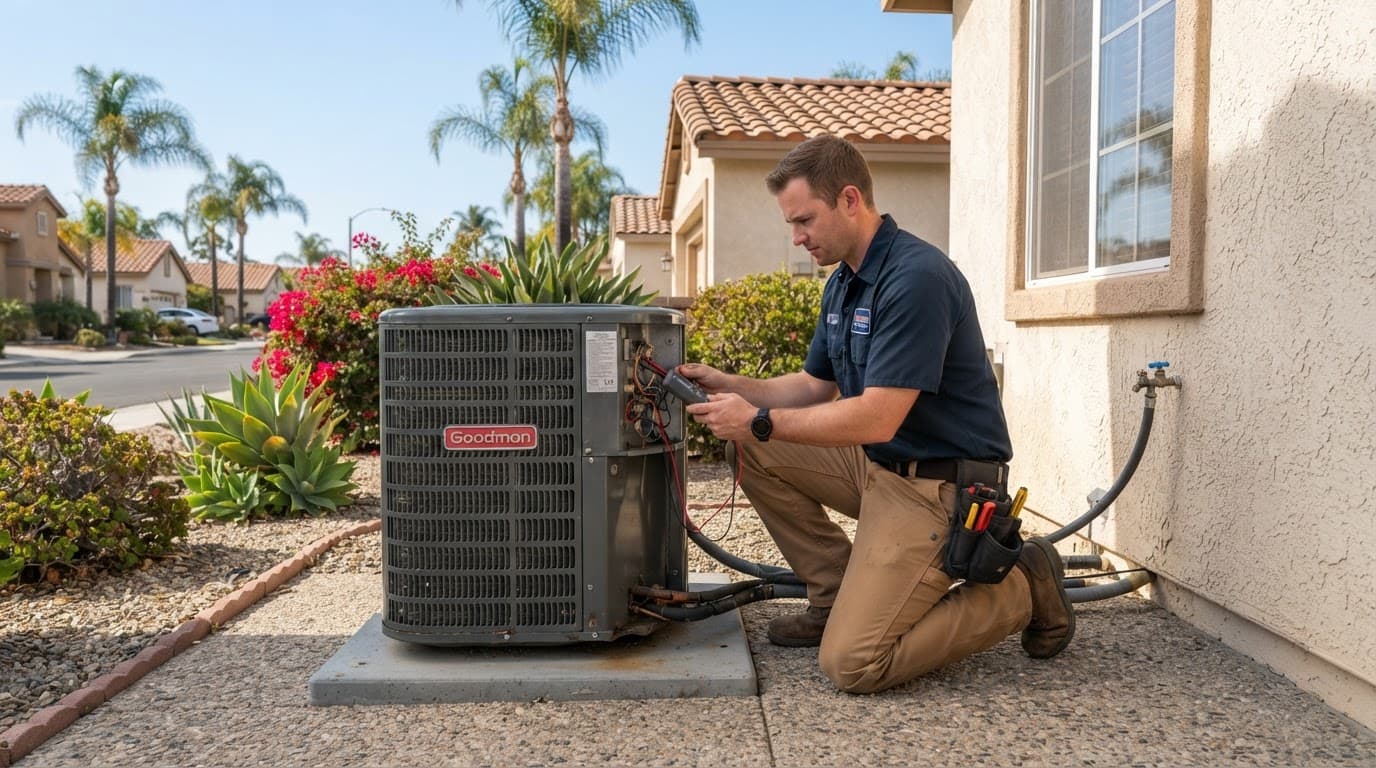
A few safe checks can reveal whether household air conditioners are wasting energy. They don’t require removing panels, touching wiring, or adding refrigerant.
- Inspect the air filter. Hold it toward a light source. If little light passes through, replace it with the correct size and airflow rating. A packed filter restricts airflow and reduces energy efficiency, forcing the blower and compressor to run longer.
- Check thermostat settings and schedules. Confirm the thermostat is in cooling mode, the temperature setting is reasonable, and no schedule is dropping the temperature while the house is empty. A smart thermostat can also show unusually long runtime and reveal climate control patterns.
- Open supply vents and clear return grilles. Furniture, rugs, and closed interior doors can block airflow. Keep the large return grille clear, because your HVAC system needs a clear path to pull indoor air back to the air handler.
- Look around the outdoor condenser. Remove leaves, grass clippings, and loose debris from around the unit. Keep shrubs and stored items at least two feet away so the condenser can release heat.
- Check for obvious air leaks. Feel around exterior doors, older windows, attic hatches, and the door between the house and garage. Conditioned air escaping through gaps makes air conditioning run longer.
- Watch for warning signs. Ice on the refrigerant line, water around the indoor equipment, warm air from vents, grinding sounds, or a breaker that trips repeatedly calls for professional attention. Turn the system off if you smell burning or see damaged wiring.
Don’t open the electrical disconnect or cabinet panels, touch wiring, pressure-wash coils, or use do-it-yourself refrigerant products. Those jobs can damage the system and create a safety risk.
Estimate What Your Air Conditioner Costs Per Day
Electricity use is measured in kWh. To estimate power consumption, multiply the appliance wattage by the hours it runs, then divide by 1,000. Multiply that result by your electricity rate.
These examples assume eight hours of continuous operation at an illustrative 45 cents per kWh. Your unit cycles on and off, and your actual rate can vary during peak hours.
| Equipment | Typical Power Draw | Eight-Hour Use | Approximate Cost |
|---|---|---|---|
| 8,000 BTU window unit | 700 watts | 5.6 kWh | $2.52 |
| Portable A/C unit | 1,200 watts | 9.6 kWh | $4.32 |
| Central 3-ton system | 2,000 to 4,000 watts | 16 to 32 kWh | $7.20 to $14.40 |
Portable solar generators have different inverter and capacity limits, so they shouldn’t be used as a proxy for central A/C power demand.
A window unit in one closed bedroom may offer energy savings compared with cooling a whole home overnight. However, running it alongside central A/C to cool the same room adds expense. Check the unit’s nameplate for its actual wattage, because models vary widely.
Time-of-Use Plans Can Turn Late Afternoons Expensive
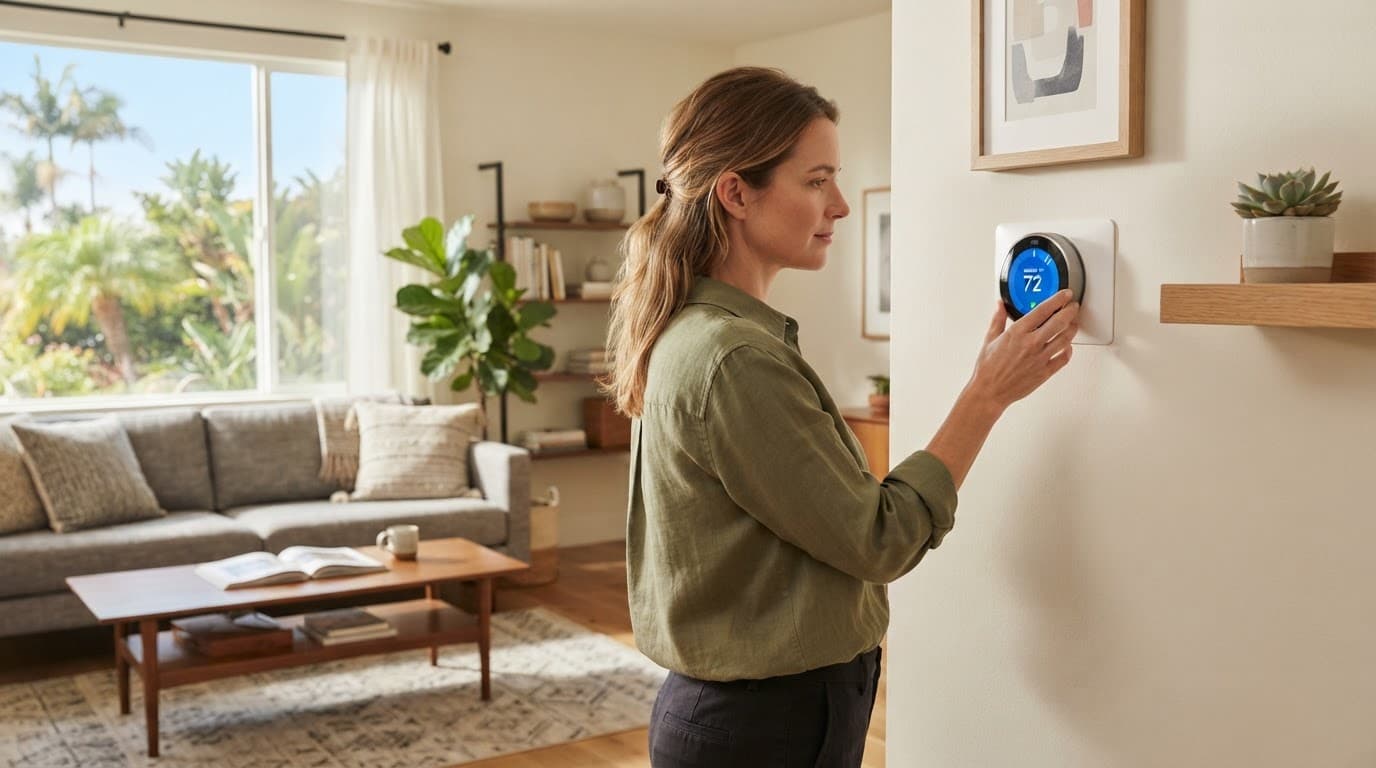
Many San Diego Gas & Electric time-of-use plans charge the most during late afternoon and evening. The late-afternoon window often runs from 4 PM to 9 PM, with peak hours costing more than baseline rates. Exact hours, seasons, and prices depend on your current rate schedule and pricing structure, so check your bill and SDG&E account.
That timing matters because the hottest part of an inland summer day often overlaps with expensive electricity. A central system may run hard while dinner cooks, laundry runs, lights are on, and everyone is home.
Shift flexible loads outside peak hours when possible. Run the dishwasher later, charge electric vehicles overnight, and use the dryer in the morning. Pre-cool occupied rooms modestly before the peak window, then raise the thermostat a few degrees when rates climb.
Solar panels can reduce daytime purchases, while battery storage can move that energy toward evening demand. Portable solar generators may support small loads, but solar generators generally can’t replace a central A/C system.
San Diego Community Power can supply the generation portion for eligible customers, while SDG&E remains the utility provider and handles delivery. The change may offer modest savings, but it won’t erase a high bill caused by heavy A/C use or an inefficient system.
When a High Bill Points to an AC Repair Need
If the filter is clean, vents are open, and thermostat settings are normal, watch how the system performs. Air conditioners that short-cycle, deliver weak airflow, create uneven temperatures, or run nonstop warrant service.
A failing capacitor, worn blower motor, dirty evaporator coil, duct leak, or low refrigerant charge can raise power use while reducing comfort. Older systems may also lose efficiency as parts wear. For homeowners looking for AC repair in Escondido, a technician can measure airflow, electrical draw, refrigerant performance, and temperature split. These measurements show the system’s energy efficiency, not just whether it still produces cold air.
Your furnace may also affect summer costs if it contains the blower that moves cooled air through the ducts. During a heating maintenance visit, ask for the blower, ducts, and thermostat controls to be checked before the next cooling season.
Assistance, Solar, and Battery Choices
CARE and FERA can provide financial assistance for income-qualified SDG&E customers. Renters and homeowners can apply if the utility account is in their name and the home is their primary residence. Income limits depend on household size and can change.
To check eligibility, follow these steps:
- Sign in to your SDG&E account or contact customer service and ask about CARE and FERA enrollment.
- Count everyone in the household and use current gross household income when reviewing the program guidelines.
- Submit the requested information, then respond promptly if SDG&E asks for verification or future renewal.
Solar production can still reduce daytime purchases, but California’s current net-billing structure differs from older net metering rules. Verify current program terms rather than assume exported energy receives the older credit. The relevant calculation depends on daytime energy generation, household power consumption, and demand during evening hours. San Diego Community Power can affect the generation portion, but it does not change the separate delivery portion. Battery storage can hold daytime solar power for evening peak hours, which often improves value for homes with high late-day use.
Solar panels are a form of renewable energy, while solar generators are portable power stations rather than rooftop systems. Most solar generators cannot sustain central A/C loads. When comparing solar generators, check usable watt-hours and continuous output. Even capable solar generators should supplement, not replace, HVAC repair, rooftop solar, or properly sized storage.
For a small apartment or a low-usage home, weather sealing, shade, and efficient A/C operation may produce better near-term energy savings. A larger inland home with strong daytime solar production and heavy evening demand may have a stronger case for solar paired with a properly sized battery.
Keep the Next Bill From Becoming a Surprise
A sudden electric bill rarely has one simple cause. Confirm billing days and kWh, review the rate schedule, then check thermostat schedules, airflow, and outdoor-unit clearance before assuming equipment failure.
If the equipment runs constantly or cools poorly, professional HVAC diagnosis can help prevent waste before the next heat spell. If your checks point to a system problem, Book Online for help restoring efficient home comfort.
FAQs About a High AC Electric Bill San Diego
Why is San Diego’s average electric bill higher than the national average?
San Diego residents face substantial local charges, and summer air conditioning adds considerable kWh use. SDG&E handles delivery for many customers, while San Diego Community Power may supply generation. Check your statement to confirm which utility provider handles delivery and generation. Together, these charges and cooling demand can make the electric bill much higher than homeowners expect.
Can a dirty filter really raise my electric bill?
Yes. A dirty filter limits airflow across the indoor coil, so your system takes longer to cool the home. Replace disposable filters on the schedule recommended for your home, especially during summer. If a new filter does not improve airflow, schedule an inspection.
Should I repair or replace older air conditioners?
Repair makes sense when the issue is isolated and the system cools efficiently after service. Replacement may be the better option when breakdowns repeat, cooling is uneven, repair costs keep rising, or the equipment is near the end of its expected service life. A full evaluation should include the unit, ducts, thermostat, and home’s cooling load.
Can solar generators lower an A/C bill?
Most portable solar generators cannot run a central system continuously. They should not be treated as an efficiency fix.