

Why Your Furnace Smells Dusty at First Startup
My Guy is Proud to Be "Your Guy" for Your Home
That first wave of warm air can carry a burning dust smell. If your furnace smells dusty during its first startup of the heating season, ordinary dust buildup is often the cause.
Still, pay attention to how the odor changes. A heating system may produce a temporary odor that fades quickly after startup.
This guide helps distinguish a normal first-startup odor from a potentially dangerous smell.
Key Takeaways
- A dusty smell during the first heating cycle is usually caused by dust buildup on furnace components and should fade within a few hours.
- Replace a dirty filter, keep return grilles clear, and ventilate the home, but remember that a new filter cannot remove dust already inside the furnace or ductwork.
- Turn the furnace off and seek professional service if the odor is electrical, smoky, chemical, metallic, gas-like, persistent, or accompanied by unusual cycling.
- Carbon monoxide has no smell, so keep working alarms near sleeping areas and on every appropriate level of the home.
- If the dusty smell returns throughout the season, schedule an HVAC inspection to check airflow, the blower, ductwork, furnace sizing, and other heating components.
Why a Furnace Smells Dusty After Sitting Idle
During the off season, a furnace collects dust, pet dander, lint, and tiny bits of debris. Some settle on heating components, including the heat exchanger, burners, blower compartment, and return-air area. When the system heats up, those particles warm quickly and release the familiar burning dust smell.
Your dirty ductwork can add to the problem, especially in homes with pets, recent remodeling, open windows, or a busy laundry area. Dust near return grilles may move through the house when the blower starts.
A normal dusty odor should fade as the furnace runs. It may last through the first heating cycle or linger for a few hours, especially if the system has not operated for many months. Opening a few windows can improve indoor air quality and clear the odor faster.
Why a New Filter May Not Solve It Immediately
Replacing a dirty air filter is smart, but it can’t remove dust already resting on internal components or inside the ducts. The first few cycles may still smell dusty after a filter change.
Dust can also enter through gaps around return ducts, an unsealed filter slot, or a return grille near pet beds and laundry. If the odor returns every time the heat starts, the filter may be part of the issue, but it probably isn’t the whole story.
When Your Furnace Smells Dusty, Know the Difference
A mild, dry smell that fades differs from smoke, melting plastic, or gas. Notice the odor’s character and whether it grows stronger as the furnace runs.
| Odor or pattern | Possible source | Safe response |
|---|---|---|
| Dry, dusty smell during first use that fades within hours | Dust on heated surfaces or in airflow paths | Ventilate the home and monitor the next cycle |
| Musty smell whenever the blower runs | Moisture, dirty ducts, or cooling-system buildup | Schedule an HVAC inspection |
| Acrid electrical smell or burning plastic | An electrical issue involving wiring, the motor, or another component | Turn the system off and call for service |
| Rotten eggs or sulfur | Possible natural gas leak | Leave the home, avoid switches and flames, then call the gas utility or 911 |
| Persistent chemical or metallic smell, or an exhaust-like odor | Combustion concern in a gas furnace or equipment problem | Shut the furnace off and arrange an inspection |
A chemical or formaldehyde-like smell may also include a metallic smell. New equipment can release odors as factory oils and materials heat for the first time. However, a persistent sharp odor may signal an overheated component or another safety issue. A technician should inspect the heat exchanger and test furnace operation, since smell alone can’t confirm the source.
Carbon monoxide has no smell. Keep working carbon monoxide alarms near sleeping areas and on every appropriate level of the home, even when the furnace seems to smell normal.
If anyone feels dizzy, nauseated, confused, or unusually tired while a carbon monoxide alarm sounds, leave the home and call 911 or your local emergency service.
Safe DIY Checks Before Calling for HVAC Service
A few basic checks can reduce dust and help you describe the problem clearly. Keep the work limited to accessible homeowner tasks. Do not remove burner covers, touch wiring, or try to clean internal furnace parts yourself.
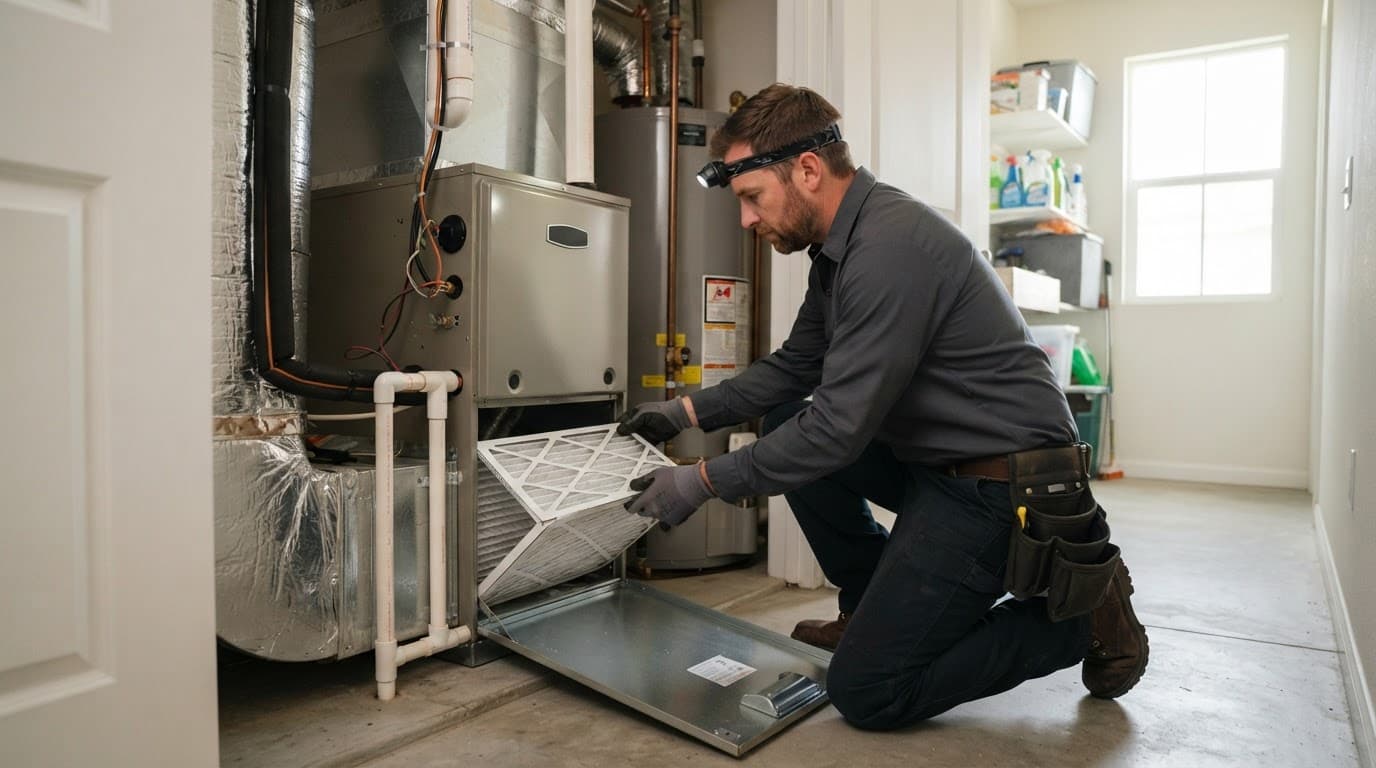
- Turn the thermostat off and wait for the blower to stop before opening the filter compartment.
- Check the furnace filter for a gray, matted surface or restricted airflow. Replace it with the correct size, then install it with the airflow arrow pointing toward the equipment.
- Clear furniture, rugs, storage bins, and pet beds away from supply registers and return grilles. Restricted returns can reduce airflow and make the furnace run hotter.
- Restart the heating system once and note whether the smell occurs only with heat or also when the blower motor runs by itself. That detail helps narrow down the source.
- Shut the system off if the odor gets stronger, smoke appears, or the furnace cycles on and off repeatedly. Also test or confirm that nearby carbon monoxide alarms are working.
A clogged air filter can contribute to a burning smell because it restricts airflow. That extra heat can trip the safety limit, shut the burners off, and lead to another attempt later, causing short cycling.
Many homes use the same blower and ductwork for heating and air conditioning. Therefore, a musty odor can sometimes come from moisture around the indoor A/C coil or condensate drain rather than the furnace itself. Mention any recent AC repair, water leaks, or unusual cooling performance when you call for help.
If these checks don’t resolve the odor, or the furnace behaves unsafely, call an hvac professional.
When a Dusty Smell Keeps Returning
If your furnace smells dusty throughout the heating season, treat it as a furnace maintenance concern rather than a normal first-startup event. The recurring odor may come from a heavily soiled blower wheel, dirty ductwork, construction debris, or a filter that is overdue for replacement.
An oversized furnace can also make the problem seem to last longer. It heats the home quickly, shuts off, and then restarts in short bursts. Those short cycles may warm dust in stages instead of allowing a longer run to burn it off at once. Short cycling also puts extra strain on ignition parts, the blower motor, and safety controls.
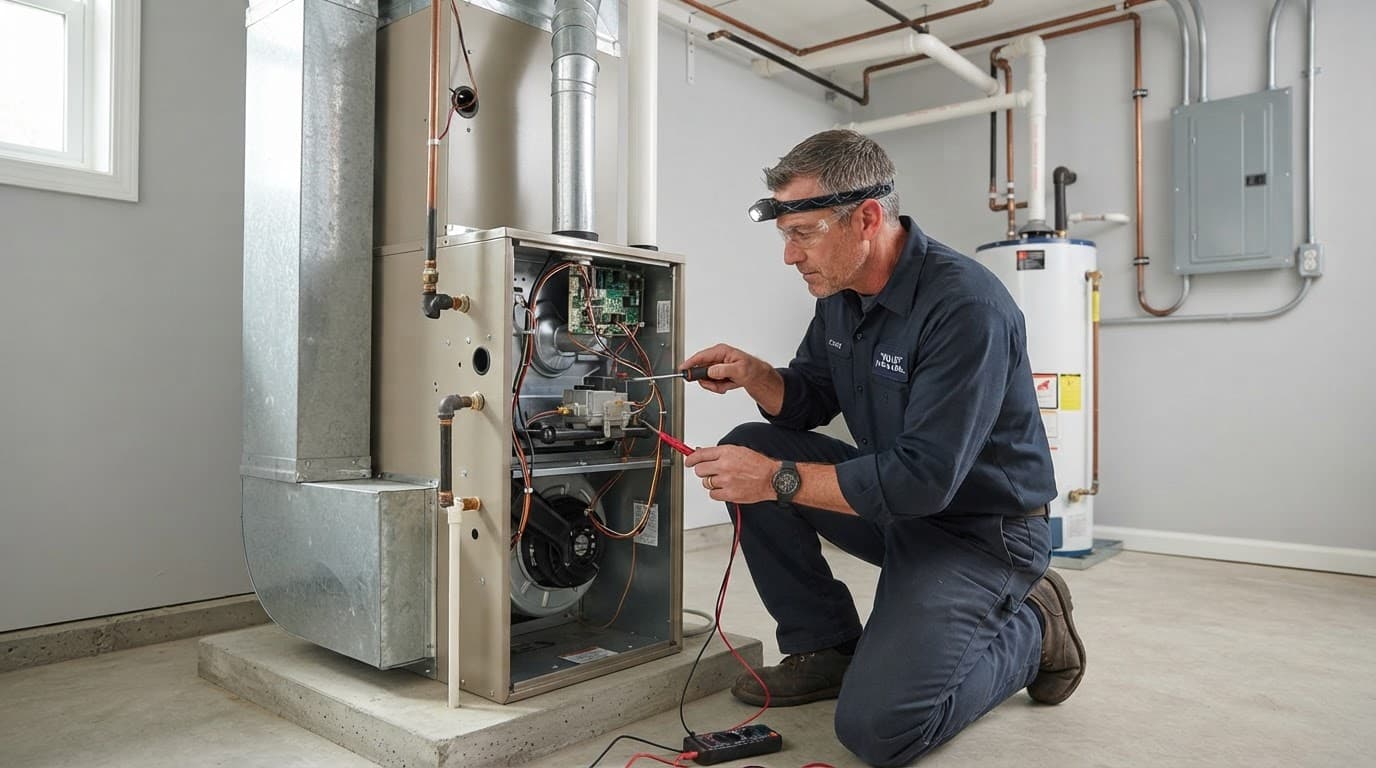
A system inspection can identify whether the issue involves airflow, a dirty blower, loose duct connections, furnace sizing, a mechanical fault involving the heat exchanger, or other heating components. Duct cleaning may help after renovations, pest activity, visible debris, or repeated dust blowing from vents. It is not automatically needed for every dusty startup.
Keep Dust From Building Up Next Season
Check the filter monthly and replace it on the schedule recommended for its type and your home’s conditions. Many 1-inch filters need replacement every one to three months, while thicker media filters may last longer. Pets, allergies, and heavy furnace use can shorten that interval.
Annual maintenance before cooler weather gives a technician time to inspect the burners, blower, electrical connections, drainage, and safety controls. For HVAC services in Escondido, professional furnace maintenance can address the dust and airflow issues that a filter change cannot reach.
A Dusty Startup Is Usually Temporary, but Stay Alert
A faint dusty odor that fades after a few hours is usually normal when a heating system starts after months of inactivity. A clean filter, open return vents, and furnace maintenance can keep that first run shorter and less noticeable.
Persistent odors need more attention, especially when they smell chemical, electrical, smoky, or gas-related. If the odor persists or any warning sign appears, Book Online for a furnace inspection, and keep the system off until it is inspected.
Frequently Asked Questions
How long should a burning dust smell from a furnace last?
A normal burning dust smell usually fades during the first heating cycle or within a few hours of operation. If that odor lasts beyond then, returns daily, or grows stronger, turn the furnace off and schedule service.
Can a dirty furnace filter cause a burning smell?
Yes. A clogged filter limits airflow, which can raise temperatures inside the unit and create overheating odors. Replace it, but call an HVAC technician if the smell continues afterward.
Is it normal for a furnace to smell dusty all winter?
No. A dusty smell at first startup is common, but it shouldn’t continue throughout the winter. An ongoing odor can point to debris, airflow problems, dirty equipment, or short cycling.
Can carbon monoxide cause a furnace odor?
No. Carbon monoxide has no smell, so it cannot explain a dusty or burning odor. If an alarm sounds or you suspect exposure, leave immediately and contact emergency services.
What should I do if my furnace smells like burning plastic?
Turn the thermostat off and shut down the furnace if you can do so safely. This scent can indicate overheated wiring or a failing fan, so arrange prompt professional repair.