

Furnace Flame Sensor Problems: Safe DIY Checks
My Guy is Proud to Be "Your Guy" for Your Home
When burners light and die almost immediately, your furnace may be shutting the furnace flame sensor signal down and closing the gas valve.
That small metal rod can cause a frustrating shutdown pattern, especially on a cold morning. Careful cleaning may solve the issue, but only after you rule out look-alike problems and gas-safety concerns.
For common 24V gas furnaces, start by understanding what the sensor watches during each heating cycle.
Key Takeaways
- Burners that light and shut off within two to seven seconds often indicate a weak flame-proving signal, but poor grounding, damaged wiring, burner problems, or control-board faults can look similar.
- A furnace flame sensor can be cleaned safely only after turning off electrical power and gas, allowing the furnace to cool, and inspecting the rod, wire, and porcelain insulator for damage.
- Never bypass the flame sensor, limit switch, or furnace door switch. If you smell gas or a carbon monoxide alarm sounds, leave the home and contact the appropriate emergency service.
- A digital multimeter can measure flame rectification in DC microamps, but readings vary by model and live testing should be left to anyone comfortable working near energized HVAC equipment.
- Replace damaged sensors with the correct model, and arrange professional service for persistent lockouts, repeated limit-switch trips, burner corrosion, wiring problems, or suspected gas and control failures.
How a furnace flame sensor recognizes a real flame
Inside many 24V gas furnaces with electronic ignition, the furnace flame sensor is a thin metal rod with a porcelain insulator and one wire. It sits at the edge of the burner assembly, where the burner flame can surround the rod.
After the igniter lights the gas, the flame sensor confirms that combustion has started. The control board sends a small sensing voltage through the rod. Because a flame contains ionized gases, it allows current to move more easily in one direction. This process is called flame rectification.
The board reads that current as a microamp signal. If it sees the expected signal within a few seconds, flame rectification proves that flame is present and the gas valve stays open. If it doesn’t, the board shuts off the gas as a safety measure. Most systems try again a few times before entering lockout mode.
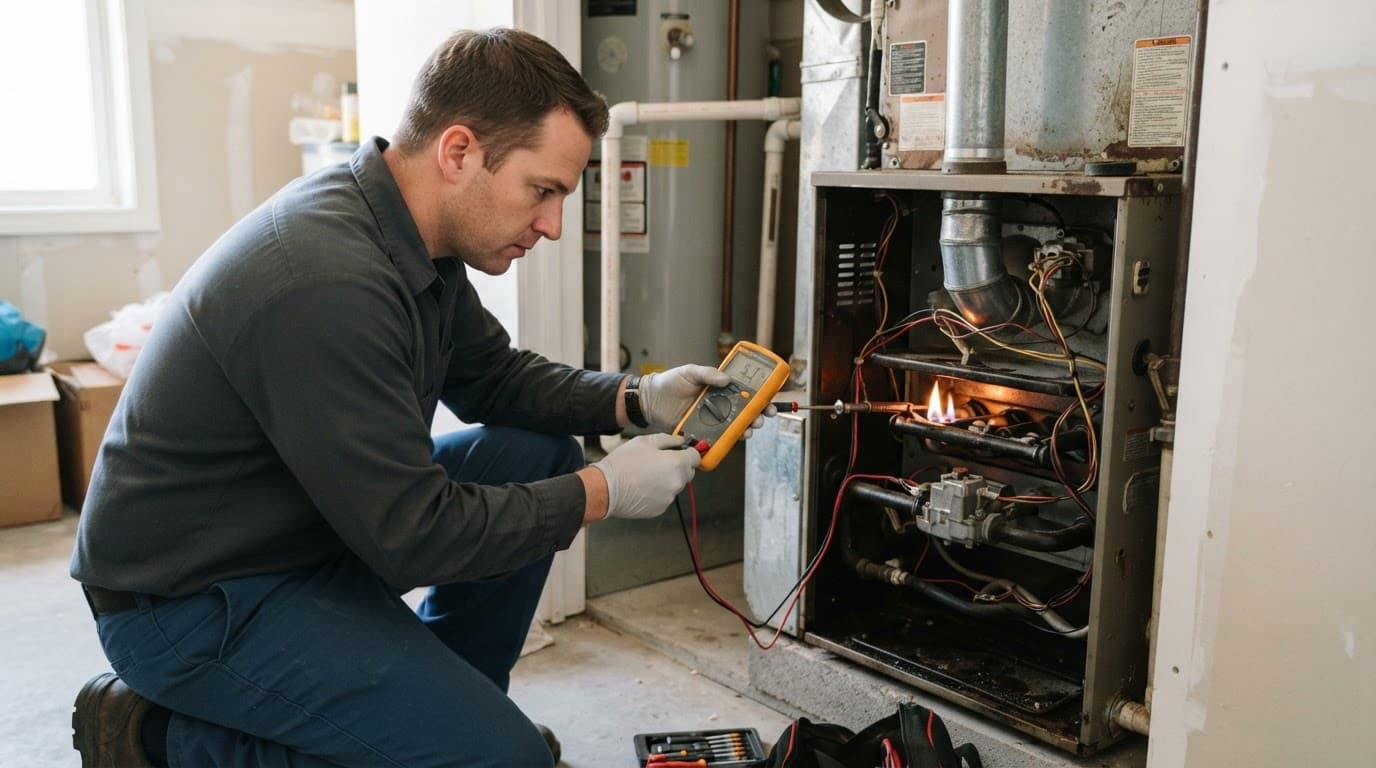
A flame sensor doesn’t measure burner temperature. It’s a safety device that proves flame is present, so raw gas can’t continue flowing after a failed ignition.
That job differs from a limit switch, which responds to excessive heat rather than flame presence.
The sensor and a thermocouple share a safety purpose, yet they work differently.
| Part | Common furnace setup | How it works |
|---|---|---|
| Flame sensor | Electronic ignition system | Sends a microamp signal to the control board |
| Thermocouple | Standing-pilot system | Produces a small voltage from pilot-flame heat |
A thermocouple usually has a copper tube that connects to the pilot safety circuit. In a standing-pilot system, the thermocouple responds to pilot heat rather than flame rectification. A modern sensor has a single wire and mounts near the burners.
Symptoms that point to a sensor, or something else
The classic furnace flame sensor failure pattern looks consistent. The inducer starts, the igniter glows or sparks, burners light, then the flame goes out within two to seven seconds. The furnace repeats this sequence and may eventually stop trying.
This isn’t usually short cycling, which describes heating cycles lasting several minutes. A two-to-seven-second shutdown points to flame-proving trouble, so timing matters during diagnosis.
| What you see | What may be happening |
|---|---|
| Burners light, then quickly go out | Dirty sensor, weak ground, or damaged sensor wire |
| Igniter never glows and no burners light | Ignition failure involving the igniter, pressure switch, or a failing control board |
| Furnace runs for several minutes, then burners stop | Limit switch opening from overheating or an airflow problem |
| Burners look weak or uneven | Dirty burners, gas supply issue, or burner alignment |
If the furnace displays error codes, record them before resetting it. They may help distinguish a sensor problem from an ignition or airflow issue.
A dirty sensor is common, but it isn’t the only cause. Flame rectification can weaken with corroded burner surfaces or a poor furnace ground. A loose sensor wire, cracked porcelain insulator, or other grounding problem can also reduce the proving signal.
On older pilot systems, a thermocouple problem can look similar but involves a different safety component. The control board closes the gas valve when the flame signal disappears.
Meanwhile, a pressure switch problem often stops ignition before the burners establish stable combustion. A limit switch usually opens later because overheating points to restricted airflow. A dirty filter, closed registers, or a blower issue can make that limit switch open.
Never bypass a flame sensor, defeat a limit switch, or tape down a furnace door switch to force a test. The furnace needs its safety circuit intact while it fires.
If you smell gas or a carbon monoxide alarm sounds, leave the home, avoid switches and flames, and contact your gas utility or emergency services from a safe location. Don’t attempt any DIY repair.
Safe DIY furnace flame sensor cleaning
A light film of oxidation or soot buildup can insulate the sensor rod. Cleaning is reasonable when the rod, wiring, and ceramic parts look intact.
First, turn the thermostat off. Shut off electrical power at the furnace service switch or breaker, and close the manual gas valve. Wait for the furnace to cool before opening the access panel.
- Find the sensor near the burners, then photograph the sensor wire connection before removing it.
- Pull off the wire connector by its insulated terminal, not by the wire itself.
- Remove the mounting screw and lift the sensor out by the porcelain base. Avoid bending the rod.
- Gently polish only the metal rod with fine emery cloth or an ultra-fine nonmetal scouring pad.
- Wipe away debris with a clean, dry cloth, reinstall the sensor, reconnect the wire, and restore power and the fuel supply.
Keep emery cloth and other abrasive material away from the porcelain base and wiring. Fine steel wool can also remove oxidation, but inspect the rod carefully for loose steel wool strands before reinstalling it. Never use a wire brush, heavy abrasive pad, or regular sandpaper.
Regular sandpaper can scratch the metal and leave coarse abrasive residue, including silica-based particles. After polishing, use a clean, dry cloth to remove residue from the rod and any emery cloth particles. The sensor needs a clean, smooth surface so flame rectification can produce a reliable sensing current. Don’t coat it with oil, cleaner, or lubricant afterward.
Put the access panel back in place before calling for heat. Then watch one normal ignition cycle through the furnace viewing window. If the burners stay lit and the heat cycle continues, cleaning likely restored the flame-sensing path.
Testing a flame sensor with a multimeter
Cleaning won’t fix a cracked insulator, a failing board, or poor grounding in a furnace flame sensor circuit. A digital multimeter set to DC microamps measures flame rectification during live furnace operation. Skip this test if you’re not comfortable working near energized HVAC equipment.
With the power off, set the meter to the DC microamp range. Check your meter’s instructions first, because the red lead may need to move to a separate microamp input port. This setup is common in 24V gas furnaces, but the required signal varies by model.
- Disconnect the sensor wire from the sensor terminal while the furnace has no power.
- Connect one meter lead to the sensor terminal and the other to the removed wire connector. The meter must sit in series with the circuit.
- Secure the clips away from hot surfaces and moving parts. Don’t hold probes by hand during ignition.
- Restore the furnace to its normal operating condition, with the access door and safety switch functioning as designed.
- Call for heat and record the reading after the burners stabilize and combustion is steady.
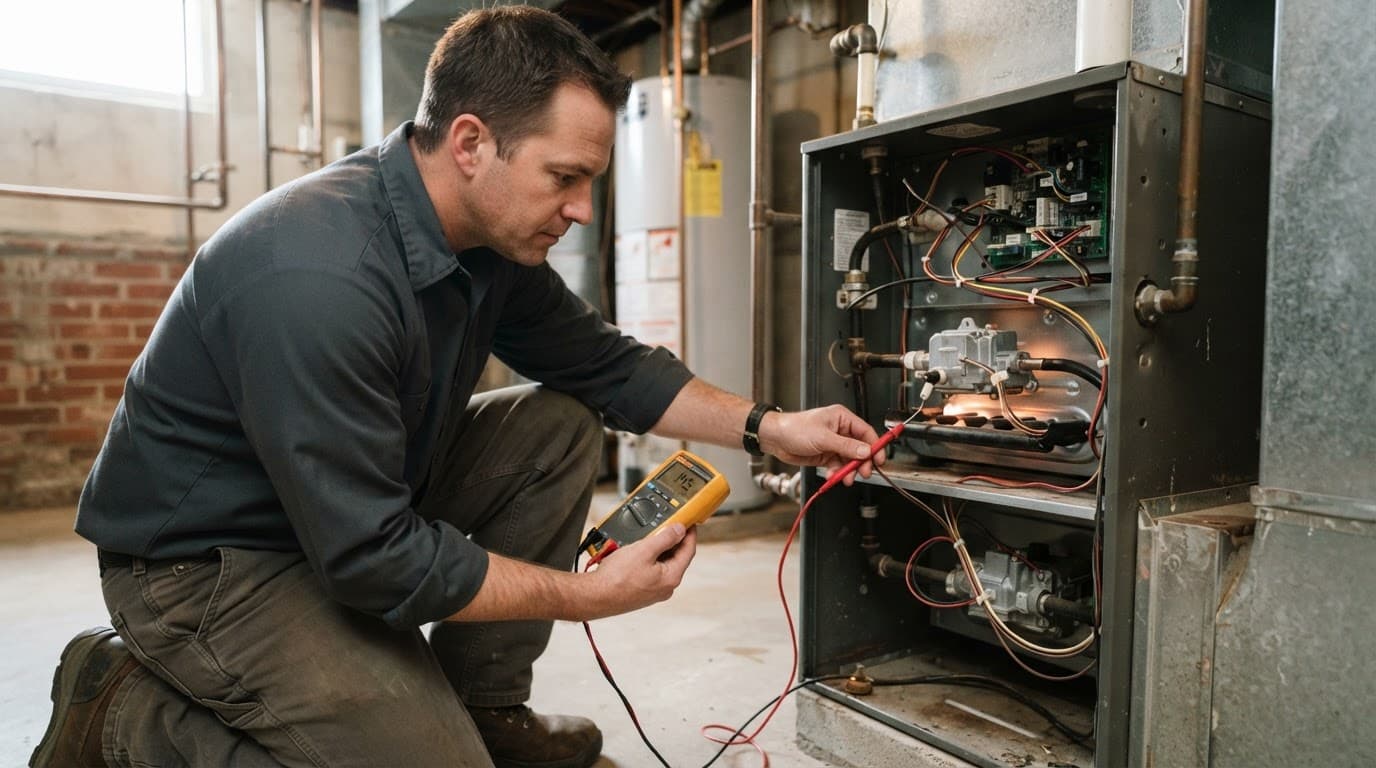
Sample ranges aren’t universal. The manufacturer’s wiring diagram or service literature controls the diagnosis and sets the control board’s pass-fail threshold. A sufficient microamp signal keeps the gas valve open, while a low signal allows the gas valve to close.
A near-zero reading with a healthy-looking flame points to the sensor, its wire, burner grounding, or the furnace controls. Low readings after cleaning can also mean burner ports need service, while a thermocouple is evaluated differently. Delayed heat shutdown may indicate an overheating limit switch, not a flame-signal problem; shut off power, then reconnect the lead.
When a cleaning isn’t enough
Replace the furnace flame sensor if its ceramic insulator is cracked, the rod is badly corroded, or the wire terminal won’t hold securely. Don’t keep cleaning a damaged part. Match the replacement to the furnace model. A similar-looking rod may not fit the burner bracket or have the right length.
Annual preventative maintenance helps catch sensor buildup before the first cold spell. Arrange furnace maintenance before the heating season, but don’t remove and abrade the sensor every month. An annual inspection and cleaning when needed is usually enough.
Persistent lockouts, burner corrosion, damaged wiring, or failed safety controls call for furnace repair in Escondido. Repeated limit switch trips can point to overheating or airflow issues, while a faulty control board or gas valve may mimic a sensor problem. Homeowners needing Escondido HVAC services should share the furnace’s stored error codes when scheduling heating diagnostics, air conditioning maintenance, central A/C service, or AC repair with the same local team.
A safer path to reliable heat
A clean furnace flame sensor can restore a normal heating cycle when burners light and immediately shut down. Still, that pattern can also point to a control board, gas valve, or limit switch problem.
Check the sensor carefully, clean it gently, and stop when a repair involves live testing or gas-system concerns. If the furnace still enters lockout mode, Book Online for a proper diagnosis.
FAQs
What is the primary job of a flame sensor?
The sensor tells the control board that burners have lit successfully. If it can’t verify flame through a microamp signal, the board shuts off fuel flow to prevent unburned gas from entering the furnace.
Why does my furnace start and stop after a few seconds?
A dirty flame sensor often causes this pattern because the board can’t confirm flame. However, poor grounding, burner trouble, damaged wiring, or a board fault can create the same result.
How often should I clean or replace the sensor?
Have it checked during annual furnace service, ideally before regular heating use begins. Replace it only when cleaning doesn’t restore a stable signal or when the rod, wire, or insulator has visible damage.
How is a thermocouple different from a flame sensor?
A thermocouple responds to pilot heat and is used in a standing-pilot arrangement. Unlike a thermocouple, a modern flame sensor uses flame rectification to confirm burner flame.
Can I test a furnace flame sensor with any multimeter?
You need a meter that measures DC microamps and supports a safe series connection. A basic meter without a microamp range can’t provide a useful flame-signal test.