

Furnace Blower Motor Failure Signs in Carlsbad Homes
My Guy is Proud to Be "Your Guy" for Your Home
When warm air barely reaches the far bedroom, the furnace may still be running, but its blower isn’t doing its job. Furnace blower motor failure often begins with a faint squeal, weak airflow, or a surprise jump in electric use before the heat stops altogether.
Carlsbad’s mild heating season can hide developing problems for months. Because the same blower moves cooled air, an ignored issue can also affect A/C and air conditioning when warm weather returns. Catching the pattern early helps prevent overheating and a more expensive repair.
Key Takeaways
- Weak airflow, unusual motor noise, humming, short cycling, burning smells, and higher energy bills can signal furnace blower motor failure.
- A clogged filter, restricted ductwork, dirty blower wheel, worn bearings, weak capacitor, or electrical problem may cause similar symptoms, so professional testing matters.
- Homeowners can check the filter, vents, thermostat, and breaker safely, but should avoid touching wiring, capacitors, or the blower assembly.
- PSC and ECM motors fail differently, and the motor type affects diagnosis, repair options, and replacement cost.
- Regular filter changes and annual furnace maintenance help reduce airflow resistance, overheating, and blower motor strain.
Warning signs of furnace blower motor failure
The blower motor draws air across the heat exchanger and sends it through your ducts. Several furnace issues can mimic a failing motor, so symptoms should guide the next step instead of becoming a final diagnosis.
| What you notice | What may be wrong | What to do |
|---|---|---|
| Weak airflow at several vents | Restricted or dirty air filter, dirty wheel, failing motor | Check it, then schedule service |
| A noisy motor with squealing, scraping, or grinding | Worn bearings or a loose blower wheel | Turn heating off and call for help |
| Humming with no air movement | Weak capacitor or seized motor | Avoid repeated restart attempts |
| Short cycling | Overheating or a limit switch response | Replace the filter and arrange service |
| Higher energy bills | Motor strain or restricted air movement | Have amp draw checked |
Treat a burning smell as urgent
Turn the heating system off at the thermostat if you smell hot plastic, burning insulation, or a sharp electrical odor from vents. If you see smoke, leave the home and call emergency services. Only shut off the circuit breaker if you can reach it safely.
A light dusty smell during the first heating cycle of the season can be normal. However, it should fade quickly. A smell that returns, gets stronger, or comes with poor airflow needs prompt furnace repair for Carlsbad homes.
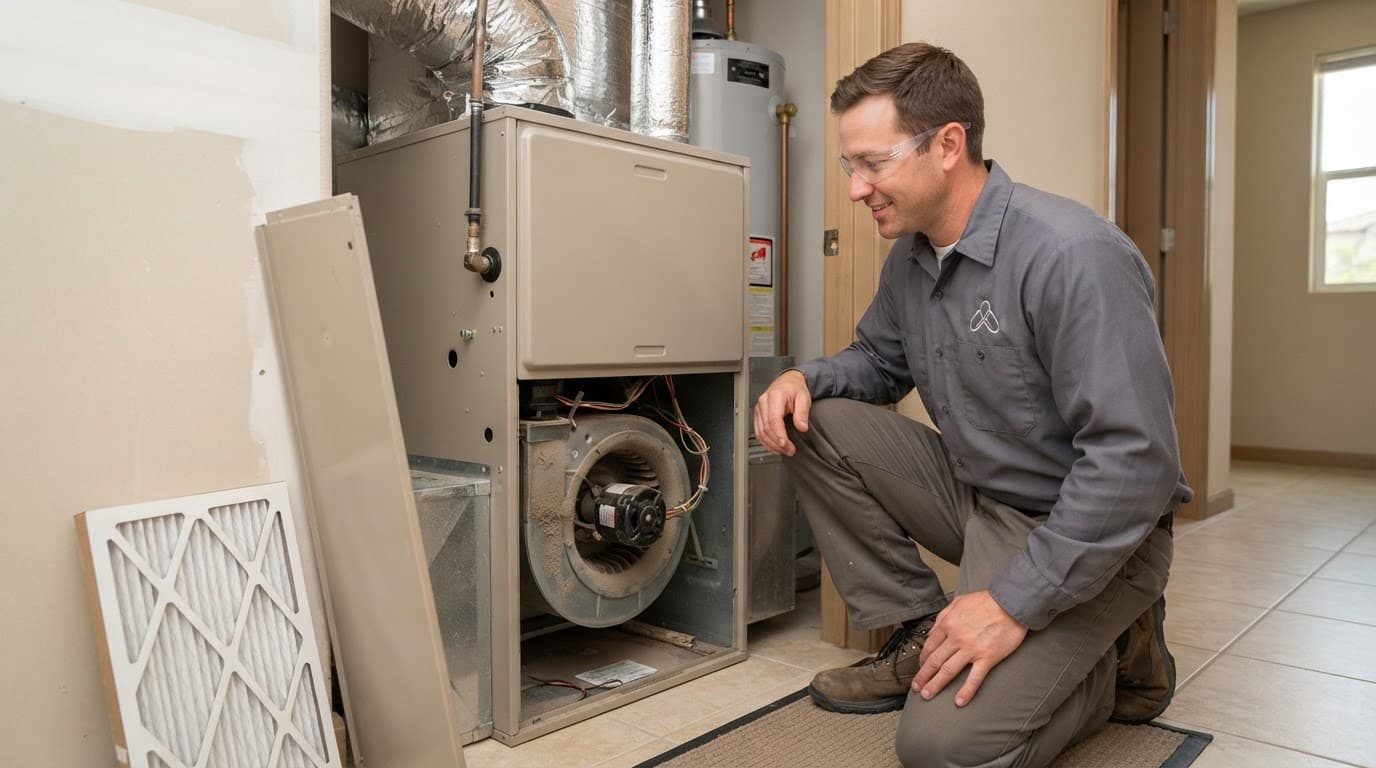
What causes a furnace blower motor to fail?
Most furnace blower motor failure starts with resistance somewhere in the airflow path. The motor works harder, runs hotter, and may trip a limit switch before overheating becomes obvious.
A clogged filter makes the motor work harder
A dirty air filter can make the motor work harder by restricting return airflow. That raises pressure inside the system, so the blower pushes against the restriction, much like pedaling uphill in the wrong gear.
Replace standard filters every one to three months, depending on pets, household dust, and filter type. Avoid highly restrictive filters unless your HVAC system can handle them; doing so reduces strain but won’t fix every problem.
Bearings, debris, and electrical problems also matter
Squealing or grinding often points to worn motor bearings. Dust buildup can unbalance the blower wheel (also called a squirrel cage), placing extra load on motor bearings.
On traditional motors, wiring, motor windings, or a failing capacitor can cause electrical problems, including a fan that hums but won’t start. The capacitor gives the motor a starting boost; repeated restart attempts can damage the motor and turn a smaller electrical repair into a replacement. Restricted ductwork can create similar resistance, so a technician must distinguish that restriction from motor failure. The symptom pattern helps diagnose the underlying fault.
PSC and ECM blower motor designs fail differently
Motor type affects both diagnosis and cost. An HVAC technician should identify the blower motor type and review the heat exchanger and overall furnace condition before quoting a repair.
Standard PSC motors use a capacitor
A PSC motor usually runs at one or a few fixed speeds. These motors are common in older furnaces and are often less expensive to replace.
When a PSC motor hums but the blower wheel will not move, the capacitor may be weak. The capacitor provides the starting boost. A technician compares its microfarad reading with the printed rating, then checks voltage, wiring, motor windings, and amp draw.
Variable-speed ECM motors use electronics
An electronically commutated motor, or ECM motor, is a variable speed motor that adjusts its output to meet changing airflow demand. It can improve comfort and efficiency, but the motor module and controls make diagnosis more involved.
An ECM blower may stop because of a failed motor module, damaged wiring, or control-board electrical problems. Replacing parts based only on a noise or error code can waste money. Testing is more reliable because it separates an airflow problem from a command or control-board problem during troubleshooting.
Safe DIY checks before calling for service
Homeowners can complete a few low-risk troubleshooting checks. These steps may help narrow a possible furnace blower motor failure, but they can’t confirm the cause. Anything involving electrical components, motor wiring, or the furnace control board belongs to a trained technician because these parts can retain or carry hazardous voltage.
Start with simple airflow checks
Before scheduling service, try these practical DIY steps:
- Set the thermostat to heating mode and raise the temperature setting several degrees above room temperature.
- Check the air filter and replace it if it looks gray, matted, or clogged with debris.
- Confirm that return grilles and supply vents are open and not blocked by furniture or rugs.
- Look for a tripped circuit breaker, but reset it only once. A breaker that trips again needs professional attention.
Before calling for service, verify the thermostat still calls for heat.
Stop troubleshooting when electrical symptoms appear
Do not remove the blower motor assembly or touch wiring to test a capacitor yourself. A burning smell, noisy motor, electrical problems, repeated breaker trips, and short cycling all call for a professional inspection.
An HVAC technician can test electrical supply, motor performance, static pressure, airflow, the blower wheel, ductwork, and the limit switch. These checks help diagnose the failed component. A broader furnace inspection may also include the heat exchanger. Arrange local HVAC service in Carlsbad when the furnace runs without moving enough air or stops after a few minutes.
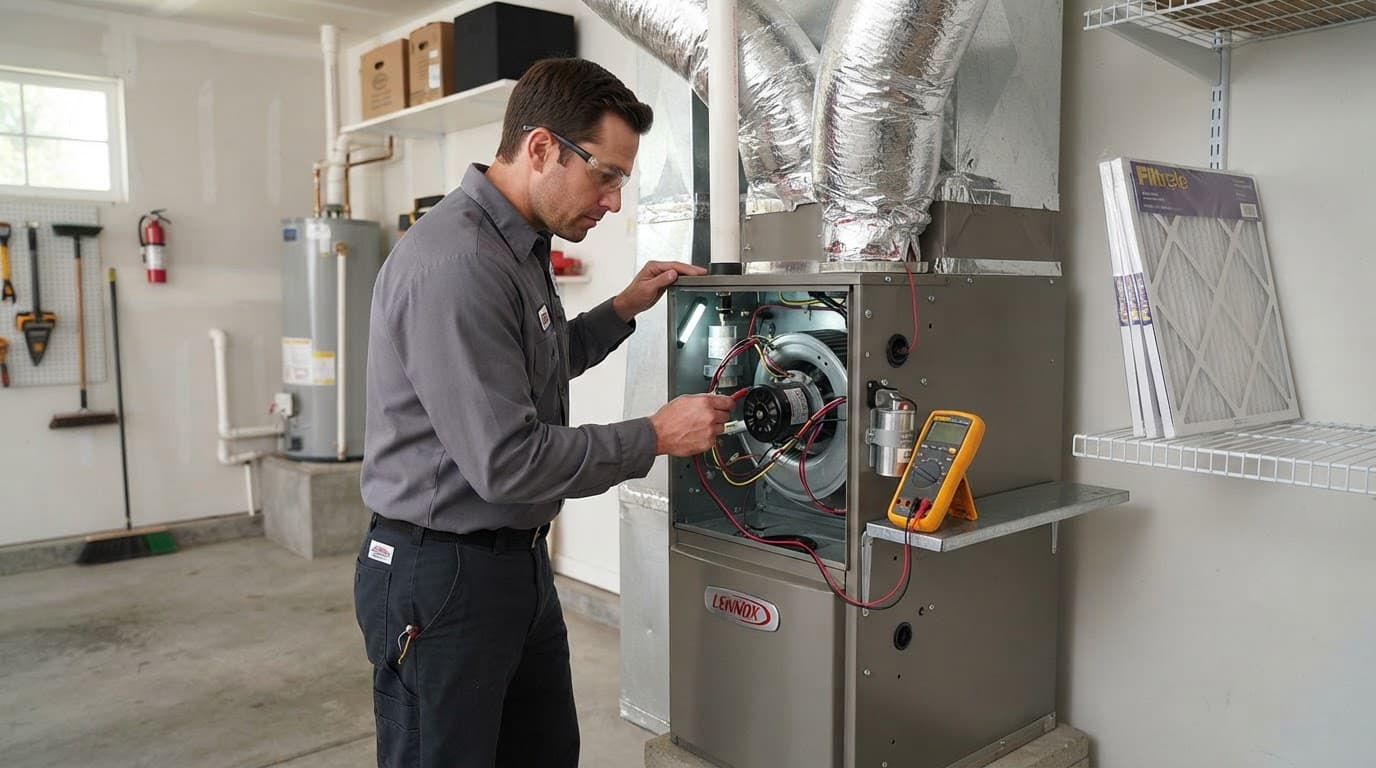
Blower motor repair costs and replacement choices
Professional diagnosis matters because the failed part may not be the motor itself. A capacitor, relay, control board, blocked filter, or damaged blower wheel can create similar symptoms.
Blower motor replacement cost and what homeowners can expect
Blower motor parts often cost about $100 to $600, depending on the motor type and furnace model. Labor rates and local conditions can change the final price.
A typical PSC motor repair or replacement with labor may run roughly $250 to more than $1,000. An ECM motor typically costs more, with an installed replacement approaching $2,000 when the motor, module, and labor are involved.
Ask a technician to diagnose the failed component before approving replacement. Request an itemized diagnosis showing airflow, amp draw, and electrical testing. It should also explain why the part failed.
Ask whether the quote uses an OEM motor, a matched replacement, or a universal part. Compatibility and warranty matter more than the label alone. Compare the written replacement cost with the cost of repairing the identified component before choosing either option.
When to repair or replace the furnace
A furnace that’s 7 to 10 years old with one isolated issue often merits repair. Controls and the ignition system should also be in good condition. Maintenance history helps determine whether an otherwise repairable furnace has been neglected.
Consider a broader replacement discussion if the furnace has a cracked heat exchanger, frequent electrical problems, or an expensive motor module failure alongside other aging parts. The right choice depends on the system’s condition, not its age alone.
Keep airflow from shortening motor life
The best maintenance task is also the simplest: keep air moving freely. A clean air filter helps protect the blower motor, reduce overheating, and support steady airflow as the system heats rooms.
Build a simple filter routine
Write the filter size and replacement date on the furnace cabinet. Check it monthly, even if it doesn’t need changing every month. During annual heating maintenance, have the blower wheel, bearings, electrical connections, drain components, and safety controls inspected for dust buildup and electrical problems.
Restricted airflow also raises energy bills. A struggling motor may run longer or draw more power, while an ECM motor may increase speed to overcome resistance.
Remember the blower runs during cooling too
The furnace blower motor works during both heating and cooling. An AC repair in Carlsbad can uncover a weak motor, dirty wheel, or ductwork restriction before it becomes a winter furnace problem.
Pay attention when rooms feel stuffy, vents lose force, or the system runs longer than usual. Those details help an HVAC technician find the cause faster.
Protect Your Furnace Before It Stops
Furnace blower motor failure rarely happens without warning; weak airflow and recurring overheating deserve attention before shutdown.
A clean filter and timely blower motor service reduce strain and help keep your home comfortable in every season. If your furnace shows these signs, Book Online for a professional diagnosis.
FAQs About Furnace Blower Motor Problems
Can a dirty filter really cause damage?
Yes. A clogged or overly restrictive filter reduces airflow and increases pressure in the system. The blower motor may run hotter and longer, which can wear out bearings, trigger safety switches, or cause an electrical failure.
How can I tell whether the capacitor or motor is bad?
A humming furnace blower that won’t start may have a weak capacitor, but a seized motor can make the same sound. An hvac technician uses electrical testing to verify capacitor strength, motor voltage, amp draw, and winding condition.
Is DIY replacement safe?
Most homeowners should leave blower motor replacement to a qualified hvac technician. The work involves high-voltage wiring, furnace safety switches, motor settings, system testing, and proper handling. Incorrect installation can damage the new motor or create a safety risk.