

Furnace Maintenance Checklist for Escondido Homes
My Guy is Proud to Be "Your Guy" for Your Home
Cool Escondido evenings can expose a furnace problem that stayed hidden all year. A clean, well-adjusted system starts more reliably, improves energy efficiency, and gives your family safer heat when temperatures dip.
This furnace maintenance checklist provides a practical preventative maintenance plan, separating simple jobs you can handle from safety work that belongs to a trained technician. Set aside time before heating season, then schedule professional service before a small issue turns into a no-heat call.
Key Takeaways
- Replace the furnace filter every one to three months, check it monthly during heating season, and keep supply vents, return grilles, and outdoor exhaust openings clear.
- Homeowners can safely handle filters, vents, basic thermostat checks, and visual inspections, but should not adjust gas controls, remove burner covers, or open electrical compartments.
- Schedule professional furnace maintenance once a year for combustion testing, heat-exchanger inspection, airflow measurements, electrical checks, and internal cleaning.
- Watch for short cycling, unusual sounds, weak airflow, uneven heating, rising energy bills, yellow burner flames, gas odors, soot, or carbon monoxide alarms, and act quickly when they appear.
- Choose a filter with a MERV rating your system can handle, and give dual-fuel, pilot-light, and high-efficiency furnaces the specialized attention they require.
The Furnace Maintenance Checklist to Use Before Heating Season
Start maintenance before the first chilly week, not after the furnace has already struggled through several cycles. For most Escondido homes, late summer or early fall is a practical time to prepare the system.
Put furnace care on a simple schedule
A furnace needs attention more than once a year. Check the filter monthly during heating season, and plan a professional inspection once a year.
Keep a note on your phone with the filter size, installation date, and service date. Follow manufacturer specifications for replacement intervals, and use the record to spot filters that load up faster than expected.
Clear the area and test basic controls
Keep at least a few feet of open space around the furnace. Paint cans, cardboard boxes, laundry, and stored holiday decorations can block airflow or create a fire risk.
Next, set the thermostat to Heat and raise the temperature a few degrees above room temperature. Listen for a normal startup, then confirm warm air reaches several supply vents. If you use a programmable thermostat, check the clock, thermostat settings, and weekday schedule after a power outage.
DIY Furnace Maintenance That Is Safe for Homeowners
Homeowner care is mostly about clean airflow, clear vents, and early observations. Do not remove burner covers, adjust gas controls, or reach into electrical compartments.
Replace the air filter on time
Turn the thermostat off before changing the filter. Slide out the old filter, then install the new one with its airflow arrow pointing toward the furnace or air handler.
Most 1-inch filters need replacement every one to three months. Check monthly if you have pets, smoke indoors, live near construction, or run the system often. A thicker media filter may last longer, but its schedule still depends on dust buildup and manufacturer guidance.
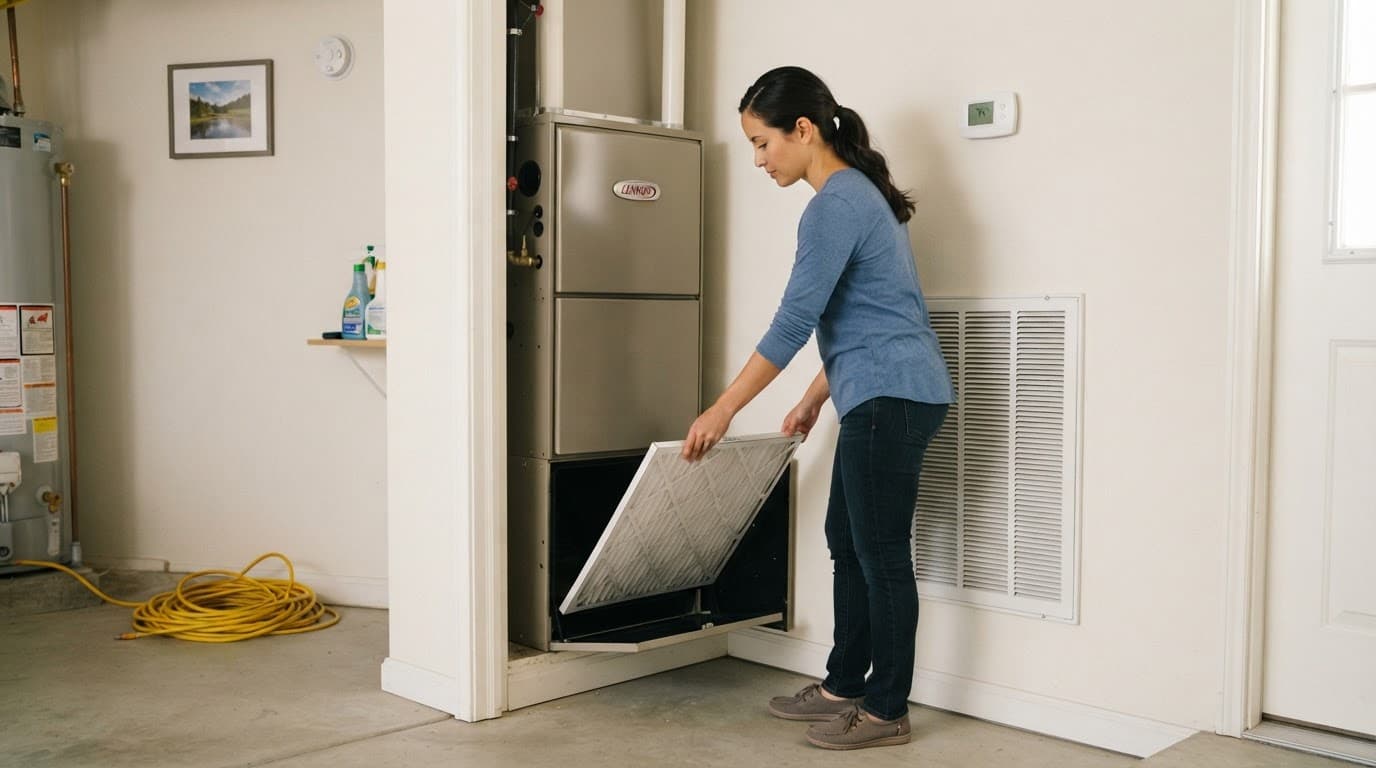
A filter can look only lightly gray and still restrict airflow when fine dust, pet dander, or smoke particles fill its fibers.
Keep this checklist near the filter cabinet. A missed filter change can overheat the furnace, strain the blower motor, and create uneven rooms.
Check vents, returns, and outdoor exhaust pipes
Walk through the home and open supply registers that were closed for a past furniture layout. Move rugs, baskets, and sofas away from return-air grilles. Closed vents do not reliably save energy, and they can raise static pressure in the ductwork.
Outside, look at the furnace exhaust and intake pipes if your home has a high-efficiency unit. Leaves, cobwebs, mulch, and nesting material should not block either opening. Use a gentle visual check only. Do not disassemble venting or push tools inside the pipe.
Central HVAC equipment often shares a blower and air distribution system. Neglected furnace care can therefore affect indoor air quality and air conditioning in Escondido. A clogged filter may contribute to an A/C or AC repair call when hot weather returns.
What a Professional Furnace Tune-Up Should Include
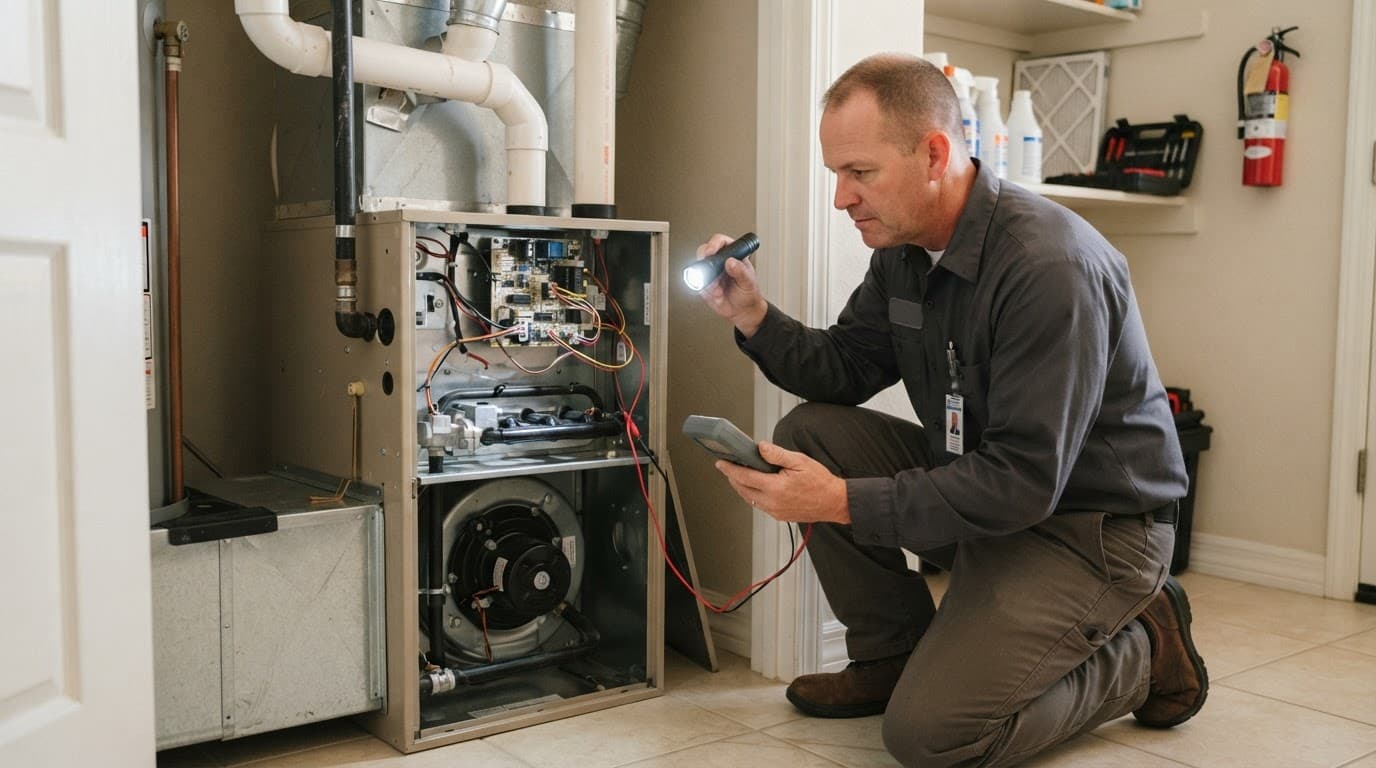
A qualified technician handles combustion, electrical testing, and internal cleaning. These tasks require training, calibrated instruments, and access to areas homeowners should leave closed.
Combustion testing protects your home
A technician inspects the burner assembly, ignition system, flame sensor, inducer motor, pressure switches, and gas connections. They also examine the heat exchanger and combustion chamber for corrosion, cracks, or other damage that could allow combustion gases into household air.
During the tune-up, the technician cleans the burner assembly and tests the flame sensor. The heat exchanger deserves careful attention because it separates the flame and exhaust gases from the air circulating through your rooms.
A technician may use a combustion analyzer and carbon monoxide meter to check how the furnace burns fuel and identify unsafe conditions.
If a carbon monoxide alarm sounds, get everyone outside and call 911 or the fire department from a safe location. Don’t reset the alarm and continue using the furnace.
Airflow and electrical checks catch hidden strain
A complete professional inspection also includes checking voltage, amperage, electrical connections, temperature rise, and static pressure. Technicians use a manometer to measure gas pressure and airflow resistance. They compare results with the equipment’s rated specifications.
They may clean the blower compartment, inspect the belt on older belt-driven equipment, and lubricate moving parts only when the model allows it. High-efficiency furnaces also need their condensate drain and trap checked for clogs.
For furnace maintenance in Escondido, ask an HVAC professional whether the visit includes combustion testing, heat-exchanger inspection, and a written list of findings. An Escondido HVAC service appointment should leave you knowing what was checked and what may need attention later.
Pick the Right Filter and Account for Your System Type
The highest MERV rating is not always the right choice. Filters need to capture particles without restricting the airflow your furnace needs.
Match MERV to your household needs
A MERV 8 filter works well for many homes with average dust levels. MERV 11 can capture smaller particles and may suit homes with pets or allergy concerns. MERV 13 offers finer filtration, but some systems cannot handle its added resistance.
Check your owner’s manual or ask a technician before moving to a denser filter. A restrictive filter can strain the system, reduce comfort, and shorten blower life. If you use a washable filter, clean and dry it fully before reinstalling it.
Give dual-fuel and pilot-light furnaces extra attention
A dual-fuel system combines a heat pump with a gas furnace. Its maintenance should cover the outdoor heat-pump unit, thermostat changeover settings, and the furnace itself. This matters because the system may switch heat sources based on outdoor conditions.
Older furnaces with a standing pilot light also need professional review. Do not adjust the pilot flame or gas valve yourself. If the pilot goes out repeatedly, call for service instead of relighting it again and again.
Warning Signs That Call for Furnace Repair
A furnace often gives notice before it stops completely. Addressing these symptoms early can prevent an inconvenient breakdown during a cold spell.
Act quickly on safety and performance changes
Schedule service soon if you notice any of these conditions:
- The furnace shows short cycling, starting and stopping every few minutes without heating the house properly.
- New banging, squealing, scraping, or rumbling sounds come from the cabinet or ductwork.
- Rooms heat unevenly, the blower runs constantly, or airflow feels weak at multiple vents.
- Your utility bill rises without a clear change in how you use heating.
- The burner flame is yellow instead of mostly blue, or you smell gas near the equipment, which may indicate gas leaks.
A gas odor, carbon monoxide alarm, visible soot, or smoke needs immediate action. Leave the home if necessary, then contact emergency responders. Once the property is safe, arrange emergency furnace repair in Escondido for emergency repairs.
Know what a tune-up can cost
A professional furnace tune-up with a safety inspection often costs about $70 to $400. Price depends on the furnace type, system condition, included testing, and whether repairs are needed.
Annual maintenance doesn’t erase every repair, especially on an older unit. However, it helps identify dirty burners, weak ignition parts, airflow restrictions, and electrical wear before they cause a full shutdown. Furnace heating in Escondido may be seasonal, but it still needs dependable care.
Keep Your Furnace Ready for Cool Evenings
A clean filter and clear airflow are the foundation of preventative maintenance. Annual professional testing adds safety checks homeowners can’t see, especially around combustion and related safety risks.
Use this checklist before cooler weather arrives, then respond quickly when noise, cycling, or comfort changes appear. When it’s time to schedule service, Book Online for a furnace inspection that fits your schedule.
Frequently Asked Questions
How often should I replace my furnace filter?
Check it every month when you use your furnace. Replace most standard filters every 30 to 90 days, depending on pets, dust, smoke, and system use. Replace it sooner if it looks clogged or airflow has dropped.
Can I inspect my own furnace’s internal components?
No. Internal inspections require access to components and may involve combustion testing or specialized cameras. Homeowners should watch for warning signs, maintain filters, and leave this work to a trained HVAC technician.
Does furnace maintenance help with cooling too?
Yes. In many homes, the furnace blower and ductwork also move cooled air. A clean filter, sound blower, and unrestricted returns support both heating and air conditioning.