

Heat Pump Icing in San Diego: What to Do Safely
My Guy is Proud to Be "Your Guy" for Your Home
A heat pump can freeze in a San Diego backyard, even when outdoor temperatures stay above 32°F. In North San Diego County, mild but damp winter conditions can leave the outdoor coil below freezing as it pulls heat from the air.
Searches for heat pump icing Escondido often begin when Escondido homeowners find a frozen heat pump covered in ice. A light, even layer of frost can be normal, but heavy ice needs attention before it damages the system or leaves your home without heat.
Start by separating a normal defrost cycle from a true freeze-up.
Heat Pump Icing Escondido: Frost or a Real Problem?
Heat pumps run year-round in North San Diego County, providing both heating and cooling. That keeps outdoor units working on damp winter mornings, even when conventional air conditioners would be off.
Light Outdoor Coil Frost Can Be Normal
During heating, the outdoor coil absorbs heat from the surrounding air. Moisture can condense on its cold surface and form a thin, even layer of frost.
A healthy system clears that frost during its defrost cycle. You may hear a change in operating sound, see steam rising from the unit, or notice water draining beneath it. Those signs usually mean the equipment is doing its job.
Trouble starts when ice covers the coil fins, fan grille, refrigerant lines, or fan blades. The unit may run for long periods with weak indoor heat, then struggle to defrost at all.
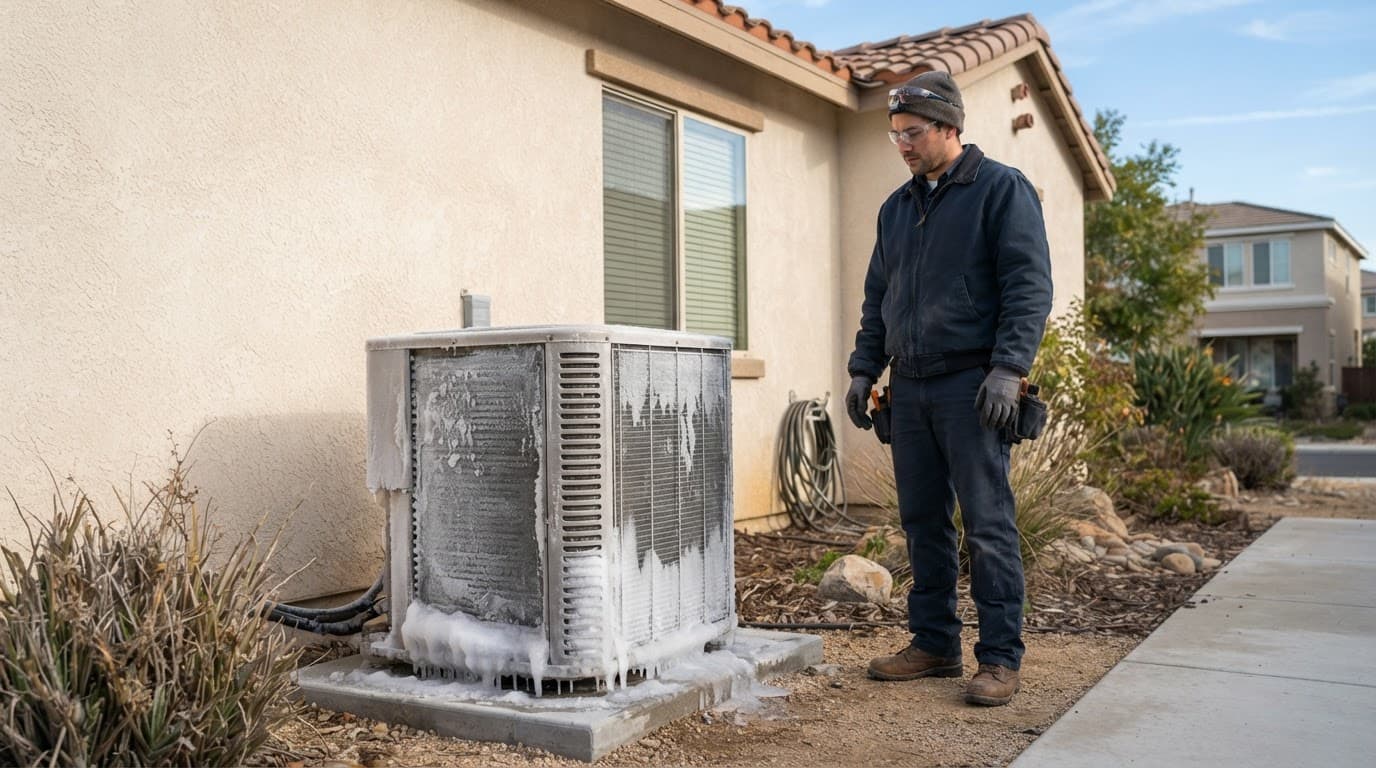
Escondido Microclimates Can Make Icing Worse
Reports from Escondido homeowners often follow a cool, damp night. Inland temperatures can fall quickly after sunset in North San Diego County, while coastal moisture can linger farther west.
The unit’s location matters, too. A heat pump under roof runoff, beside sprinkler overspray, or in a shaded side yard stays damp longer. Dense shrubs and piled leaves can create an airflow restriction around the unit.
Ice that returns after every defrost cycle points to more than weather. It often signals a mechanical problem or a refrigerant issue.
How the Heat Pump Defrost Cycle Works
Even mild winters in North San Diego County can create conditions that require a working defrost process. System sensors and controls manage it separately from normal heating operation. Variable-capacity heat pumps adjust output more gradually than older single-stage units, but they still need a working defrost process.
The system temporarily reverses refrigerant flow
In defrost mode, the reversing valve changes the refrigerant path. The heat pump briefly operates much like it does in cooling mode, sending hot refrigerant through the outdoor coil to melt frost.
The outdoor fan often stops during this process. Meanwhile, auxiliary heat, usually electric resistance heat inside the air handler, may keep cold air from blowing into your rooms. A dual-fuel system may use a gas furnace for backup heat instead.
Steam during a brief defrost cycle is normal. Ice that remains after the cycle ends is not.
The indoor evaporator coil is separate from the outdoor coil that frosts during heating.
Most defrost cycles last only several minutes. If the unit runs in defrost for a long time, repeats the cycle often, or never clears the coil, schedule service.
Parts That Commonly Cause a Frozen Heat Pump
The defrost control board uses information from temperature sensors. A failed sensor, loose wire, or board problem can stop the cycle before it starts.
A stuck reversing valve can also prevent hot refrigerant from reaching the outdoor coil. In other cases, a failing outdoor fan motor reduces airflow across the coil.
A low refrigerant charge may create abnormal coil temperatures, but refrigerant does not simply wear out. A technician should find and repair any leak before recharging the system to the manufacturer’s requirements.
Safe DIY Steps for a Frozen Outdoor Unit
Homeowners can handle a few checks safely. These precautions apply throughout North San Diego County. Leave sealed refrigerant systems, electrical panels, and component testing to a trained HVAC technician.
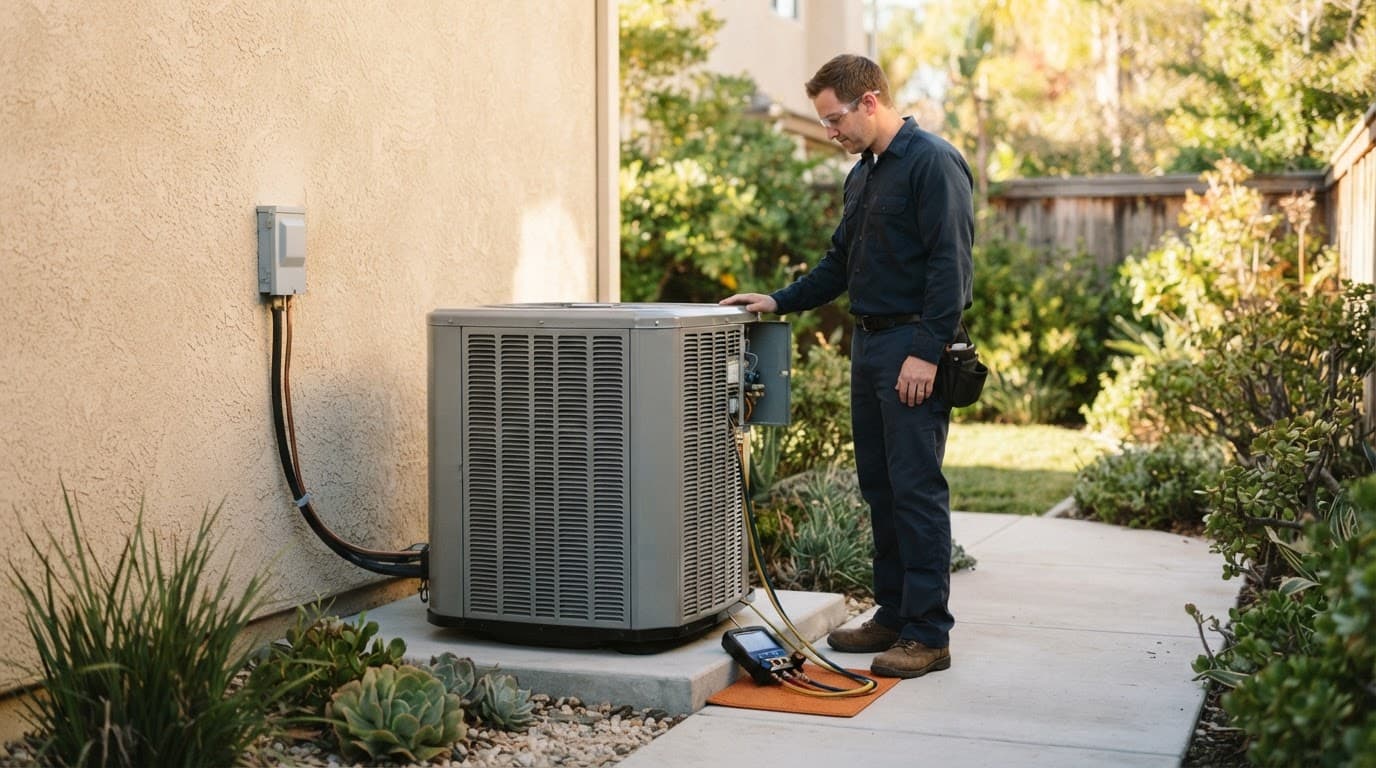
What you can check before calling
First, verify the thermostat settings, including the operating mode and set point. If the coil is lightly frosted and the unit enters defrost, give it time to finish. If the unit is completely iced over, switch the thermostat off and turn off power at the breaker before inspecting the area.
- Check the indoor air filter and replace it if it is visibly dirty. This is safe, but it won’t correct a failed defrost component.
- Clear leaves, mulch, pet hair, and loose debris around the outdoor unit. Keep plants trimmed back according to the equipment manufacturer’s clearance requirements.
- Let the ice melt naturally after the unit is off. Do not chip at coil fins, pour boiling water on the unit, spray it with a hose, use salt, or use a hair dryer near outdoor electrical equipment.
Take a photo before the ice melts. It can help the technician see where the freeze-up began.
Signs you need heating repair right away
Call for professional help when the fan cannot turn because ice surrounds it, the system blows cool air, or frost returns soon after a completed defrost cycle. Repeated breaker trips, burning odors, grinding sounds, and unexplained water pooling also need prompt attention.
Do not keep resetting a tripped breaker. That can damage electrical components and hide the source of the fault.
For a frozen coil, a qualified provider with NATE-certified technicians can test sensors, fan operation, control signals, refrigerant pressures, and the reversing valve. Request a written estimate describing the diagnosis and recommended work. Arrange Escondido heating repair when ice keeps coming back, heat is weak, or you notice a safety concern.
Repair vs Replace an Icing Heat Pump?
For homeowners in North San Diego County, a frozen coil does not automatically mean replacement. A bad sensor, damaged wire, or failed defrost board can often be repaired if the equipment is otherwise in good condition.
Use the system’s history to make the call
Ask for a written estimate that identifies the failed part, repair price, and any related issue, such as a refrigerant leak. A one-time repair on a newer unit usually makes sense, but check warranty coverage before approving it.
Replacement becomes a more serious option when a system is past 10 to 15 years old and needs a major compressor repair, repeated refrigerant work, or hard-to-find parts. A technician should also review installation details, sizing, drainage, and airflow before recommending new equipment.
In North San Diego County, equipment that provides cooling and winter heating deserves a broader assessment. For related equipment concerns, San Diego AC repair can include evaluating heat pumps, ductless mini splits, and air handlers.
If your home in San Marcos has a dual-fuel setup, the gas furnace may provide temporary backup heat. Its heat exchanger and the heat pump still need separate evaluation before normal operation resumes.
Prevent Ice Buildup Before the Next Cold Spell
Schedule a heating tune-up at least once a year, preferably before heavy winter use in North San Diego County. Homes that run heat pumps heavily for winter warmth and summer cooling may benefit from two seasonal visits across North San Diego County.
A maintenance visit with NATE-certified technicians should include airflow checks, outdoor coil cleaning, electrical inspection, defrost testing with temperature sensors, drain inspection, and refrigerant performance review. These checks can support energy efficiency and potentially lower utility bills by identifying control or airflow problems early.
Keep sprinklers away from the equipment, prevent roof runoff from dripping onto it, and avoid covering outdoor heat pumps or ductless mini splits for winter. A breathable cover isn’t a substitute for proper clearance and drainage.
A heating maintenance Escondido membership can make seasonal service easier to keep on schedule.
Final Thoughts
In North San Diego County, thin frost can be normal during heat-pump heating. Recurring ice or weak indoor heat needs diagnosis.
Homeowner checks may identify simple issues, but avoid unsafe DIY repairs. Component or refrigerant problems need professional attention. A heating tune-up can address minor performance issues before the next cold spell.
If the system leaves your home without heat, ask whether same-day repair is available. Before approving Escondido heating repair, request a written estimate and check your warranty coverage. When ice keeps returning, Book Online for an inspection.
FAQs About Heat Pump Icing
Can a dirty air filter cause a heat pump to ice over?
A dirty air filter restricts indoor airflow and can reduce overall system performance. It rarely causes heavy outdoor ice by itself, but replacing a clogged filter is an important first step before scheduling repair.
Why does my heat pump freeze when it is above freezing outside?
The outdoor coil can be colder than the surrounding air while it extracts heat. Moist air then freezes on the coil, especially during damp weather, shade, or poor outdoor airflow.
Should I turn on emergency heat if the outdoor unit is frozen?
Emergency heat can provide temporary indoor warmth on systems equipped with electric resistance heat. This backup mode costs more to operate, so use it only as directed by your system manual or HVAC technician.
Does a furnace need the heat pump defrost cycle?
No. A gas furnace creates heat through combustion and transfers it through a heat exchanger. It doesn’t extract heat through an outdoor coil, so it doesn’t need this process.