

Bent AC Condenser Fins: Safe Oceanside DIY Care
My Guy is Proud to Be "Your Guy" for Your Home
An outdoor air conditioner can look rough after a windy week, yet a handful of flattened condenser fins rarely means the system has failed. These cooling fins need open channels to release heat with proper airflow from your home.
In Oceanside, blowing sand, salty coastal air, yard work, and hose mistakes can bend or clog those delicate strips. Knowing the difference between a cosmetic ding and restricted circulation helps you choose safe DIY care with confidence.
Start by looking at the shape and reach of the damage across the HVAC fins, not one bent fin in isolation.
Why open condenser fins keep air conditioning efficient
Your outdoor condenser coil releases heat collected from inside the house. Refrigerant moves through its tubing, while thousands of thin metal fins expand the surface for heat exchange, much like a radiator releases heat through its finned surface.
The condenser fan pulls air through narrow channels between the HVAC fins. When these paths stay open, the system sheds heat efficiently and sends cooled fluid back indoors, supporting energy efficiency.
Air needs clear paths through the coil
A few folded fins in one corner usually don’t change performance. However, when rows of fins are crushed together, air takes the easier route around the damaged section instead of through it.
That blocked area holds heat near the coil. As a result, the system runs at higher pressure and the compressor works harder to cool your home. Longer run times can raise energy use, especially during a warm Oceanside afternoon.
Dirt, grass clippings, and other debris become trapped between the fins, making the problem worse. Still, bent outdoor fins don’t automatically explain every cooling issue. A frozen indoor evaporator coil usually points to another problem, such as low indoor airflow or a separate system fault.
When bent AC condenser fins need attention
Turn off the thermostat before inspecting the system closely. Then look across the cooling fins from the side, using a flashlight if needed, to assess the HVAC fins. You can usually spot whether damage is limited to a small patch or covers a larger part of the coil face.
A few imperfect fins are usually normal
A few wrinkled fins on a new air conditioner can appear after a new AC install. Freight shipping, delivery, or handling may leave minor marks near an edge, and they often have no measurable effect on cooling.
However, a new unit shouldn’t have a broad section that looks flattened, mashed, or scraped. Take clear photos before attempting any repair. Contact the installer if the cabinet is dented, a protective grille is bent, or the fin damage reaches a large section of the coil.
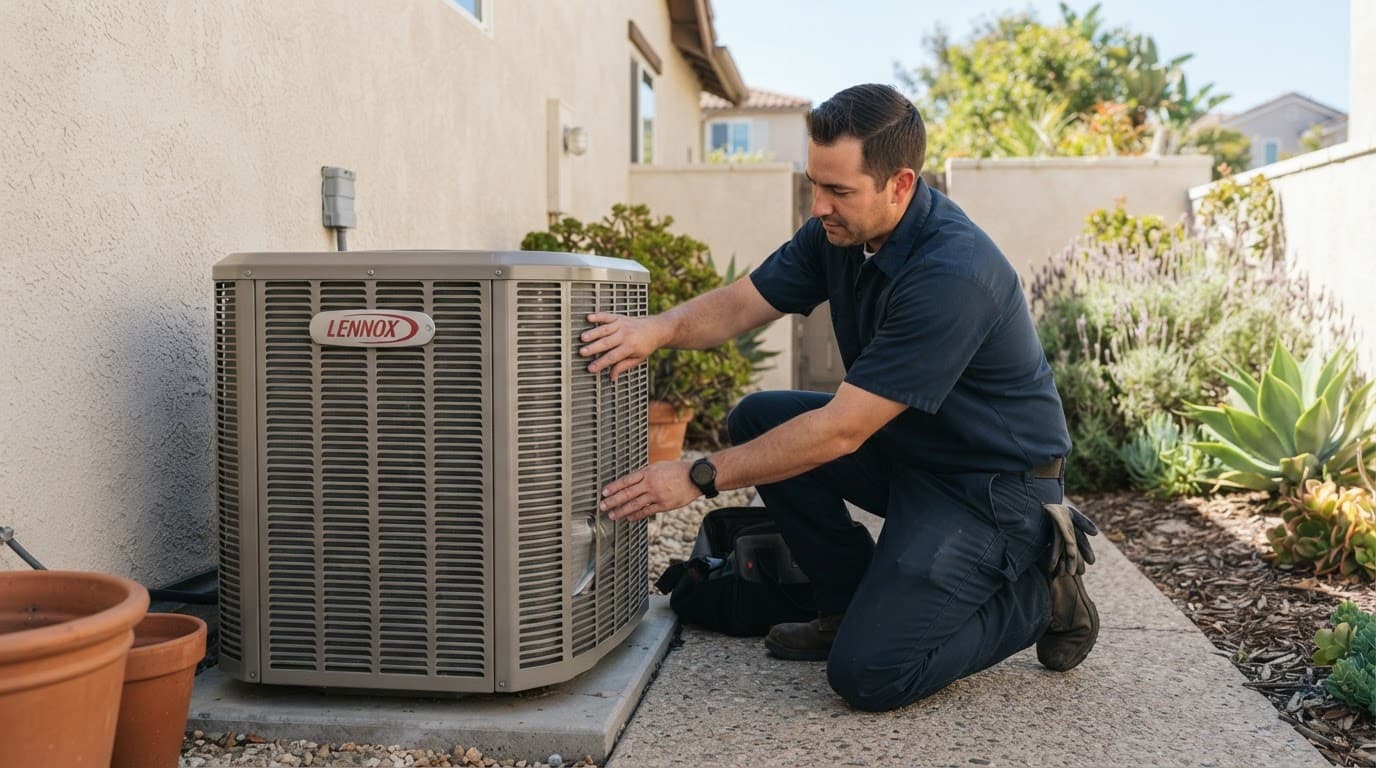
A few bent fins near a corner are different from a dense, flattened patch across several rows. There is no useful universal percentage for homeowners to follow. A small damaged spot can matter if it blocks a major airflow path, while scattered bent fins across the coil may not.
Look for open gaps and consistent channels between most fins to support airflow. If the unit still cools normally, careful maintenance is often enough.
What bends fins around Oceanside homes
Most physical fin damage starts with routine work around the yard. Weed trimmers, hedge clippings, tossed toys, moving patio furniture, and pets can all strike the soft metal of HVAC fins.
Yard work and cleanup cause most damage
Pressure washers are another frequent culprit. Their concentrated spray can flatten fins in seconds, even when the coil looked clean beforehand. A garden hose on a gentle setting is safer for routine rinsing.
Coastal air doesn’t usually bend fins, but it can speed up corrosion and help grime stick to the coil. In Carlsbad and Oceanside, salt residue, dust, and damp morning air can combine into a stubborn film if the unit goes too long without cleaning. When needed, use a coil cleaner only if its label says it’s safe for the coil.
Routine maintenance in Oceanside starts with the basics in Oceanside outdoor unit maintenance: clear leaves, salt residue, grass clippings, and loose debris before they restrict airflow. Keep shrubs, stored items, and lawn equipment away from the unit so air can move freely around it.
Safe DIY care for condenser fins
DIY fin work is reasonable when the damage is light, localized, and clearly limited to the aluminum fins. Treat HVAC fins as thin metal, not heavy automotive radiator hardware. It is not a complete repair for a line leak, damaged copper tubing, electrical problems, or major coil damage.
Use a correctly sized fin straightening comb
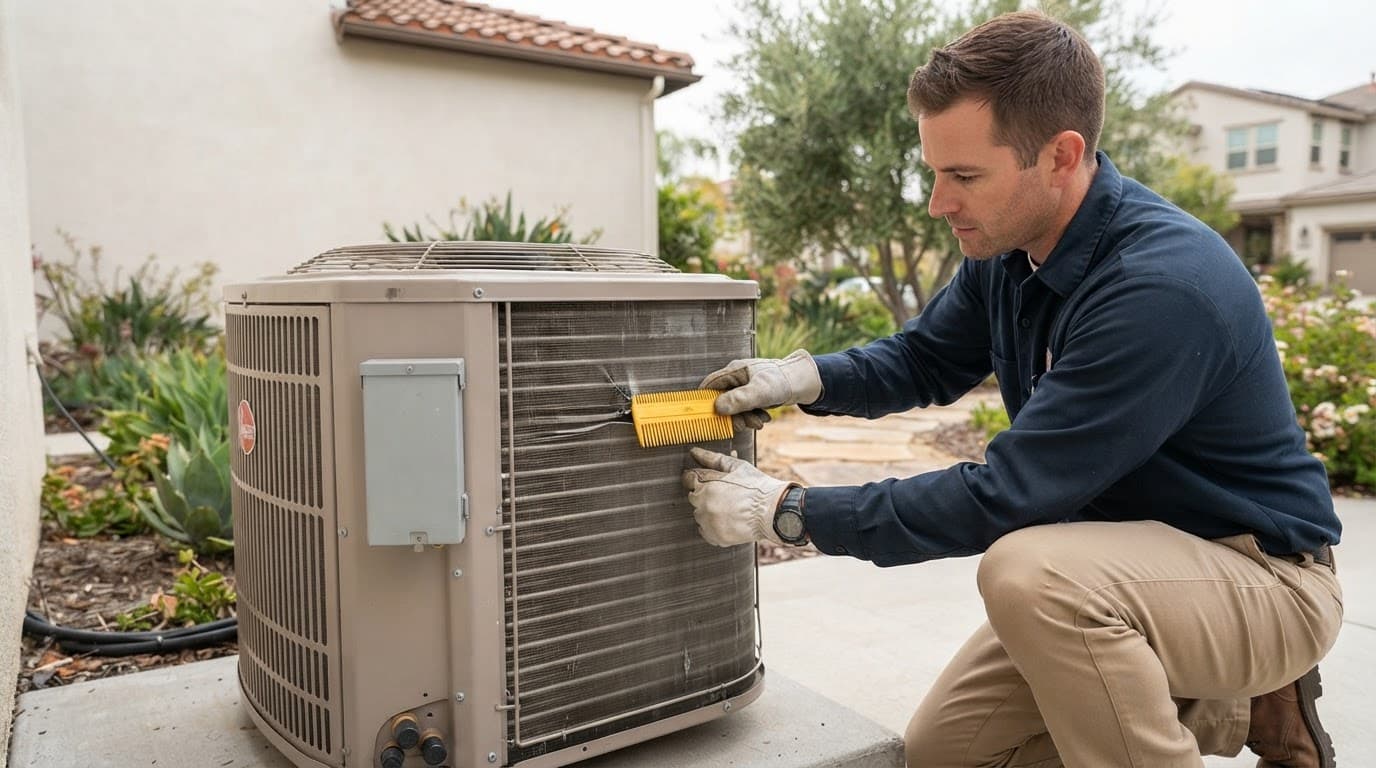
A fin straightening comb has teeth that fit between the fins without tearing them. Before buying one, check your unit’s manual or compare the comb carefully with an undamaged section of the coil. A comb with the wrong spacing can create more damage.
Turn off the AC at the thermostat, then shut off power at the outdoor disconnect or breaker. Don’t open the electrical compartment. Even with power off, internal components aren’t part of safe homeowner work.
- Remove loose debris, leaves, and grass with a soft brush or a vacuum brush attachment. Avoid pushing material deeper into the coil.
- Place the fin comb into an undamaged area next to the bent section. Pull it slowly in the same direction as the fins, using short, gentle passes.
- Work across a few fins at a time. Stop if the tool catches or the metal begins to tear. For one isolated bent fin, a small non-sharp flat tool can help, but a fin comb is much safer than a knife.
- Afterward, rinse the coil lightly with a garden hose using a wide, low-pressure spray. Keep the nozzle back from the fins and never use a pressure washer.
If the fin straightening comb catches, stop immediately to avoid tearing the metal.
For further cleaning, choose a coil cleaner approved for your condenser coil type. Follow the product directions closely, and keep the coil cleaner away from electrical parts, painted surfaces, and nearby plants.
A fin comb can reopen blocked air channels and improve airflow, but it cannot fix a punctured refrigerant tube.
When DIY fin repair is too risky
Stop the repair if the HVAC fins feel brittle, tear easily, or remain tightly crushed after a few careful passes. Corroded fins should not be worked further, since overworking damaged aluminum can turn a small problem into a larger one.
Call for help when the coil or system shows warning signs
A qualified HVAC technician should inspect the unit if a wide portion of the coil has damaged fins, the fins are corroded away, or you can see damaged tubing behind them. Oil residue, a hissing sound, and weak cooling can also point to a refrigerant leak.
Don’t try to seal a line with tape, glue, or a hardware-store patch. This work requires proper equipment, leak testing, and care that protects the system.
Bent AC condenser fins combined with warm indoor air, frequent cycling, weak cooling, breaker trips, unusual compressor noise, or compressor failure call for diagnosis rather than more combing. Professional air conditioning repair can confirm whether the coil, fan motor, capacitor, charge, or another component is causing the trouble.
Keep condenser fins open between service visits
A quick visual check once a month during cooling season can catch trouble before it spreads. Look for grass clippings, windblown leaves, branches, and other debris resting against the outdoor unit.
Give the condenser breathing room
Leave about two feet of clear space around the condenser when possible, or follow the clearance guidance in your manufacturer’s manual. Keep tools, pool equipment, and furniture from pressing against the cabinet.
This clearance supports airflow across the cooling fins and helps protect the HVAC fins inside. If you use a protective cover during the off-season, remove it before operating the system. Never run the AC with a cover in place.
Manufacturer-approved guards can help in high-traffic spots, although a tight mesh screen can also collect debris. The finned surface works like a radiator, so it needs open space rather than a tight cover.
An A/C maintenance service visit in San Marcos or nearby North County communities can include coil cleaning and airflow checks. Technicians can inspect developing fin damage, check the indoor evaporator coil, and use a suitable coil cleaner when appropriate.
Many homeowners also pair air conditioning service with a heating and furnace inspection in Escondido before cooler evenings return. A professional AC maintenance service can catch issues that a visual inspection cannot.
Cooling problems may have another cause
Clear outdoor HVAC fins are only one part of a healthy system. They don’t rule out indoor or electrical faults. A clogged indoor filter, failed capacitor, weak blower, thermostat issue, duct leak, frozen evaporator coil, or low charge can also leave rooms warm.
If the AC runs but never reaches the thermostat setting, replace the filter if it’s dirty and confirm that supply vents are open. A frozen evaporator coil can also signal the need for professional repair. Then check the outdoor unit from a safe distance for a running fan and unusual sounds.
Air conditioner repair in Oceanside is the right next step if the unit won’t start, repeatedly trips a breaker, or blows warm air after basic checks. Those symptoms need testing, not a DIY adjustment to the coil.
Conclusion
Most fin damage is manageable when it is small, shallow, and limited to the aluminum surface. Work slowly with the right comb, protect the coil from dust, and stop immediately if tubing or major coil damage is visible.
A clean coil with open fins helps your system move heat efficiently and puts less strain on the compressor during hot weather. During regular cleaning, use only an approved coil cleaner and follow its directions.
For widespread damage or cooling problems, professional repair is the safer choice. Book Online.
FAQs about condenser fin damage
Is it normal to find bent fins on a new AC condenser?
A few bent fins can be normal after shipping or installation, especially near the coil edges. Take photos and ask the installer about anything widespread, deeply crushed, or paired with a dented cabinet. A new system should not have a large blocked area on the coil.
Can I use a household tool instead of a fin straightening comb?
For one or two lightly bent fins, a small non-sharp flat tool may work with extreme care. However, a correctly sized comb gives you better spacing control and reduces the chance of tearing the metal or puncturing a tube. Avoid knives, sharp picks, and pressure washers.
Can bent condenser fins cause higher energy bills?
They can if enough of the condenser coil is blocked. Restricted air movement makes heat harder to release outdoors, so the compressor may run longer and work under greater strain. Minor scattered bends usually have little effect, while dense flattened sections deserve attention.