

Whole-Home Air Purifier vs. Portable Units in Escondido
My Guy is Proud to Be "Your Guy" for Your Home
Dust on furniture is annoying, but it can also reveal what your family breathes between cleaning days in Escondido. Pet dander, pollen, cooking particles, wildfire smoke, and odors may linger indoors after the source is gone.
Choosing a central option or portable unit depends on your home’s layout, the pollutant, and how well an air purification system fits your airflow and HVAC system. The goal is better indoor air quality without restricting heating or cooling performance.
For a portable model, check its clean air delivery rate and expected air changes per hour for the room you use most. An air quality sensor can help monitor changes, but it won’t identify every pollutant.
Start by matching the equipment to the problem, rather than buying based on a large coverage claim.
First, Identify the Air Problem You Want to Solve
Escondido homes often deal with dry-season dust, spring pollen, pet hair, and outdoor smoke that enters through doors, windows, and small building gaps. A purifier can help, but it won’t fix a moisture problem, a duct leak, or an air conditioner with weak airflow.
Mechanical filters capture particles
Mechanical filters capture solid particles as air passes through them. Their performance depends on filter area, a tight seal, and adequate airflow. This includes dust, pollen, mold spores, pet dander, and some fine particulate matter from smoke.
For allergy concerns, prioritize a high-quality HEPA filter with a suitable MERV rating, or a properly sized portable unit with a true HEPA filter. Check its clean air delivery rate. It should provide enough air changes per hour for the actual room, not just trap particles in a small test chamber.
Odors and gases need activated carbon
Volatile organic compounds, often called VOCs, come from products such as paint, cleaning sprays, fragrances, and new furniture. A HEPA filter does not remove gases.
Activated carbon adsorbs many odors and VOCs because its porous surface holds gas molecules. However, a thin carbon sheet has limited capacity. Strong or frequent odors call for a purifier with a substantial carbon filter, plus source control and ventilation when possible.
How a whole-home air purifier works with an HVAC system
An air purification system installs within the return ducts, supply ducts, or a dedicated filter cabinet near the indoor air handler. When the blower runs, air circulates through the system, and fan speed affects how consistently it receives treatment before returning to rooms.
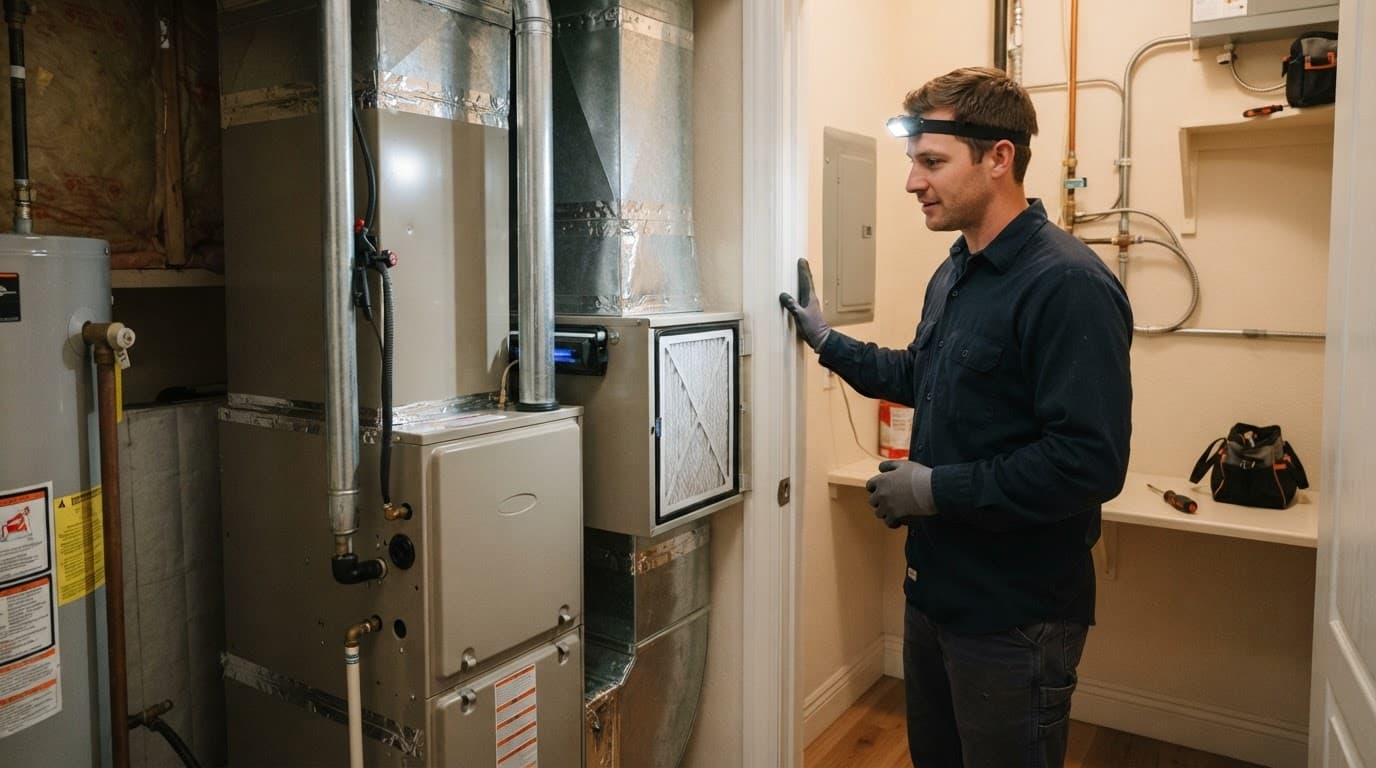
Your ducts and blower set the limits
No central purifier fits every setup. The cabinet must match the ductwork dimensions, the filter must seal correctly, and the blower must handle the added resistance.
A deep media filter cabinet with a MERV 13 filter often works well in residential systems because it gives mechanical filters more surface area. In contrast, dense HEPA media can create too much static pressure for a standard furnace or air handler. Restricted airflow can reduce comfort, raise energy use, and contribute to equipment trouble.
A professional ductwork inspection can reveal undersized returns, leaky connections, or existing airflow restrictions before installation.
Whole-home coverage has practical boundaries
Central filtration treats air that passes through the heating and cooling equipment. It can improve air across bedrooms, living areas, and hallways, but air changes per hour depend on fan runtime and return-air paths.
Closed bedroom doors, duct leaks, and an infrequently running blower can reduce air changes per hour and limit circulation. A central system also won’t remove settled dust from carpets or replace normal cleaning. It works best as part of a maintained air conditioning and heating system.
A filter that is too restrictive can create more HVAC problems than a moderately rated filter that allows steady airflow.
Portable Unit Performance
A portable air purifier cleans the air in the room where it operates. It doesn’t rely on a connected system, so it can run overnight in a bedroom even when the central system is off.
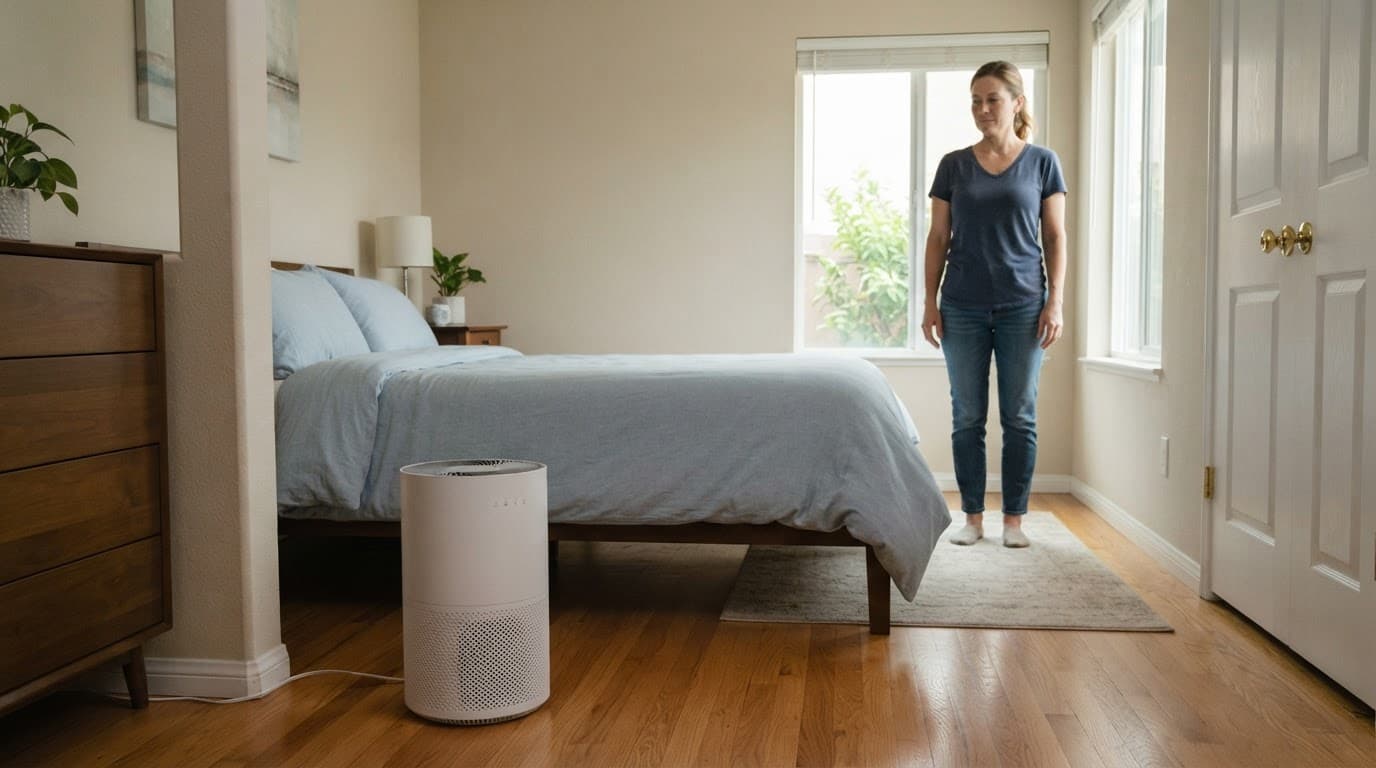
Use clean air delivery rate instead of broad coverage claims
Clean air delivery rate, or CADR, measures how quickly a portable purifier supplies cleaner air for smoke, dust, and pollen. A higher smoke CADR indicates more fine-particle cleaning capacity at a given fan speed. A HEPA filter and other mechanical filters describe how particles are captured.
Use this clean air delivery rate calculation:
CADR x 60 / room volume in cubic feet = air changes per hour
For example, a 300-square-foot bedroom with an 8-foot ceiling holds about 2,400 cubic feet of air. A purifier with a 200 CFM clean air delivery rate can provide about five air changes per hour under those conditions.
Manufacturers often base room size claims on ideal conditions and a low target for air changes per hour. Quiet operation usually means less fan noise at a lower fan speed.
Automatic modes can adjust fan speed when an air quality sensor detects a change. However, an air quality sensor may react slowly or overlook pollutants.
For allergies or smoke, choose a unit whose clean air delivery rate supports several air changes per hour at a quieter mid-range fan speed.
Placement affects portable purifier results
Place the unit several feet from walls, curtains, and furniture. Keep doors and windows closed when you want the strongest room-level results.
A portable purifier belongs near the people who need it most, such as in a bedroom, nursery, home office, or pet area. One unit in the living room cannot reliably clean a closed upstairs bedroom.
HEPA, Carbon, UV, and Other Air Cleaning Technologies
Marketing labels can make unlike technologies sound interchangeable. They aren’t. An air purification system may combine several methods, but each addresses a different type of indoor contaminant.
HEPA and carbon filters handle different pollutants
A HEPA filter captures at least 99.97% of particles measuring 0.3 microns under test conditions. These mechanical filters are useful for airborne allergens and fine smoke particles, but they don’t neutralize odors or gases.
Activated carbon works through adsorption, holding cooking smells, pet odors, and some VOCs on its surface. Activated carbon becomes saturated over time. If odors return quickly after the purifier runs, replace the carbon filter or look for an indoor source that needs removal.
UV and photocatalytic systems need careful evaluation
UV germicidal irradiation, often delivered by germicidal lights, can limit microbial growth on an HVAC coil or drain pan. A UV air purifier’s performance depends on lamp intensity, exposure time, fan speed, and placement. Higher air changes per hour shorten exposure time, while lower air changes per hour allow longer contact.
UV-C lamps designed for germicidal use typically operate around 254 nanometers and don’t intentionally create ozone. Homeowners should still verify ozone emissions testing for the product and avoid ionizing devices that produce ozone during operation.
Photocatalytic oxidation can alter certain VOCs, but it may also form intermediate byproducts if the reaction is incomplete. It shouldn’t be the first choice for fresh paint fumes or strong chemical odors. An air quality sensor can guide operation, but it doesn’t replace source control. Remove the source, ventilate the area, and use carbon filtration when appropriate.
Comparing Cost, Noise, and Everyday Use
Portable units usually cost less upfront. Many dependable room purifiers fall between $100 and $500, although larger premium models cost more. Filter replacements and energy consumption affect long-term cost, and a HEPA filter or activated carbon media may require regular changes.
A professionally installed central system can range from several hundred dollars for a media cabinet to several thousand dollars when it includes advanced purification, electrical work, or duct modifications.
| Factor | Central setup | Portable room unit |
|---|---|---|
| Coverage | Treats air moving through central equipment across connected spaces | Treats one defined room, depending on room size |
| Upfront cost | Equipment plus installation | Usually lower, plug-in purchase |
| Noise level | Mostly contained near the air handler | Fan speed affects perceived sound in the room |
| Replacement filters | Media filters, lamps, and service checks | Filter media and odor-control media |
| Best fit | Broad household particle control | Bedrooms and pollutant hot spots |
Portable units may deliver a higher clean air delivery rate and steadier air changes per hour in one room. Central circulation covers connected spaces, but its air changes per hour are less predictable because runtime and layout vary.
A portable option may clean one occupied room more intensely. A central setup offers convenient whole-house coverage when central equipment supports it. On some portable models, an air quality sensor simplifies daily use.
Choosing the Right Setup for Your Home
Start by locating symptoms, odors, or visible dust, then check the HVAC equipment and airflow. An air purification system may suit house-wide coverage, while one bedroom with pet dander or seasonal allergies may need a targeted unit.
When central air purifiers make sense
Choose central air purifiers when you want less visible dust or recurring odors throughout the house. Run your HVAC system fan regularly for consistent air changes per hour; activated carbon can help with recurring odors. This setup suits households that don’t want multiple portable units taking up floor space.
An Escondido HVAC evaluation should include static-pressure testing and a look at the return ductwork before selecting a high-efficiency filter. In Vista, ac repair should come first if airflow is weak or the system short-cycles.
San Marcos air conditioning equipment and Carlsbad heating systems both need correct airflow before an air purifier is added. An Oceanside A/C system may need more frequent filter checks because coastal dust and open-window habits affect loading. A Fallbrook furnace also benefits from a clean return path during heating season. After installation, verify that the home reaches the intended air changes per hour.
When portable units are the better buy
Portable units make sense for renters, homes without central ducts, and targeted needs. A portable air purifier offers a lower-risk trial with a suitable clean air delivery rate for the space. Look for enough air changes per hour for the space, and use an air quality sensor to adjust fan speed.
For recurring concerns, Escondido indoor air quality services can help identify whether filtration, ventilation, duct service, or humidity control fits the home.
Filter Changes and DIY Tasks That Are Safe
Air purification only works when air can move through clean filters. Keep the manufacturer’s replacement schedule handy, since filter lifespan varies with pets, smoke exposure, nearby construction, and heavy cooling or heating use.
Replace filters before airflow drops
Check a 1-inch HVAC filter monthly. Many need replacement every one to three months. Thick media filters often last six to 12 months, while a HEPA filter or carbon filter in a portable unit may need replacement within a similar range. Activated carbon loses odor-absorbing capacity as odors load the media, so keep replacement filters on hand.
A loaded filter can reduce clean air delivery rate and lower air changes per hour. It may also force a higher fan speed, making air changes per hour less reliable. An air quality sensor can flag worsening performance, but it doesn’t replace visual checks.
UV lamps can still glow after their germicidal output has declined, so replace them on the manufacturer’s schedule. Regular AC maintenance in Escondido also helps catch dirty coils, blower issues, and airflow problems that affect filtration.
Keep DIY work simple
Homeowners can vacuum a portable unit’s prefilter, clean its exterior grille, and replace filters with the correct model. You can also place a portable purifier in the right room and monitor whether dust or allergy symptoms improve.
Don’t tape a dense HEPA sheet over a return grille or run a furnace without its required filter. Leave duct modifications, UV wiring, and static-pressure testing to a qualified technician.
Final Thoughts
The best choice depends on where pollutants collect and whether your heating-and-cooling equipment can move air through added filtration without strain. A portable purifier delivers focused room cleaning. A whole-home air purifier can support cleaner air across the house as part of a broader air purification system.
Start with clean filters, healthy airflow, and a realistic view of the contaminants you want to reduce. Consider activated carbon for odors, a portable model’s clean air delivery rate, and expected air changes per hour. If a central solution fits your home, Book Online to discuss the equipment and installation details.
Frequently Asked Questions
Can a central purifier be installed on existing ducts?
Not always. The equipment must fit the duct layout and match the blower’s available static pressure. A contractor should inspect the return duct, filter cabinet space, electrical needs, and airflow before recommending an installation.
How often should I change an air purifier filter?
Follow the manufacturer’s instructions, then adjust for actual conditions. Homes with pets, smoke, high pollen exposure, or frequent HVAC use may need earlier changes. Replace filters when they look loaded, odors break through, or airflow falls.
Do UV-C systems create dangerous ozone?
Many UV-C systems using 254-nanometer lamps don’t intentionally produce ozone. Still, check for documented low-ozone or zero-ozone testing. Avoid products that rely on ozone or unverified ionization claims for air cleaning.
What does clean air delivery rate tell me?
Clean air delivery rate measures how quickly a device supplies filtered air. To estimate air changes per hour, divide the delivered airflow by the room’s air volume. That air changes per hour figure is only an estimate, since actual air changes per hour vary by room layout and operating conditions.
Is an air quality sensor useful?
An air quality sensor can track changes in airborne pollutants and help equipment respond automatically. Some models adjust fan speed when readings rise, but sensors need proper placement and occasional cleaning.