

Furnace Exhaust Vent Blockage: Safe Escondido Checks
My Guy is Proud to Be "Your Guy" for Your Home
A furnace that starts, runs briefly, then shuts down may have a visible exhaust pipe problem. In Escondido, leaves, pests, wind, or nearby landscaping can obstruct it.
For Escondido homeowners, a few safe exterior checks can identify minor obstructions, but they aren’t a complete diagnosis. Because combustion gases and carbon monoxide are involved, limit checks to reachable areas. Stop troubleshooting and call a licensed HVAC professional if the cause isn’t obvious.
Key Takeaways
- A blocked furnace intake or exhaust pipe can cause short cycling, failed start-ups, and safety shutdowns, but similar symptoms may have other causes.
- Safely inspect only reachable exterior openings after turning the thermostat off; remove loose debris from around the openings without probing into the pipes.
- Never use sticks, hoses, leaf blowers, pressure washers, homemade screens, or unapproved caps on furnace vent terminations.
- Leave deep obstructions, nests, water, ice, damaged pipes, recurring shutdowns, and error codes to a licensed HVAC professional.
- If a CO alarm sounds or anyone feels dizzy, nauseated, confused, or unusually headachy, leave immediately and call 911 or the fire department from outdoors.
Why Furnace Exhaust Pipes Matter
Many newer high-efficiency furnace systems use white or gray PVC pipes exiting through an exterior wall. One brings combustion air into the unit; the other serves as the exhaust pipe, carrying cooler combustion products outdoors.
These pipes work as a matched intake and exhaust path. If the intake becomes blocked, the furnace may not get enough air for proper combustion. If the exhaust pipe becomes obstructed, the unit’s safety controls can trigger furnace shutdown before combustion gases back up.
The pressure switch is designed to stop unsafe operation
Inside the furnace, the pressure switch confirms that the draft inducer can move air and exhaust through the venting path. A blockage, cracked pipe, loose joint, or condensate issue can prevent that switch from closing.
As a result, the furnace may try to start and then stop before producing heat. Repeated starts and stops are called short cycling, and they deserve attention rather than repeated thermostat adjustments.
A furnace safety shutdown is a warning to inspect the vent path, never a reason to bypass a safety control or keep resetting the system.
Warning Signs of a Furnace Exhaust Vent Blockage
A furnace exhaust vent blockage does not always look dramatic. Sometimes the first clue is a cold house and a furnace that will not complete its start-up cycle.
Pay attention when several symptoms appear together:
- The furnace turns on, but the burners never stay lit, or the unit shuts down within a few minutes.
- Warm air stops reaching the vents, even though the thermostat calls for heating.
- You hear the inducer fan start repeatedly before the system shuts off.
- The furnace displays an error code or a blinking diagnostic light.
- Leaves, dirt, insect nests, plastic bags, debris, or dense shrubs sit against the pipe openings.
- A CO alarm sounds, or anyone in the home feels dizzy, nauseated, confused, or unusually headachy.
A warm cabinet panel alone does not confirm a vent issue. Still, an unusual odor, soot, water around the furnace, or a noisy start-up calls for an HVAC inspection by a qualified HVAC technician.
Carbon monoxide safety always takes priority
Carbon monoxide poisoning can occur when a blocked vent allows combustion gases to enter the home. Furnace safety mechanisms may shut the unit down, but they cannot replace alarms or professional testing.
If a CO alarm activates, get everyone and pets outside immediately. Call 911 or the fire department from outdoors, then contact your gas utility and a licensed HVAC professional. Do not silence the alarm, open windows and remain inside, or restart the furnace to test it.
Safe Exterior Checks Before You Call for Service
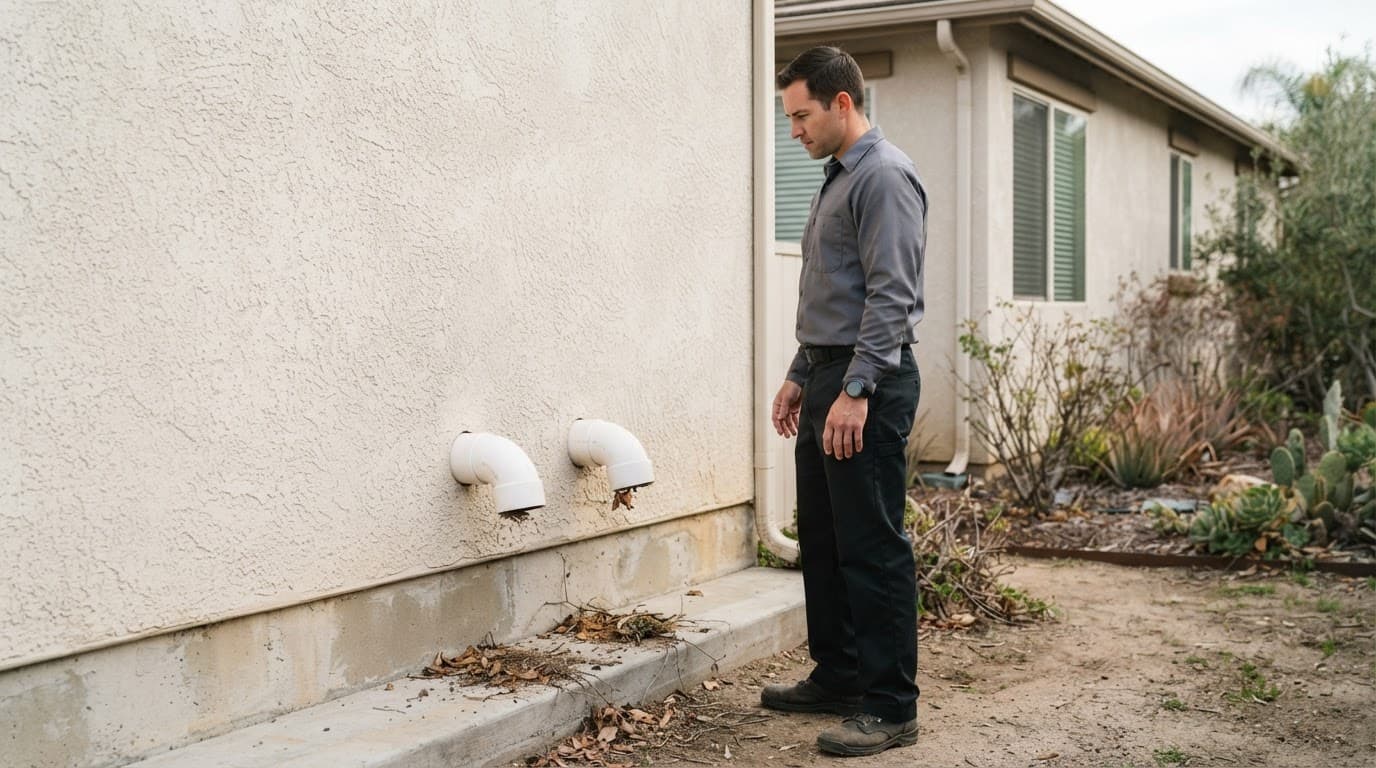
Safe DIY check: Look, don’t reach deep into the pipe
A homeowner should inspect only reachable outdoor portions of the intake and exhaust terminations. Turn the thermostat to “off” before you begin. If you smell gas, hear hissing, or have a carbon monoxide concern, skip the inspection and leave the area.
Do not dismantle equipment or remove fittings during this check. Locate the terminations near the ground or on an exterior wall.
Depending on the installation, the two PVC pipes may sit side by side or end in different positions. One opening serves the intake, and the other serves the exhaust. Neither opening is safe to probe, even if it looks like a drain.
Use a flashlight to inspect the visible opening of the exhaust pipe, then check the intake opening. Look for dry leaves, mulch, grass clippings, mud, spider webs, insect nests, and other debris. In Escondido, snow buildup is unlikely, but rain-carried dirt can still enter low-mounted openings. In unusual cold, ice buildup can also occur.
Clear loose debris from around the outside of each opening with a gloved hand. Keep plants, patio furniture, storage bins, and outdoor decorations away from both exterior pipes. Leave at least a few feet of open space around the terminations to protect airflow.
Do not insert a stick, garden hose, wire, leaf blower, or pressure washer into either opening. You could push material deeper, crack the pipe, dislodge a fitting, or damage internal furnace components.
Use a shop vac only for dry, loose, reachable material
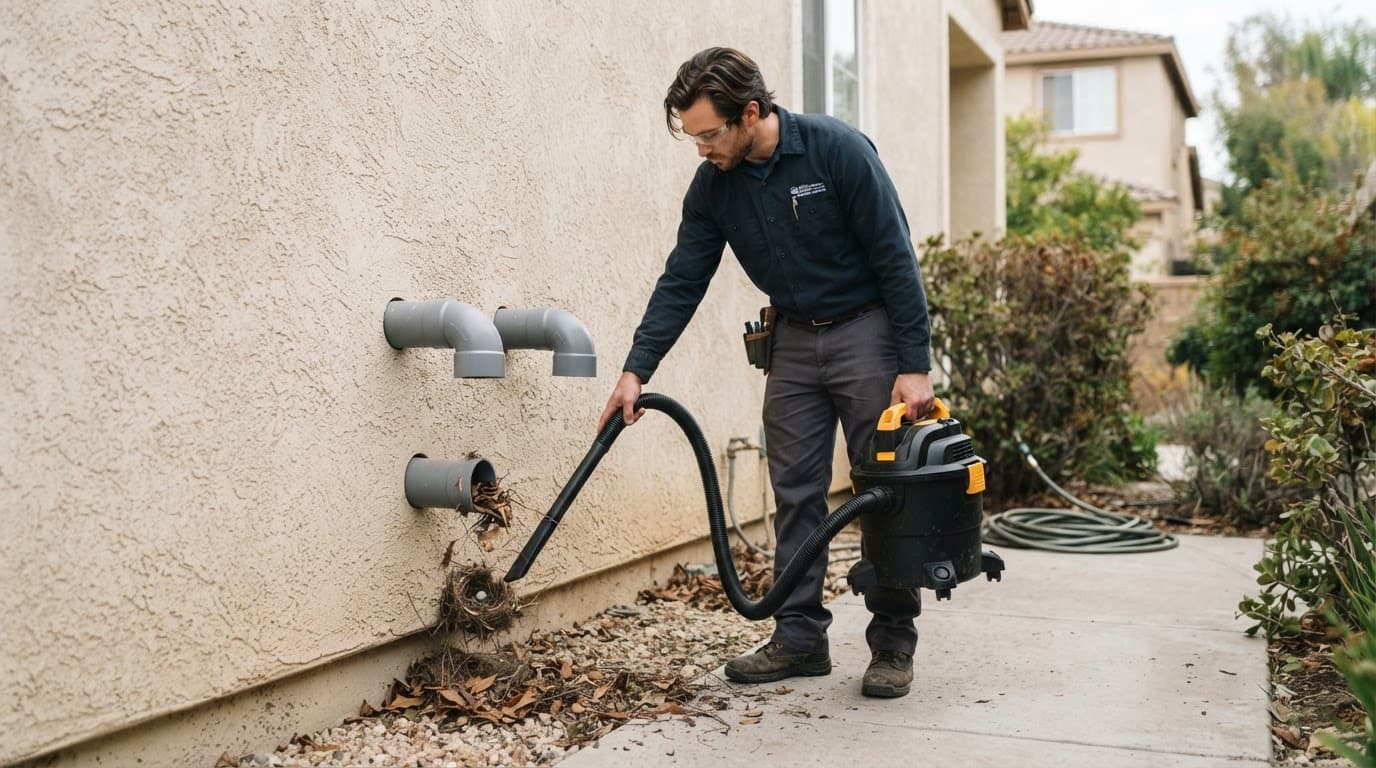
If dry, loose, reachable material sits at the opening, a shop vac can remove it safely. Hold the nozzle near the pipe’s end, and don’t seal it tightly over the opening.
Stop and call a licensed HVAC professional if you meet resistance or find a deep nest inside the exhaust pipe. Do the same if you find water, a damaged pipe, ice, or a detached joint. This is the safe limit of homeowner troubleshooting. A technician should inspect the full vent run and condensate system before the furnace operates again.
What Not to Do With a Blocked Furnace Vent
A quick fix can create a larger repair. Never tape over a cracked exhaust pipe or glue a joint without confirming the material and slope. Don’t resize the pipe because a local store has a different fitting. Don’t add a screen, relocate the vent, or otherwise alter its path. Changes to the heating system belong to a licensed professional.
PVC pipes must follow the furnace manufacturer’s approved layout. Diameter, elbow count, length, slope, termination location, and ventilation clearances near windows, doors, and fresh-air intakes all affect safe operation. An exhaust pipe that looks intact outside may have a separated fitting or moisture issue indoors.
Skip homemade screens and caps
Unapproved screens and an aftermarket vent cap can keep out leaves or animals, but they can also collect lint, frost, debris, or insect material. The wrong accessory may block the opening, and ice buildup can create another restriction even in Escondido’s mild winters.
Use only a termination design approved for your furnace model and local code. If birds or rodents repeatedly enter the pipe, ask a technician to recommend a manufacturer-compatible solution instead of fitting mesh over the opening.
Don’t keep cycling the thermostat
Turning the thermostat off and on can make a failed start sequence repeat. That doesn’t clear a blockage, and it can obscure the pattern a technician needs to diagnose.
If your filter is dirty, replace it with the correct size and rating. A dirty filter restricts household airflow, not the vent path. It differs from an exhaust blockage, but both can make heating performance worse.
When Furnace Service Is the Safer Choice
Call for service in Escondido after one careful exterior check. Do so if the unit still fails to heat, continues short cycling, or shows an error code.
Call promptly for a nest inside the pipe, standing water, discoloration, a damaged or wet vent component, or a loose termination.
An HVAC technician can measure draft pressure, test the pressure switch, and inspect the inducer. A licensed HVAC professional can verify condensate drainage and evaluate the full furnace exhaust system and exhaust pipe path. An HVAC inspection provides more detail than routine maintenance; troubleshooting cannot replace it, and homeowners shouldn’t open the cabinet or continue resets when shutdowns persist.
For a system that won’t stay on, furnace repair in Escondido can identify vent, condensate drain, control, or combustion faults. Heating services in Escondido can help determine whether the problem needs routine service or urgent attention. Emergency repair is safer for suspected combustion-gas exposure, especially on cold nights or with children, older adults, or respiratory concerns.
Keep doors and windows in mind
Modern vent locations must follow appliance instructions and local installation requirements. Exhaust outlets should not direct combustion gases toward operable windows, doors, fresh-air intakes, or areas where people gather.
Don’t relocate a pipe yourself to improve its appearance or make room for landscaping. A professional must verify the installation against the equipment instructions and local requirements, including risks created by nearby renovations.
Prevent Future Vent Problems
Include exterior pipes in your monthly home walk-around during the heating season. After high winds, heavy rain, landscaping work, roof cleaning, or pest activity, inspect the exhaust pipe termination. Keep mulch and ground cover from creeping upward around low terminations.
A seasonal tune-up also catches problems you cannot see from the yard. During furnace maintenance in Escondido, a technician can inspect a high-efficiency furnace. The visit includes burners, the heat exchanger, condensate drainage, venting, safety controls, and filters.
Treat the whole comfort system as connected
Your home’s HVAC equipment works as one heating system, with shared power, drainage, and venting pathways. A full inspection can spot furnace concerns before spring air conditioning use begins, helping avoid surprise A/C repair calls in Escondido. Clear venting and clean filters support airflow, heating performance, and less heat loss as weather warms.
Replace filters according to the maintenance schedule recommended for your household and filter type. Homes with pets, construction dust, or frequent heating use may need more frequent checks. Keep CO alarms installed outside sleeping areas and test them according to the manufacturer’s instructions.
FAQ About Furnace Vent Blockages
Can a furnace exhaust vent blockage cause carbon monoxide indoors?
Yes. Restricted venting can interfere with safe combustion and exhaust removal. Modern furnaces have safety controls that may shut the system down, but no device replaces working CO alarms and professional inspection. Leave the home immediately if a CO alarm sounds.
Why does my furnace run for a minute and then shut off?
The furnace may fail a pressure-switch check because of a blocked intake or exhaust pipe. A dirty flame sensor, condensate drainage problem, faulty inducer, or control issue can cause similar behavior. An HVAC technician in Escondido can test the system safely.
Can I use a vent cap or screen to stop animals?
Only use an accessory approved by your furnace manufacturer and designed for the installed venting system. Fine mesh can trap debris and restrict airflow. A professional can suggest a safer option after identifying what is entering the pipe.
What can I safely check outside?
From the ground, inspect reachable openings and remove loose leaves, twigs, or nesting material. Stop if the obstruction is inside the pipe, the vent is damaged, or the opening isn’t safely reachable. Call a licensed HVAC professional instead.
Does Southern California weather still cause vent problems?
Yes. Escondido can experience Santa Ana winds and heavy rain, which may carry leaves into vents or damage exterior components. Insects, nesting animals, and overgrown landscaping can also block furnace vents.
Keep the Vent Path Clear and the Furnace Protected
A clear furnace exhaust path gives your furnace the airflow it needs to start, heat, and shut down safely. Visually check reachable openings for debris, but don’t attempt invasive repairs on an exhaust pipe. Leave deep clogs, cracked sections, recurring shutdowns, and any CO concern to a licensed HVAC professional.
A quick exterior check can help prevent a major interruption in heating, especially before a cool Escondido evening. If your furnace still won’t operate normally, contact a professional for furnace repair in Escondido.