

Why Your AC Blows Dust Through the Vents
My Guy is Proud to Be "Your Guy" for Your Home
Dust puffing from an air vent can make a clean room feel dirty again within hours. If you are a homeowner in Escondido CA searching for AC blowing dust Escondido solutions, the root cause is often a neglected air filter, dirty ductwork, or accumulated debris inside the system that compromises your indoor air quality.
A little household dust is normal. However, visible bursts of dust when your air conditioning starts, or dark debris collecting near supply vents, deserve your immediate attention. The source may affect cooling, heating, indoor air quality, and your equipment’s overall lifespan.
Key Takeaways
- A clogged or poorly fitted dirty air filter is a common reason your cooling system sends dust through your air vents.
- Dust may also come from dirty ducts, a contaminated blower compartment, or gaps near return ducts.
- Do not run your A/C without a filter, even briefly, because it can pull debris directly onto the evaporator coil.
- Repeated dust clouds, musty odors, weak airflow, or uneven temperatures call for professional HVAC service.
- Regular filter changes and routine maintenance reduce dust circulation in Escondido homes.
AC Blowing Dust Escondido: What the Dust Tells You
Your HVAC system moves a large volume of air every time it starts. It pulls indoor air through return grilles, passes it through a filter, cools or heats it, and pushes it back through supply vents. When that filter or air path has a problem, the system can redistribute dust buildup that it collects.
The timing of the dust matters. A small burst after the system has sat unused may be dust that settled inside your air vents. Dust that appears every cycle points to an active source. For example, a loose filter can allow unfiltered return air to slip around its edges. That air may carry pet dander, lint, drywall dust, and other particles directly into the equipment.
Check the color and texture, too. Pale gray dust often comes from normal household buildup. Black streaks near supply grilles can be soot, dirty insulation, or residue from candles and cooking. A professional should inspect persistent dark material rather than guessing what it is.
A dirty vent cover is often a symptom, not the source. Cleaning the grille alone will not stop dust that is entering through the return side or your home air ducts.
In Escondido CA, open windows, dry weather, nearby construction, and pets can add more airborne debris to your indoor airflow. Those local conditions make filter maintenance more important, especially during long cooling seasons when your HVAC system runs almost constantly.
Common Reasons an AC Blows Dust Through the Vents
The air filter is clogged, missing, or installed incorrectly
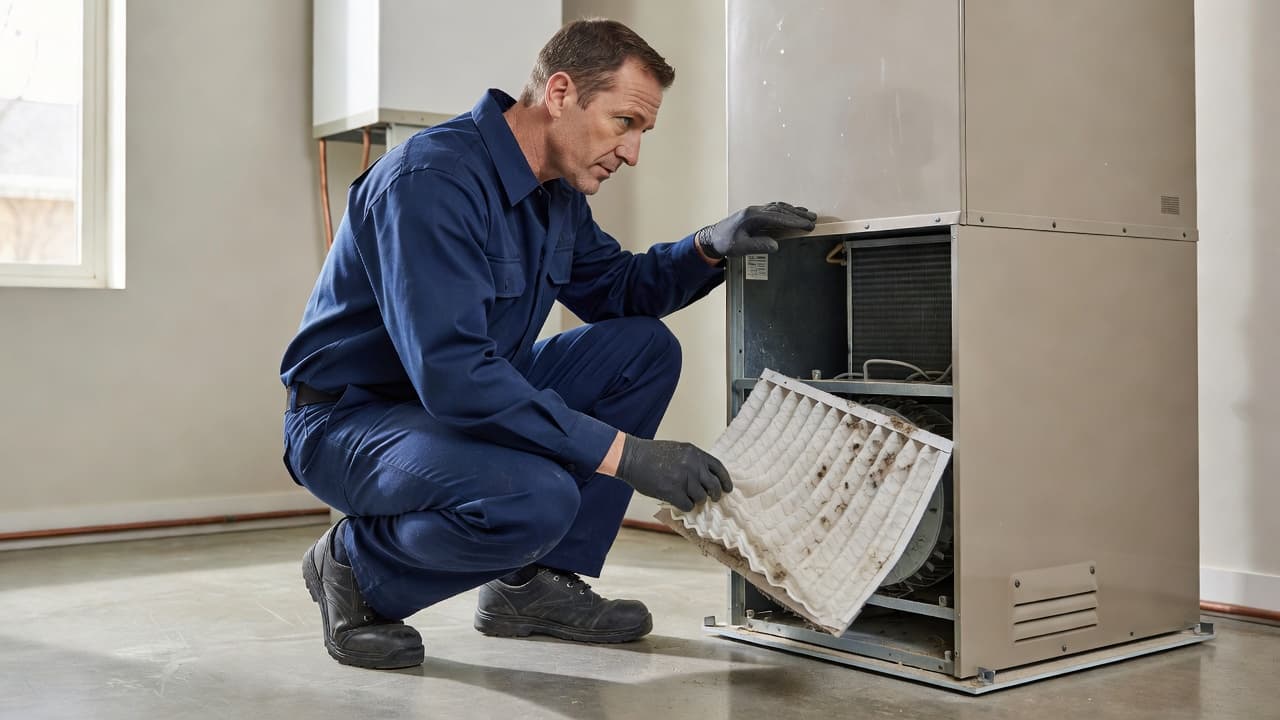
The air filter is your first line of defense. Once a dirty air filter loads up with dust, airflow drops and the blower works harder. If it is missing, bent, the wrong size, or facing the wrong direction, particles can bypass it.
Look at the arrow printed on the filter frame. It should point toward the furnace or air handler, in the direction of airflow. A filter that bows inward or rattles in its slot may be too small.
Most 1-inch filters need replacement about every one to three months. Homes with pets, smokers, open windows, or heavy summer A/C use may need more frequent changes. Avoid choosing the highest MERV rating without checking the manufacturer’s recommendation, since a dense air filter can restrict airflow in some systems.
The return ducts are pulling dust from hidden spaces
Return ducts operate under negative pressure. Any opening around a return boot, attic duct connection, or wall cavity can draw in dirty air before it reaches the filter. That debris may include attic insulation fibers, loose drywall dust, and old construction material.
Supply ducts and leaky air ducts can also develop problems. In an attic, a disconnected or damaged section of ductwork may gather dust, then send it through your air vents once airflow resumes. You may notice a dusty smell, poor airflow in one area, or rooms that never seem to cool evenly.
The blower and evaporator coil need cleaning
When a filter has been neglected, dust buildup can occur on the blower wheel, motor compartment, and evaporator coil. The blower then moves contaminated air through the home. A dirty evaporator coil also restricts airflow and can contribute to frozen components.
This problem sometimes appears with other warning signs, such as longer cooling cycles, warm rooms, higher utility bills, or an A/C that shuts off early. Read about air conditioner short cycling causes if the system is also turning on and off more often than usual.
DIY Checks You Can Safely Make First
Start with simple items that do not require opening electrical panels or dismantling equipment. Check your thermostat settings and turn the system off before removing the filter, then inspect the filter compartment with a flashlight.
Use this quick routine:
- Replace a dirty air filter with the correct size and airflow direction. Consider upgrading to a high efficiency HEPA filter if your household deals with severe dust, and write the installation date on the frame.
- Vacuum supply and return grilles with a brush attachment as part of your regular vent cleaning routine. Then wash removable metal covers with mild soap and water.
- Look for obvious gaps around return grilles, especially where duct boots meet drywall. Small gaps may need professional sealing if they extend into an attic or wall cavity.
- Clear the area around indoor returns. Furniture, rugs, and curtains can reduce airflow and make the system pull harder through nearby gaps in your air vents.
- Check exterior conditions. Close windows during dusty days and keep pets away from open return grilles while cleaning.
Never spray cleaners, fragrances, or disinfectants inside ducts. Do not reach into the blower area, remove coil panels, or run the system without a filter. Those shortcuts can create electrical hazards and put more debris on sensitive components.
If the A/C is not cooling as well as it used to, dust may be part of a larger airflow issue. Review these common summer HVAC problems before assuming the vent dust is only a housekeeping problem.
When Dust Calls for Professional AC Repair
Some dust problems begin with routine maintenance. Others need diagnosis and repair. Schedule AC repair Escondido if you see dust blow out after every startup, find debris that looks like insulation, or notice a burning or musty odor from the vents.
NATE-certified technicians can inspect the filter rack, blower wheel, coil, return plenum, and accessible ducts. They can also test static pressure and airflow. These measurements help locate restrictions, a potential refrigerant leak, and leaky air ducts that are invisible from the living space.
Call for HVAC service promptly if you notice any of these conditions:
- Dust is paired with ice on the indoor or outdoor condenser unit.
- Airflow is weak at several vents, even with a new filter.
- The furnace or air handler makes new rattling, scraping, or buzzing sounds.
- Dark debris returns soon after you clean vent covers.
- Higher utility bills and lower cooling costs occur while comfort drops, which can severely impact energy efficiency.
For homes in Vista, San Marcos, Carlsbad, Oceanside, Fallbrook, Poway, and San Diego, seasonal service can catch these issues before peak summer demand. Professional duct cleaning is also safer when dust has reached the evaporator coil or blower assembly.
Keep Dust From Returning to Your Vents
Maintaining a consistent filter schedule does much more than simply protect your indoor air quality. It also helps the entire air conditioning system move the correct amount of air, which improves overall energy efficiency. Set a monthly phone reminder to inspect the filter, even if it does not always need replacement.
During heating season, those same filter and duct issues affect your furnace. A furnace can circulate stored dust after months of low use, so change the filter before the first cool evening. Keep return grilles clear year-round and avoid storing boxes near the indoor unit to prevent unnecessary dust buildup.
If you are remodeling, ask contractors to cover registers and returns while sanding drywall or cutting materials. Consider upgrading to a high efficiency HEPA filter, and replace it more often until the construction work is complete. Fine construction dust can travel farther than expected and settle deep inside the HVAC system.
Investing in routine maintenance also gives a technician a chance to spot loose duct connections, damaged insulation, and filter-rack gaps before they become a recurring mess.
Final Thoughts
Dust from your air vents is often your home’s first warning that proper airflow needs attention. A properly fitted filter and clean return path can solve many cases of an AC blowing dust through the system.
When dust keeps returning, treat it as an HVAC issue rather than a cleaning chore. Book Online to have a professional in AC repair Escondido inspect your equipment and find where the debris is entering.
FAQs
Can a dirty air filter cause dust to come out of vents?
Yes. A loaded filter restricts airflow, and a damaged or poorly fitted filter can let dust, pet dander, and other debris bypass the filter media entirely. Replacing it with the correct size is the first step toward cleaner indoor air.
Is dust blowing from vents a sign of mold?
Not necessarily. Most visible dust is standard household debris, lint, pet dander, or material pulled through duct leaks. However, mold spores can sometimes mix with particulate buildup, requiring proper identification if you also smell persistent mildew or see moisture around the system.
Should I have my air ducts cleaned?
Professional duct cleaning may help when there is visible debris, post-construction dust, pest contamination, or a confirmed duct problem within your air ducts. First, have the filter, blower, coil, and duct connections inspected so the underlying source of the dust does not remain.
Why does my furnace blow dust when heating starts?
Dust can settle in your air ducts and on internal components during the months when the heating system is not in use. A new filter and a clean system usually reduce the first-use smell and dust, but recurring debris needs a professional HVAC inspection.