

Why Your AC Smells Like Burning in Oceanside Homes
My Guy is Proud to Be "Your Guy" for Your Home
A burning odor from your cooling system is never something to ignore. When you notice an AC burning smell in Oceanside homes, it can often be attributed to simple dust accumulation; however, it may also indicate a worn motor, faulty wiring, or another electrical hazard.
The tricky part is that many odors seem similar at first. If your unit continues to produce an unpleasant scent, the safest move is to determine if you are dealing with a temporary startup issue or a significant problem that requires a professional AC repair service. Relying on an expert for diagnostic checks ensures your system is safe and functioning correctly before any further damage occurs.
Key Takeaways
- Distinguish the Odor: While a temporary, mild scent of burning dust is common when starting your system after a long idle period, odors resembling burning plastic or chemicals indicate a serious electrical issue.
- Address Airflow First: A clogged air filter or blocked vents can force your blower motor to work harder and overheat; always perform a quick check of your filters and registers before assuming the unit is broken.
- Recognize Local Environmental Factors: Homes in Oceanside are uniquely prone to these smells due to salt-air corrosion and high humidity, which accelerate the degradation of wiring and electrical components.
- Prioritize Safety: If you detect smoke, experience tripped breakers, or notice a sharp, persistent electrical smell, shut off the power immediately and contact a professional to avoid fire hazards and further equipment damage.
What a burning smell from your AC usually means
Most homeowners assume the outdoor unit is the source of the problem. Sometimes it is, but the odor often originates inside, where the blower motor, wiring, control board, or air handler sits. A failing blower motor is a particularly common culprit for internal smells, as it struggles to spin against resistance or electrical resistance builds up within its windings.
Your HVAC system shares parts between air conditioning and heating. Because of that, a smell that shows up during the cooling season may still come from dust on components, a stressed motor, or overheated electrical parts that run year round.
This quick guide can help you tell one smell from another.
| Smell | Common cause | What to do |
|---|---|---|
| Dusty, dry odor | Dust burning off after a long idle period | Watch it for a few minutes |
| Burning plastic smell | Overheated wire, capacitor, or insulation | Shut off power and call for service |
| Electrical burning smell | Failing motor or wiring issue | Stop using the system |
| Musty plus hot odor | Dirty filter or blocked airflow heating up parts | Replace filter and inspect vents |
A light dusty smell, often described as dust burning off the heat strips or components, may happen the first time a system runs after sitting for weeks. Oceanside’s mild weather can make that more common, because some systems stay idle until the first hot spell. Still, the odor should fade quickly.
If it smells like plastic, hot metal, or anything electrical, treat it as a warning. Components such as capacitors, contactors, and motors can overheat when you have a clogged air filter or poor airflow, as these conditions cause the system to strain while trying to move air.
If the odor smells harsh, chemical, or electrical, turn the system off right away.
Smoke, sparks, or a tripped breaker move this from a situation where you can watch it to a situation where you need to call for help now. A burning smell should never linger through a full cooling cycle.
Why Oceanside homes deal with this more often
Coastal weather throughout North County San Diego is significantly tougher on mechanical equipment than inland climates. Salt in the air accelerates corrosion on outdoor electrical connections, evaporator coils, and exposed metal parts. Over time, that environmental wear can lead to overheating, poor electrical contact, and noticeable unusual odors.
Oceanside homes also face a combination of coastal moisture, dust, and long run times during summer heat waves. That environment puts immense stress on air conditioning systems. When filters are dirty or coils are coated with grime, the blower and compressor must work much harder, leading to overheating. Consistent air conditioning maintenance is essential to prevent this buildup and ensure your system runs efficiently without overheating.
Many homes in the area have air handlers located in attics, garages, or tight utility closets. These spaces often trap dust, insulation fibers, and pet hair, which can significantly lower your indoor air quality. When airflow is restricted by this accumulation, the motor runs hotter, and older belts, bearings, or wiring insulation may begin emitting a burnt smell.
Age is another critical factor. While a newer system can still produce odors if debris enters the unit, older models are more likely to suffer from weak capacitors, worn fan motors, or loose electrical terminals. In a coastal environment like Oceanside, this salt-related wear accumulates slowly until it manifests suddenly on a particularly hot day.
Even residents in nearby cities like Carlsbad and Vista encounter similar salt-air issues, but Oceanside homeowners often notice these problems first during the initial stretch of warm weather. The system kicks on after a dormant period, and the hidden wear finally makes itself known.
That is why a one-time smell and a repeated smell are not the same problem. If you continue to notice a burning scent, it deserves a closer look from a professional.
Safe DIY checks before you schedule AC repair
You can do a few simple checks before calling for professional help, as long as you keep safety first. Do not remove electrical panels, and do not keep testing a system that smells worse each time it turns on.
Start with these steps:
- Turn the thermostat off if the smell is strong or sharp. If you notice smoke, also shut off the breaker.
- Check the air filter. If you find a dirty air filter that looks gray or packed, or if you identify a clogged air filter that appears warped, replace it immediately with the correct size.
- Walk through the house and make sure supply vents and return grilles are open and not blocked by rugs or furniture.
- Go outside and look at the condenser. Remove leaves, grass, or debris around the cabinet, and take a quick look at the nearby condensate drain line area to ensure there is no visible blockage, but do not open the unit itself.
- Restart the system only if the odor seemed dusty and mild. If the smell returns after a few minutes, shut it down.
A dirty filter is one of the few causes you can fix on your own. Poor airflow makes motors run hotter, and that can create a burnt smell that seems worse than the original problem.
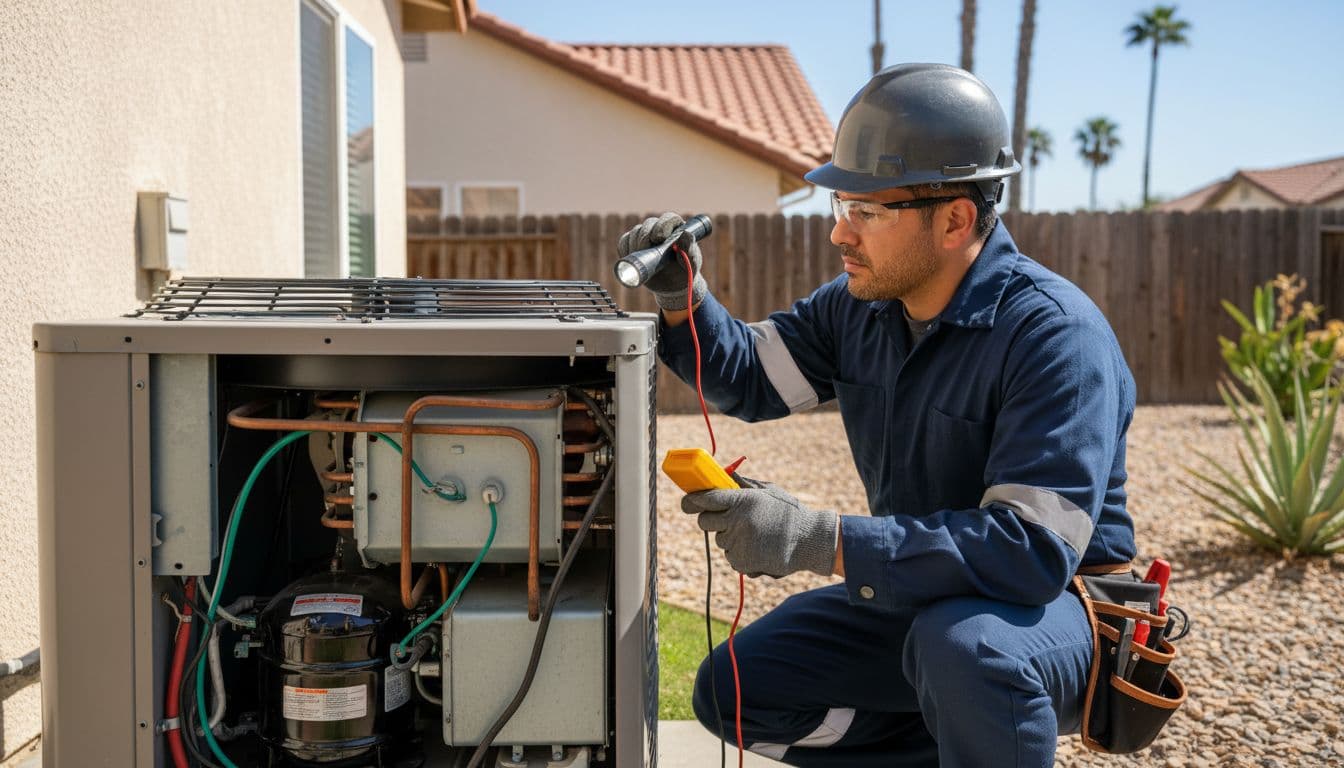
You should also pay attention to when the smell appears. If it happens only at startup, dust may be the issue. If it builds while the system runs, overheating is more likely. A smell that comes with weak airflow often points to a blower problem or a restricted filter.
Skip any DIY that involves capacitors, wires, motors, or breaker panels. Those parts can hold power and cause injury even after the unit stops running. HVAC and heating equipment may look simple from the outside, but the electrical side is not a safe weekend project.
If these steps do not resolve the issue, you should contact a qualified HVAC technician to perform a professional AC repair service. For homeowners, the goal is not a full diagnosis. The goal is to rule out easy airflow problems and know when to stop.
When to call an HVAC technician right away
Some warning signs indicate that your system requires professional service immediately. If your air conditioning smells like it is burning and any of the following symptoms appear, you should treat the situation as a potential fire hazard and schedule emergency AC repair rather than continuing to run the unit:
- The burning rubber smell, melting plastic, or a harsh chemical aroma intensifies with each cooling cycle.
- The circuit breaker trips consistently when the AC starts.
- Airflow drops significantly, the system stops cooling, or you detect a potential refrigerant leak.
- You hear persistent buzzing, screeching, or clicking coming from the unit.
- Smoke, visible scorch marks, or hot spots appear on or near the equipment.
A trained HVAC technician will thoroughly test the electrical components, including the capacitor and contactor, while checking for high amperage draw or loose wires. They will also inspect the blower assembly, the fan motor, compressor wiring, and the control board. These are complex parts that homeowners should not attempt to service on their own to avoid personal injury or further mechanical failure.
In many cases, the fix is straightforward. It might be a faulty capacitor, an overheating motor, or a wire connection that has begun to degrade. In other scenarios, the odor stems from a system that has been struggling due to restricted airflow for too long. In those instances, the necessary repair includes deep cleaning, replacing worn components, and correcting the root cause of the strain.
Fast service is essential because heat damage spreads quickly. One weak electrical connection can damage nearby parts and turn a minor repair into a much larger one. If your unit is older, ask your technician whether the problem is isolated or part of a wider wear pattern. Repeated burning odors can signal a system nearing the end of its useful life, and a professional should explain exactly what failed and whether future repairs are likely to be cost-effective.
Final thoughts
A burning smell from your AC may be harmless dust, but it should never be a guess. In Oceanside homes, coastal wear, clogged airflow, and aging parts can all make the system run hot.
The best rule is simple: if the odor is mild and fades fast, monitor it. If it smells electrical, plastic-like, or keeps coming back, shut the unit off and get it checked. Staying on top of your air conditioning maintenance is the best way to catch these issues early. By scheduling a routine tune-up, you can ensure that your electrical circuit is safe and that your system is running at peak efficiency.
We highly recommend annual AC maintenance to prevent these burning smells from recurring and to extend the lifespan of your unit. If you want a professional to inspect the problem before it gets worse, you can Book Online. A small smell is often the first warning your HVAC system gives you, and taking action now can save you from costly repairs later.
FAQs
Is a burning smell normal when the AC starts for the first time?
Sometimes, yes. Dust can settle on internal parts during a long idle period, and the smell of dust burning off is common when the system starts for the first time in the season. That odor should fade quickly. If it lasts through the cycle or smells like acrid electrical components, it is not normal.
Can a dirty filter cause a burning odor?
Yes. A dirty air filter restricts airflow, which forces motors and other electrical components to run much hotter than intended. Replacing the filter is a safe DIY step and is often the first thing you should check when you notice an unusual smell.
Why does the smell seem stronger at night?
Night air is cooler, so odors can seem more noticeable when outdoor noise drops and windows are open. In some homes, the system also runs longer in the evening, which can heat a failing part enough to release a smell.
Should I keep running the AC if the smell goes away?
Only if the smell was light and dusty and did not return. If it comes back, grows stronger, or comes with noise, poor cooling, or tripped breakers, shut the system off and call for professional air conditioning repair.
Does salty Oceanside air affect air conditioning equipment?
Yes. Salt air can speed up corrosion on outdoor components and electrical connections. This is a specific concern for homeowners living in North County San Diego, where the salt air can lead to premature wear, overheating, and poor electrical contact, often resulting in the burning odors homeowners notice before a major breakdown.