

Why Your AC Smells Like Rotten Eggs in San Diego Homes
My Guy is Proud to Be "Your Guy" for Your Home
A rotten-egg odor from your vents is never a smell to ignore. When your AC smells like rotten eggs, treat it as a possible natural gas leak until you know otherwise.
Your air conditioner may be moving the odor through the house, even when the source is a furnace, water heater, plumbing drain, or another nearby system. Start with safety, then narrow down the cause once the home is safe.
Key Takeaways
- Treat a true rotten-egg smell as a possible natural gas leak: leave the home, avoid switches and flames, and call 911 or your gas utility from a safe location.
- Your AC may spread an odor from a furnace, water heater, plumbing drain, gas line, or nearby space without being the source.
- After gas has been ruled out, the smell’s location and timing can help identify a dry P-trap, sewer gas, dead animal, mold, condensate problem, or electrical issue.
- Turn off the HVAC system if the odor appears during operation and resembles burning plastic, hot wiring, or chemicals; don’t repeatedly restart it.
- Preventive maintenance, regular filter replacement, and keeping unused drains filled can reduce HVAC odors, but persistent smells require a qualified HVAC or plumbing inspection.
Why an AC Smells Like Rotten Eggs: Treat It as a Gas Emergency First
Natural gas has no smell on its own. Utilities add an odorant called mercaptan so people can recognize a leak before gas builds to dangerous levels. This sulfur smell is often described as rotten eggs, cabbage, or sewage.
A central HVAC system can pull this odor into a return vent and spread it through several rooms. Therefore, smelling it at an A/C vent doesn’t prove the air conditioner caused it. Check the timing and location only after you have left the home.
A rotten-egg smell near a gas furnace, water heater, stove, dryer, meter, or gas line is a gas warning, even if the odor first appeared at an air vent.
A carbon monoxide detector does not detect natural gas, so it can’t replace leaving the home and calling emergency services.
If you suspect gas is escaping:
- Leave the house right away and take people and pets with you.
- Don’t turn lights, appliances, the thermostat, or breakers on or off.
- Avoid flames, smoking, vehicles near the home, and phone calls from inside.
- From a safe location, call 911, San Diego Gas & Electric, or your gas utility.
Don’t return until emergency personnel or the utility says it is safe. Once the immediate danger has passed, schedule gas line inspection and repair if the utility identifies a problem on your side of the meter.
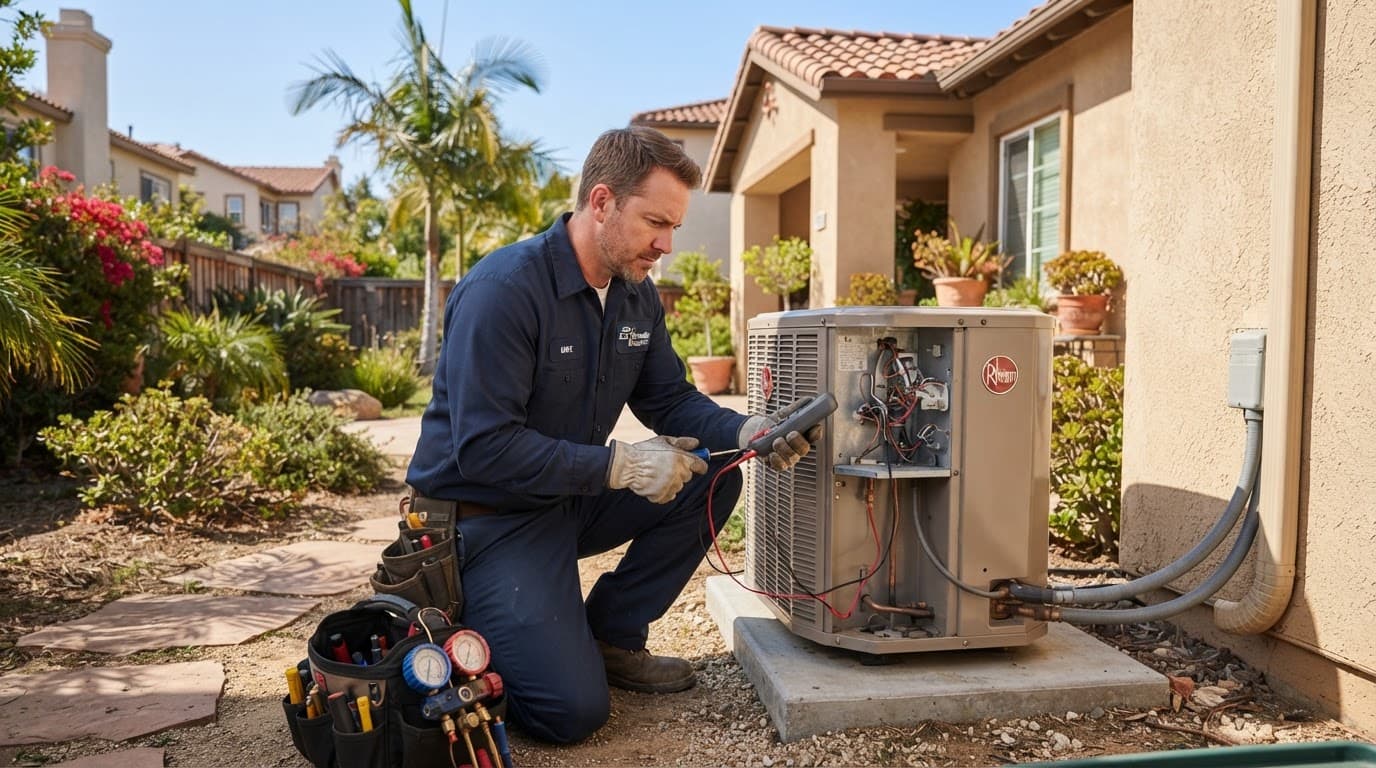
Use the Smell’s Location and Timing to Narrow the Cause
After gas has been ruled out, note where the odor is strongest and when it appears. A smell reaching every vent when the blower starts may come from the air handler, return path, or a nearby source. An odor strongest in one bathroom or laundry room often points to plumbing.
This quick guide can help you describe the issue accurately when you call for service.
| What you notice | Likely source | Best next step |
|---|---|---|
| Strong sulfur odor near gas appliances or meter | natural gas leak | Leave and call emergency services or the gas utility |
| Sewage smell near an unused bathroom, floor drain, or laundry room | Dry P-trap or plumbing vent issue | Add water to the drain, then call a plumber if it returns |
| Odor only from one vent or closet | dead animal, contaminated duct, or localized drain issue | Arrange a professional inspection |
| Burning plastic, hot wiring, or fishy smell when cooling starts | electrical issue in the HVAC system | Shut the system off if no gas odor is present and call for repair |
| Musty, damp smell | Mold, mildew, dirty coil, or condensate problem | Schedule maintenance and inspect drainage |
Write down whether the smell appears during cooling, heating, or fan-only operation. Also note which rooms smell first. These details can shorten a San Diego HVAC service visit and help a technician inspect the right equipment.
Sewer Gas Can Reach HVAC Vents
A plumbing issue can make your HVAC vents smell like sewage. The most common cause is a dry P-trap, the curved section of pipe beneath a sink, shower, tub, or floor drain. Water sitting in that bend blocks sewer gas. When a bathroom or laundry drain goes unused, the water can evaporate and leave an open path for odor.
This happens often in guest bathrooms, garage floor drains, and seldom-used utility sinks. If a return vent is nearby, the blower can pull that odor into the HVAC system and circulate it.
A homeowner can safely pour water into an unused drain to refill the trap. Use plain water, and don’t mix drain chemicals to mask the smell. If the odor returns soon afterward, a broken trap, clogged vent stack, sewer-line issue, or damaged drain connection may be involved.
The system’s moisture drainage also deserves attention. A clogged or backed-up condensate drain line can create unpleasant odors near the air handler. Slime or standing water may worsen the problem. However, a true rotten-egg smell still calls for a plumbing inspection after gas has been excluded.
Dead Animals, Mold, and Refrigerant Odors
A dead animal in ductwork, a crawlspace, or near an outdoor unit can create a foul sulfur-like odor. It is usually strongest near one vent, return grille, attic access, or mechanical closet. A technician may inspect ducts and equipment panels with proper tools rather than spreading contaminants through the home.
Mold and mildew usually smell musty, damp, or earthy rather than like sulfur. Dirty evaporator coils, wet insulation, and a neglected drain pan can feed that problem and affect indoor air quality.
A refrigerant leak usually produces a chemical odor rather than a sulfur smell. If cooling performance drops, ice forms on refrigerant lines, or the system cools poorly, turn it off and arrange professional air conditioning service.
Electrical Problems Need Prompt AC Repair
An electrical issue in an air handler, condenser, or furnace can create sharp odors that homeowners sometimes mistake for sulfur. These components are part of the HVAC system. Overheated wiring, a failing capacitor, scorched insulation, or a damaged circuit board may smell like hot plastic, chemicals, ozone, or burnt dust.
Poor cooling or ice may point to a refrigerant leak. That problem is separate from electrical trouble and should be professionally checked.
If the smell appears only when the blower or compressor runs, and gas has been ruled out, turn the thermostat to off. Don’t keep restarting the equipment to see whether the odor fades. Repeated operation can worsen damaged electrical parts.
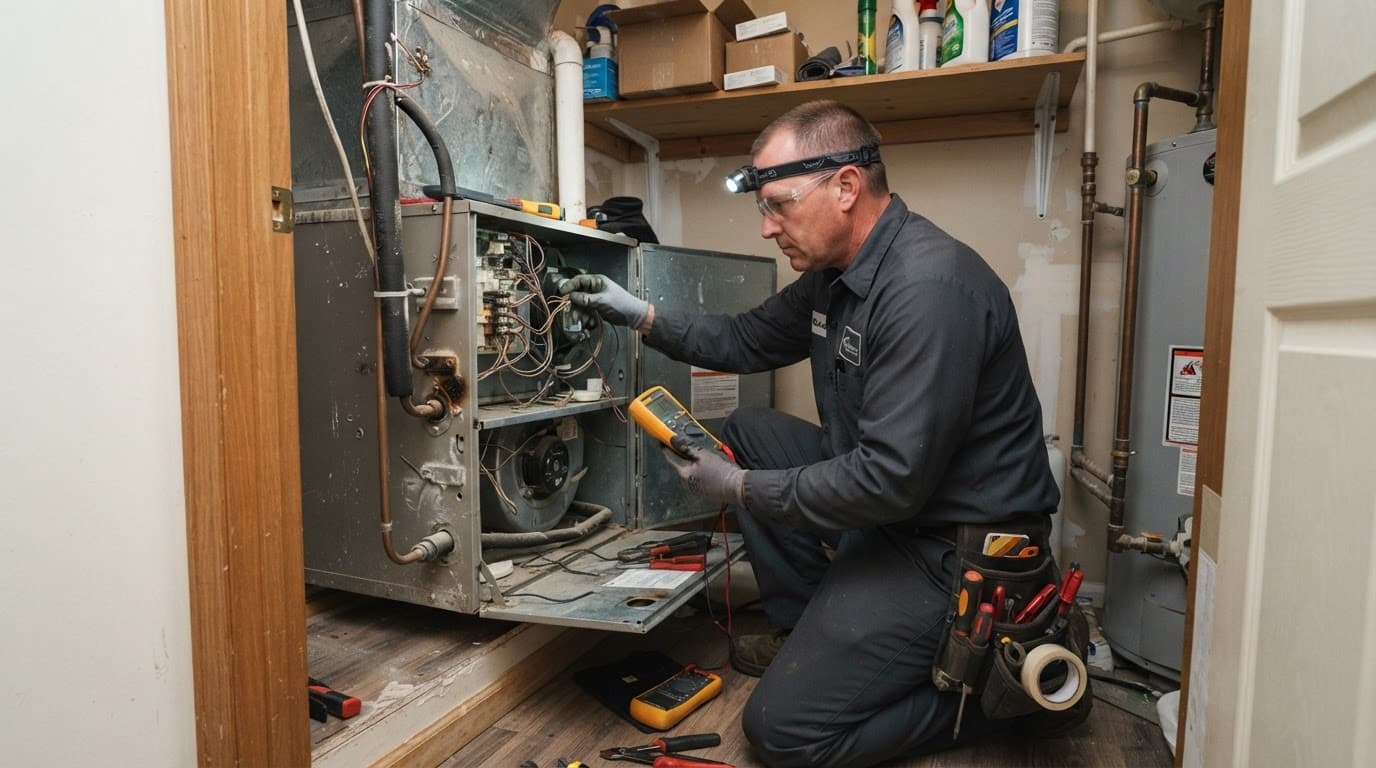
For homes in Escondido, air conditioning repair should include an inspection of electrical connections, drain components, coils, and the indoor unit. If the odor appears during heating instead, the technician should also inspect the furnace and nearby gas connections.
Safe DIY Steps and Odor Prevention
DIY work has limits when odors involve gas, electricity, or duct contamination. You can, however, handle a few low-risk tasks that reduce moisture and debris in your system.
- For air filter replacement, check the filter monthly and replace it every one to three months, or sooner if it looks loaded with dust. Homes with pets, construction dust, or frequent A/C use often need more frequent changes.
- Run water into rarely used sinks, showers, and floor drains once a month so each P-trap stays filled.
- Keep the area around your indoor unit dry and clear to limit mold and mildew and protect indoor air quality. Look for visible water around the condensate pan, but don’t remove electrical panels or pour chemicals into equipment.
- Note the rooms, time of day, and operating mode connected to the odor. This gives HVAC or plumbing technicians useful clues.
Annual preventative maintenance includes routine air filter replacement and checks for dirty coils, loose wiring, worn components, and a clogged condensate drain line. These checks can prevent odors or shutdowns while helping your heating and cooling equipment run reliably through changing San Diego weather.
A Rotten-Egg Smell Calls for the Right Response
When your AC smells like rotten eggs, assume gas is the cause until a utility or qualified professional rules it out. Once the home is safe, the smell’s location and timing can point toward sewer gas, a dry drain, an electrical problem, or contamination near the HVAC system. A refrigerant leak can cause chemical odors, poor cooling, or ice, but it usually does not cause a true rotten-egg smell.
A persistent odor deserves an HVAC or plumbing inspection, not fragrance sprays or repeated thermostat resets. For help with non-emergency cooling concerns, you can Book Online after any gas-related safety issue has been cleared.
Frequently Asked Questions
Can my air conditioner itself produce a rotten-egg smell?
Usually, no. An air conditioner does not use natural gas to cool your home. However, the blower can draw odors from a nearby furnace, water heater, drain, return duct, or wall cavity and send them through the vents.
How often should I schedule air filter replacement?
Check it every month. Regular air filter replacement is usually needed every one to three months, though pets, allergies, dust, and heavy air conditioning use can shorten that interval.
Could my car’s A/C smell indicate a catalytic converter problem?
A vehicle with a sulfur odor may have a failing catalytic converter, fuel system problem, or exhaust system leak. A catalytic converter reduces harmful emissions before exhaust leaves the vehicle. Damage or failure in the catalytic converter can produce a rotten-egg smell. This issue is unrelated to a home’s HVAC system, so have an automotive technician inspect the vehicle instead of an AC contractor.
How is a catalytic converter diagnosed?
An automotive technician can test the catalytic converter with diagnostic equipment. They may also inspect the catalytic converter and related emissions components.
Should I call for emergency HVAC repair for a rotten-egg smell?
Call emergency services or your gas utility first if you smell gas. After they clear the home, an HVAC or plumbing professional can inspect equipment, ducts, drains, and electrical components that may have carried or caused the odor.