

Why Your AC Smells Like Vinegar in San Diego
My Guy is Proud to Be "Your Guy" for Your Home
When your air conditioner starts to emit a sharp vinegar smell, it gets your attention fast. The odor is sour and hard to ignore, especially when it spreads through the whole house.
In many San Diego homes, that smell points to trapped moisture, bacterial buildup, or organic growth inside your air conditioning system rather than the outdoor air. The good news is that the cause is often fixable if you catch it early. Start by reviewing the most common reasons for these odors.
Key Takeaways
- Identify the source: A vinegar-like smell usually indicates trapped moisture, mold, or bacterial growth within your indoor HVAC components, such as the evaporator coil or condensate drain line.
- Perform simple checks: Start by replacing your air filter, as a dirty or damp filter is a frequent culprit for sour odors, and ensure your system is free of visible standing water near the air handler.
- Address drainage issues: A clogged condensate drain can cause stagnant water to pool, creating an ideal environment for bacteria; clearing the line or scheduling professional maintenance can resolve this.
- Recognize warning signs: While common, these odors should not be ignored. If the smell is accompanied by electrical, burning, or fishy odors, shut the unit off immediately and call a professional to prevent further damage.
What a vinegar smell from your A/C usually means
A vinegar smell from your air conditioning system usually originates within the indoor components. This includes the evaporator coil, the drain pan, the condensate drain line, the blower area, and occasionally the ductwork. When dust, moisture, and organic debris collect in these areas, mold and bacteria begin to thrive. As air moves across these damp surfaces, the resulting odor is circulated throughout your rooms.
Another common cause involves a clogged condensate drain line. Your unit pulls excess moisture from the indoor air as it cools, and that water must be properly removed. If the drainage slows or the line becomes blocked, stagnant water can pool in the drain pan, creating a distinct sour odor.
A dirty evaporator coil can also cause this problem. Because the coil remains cold, it naturally attracts condensation. If grime builds up on the surface, it creates an ideal environment for mold growth, which often leads to that sharp, acidic scent.
This quick guide helps separate the most likely causes:
| Likely cause | What you may notice | Best next step |
|---|---|---|
| Bacteria growth in the drainage area | Sour smell is strongest when the system first starts | Inspect drainage, replace filter, schedule service if it returns |
| Clogged condensate drain | Water near the indoor unit, damp smell at vents | Turn the system off and clear the line if it is easy to reach |
| Dirty evaporator coil | Weak airflow, stale or acidic odor | Have the coil cleaned during AC service |
| Clogged air filter | Smell gets worse when the blower runs | Replace the filter and monitor the odor |
Most importantly, do not assume the smell will go away on its own. Small moisture issues often turn into bigger HVAC repairs when they sit too long.
If the odor keeps returning, local professional air conditioning services in Escondido can inspect the drain, coil, and blower before the problem spreads.
Why San Diego and nearby homes notice it more
San Diego weather is generally easier on HVAC equipment than many parts of the country, but it still creates ideal conditions for odor problems within your HVAC system. Mild coastal humidity, combined with marine layer moisture, creates excess moisture that gives condensation more chances to build up inside your unit.
Homes in Carlsbad and Oceanside often deal with damp morning air and salt near the coast. Inland areas such as Escondido, Vista, San Marcos, Poway, and Fallbrook see more dust and hotter afternoons. Those conditions may seem different, yet both can lead to the same result: dust and moisture accumulating inside the system, which directly impacts your indoor air quality.
Many homes also run the A/C in short cycles during spring and early summer. Short cycles cool the house, but they do not always dry the internal components effectively. When the evaporator coil remains damp between cycles, those odors tend to linger.
Older ductwork can also contribute to the problem. If small gaps pull in dusty attic air, that debris settles on parts of the system that are already damp. Over time, the smell becomes more noticeable each time the blower starts.
If the sour smell comes with a burning, fishy, or sharp electrical odor, shut the system off and call for service right away.
That warning matters because not every bad smell is a simple cleaning issue. While a sour smell is common, homeowners should also be aware of more serious issues like refrigerant leaks or electrical malfunctions, as these problems require immediate professional attention.
DIY checks you can do safely
You can rule out a few basic causes before calling for professional AC repair. Keep the steps simple, and stop if anything feels unsafe. Following these basic AC maintenance steps can often resolve minor issues without needing a service call.
- Turn the system off if the smell is strong or you see water around the indoor unit.
- Replace your clogged air filter, especially if it is dusty, damp, or overdue. Just as you would maintain a cabin air filter in your car to keep the interior smelling fresh, your home air filter is essential for preventing a musty odor from circulating through your vents.
- Check nearby vents for visible dust, damp spots, or mildew smells.
- Look for standing water around the air handler or furnace closet.
- If your condensate drain line has an open PVC cleanout and you know it is the right one, flush it with a small amount of white vinegar, then water.
That last step helps with mild drain line buildup, but only do it if the pipe is easy to identify. If you are not sure, skip it. Pouring liquid into the wrong pipe can create a mess.
You can also remove vent covers and wash them with mild soap if they smell musty. Let them dry fully before putting them back. However, do not spray cleaners inside the unit, and do not open sealed panels around the coil or blower.
A new filter fixes more odor calls than people expect. When dust holds moisture, the filter starts smelling like an old sponge. Replacing it gives you a quick answer without much cost.
If the smell fades and stays gone, great. If it returns after a few days, the deeper problem is probably inside the system. That is when it makes sense to schedule routine AC maintenance and have the drain, coil, and blower cleaned the right way.
When you need AC repair instead of a quick fix
Some smells mean your system requires a professional AC repair rather than a simple filter change. If the odor returns every time the air starts, the source is likely buried deeper than the vent cover.
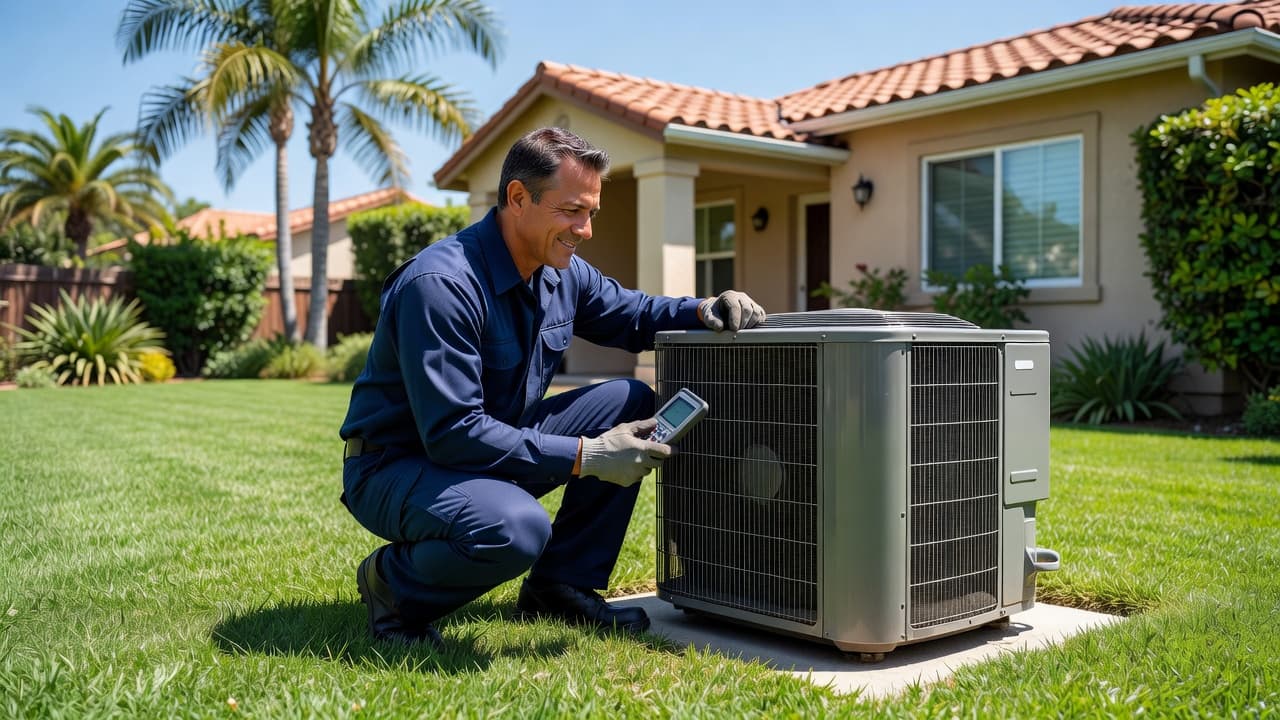
Watch for a few strong warning signs. Weak airflow often points to a dirty coil, a blower issue, or a clogged drain around the indoor unit. Water stains near the air handler typically indicate that the condensate system is not draining well, which can eventually damage your entire HVAC system. Furthermore, rising indoor humidity levels often signal that your cooling system is no longer removing moisture effectively.
If your system is older, the odor may stem from years of buildup on the evaporator coil. In these cases, mold and bacteria thrive in the moisture, creating an unpleasant smell that circulates through your home. Since the same blower moves air for both cooling and heating, dust and organic growth in shared components can impact your overall indoor air quality. You may even notice a sour smell when the furnace fan starts after a long idle period.
Location also plays a major role in your system’s health. Homes across San Diego County often run air conditioning for long stretches, only to switch over to heating on cooler nights. This stop and start pattern allows moisture to linger inside the cabinet.
Professional diagnosis makes a significant difference, as a technician can conduct a deep professional cleaning of the drain pan and inspect the evaporator coil, blower wheel, and duct connections in one visit. If you need year-round professional HVAC maintenance and repair, that full-system inspection is the most reliable way to stop repeat odors and keep your home comfortable.
How to keep the smell from coming back
Once the odor is gone, a few simple habits help keep it away. Start with your air filter. Check it every month during heavy use, and replace it as needed. In many homes, that means changing it every one to three months to ensure proper airflow and prevent debris from settling in the unit.
Next, prioritize keeping the drain line and drain pan clean. Scheduling annual AC maintenance is highly recommended because a professional technician can clear out sludge and buildup before standing water leads to mold growth. This proactive approach is essential for both newer systems and older A/C units.
It also helps to keep vents open and furniture away from return grilles. Better airflow helps the entire system dry out between cycles, which discourages moisture accumulation. Around the outdoor unit, trim back plants and clear away debris so the equipment can breathe efficiently.
Don’t ignore the off-season, either. Your furnace and cooling system share parts in many homes, so keeping a clean blower and healthy airflow across your HVAC system supports both long-term heating and air conditioning performance.
Final thoughts
A vinegar smell from your cooling system typically starts with excess moisture and organic buildup within the unit, rather than a total system failure. By addressing these signs of moisture early, you can often resolve minor drainage or cleaning issues before they escalate into an expensive breakdown.
If the vinegar smell persists, becomes more intense, or is accompanied by water leaks or weak airflow, it is time to schedule a professional AC repair. You can Book Online if you want a local technician to inspect your system, identify the root cause, and ensure your home stays comfortable throughout the year.
FAQs
Is a vinegar smell from an AC dangerous?
Usually, the vinegar smell itself is not considered dangerous, but the underlying cause can become a problem. Mold and bacteria, standing water, or even an electrical issue can affect your home comfort and indoor air quality. If the odor is sour and also smells hot, fishy, or burnt, turn the system off immediately.
Can a dirty air filter make my AC smell sour?
Yes, it can. An air filter that traps dust and moisture over time can start to smell stale or produce a distinct sour smell. Replacing the filter is one of the easiest DIY checks you can perform, and it is often worth trying first to see if the issue resolves.
Why does the smell get worse when the system first turns on?
That often happens when moisture sits in the drain pan, on the coil, or in nearby dust while the system is off. When the blower starts, it pushes that trapped odor into the house.
Will the smell go away if I keep running the A/C?
Sometimes it fades for a while, but that does not mean the cause is gone. If water, buildup, or organic growth is still inside the unit, the smell usually returns.
Does this happen in heating mode too?
It can. Many homes use an HVAC system that shares the same blower and ductwork for both heating and cooling. If the odor source is located in the indoor cabinet or the ducts, you may notice it when the furnace fan runs, too.