

AC Surge Protector Benefits for Escondido Homeowners
My Guy is Proud to Be "Your Guy" for Your Home
An air conditioner can lose a control board in the fraction of a second it takes the lights to flicker. That is why Escondido homeowners should consider the AC surge protector benefits before a summer outage leaves their cooling system unresponsive.
Power surges don’t only come from lightning. Utility switching, power restoration, and large appliances cycling can send short voltage spikes through a home’s electrical system. A dedicated HVAC surge protector gives sensitive air conditioning equipment another layer of defense when those spikes occur.
Why surge protection matters in Escondido
Summer heat puts heavy demand on air conditioning in Escondido, especially when the system runs through long afternoons. That workload makes dependable electrical protection a practical concern, not an optional accessory.
Voltage spikes are brief but can cause expensive damage
Power surges are sudden rises in voltage that last only a moment. Lightning strikes can cause them, but grid switching and restored power are more common sources of stress for a home’s electrical system.
The surge may damage parts immediately, or weaken them until the system fails later. Circuit boards, capacitors, contactors, and motor controls can all suffer electrical stress. Repeated smaller voltage transients are also a concern because they can wear down electronic parts over time.
After an outage, review guidance for protecting your HVAC after an Escondido power outage before repeatedly resetting equipment that won’t restart.
Modern equipment has sensitive electronics
Older systems used simpler mechanical controls. Today’s HVAC equipment often includes communicating thermostats, ECM blower motors, and inverter-driven systems.
An A/C condenser is not the only target. The indoor air handler, a high-efficiency furnace, and its furnace controls can also contain vulnerable electronics. An HVAC surge protector can help protect these sensitive systems, while a Type 2 SPD provides added protection at the equipment level.
An inverter control board regulates compressor speed with electrical components such as IGBT power modules. It delivers better comfort and efficiency, but it also needs clean, stable power. This protection cannot fix a mechanical failure, but it can limit the electrical hit that damages its controls.
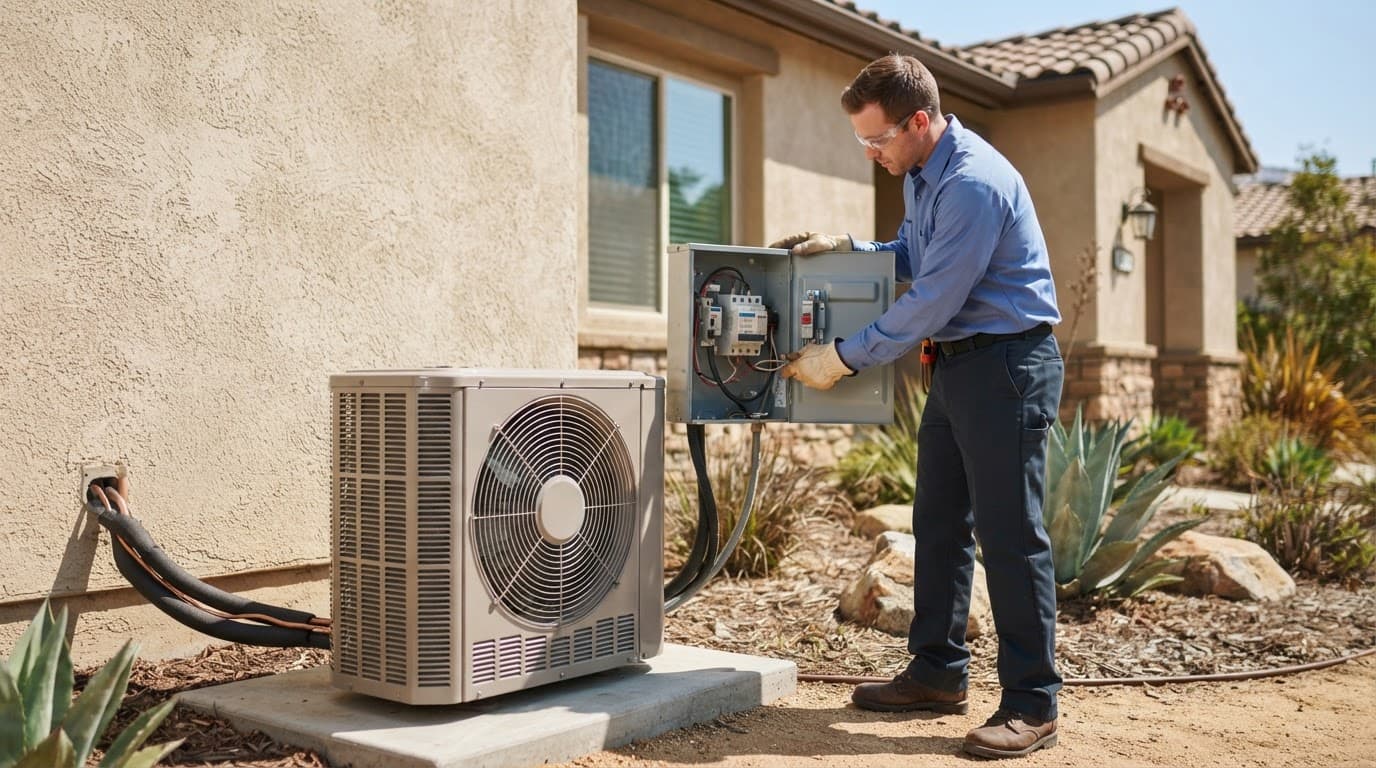
How an HVAC surge protector handles power spikes
An HVAC surge protector, also called a surge protective device or SPD, monitors incoming voltage. Under normal conditions, a Type 2 SPD stays out of the way. During power surges, it redirects excess energy toward the grounding path when voltage rises above a safe threshold. The surge protective device helps limit sudden voltage transients before they reach sensitive electrical components.
The device takes the hit first
Most residential SPDs use metal oxide varistors, often called MOVs. These components absorb or divert transient energy before it reaches expensive electronics. Each strong surge uses some of their capacity, giving a Type 2 SPD a limited lifespan. Surge protection isn’t a one-time purchase that lasts forever.
Models such as the Intermatic surge protector AG3000 and Eaton HVAC-rated SPDs are common Type 2 SPD options. A Type 1 SPD serves at the service entrance, while equipment-level devices protect individual equipment. The right Type 2 SPD depends on your equipment voltage, available installation space, electrical code, let through voltage rating, and the manufacturer’s warranty requirements.
A surge protector needs a short, low-impedance path to ground. Poor grounding can limit how well it protects the equipment.
Grounding matters as much as the protector
An SPD cannot compensate for loose connections, an outdated electrical panel, or improper bonding. The grounding wire must connect correctly, and the installer should keep its path as short and direct as possible.
Homeowners can look for obvious corrosion, damaged conduit, or a missing status indicator. However, don’t remove a panel cover or test energized wiring with a multimeter. A qualified electrician can verify grounding and bonding safely, while an HVAC professional can check the condenser disconnect and equipment wiring.
Whole home surge protector and AC protection work better together
Service-panel protection is a strong first layer, but an HVAC surge protector adds focused protection. A Type 2 SPD near the outdoor condenser disconnect box can complement a Type 1 SPD at service equipment. Power surges can enter through electrical service, and some can develop within the home’s circuits as major appliances start and stop.
Use layered protection near valuable equipment
Service-panel protection reduces incoming surge energy before it moves through household circuits. A Type 2 SPD at the panel works with an HVAC surge protector installed near valuable equipment. Indoor air handler and furnace electronics may also benefit from protection at their power source.
| Protection location | Common SPD type | Main job |
|---|---|---|
| Service entrance or main panel | Type 1 SPD or Type 2 SPD | Reduces surges entering the home |
| Outdoor condenser disconnect box | Type 2 SPD | Protects the AC’s condenser controls and board |
| Indoor air handler or furnace circuit | Type 2 SPD | Protects indoor HVAC electronics |
A Type 1 SPD can be installed on the line side or load side of service equipment, depending on the product and local code. A Type 2 SPD is installed on the load side, such as at a service panel or dedicated equipment circuit. A licensed installer can determine the correct locations for your home.
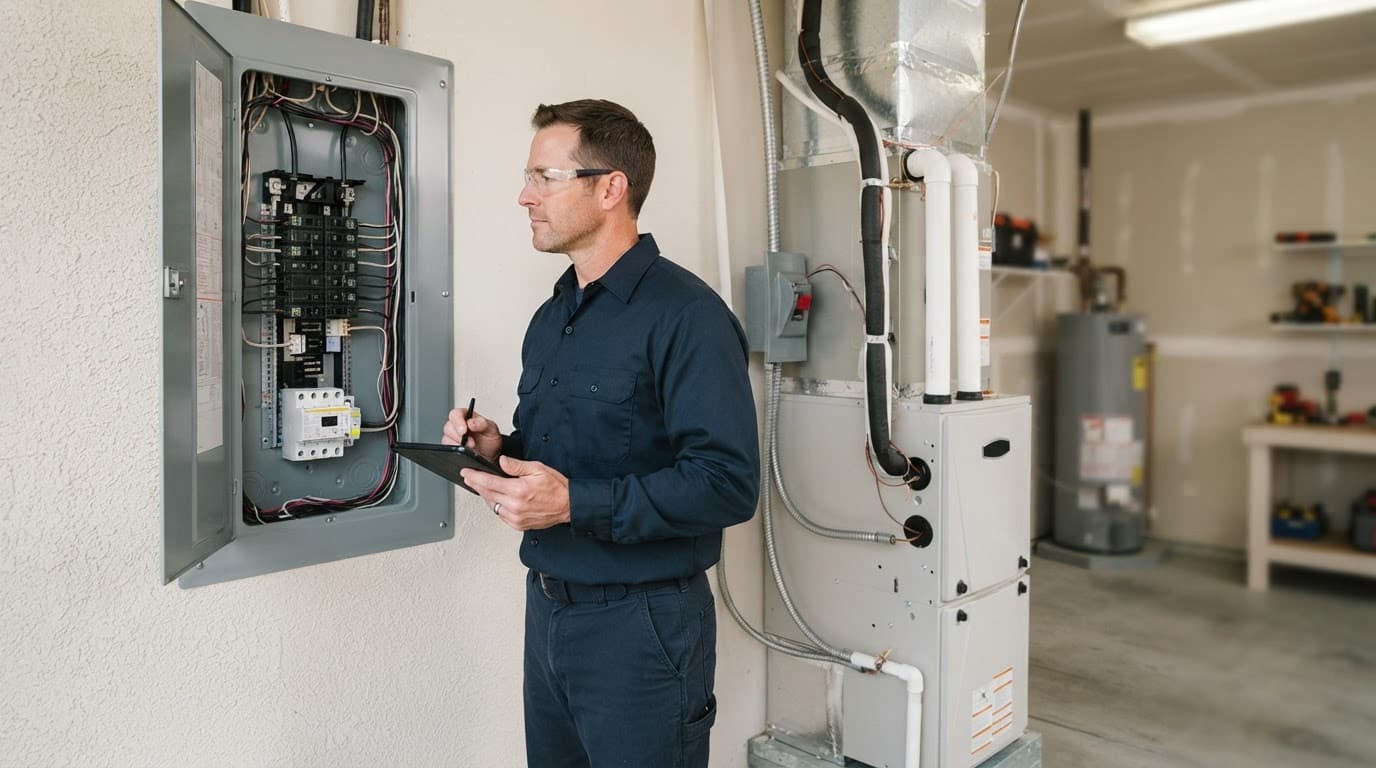
The cost of surge protection for an HVAC system
Installed costs for a dedicated HVAC surge protector, typically a Type 2 SPD, often fall between $150 and $400. Equipment-level protection may use a Type 2 SPD, while a whole home surge protector covers more circuits. Final pricing depends on the unit, wiring access, panel condition, and whether a Type 1 SPD is needed at service equipment.
Compare installation price with replacement cost
A damaged inverter control board can cost roughly $800 to $2,500 to replace. Failures may also involve IGBT power modules or related circuit boards, increasing repair costs. That replacement cost can look modest beside a potential compressor repair.
The financial case is also clearer when you consider downtime. A failed board can leave a home without cooling during a heat wave, when parts may not be immediately available. If your system has already stopped cooling, arrange AC repair in Escondido rather than assuming a new protector will solve an existing failure.
Read warranty terms before approving the work
Ask what the device warranty covers. Connected-equipment coverage can also require professional installation, proper grounding, registration, receipts, and an inspection of the failed equipment.
A clear quote should identify the device and its installation location, whether at the outdoor condenser disconnect box, furnace, or air handler. It should also list labor and any electrical corrections needed. Price matters, but so does knowing what protection you are actually buying.
Safe checks for an HVAC surge protector and professional installation
Homeowners can handle a few simple observations. Electrical installation and repairs belong to a qualified professional because condenser disconnects and service panels carry hazardous voltage.
What you can check without opening equipment
Before calling for service, take these safe steps:
- Look at the SPD’s external status indicator. Consult its manual if the status indicator is off or red.
- Check the outdoor condenser disconnect box for storm damage, corrosion, or signs of overheating.
- Note whether the thermostat, air handler, furnace, or condenser stopped working after an outage. Share that timing with the technician.
Don’t reset a breaker again and again. Likewise, never replace a capacitor or open the condenser cabinet yourself. Capacitors can retain a dangerous electrical charge and damage other electrical components even after power is shut off.
When a professional should inspect the system
Call for help if you smell burning, hear buzzing at the panel, see a tripped breaker that won’t hold, or find an SPD with a changed status indicator. The device may be a Type 2 SPD installed at the service panel. A Type 1 SPD is placed ahead of the main service equipment, while a second Type 2 SPD may protect downstream equipment. An electrician should handle placement, panel work, and grounding wire concerns.
Surge protectors commonly have a lifespan of three to ten years, depending on exposure and manufacturer instructions. Replace one sooner after major voltage transients, lightning strikes, or a failed status indicator. Electrical symptoms can overlap with other problems, including signs of a failing AC capacitor. A proper diagnosis matters.
Final Thoughts
The most practical benefits of layered surge protection are simple: fewer threats to the electronics that keep your home comfortable. An HVAC surge protector can work with a Type 2 SPD to help protect modern cooling equipment and a furnace. Sound grounding and regular checks reduce electrical risk, but no setup guarantees an HVAC system will never fail.
If an outage, breaker issue, or unexplained shutdown has left you concerned about your system, Book Online for a professional inspection. Protecting the controls is usually less costly than replacing them after a surge.
Frequently Asked Questions
Can power surges cause an AC compressor or circuit boards to fail?
Yes. A strong surge can damage circuit boards or inverter modules immediately. Smaller recurring spikes can weaken electrical components until they fail. Protection reduces this risk, but it can’t prevent wear, refrigerant problems, or mechanical damage to these parts.
Is a whole home surge protector enough for an HVAC unit?
It helps protect every circuit, but a local Type 2 SPD near the outdoor condenser disconnect box adds another layer. This can help equipment such as a communicating furnace and systems with IGBT power modules. Layered protection is especially useful for sensitive controls and variable-speed equipment.
How often should an HVAC surge protector be replaced?
Follow the manufacturer’s instructions and check the status indicator regularly. Many devices last three to ten years, but a red light or failed status indicator calls for earlier replacement. The instructions can also affect warranty coverage, especially after a major surge.
Can I install an AC surge protector myself?
Only if you are qualified to perform electrical work and local rules allow it. A Type 1 SPD is installed at service equipment, while a Type 2 SPD is installed on the load side. Most homeowners should use a licensed professional or qualified installer. Correct wiring, grounding, and placement affect safety and performance.