

AC Unit Age Escondido: Decode Your Serial Number
My Guy is Proud to Be "Your Guy" for Your Home
A central air conditioner can look clean and still be near the end of its useful life. Its equipment code often reveals the manufacturing date, giving you a practical starting point for repair planning and replacement budgeting.
Local homeowners researching an older AC in Escondido California may start after a surprise air conditioning repair quote, a hot room, or higher energy bills. The nameplate can identify when the equipment was made, but it doesn’t always show when it was installed. Start with the label, then consider how Southern California weather has treated the system.
Key Takeaways
- The serial number usually shows when an AC unit was manufactured, not the exact installation date; check the nameplate, indoor equipment labels, and home records for more details.
- HVAC serial-number formats vary by manufacturer and production era, so use brand-specific clues and confirm unclear dates with the manufacturer or an HVAC professional.
- A well-maintained AC system in San Diego County often lasts 12 to 17 years, but inland Escondido heat, coastal conditions, installation quality, and maintenance can affect its lifespan.
- Age alone does not determine whether to repair or replace an air conditioner. Consider comfort, performance, repair history, refrigerant type, and operating costs together.
- Label reading is a safe DIY task, but refrigerant, electrical, compressor, airflow, and other air conditioning repair issues require trained professional help.
Find the Nameplate Before You Decode Anything
Your outdoor AC condenser is the metal cabinet outside your home. Look on its side panel, near the electrical connection or service access panel, for a metal or weatherproof label.
The label usually includes the manufacturer, model number, equipment identifier, electrical ratings, refrigerant type, and sometimes a printed manufacturing date. Don’t confuse the model number with the serial number. The model identifies the equipment type, while the serial identifier may contain date information.
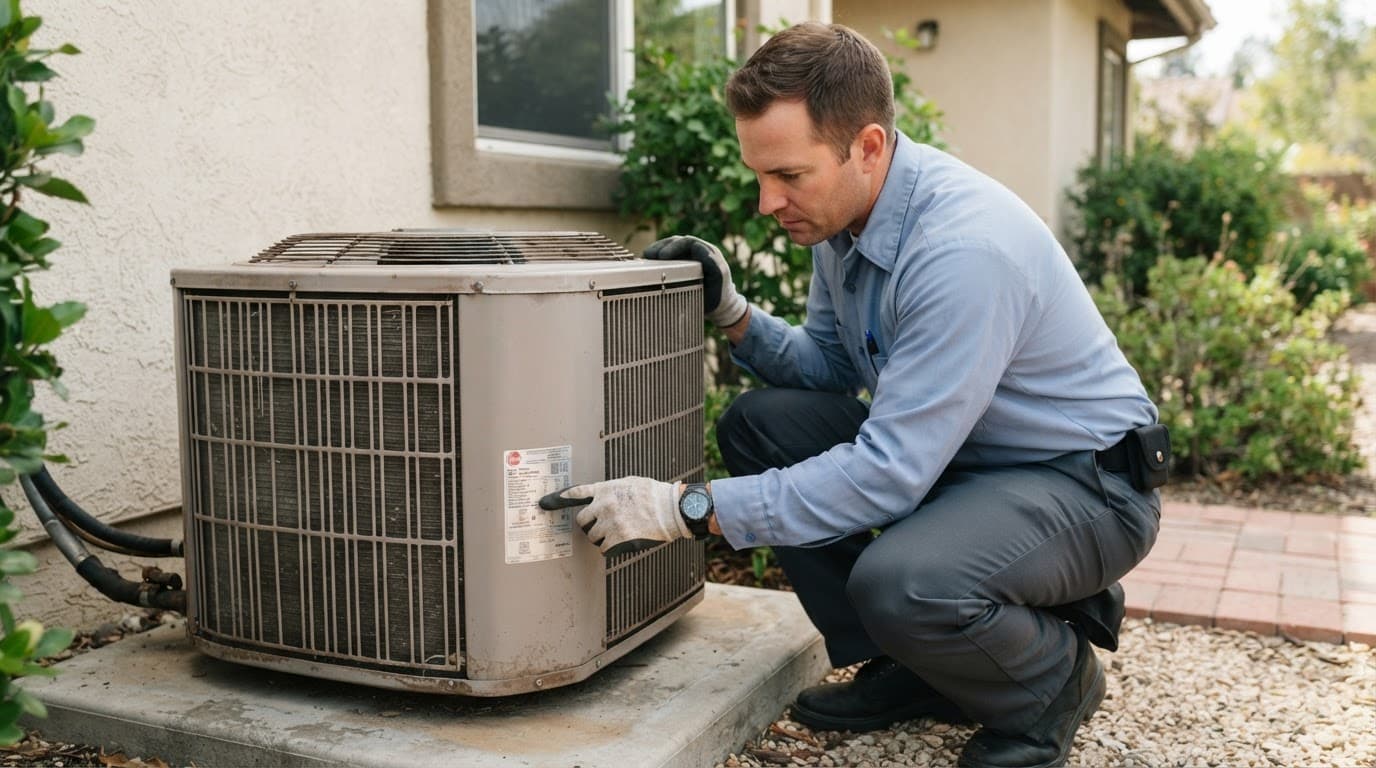
Use this simple DIY process to gather the right details:
- Find the label with a phone flashlight, but don’t remove screws or open electrical panels.
- Take one photo of the whole nameplate and one close-up photo of the serial number.
- Write down the brand, model number, serial code, and any date printed on the label.
- Check the indoor air handler, heat pump, or furnace label as well, since it may have a different age.
- Save the photos with home records, repair invoices, and maintenance dates.
Clear equipment-label photos help an air conditioning repair professional prepare for a service visit.
An outdoor condenser might be newer than the furnace or indoor coil. Comparing their labels helps date the HVAC system. This often happens after a previous owner replaces only the cooling equipment. Separate ages don’t always mean something is wrong.
The serial code shows when the equipment was manufactured, not a guaranteed installation date. A unit can sit in warehouse inventory before it reaches a home.
Decoding HVAC Build Dates From the Nameplate
There is no universal HVAC serial number formula. Each manufacturer uses its own system, and many brands have changed formats over time. A directly printed manufacturing date on the nameplate is the easiest and most reliable answer.
Still, these common patterns can help you read many residential systems:
| Brand | Common date-code clue | Example |
|---|---|---|
| Goodman and Amana | The first two digits often show the year, followed by the two-digit month. | 1705 often means May 2017. |
| Carrier, Bryant, and Payne | Many units begin with production week and year. | 2418 may mean week 24 of 2018. |
| Trane and American Standard | Many newer units begin with year and month digits. | 1810 may indicate October 2018. |
| Lennox, Rheem, and Ruud | Formats vary by production era and factory. | Use the full code for confirmation. |
Letters can also matter. On older equipment, a letter may identify the month or year, while another character can refer to a factory or product line. Online charts can provide an initial estimate but may not settle the question.
If the code is unclear, contact the manufacturer with the full model and serial number details. An HVAC technician can also verify the date during a maintenance visit. Manufacturer confirmation or professional verification is especially helpful when the date affects a purchase or repair decision. Never estimate age based only on cabinet color, brand, or how modern the unit looks.
What Your Unit’s Age Means in Escondido and San Diego
The age shown on the label is only a starting point for an air conditioner lifespan estimate. Local weather, installation quality, and care shape your unit lifespan and HVAC system performance more than the date alone.
A well-maintained AC condenser in San Diego County often lasts 12 to 17 years. Inland Escondido heat can add many hours of summer runtime, putting pressure on compressors, capacitors, fan motors, and electrical connections.
Homes closer to Carlsbad or Oceanside face a different challenge. Coastal salt air and humidity can corrode condenser coil fins, fasteners, and metal cabinets. Inland systems avoid much of that exposure, but prolonged heat waves still increase wear.
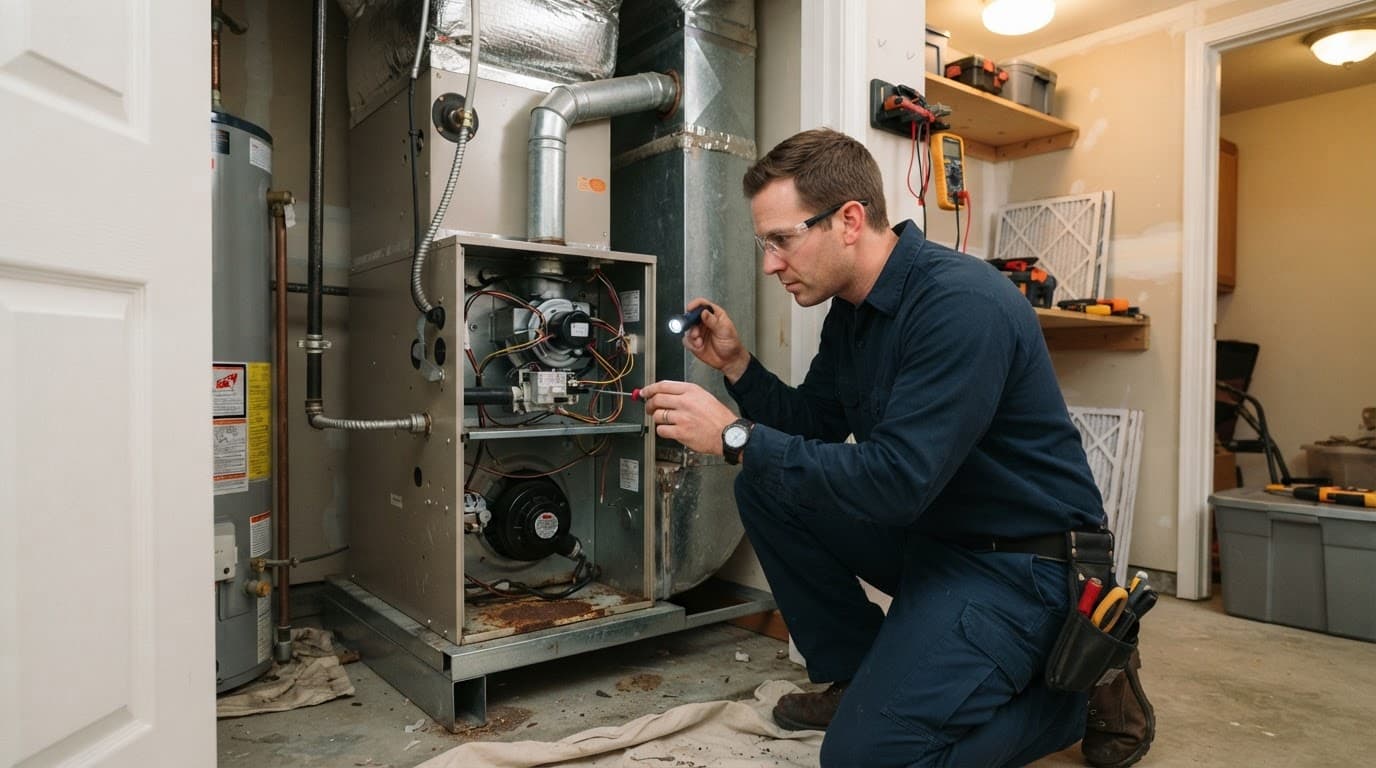
Other equipment has its own typical range. A heat pump commonly lasts 12 to 15 years, while a gas furnace often lasts 15 to 20 years. A heat pump handles both heating and cooling, so its operating hours may be higher than cooling-only equipment.
Several problems can cut an air conditioning system’s life short:
- An oversized unit can short-cycle, which means it starts and stops too often.
- Infrequent filter changes, blocked returns, and restricted ductwork reduce airflow and strain the blower system.
- Leaky ductwork forces equipment to run longer to reach the thermostat setting.
- Refrigerant leaks make the compressor work harder and can cause coil icing.
- Skipped maintenance lets small electrical and drainage issues grow into expensive repairs.
Regular maintenance keeps a system cleaner and reduces the risk of avoidable air conditioning repair. As equipment ages, timely air conditioning repair can help prevent failures during the hottest week of the year.
Warning Signs That Call for Air Conditioning Repair or Replacement
Age does not automatically mean replacement. A 14-year-old system with a minor capacitor issue may still have useful life. However, air conditioning repair becomes harder to justify when the unit lifespan, repair history, and comfort problems point to decline.
Watch for these signs that the equipment may be failing:
- Rooms stay warm even though the thermostat calls for cooling.
- The unit runs for long periods, then struggles to reach the set temperature.
- Energy bills rise without a meaningful change in household use.
- You hear grinding, screeching, loud buzzing, or hard-starting noises.
- Refrigerant lines freeze, water collects around the indoor equipment, or the breaker trips.
- Leaking or poorly sealed ductwork leaves some rooms uncomfortable despite normal equipment operation.
R-22 Freon (R-22 refrigerant) matters when evaluating older equipment, but it does not require immediate replacement. New R-22 production and imports ended in the United States in 2020. Existing and reclaimed supplies remain available, but R-22-related repairs can become costly. A major leak or compressor failure may shift the math toward a new unit. Build a replacement fund and learn your provider’s after-hours emergency services options.
Homeowners comparing repair costs in San Diego County often use the $5,000 test as a rough guide. Multiply the unit’s age by the repair estimate. For example, a 12-year-old unit needing a $900 repair produces 10,800. That result does not make the decision for you or substitute for a professional assessment. Still, replacement quotes deserve attention.
Compare air conditioning repair costs with the system’s condition, recent repair history, refrigerant type, comfort problems, and performance. For a closer comparison, review this guide on deciding whether to repair or replace your AC.
When a DIY Age Check Needs Professional Help
Reading a label is a safe DIY task. Diagnosing a refrigerant leak, electrical fault, compressor issue, or airflow problem is not. Leave air conditioning repair to trained professionals with proper test equipment.
A San Diego HVAC professional can inspect an AC condenser or mini split, test electrical parts and airflow, and verify compatibility. A cooling technician can diagnose faults and complete air conditioning repair when testing reveals a problem. That assessment helps decide whether to repair or replace equipment older than 10 years or causing uneven temperatures.
Local HVAC system maintenance and repair can reveal issues a nameplate cannot show, including weak airflow, ductwork leaks, aging ductwork, or a failing drain system. A local air conditioning service visit can also identify where air conditioning repair is needed. Keep your home HVAC records and label photos for accurate equipment details, including regular maintenance and filter changes.
A Clear Date Makes the Next Decision Easier
A serial number turns “old AC” into a useful timeline. Once you know the equipment date, weigh it with comfort, repair history, refrigerant, and operating performance.
Age alone doesn’t decide whether to repair or replace. If your aging HVAC system no longer keeps your home comfortable, an inspection can prioritize immediate air conditioning repair before you need emergency services. It can also help you plan a replacement fund and choose a cooling solution before a breakdown.
Book Online for air conditioning service and help scheduling air conditioning repair. A clear diagnosis gives you the facts needed to make the next decision with confidence.
FAQs About Serial Numbers, System Age, and Air Conditioning Repair
Can a serial number show the exact installation date?
Usually, no. The code identifies when the manufacturer built the equipment. Installation records, permits, invoices, or previous service paperwork may show when it was installed in your home.
What if the equipment label is faded or missing?
Check the indoor air handler or furnace for a second label. If both labels are unreadable, review past invoices, home inspection reports, permits, and warranty documents. A qualified provider can also assist with air conditioning repair and equipment identification.
Does R-22 Freon mean I must replace my air conditioner?
No. You can keep using a functioning R-22 Freon system. However, a significant leak or major component failure can be expensive because this refrigerant is no longer produced or imported new.
Does age help me decide whether to repair or replace an AC?
Age provides useful context, but performance, repair history, refrigerant, and installation quality also matter. Consider all four factors before choosing the next step.
Can I use the same method for a heat pump or furnace?
Yes. Heat pumps, furnaces, air handlers, and AC condensers all have model and serial-code labels. Check each component because they may have been installed or replaced at different times.