

How Attic Insulation Affects AC Performance in Escondido Homes
My Guy is Proud to Be "Your Guy" for Your Home
A powerful air conditioner can’t overcome a ceiling that keeps feeding heat into your home. In summer, the quality of attic insulation strongly affects AC performance, determining whether rooms cool evenly or your HVAC system runs for hours without catching up.
Escondido’s dry, sunny weather can turn an under-insulated attic into a heat reservoir, increasing heat gain through the ceiling. Attic improvements can support energy efficiency, lower energy bills, improve indoor comfort, and reduce strain on your HVAC system.
Key Takeaways
- Attic insulation slows heat transfer into living spaces, helping reduce cooling loads, energy costs, upstairs hot spots, and strain on the AC system.
- Insulation works best when it has consistent depth and is combined with air sealing at attic hatches, wiring holes, plumbing penetrations, and other openings.
- Hot or leaking attic ductwork can waste cooled air and cause weak airflow, uneven temperatures, dusty registers, and longer HVAC run times.
- Fiberglass, cellulose, and spray foam can each fit different attic conditions, but the right choice depends on the home’s design, moisture conditions, required R-value, and HVAC system location.
- Inspect attic insulation, air sealing, ductwork, and ventilation before replacing an air conditioner; a whole-home evaluation and Manual J load calculation can help determine whether the existing system is properly sized.
Attic Insulation AC Performance in Escondido Homes
On a hot afternoon, attic temperatures can reach 130 to 150 degrees Fahrenheit. That heat tests the ceiling’s thermal barrier and drives heat transfer through it. It also surrounds the attic ductwork, which carries cooled air to your rooms, increasing your HVAC system’s workload.
When insulation is thin, uneven, or compressed, that protection weakens, reducing HVAC efficiency and increasing the cooling load. Your HVAC system runs longer, raising electricity use. Longer cooling cycles add wear to the HVAC system’s compressor, blower motor, and capacitor.
Why upstairs rooms often stay warmer
Upper-floor rooms sit closest to the attic, so they feel the effects first. The second floor can develop hot spots, even when rooms below feel comfortable.
A thermostat downstairs may reach its thermostat setting while upstairs temperatures remain elevated. These temperature differences don’t always mean the air conditioner is too small. In many Escondido homes, attic heat gain can exceed what the system reasonably removes during peak afternoon hours.
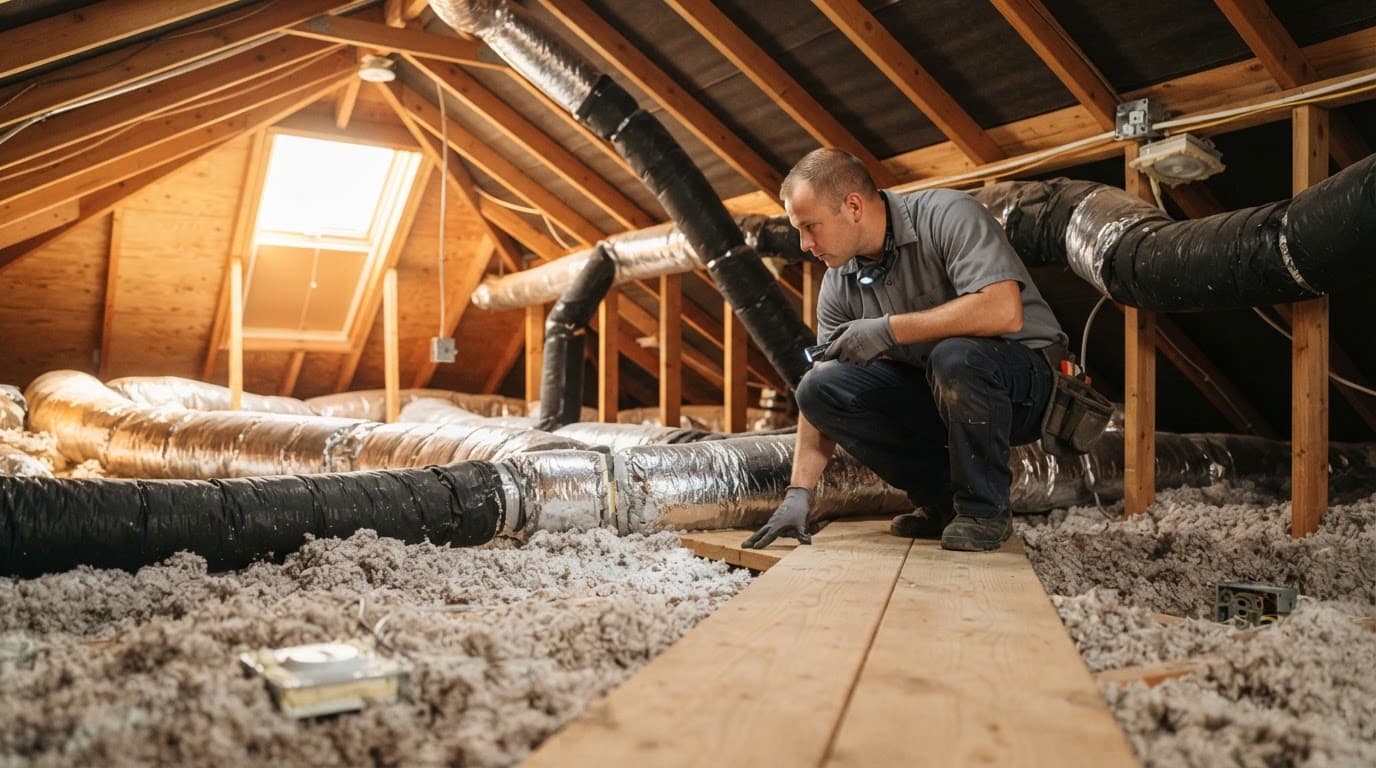
Insulation slows heat before it reaches your living space
Attic insulation works by resisting heat transfer before it reaches your living space. Its R-value measures that resistance. A higher rating means heat moves more slowly through the material.
For warm Southern California attics, many homes benefit from an R-value in the R-38 to R-60 range. The right insulation levels depend on current depth, layout, local code, and whether ducts run through the attic. The attic floor is part of the home’s building envelope, so enough insulation can reduce the workload on your HVAC system.
Depth matters as much as material
A few inches of old insulation rarely provide enough resistance in a hot attic. That thin layer weakens the thermal barrier between the attic and living space. Fiberglass batts can also lose effectiveness when gaps form around framing, wiring, or odd-shaped areas.
Loose-fill materials, including blown-in fiberglass and cellulose insulation, cover irregular spaces more consistently. However, even a deep layer won’t perform as intended if it’s been flattened by storage boxes or foot traffic. Attic insulation needs a consistent, fluffy depth to hold air and resist heat.
An attic can look insulated from the access hatch while still having thin spots over bedrooms, around duct runs, or near the eaves.
Before adding insulation near an HVAC system or wiring, a professional should check for moisture damage, pest activity, roof leaks, and unsafe wiring. Covering those issues can make later repairs harder and may trap a problem in place.
Air sealing stops hot air from bypassing insulation
Insulation slows heat through the ceiling. Air sealing must accompany attic insulation because an insulating layer cannot block airflow through openings. Both steps matter because insulation alone cannot stop air moving through gaps.
Common air leaks occur at attic hatches, plumbing penetrations, wiring holes, open wall cavities, and recessed light fixtures. Warm attic air can enter through these openings, adding heat gain. Conditioned air can also escape upward, making the HVAC system work harder.
Start with the attic floor plane
The attic floor is the boundary in the building envelope between your cooled home and the hot attic. Sealing it before adding insulation makes the upgrade more effective and keeps loose-fill material from hiding important gaps.
Some areas need special care. Recessed fixtures require the correct clearance and fire-safe approach. Gas appliances, flues, and furnace vents also need approved clearances. Homeowners should never pack standard insulation against a hot vent or an unapproved light fixture.
Don’t overlook the attic hatch
An uninsulated hatch acts like a leaky door in your ceiling, creating one of the easiest air leaks to overlook. A weather-stripped hatch cover with insulation on top can limit heat entering the home and make the opening less drafty.
This is one of the few improvements many homeowners can handle themselves. Still, large gaps, damaged wiring, and combustion-related clearances require a professional who can assess the HVAC system safely.
Hot attic ductwork wastes cooled air
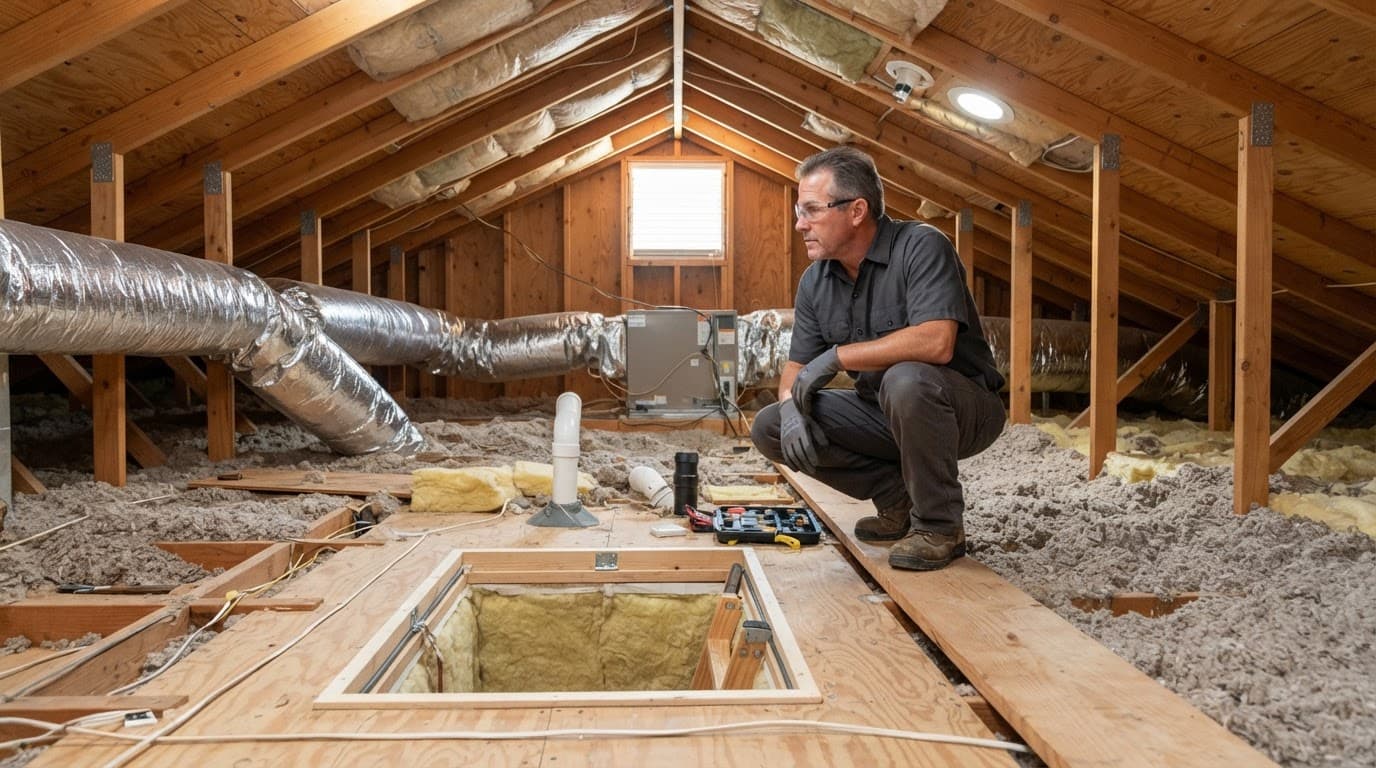
Ducts in a 140-degree attic have a difficult job. Even when the air conditioner produces cold air, heat transfer through poorly insulated duct walls can warm it before it reaches a register. The HVAC system must work harder to maintain comfort.
Leaky ducts create another problem. Supply ducts can spill cooled air into the attic, while return ducts can pull in hot, dusty attic air. This reduces HVAC efficiency and makes the HVAC system work harder while indoor comfort drops.
Signs your ducts need attention
Watch for weak airflow, rooms that never cool, dusty registers, or temperature differences between rooms. These problems can reduce indoor comfort.
High utility bills during ordinary weather can also signal higher energy costs from duct losses.
A duct inspection can identify disconnected runs, crushed flex duct, missing insulation, and leaking joints in the ductwork. Escondido air duct services can help confirm whether duct losses are contributing to poor cooling.
Ventilation has a separate job
Attic ventilation helps release heat and moisture, but it doesn’t replace insulation or air sealing. A vented attic still needs a well-sealed ceiling plane and enough insulation beneath it.
Keep soffit vents clear when adding attic insulation. Baffles maintain an air channel at the eaves, so insulation does not block incoming ventilation air. Roof and attic conditions vary, so ventilation changes should fit the home’s actual design.
Choosing fiberglass, cellulose, or spray foam insulation
Each option can work well when installed correctly. The right attic insulation material depends on your budget, attic access, moisture conditions, required R-value, existing insulation levels, and HVAC system location. It also depends on whether you’re insulating the attic floor or roofline.
| Material | Where it fits well | Key consideration |
|---|---|---|
| blown-in fiberglass | Open attics where added depth is needed | It settles less than some loose-fill options |
| cellulose insulation | Irregular attic floors needing dense coverage | It can settle over time if poorly installed |
| spray foam insulation | Rooflines and assemblies that are difficult to air seal | It costs more and requires skilled installation |
For accessible attic floors, installers can build an even layer of attic insulation over a large area. Loose-fill options also fill around obstacles well and provide solid coverage when installed at the proper depth.
Spray foam needs a building-specific plan
Spray foam can combine insulation and air sealing in one application. However, turning a vented roof and attic into an unvented assembly changes how that space manages heat and moisture.
That choice requires careful planning around the HVAC system, existing ducts, roof sheathing, and combustion appliances. It isn’t a casual weekend project.
Signs an attic upgrade may help your cooling costs
Your home may be telling you the attic insulation needs attention. Thin, patchy, or compressed material can make the HVAC system run continuously on hot days, while certain rooms stay warm.
Other clues are easy to miss:
- Ceiling surfaces feel warm during the afternoon, especially on the second floor, creating hot spots despite a comfortable downstairs thermostat setting.
- Insulation sits below the tops of ceiling joists or looks patchy and compacted.
- The attic hatch feels hot, dusty air enters around it, or nearby ceilings show staining.
- The system needs frequent service despite regular filter changes and routine maintenance.
- Summer energy bills jump sharply even though your household habits have not changed.
Poor insulation can increase summer heat gain and affect winter heating performance. That added attic heat can make the AC run longer, raising cooling costs. Those longer cycles can increase energy costs over time. On cool Escondido nights, indoor warmth escapes through weak spots, so the furnace may run longer despite the mild climate.
If your HVAC system starts short-cycling, blowing warm air, or making unusual sounds, the air conditioner may have a mechanical fault that insulation alone won’t solve. Arrange AC repair in Escondido to rule out the problem.
Insulate before buying a larger air conditioner
Reduce the home’s heat gain through attic insulation and related improvements before buying a larger air conditioner. A bigger unit may cool the house quickly, but oversized equipment can still create new problems. Short cycles don’t prove the thermostat setting is correct, and they may hurt humidity control while increasing HVAC system wear.
Insulation and sealing work can reduce the cooling load by limiting the heat the equipment must remove. After these improvements, a contractor can better determine whether the existing unit is correctly sized.
Ask for a whole-home evaluation
A Manual J load calculation should account for square footage, windows, orientation, duct condition, insulation, and leakage. It offers a more dependable answer than choosing a system based only on the old unit’s size.
A whole-home evaluation helps an HVAC contractor assess the HVAC system and identify changes that may support energy efficiency.
This approach matters for homeowners considering replacement. Escondido air conditioning services can assess the equipment and the parts of the home that affect its output.
DIY attic improvements that are safe and worthwhile
Homeowners can make a difference with a few low-risk tasks. Work early in the morning, wear eye protection, gloves, a long-sleeved shirt, and a suitable dust mask or respirator. Never step between ceiling joists.
Start by moving stored items away from attic insulation and checking that the attic hatch closes tightly. Don’t disturb questionable material during the inspection. You can also add weatherstripping to the hatch and look for obvious signs of roof leaks or pest damage.
Avoid using expanding foam near heat-producing fixtures, flues, or electrical components unless the product and location are approved. Do not disturb vermiculite insulation, which may contain asbestos. Leave questionable insulation and complex sealing work to a licensed contractor.
For Escondido HVAC service needs, the same rule applies: address attic conditions alongside equipment work on the HVAC system. A well-maintained HVAC system performs best when the home around it stops wasting the air it produces.
A cooler attic supports a healthier AC system
Attic insulation controls how much heat reaches rooms above living spaces. It protects cooling output, reduces upstairs hot spots, and supports indoor comfort.
A careful upgrade sequence starts with attic insulation, then addresses air sealing at the ceiling plane and duct repairs. Evaluate attic ventilation separately, since potential changes to energy costs and cooling costs depend on existing conditions.
If upstairs comfort problems or long run times persist, Book Online for an evaluation of your HVAC system, attic conditions, and ductwork.
Frequently Asked Questions
Can attic insulation reduce my electric bill?
Yes, when attic heat contributes to higher energy bills. Added insulation and sealing reduce the heat your cooling system must remove. Savings in Escondido vary with existing insulation depth, duct condition, thermostat habits, and system condition.
What insulation level is recommended for an Escondido attic?
Many homes in warm climates use R-38 to R-60 as a general starting range. The appropriate R-value depends on existing insulation, local requirements, attic access, and the material selected.
Will new insulation fix a hot upstairs room?
It can help substantially, especially when the attic above that room has thin coverage or poorly sealed areas. However, restricted airflow, leaking ducts, sun-facing windows, and an undersized system can also cause uneven temperatures.
Should I repair ducts before adding insulation?
Yes, inspect and repair ductwork before covering the attic floor with loose-fill insulation, whenever possible. Sealing a leak or reconnecting a damaged run is easier before loose-fill material covers it. Confirm duct insulation is intact, and assess the HVAC system alongside duct condition and equipment operation.