

Why Some Rooms Stay Hot in Carlsbad Homes
My Guy is Proud to Be "Your Guy" for Your Home
A cool house should feel consistent throughout, but it is not uncommon to find one bedroom that feels like late afternoon all day. Persistent hot rooms in Carlsbad homes are a frequent complaint for many residents, even when the air conditioning system appears to be functioning normally.
Usually, the problem is not caused by one single factor. Airflow restrictions, intense sun exposure, poor insulation, inefficient duct layouts, and improper thermostat placement can all push specific areas out of sync with the rest of the house. Because North County San Diego experiences unique climate patterns, these hot rooms in Carlsbad can be particularly frustrating for homeowners trying to maintain a comfortable environment. Once you identify where the thermal imbalance starts, finding the right solution becomes much clearer.
Key Takeaways
- Airflow is the Primary Culprit: Most persistent hot rooms are not caused by a failing AC unit, but rather by issues with air distribution, such as leaky or crushed ducts, poor return airflow, or blocked vents.
- Building Design Influences Temperature: Structural factors including intense west-facing sun exposure, thin attic insulation, vaulted ceilings, and rooms located above garages can trap heat, making it difficult for even a healthy HVAC system to keep up.
- Perform Simple DIY Checks First: Before calling a professional, homeowners can improve comfort by replacing dirty air filters, ensuring furniture does not block supply registers, keeping interior doors open to improve return air, and closing blinds during peak afternoon heat.
- Know When to Seek Professional Help: If you notice a consistent temperature gap of 4 to 6 degrees between rooms, or observe signs like weak airflow, noisy ducts, or increased humidity, a professional inspection is necessary to diagnose and balance the system.
Why one room feels hotter than the rest
Most homes do not cool every room the same way. A central thermostat reads the temperature in one spot, then tells the system when to stop. If that thermostat sits in a cool hallway, a shaded living room, or a downstairs area, it can shut off the system before the warmest room ever catches up.
That happens a lot in Carlsbad. Mornings can feel mild, then afternoon sun pours into west-facing rooms and corner bedrooms. Residents in South Oceanside often experience similar patterns with intense sun exposure throughout the day. Rooms above garages also heat up faster because they get warmth from below and from the roof above. When you step into a persistently heated room, it can feel like you just walked into a hot yoga session at a local yoga studio, leaving you uncomfortable and searching for relief.
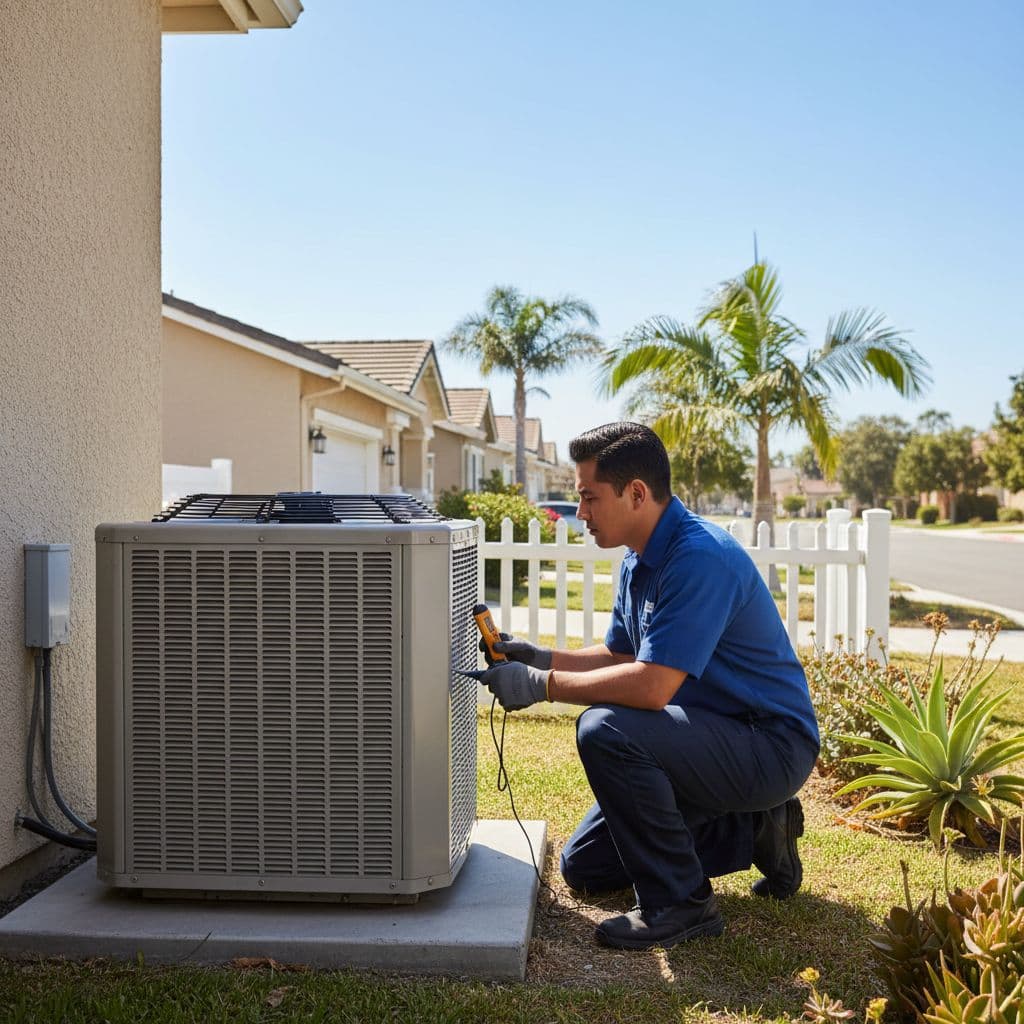
A single hot room does not always mean the whole HVAC system is failing. Often, the issue is distribution. The cool air may not be reaching that room well, or the room may be gaining heat faster than the system can remove it.
One warm room can point to an airflow problem, even when the rest of the house feels fine.
House layout matters, too. Two-story homes often trap heat upstairs. Long duct runs lose pressure before air reaches the farthest room. If you notice a specific heated room in your home, keep in mind that closed interior doors can also reduce return airflow, so the room fills with warm air and stays there.
The room may seem stubborn, but homes follow patterns. Once you spot the pattern, you can stop guessing.
HVAC issues that often cause hot rooms
When homeowners think about hot rooms, they often blame the unit outside. While that can sometimes be the case, room by room temperature problems are more often tied to airflow than cooling power.
Leaky ducts are a common culprit. If a duct runs through a hot attic and has gaps, cooled air escapes before it ever reaches the vent. Crushed flex duct creates similar restrictions, as does a damper that is only partially open.
A weak return can also leave a room feeling stagnant. Your supply vents push cooled air in, but return air must have a clear path back to the system. Without proper return airflow, pressure builds and circulation slows to a crawl. The room quickly turns into a stuffy environment that feels less like a bedroom and more like a Bikram yoga studio. Much like a vinyasa class requires fluid motion to be effective, your home climate control depends on consistent air movement to maintain comfort. A well-tuned system provides the necessary strength and flexibility to keep every corner of the house, from Carlsbad to Oceanside, at a balanced temperature.
This quick table shows what homeowners often notice first:
| What you notice | Likely cause | Why it matters |
|---|---|---|
| Weak airflow from one vent | Kinked or leaking duct | Cool air never fully reaches the room |
| One bedroom feels like a warm yoga studio when the door stays shut | Poor return airflow | Warm air gets trapped inside |
| Several rooms feel less cool than usual | Dirty filter or blower issue | The system can not move enough air |
| The whole house struggles on hot days | System problem needing ac repair | Cooling capacity may be dropping |
A clogged air filter can make the entire air conditioning system work significantly harder. Low airflow hurts comfort across the house, but one distant room often shows the effects first. In other cases, the supply air itself is not cold enough. Then the problem may be low refrigerant, a dirty coil, or another issue that calls for professional ac repair.
The same duct problems can also affect heating in winter. If a room is cold in January and hot in August, the ductwork deserves a close look.
House features your air conditioning can’t fully overcome
Sometimes the HVAC equipment is doing its job, but the room keeps fighting back. Even in a beautiful coastal retreat, a room can feel less like a luxury boutique hotel and more like an oven if the home architecture invites too much heat. This happens when the house design or construction allows more heat to enter than your air conditioning system can offset.
Windows are a major factor in this equation. A west-facing bedroom with older glass can soak up intense afternoon heat, especially if the home features private patios that reflect sunlight directly into the living space. Add thin blinds or bare windows, and the room warms up quickly. You may feel the change in temperature long before the thermostat reacts.
Insulation is another common weak point. If attic insulation is thin, shifted, or missing over one specific section of the home, that room will absorb roof heat throughout the day. Rooms with vaulted ceilings often feel this discomfort first, as do many bonus rooms and second-floor spaces throughout Carlsbad and nearby areas like Oceanside.
A room situated over the garage is another classic problem spot. Garages get significantly hot, causing the ceiling above them to warm up and the bedroom floor to radiate that heat upward. Even a perfectly functioning air conditioner may struggle to keep that specific space as comfortable as the rest of the home.
Furniture placement can also exacerbate these issues. A bed frame positioned over a floor register, heavy drapes blocking a vent, or a large dresser obstructing a return air vent can restrict airflow more than most homeowners realize. Furthermore, home offices often run warmer because computers, monitors, and printers generate additional heat.
In other words, some hot rooms in Carlsbad homes are part HVAC issue and part building issue. Whether you are living in a historic property or a newer development near Oceanside, if you only address the cooling equipment without evaluating the home structure, the room may improve only slightly. Addressing these building inefficiencies is often necessary to achieve true comfort.
DIY checks before you schedule service
Maintaining a comfortable living space is essential for meeting your wellness goals, and taking a proactive, beginner-friendly approach to home care can often resolve temperature inconsistencies. Before you schedule service for a professional HVAC inspection, try these simple checks to improve your indoor environment.
- Replace the air filter if it is dirty. Restricted airflow can strain your system and prevent it from cooling your home evenly.
- Ensure every supply vent is fully open. You should also move rugs, beds, and heavy furniture away from registers to allow for maximum circulation, which is vital for a healthy home.
- Keep the door to the hot room open for a day. If the room begins to cool effectively, the issue may be a lack of return airflow.
- Check your thermostat fan setting. Setting the fan to Auto is typically better than On for normal cooling, as it helps your system dehumidify the air properly, supporting better indoor air quality.
- Close blinds or curtains during peak afternoon sun. This simple habit helps minimize heat gain in west-facing rooms, keeping your space consistent and comfortable.
- Use a basic thermometer to compare temperatures across different rooms after the air conditioner has been running. While a minor variation is normal, a gap of several degrees confirms a real cooling imbalance that may require further attention.
For homeowners who prioritize wellness, these basic maintenance steps are a great start. However, please skip any work that involves electrical components, refrigerant, or opening sealed equipment. Those tasks require a trained HVAC technician. Attempting repairs beyond basic maintenance can damage your system or create safety risks, so always call a professional if you are unsure.
When it’s time to call a Carlsbad HVAC pro
If one room stays warm week after week, it usually needs more than a filter change. The strongest clue is a repeated temperature gap. When a room runs several degrees hotter than nearby spaces, something is off in the system or the structure.
Whether you live in Carlsbad Village or North Carlsbad, call for service if you notice weak airflow, higher energy bills, longer run times, humidity indoors, or noisy ducts. Those signs often show up well before the system stops cooling completely.
A good technician will not stop at the thermostat. They should check supply temperature, airflow, return path, filter condition, duct layout, attic losses, and the age of the equipment. When a professional diagnoses your home, the recovery results should be as precise and comfortable as the environment of a modern studio. This matters because the fix could be small, such as balancing dampers, or larger, such as duct repair or a system sizing problem.
Older equipment also deserves extra attention. If your air conditioning is near the end of its life, it may still run but no longer keep up on warmer days in Carlsbad. In that case, a careful diagnosis matters more than a quick guess.
The real issue is balance
That hot spare room or warm back bedroom usually is not random. In most cases, the house is out of balance, either from poor airflow, excess heat gain, or both. Achieving a truly comfortable home is a full-sensory experience where every space feels consistent. When your system is optimized, it should perfectly sculpt and flow conditioned air to every corner of your floor plan, eliminating those frustrating temperature spikes.
While small fixes can help, persistent temperature gaps often require a professional diagnosis to restore that ideal equilibrium. Think of routine professional care as an unlimited monthly membership for your comfort, ensuring your system operates at peak efficiency year-round. If one room keeps overheating while the rest of the house feels fine, Book Online and get the system checked by a Carlsbad HVAC expert before the peak summer heat settles in.
FAQ
Why is the upstairs always hotter in my Carlsbad home?
Heat rises, and upstairs rooms often sit closer to a hot attic or roof deck. Because the thermostat is usually located downstairs, the system may shut off before the second floor feels as refreshing as a cold plunge.
Is closing vents in cooler rooms a good way to push more air into the hot room?
Usually, no. Closing too many vents can increase pressure in the duct system and hurt airflow. It can also strain the equipment. Proper system balancing should be done with care.
Does a hot room always mean I need AC repair?
No. A hot room can come from insulation problems, sun exposure, blocked vents, or duct leaks. Still, if several rooms feel warm or the air isn’t cooling well, professional AC repair may be needed.
Can the same problem affect both heating and cooling?
Yes. Duct leaks, weak returns, and airflow restrictions can make one room too hot in summer and too cold in winter. Because your shared ductwork affects both heating and cooling, minor issues often impact the comfort of your entire home.
How much temperature difference between rooms is normal?
A slight difference is common, especially in rooms with lots of sun. However, if one room feels as stifling as a cedar hot tub, the home likely has an airflow or heat gain problem. If you are struggling to keep a room comfortable, think of your air filter maintenance like a regular class schedule for mat pilates. Staying consistent with filter changes ensures your system performs efficiently throughout the year. If the temperature gap is consistently 4 to 6 degrees, it is worth scheduling a professional inspection.