

Central Air Lifespan in Carlsbad’s Coastal Climate
My Guy is Proud to Be "Your Guy" for Your Home
Salt-laden ocean air can wear down an outdoor air conditioner long before it looks old. A 10-to-15-year range is a realistic benchmark for the central air lifespan Carlsbad homeowners should plan around, even though well-kept systems elsewhere may run longer.
Age alone doesn’t determine air conditioner lifespan. Service history, salt exposure, installation quality, energy costs, and recurring repairs offer a more useful picture of expected service life. Start with a realistic local benchmark, then watch for conditions that shorten it.
Key Takeaways
- Central air systems in Carlsbad typically last 10 to 15 years, with coastal salt exposure, maintenance, installation quality, and usage affecting actual service life.
- Salt, moisture, and dust can corrode condenser coils and electrical components, especially in homes near the ocean, beaches, and lagoons.
- Seasonal professional maintenance, regular filter changes, clear airflow around the condenser, and early corrosion checks can help protect efficiency and extend equipment life.
- Repair may make sense for newer systems with isolated issues, while repeated breakdowns, rising energy bills, major coil or compressor damage, and a 12-to-15-year-old coastal unit support comparing replacement options.
- Proper sizing, ductwork, refrigerant compatibility, permits, and California Title 24 requirements should be reviewed when installing a new system.
Central Air Lifespan Carlsbad: The Local Range
Most central air systems last 12 to 20 years in milder, less corrosive climates. Near coastal San Diego, Carlsbad homes often see a shorter HVAC system lifespan because outdoor components run through long cooling seasons while facing moisture and salt exposure.
Your local planning range depends on where the condenser sits and how it has been maintained.
| System condition and location | Practical planning range | What affects it most |
|---|---|---|
| Exposed coastal condenser | 10 to 15 years | Salt deposits, moisture, corrosion |
| Sheltered Carlsbad home with regular service | 12 to 15-plus years | Coil condition, airflow, repair history |
| Well-maintained system in a low-corrosion climate | 12 to 20 years | Usage, sizing, installation quality |
These are practical planning ranges, not expiration dates. A poorly installed 8-year-old unit can develop compressor trouble, while a protected 16-year-old system may still cool reliably.
The outdoor condenser gets most of the attention, yet the entire HVAC system matters. The indoor evaporator coil, blower motor, thermostat, condensate drain, ductwork, and electrical controls all affect comfort and efficiency. A central system may also share its blower and ducts with your furnace or other heating equipment, so one neglected component can strain the rest.
Coastal Salt Air Corrosion Starts at the Condenser
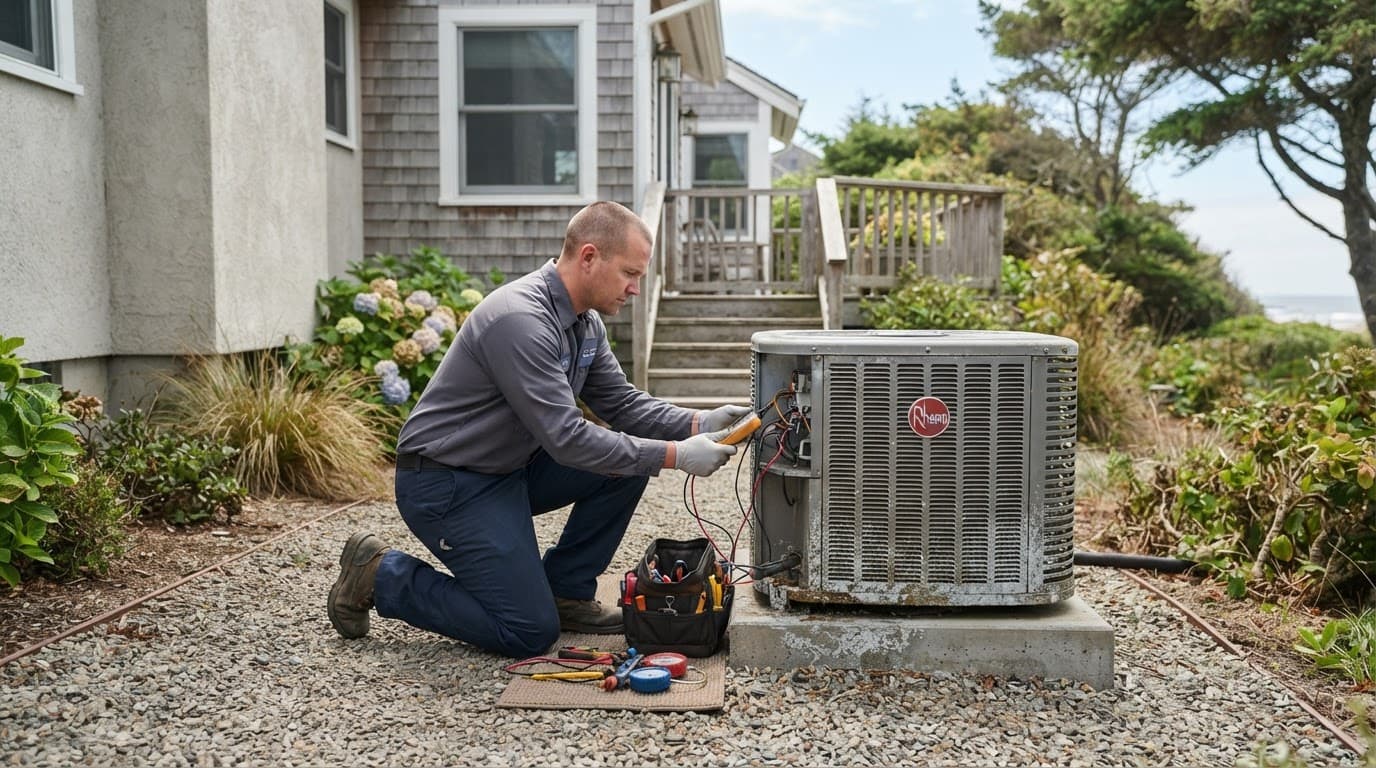
Ocean breezes carry salt aerosol inland, where it settles on the condenser’s metal surfaces. When mixed with fog, dew, or humidity, the residue accelerates corrosion on coil fins, fasteners, electrical connections, and cabinet panels.
Homes near Carlsbad State Beach, Tamarack Beach, or Agua Hedionda Lagoon typically receive more salt exposure than properties farther inland. Inland homes can still experience longer cooling cycles during warmer periods, creating a different type of strain.
Salt deposits also trap dust against the coil, restricting heat transfer. The compressor then runs hotter and longer, increasing power use and mechanical wear.
Corrosion often begins as a thin, dull film on metal and damaged coil fins. Waiting for visible rust can mean missing the early warning period.
During a professional inspection, ask for a close look at the condenser coil, electrical contacts, refrigerant lines, and cabinet panels. A compatible factory-applied or approved coil coating may help in areas with high exposure. However, coating cannot restore a coil that has already corroded through.
Maintenance That Protects Air Conditioning Equipment
Preventive maintenance won’t make a failing system new again. It can, however, find loose connections, restricted airflow, weak capacitors, drain problems, and developing coil damage before they become expensive AC repair calls.
Schedule a professional system tune-up twice a year. Regular HVAC maintenance should include cooling service in spring and furnace maintenance in fall when the home uses a furnace. Some manufacturer warranties require documented maintenance, although the exact rules vary by brand and model. Keep every invoice and review your warranty documents instead of assuming coverage.
When you schedule Carlsbad HVAC services, request more than a quick visual check. A complete visit should include checking electrical components, blower performance, drain flow, coil cleanliness, refrigerant levels, thermostat operation, and duct airflow. A technician should diagnose a possible refrigerant issue rather than adding refrigerant without finding the cause.
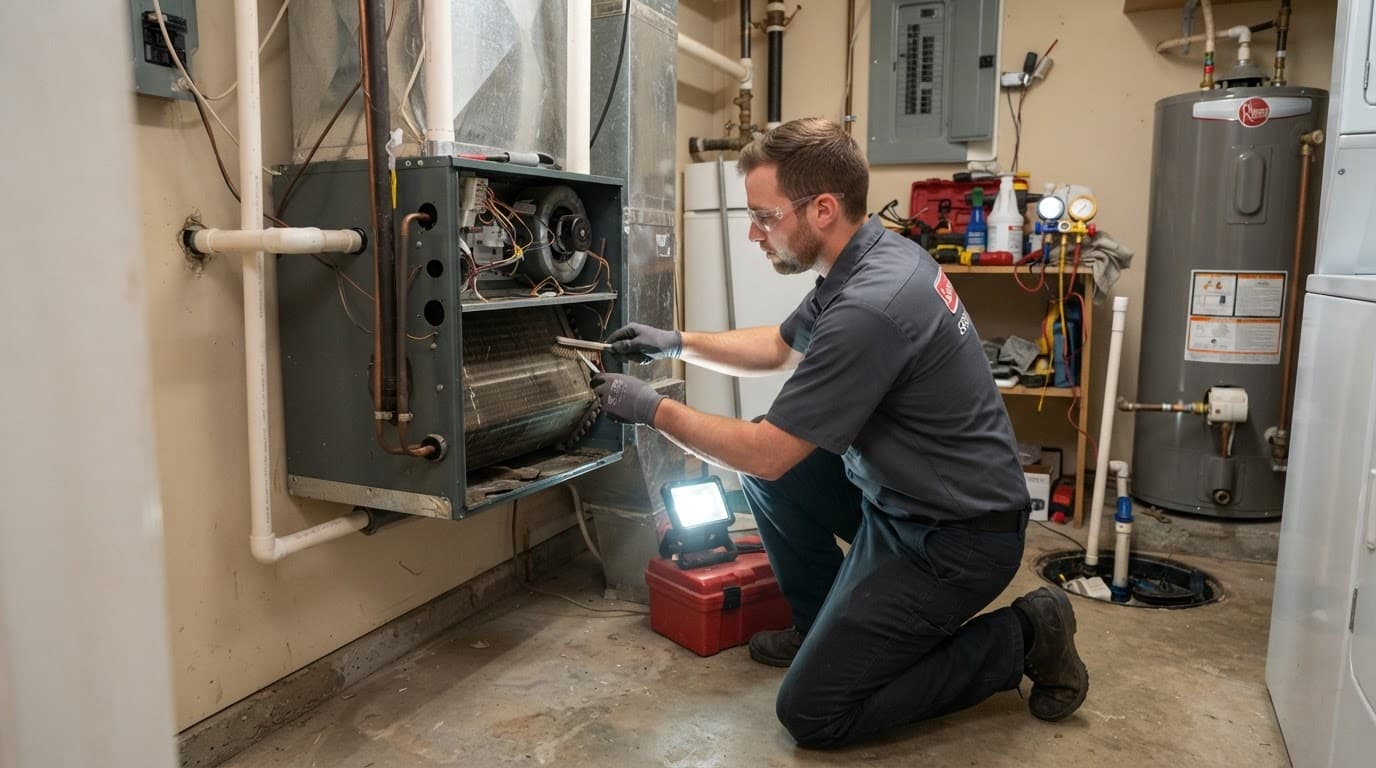
DIY steps that make a real difference
Homeowners can handle a few simple tasks between service visits:
- Inspect the air filter monthly, and plan air filter replacement every 30 to 90 days, sooner during dusty weather or heavy A/C use, based on the equipment’s approved filter rating.
- Keep leaves, soil, patio furniture, and dense shrubs away from the outdoor unit so air can move freely.
- Use a gentle hose rinse on the exterior cabinet only when the unit is off, and avoid pressure washers that can flatten coil fins.
- Pay attention to new rattling, buzzing, water around the indoor unit, warm air from vents, or rooms that suddenly cool unevenly.
Choose filters that your system can handle. A filter should balance indoor air quality goals with the equipment’s airflow limits. An overly restrictive filter can reduce airflow and strain the blower motor, even though it may seem better for filtration.
For more homeowner-safe upkeep and signs that need professional help, review these Carlsbad AC repair DIY tips.
When Repair Makes Sense, and When Replacement Wins
A repair estimate needs context. The Rule of 5,000 gives homeowners a simple first screen when deciding whether to repair or replace HVAC equipment: multiply the system’s age by the estimated repair cost. If the total exceeds 5,000, replacement deserves serious consideration, but the rule is only a screening tool, not an automatic replacement mandate.
For example, a $600 repair on a 12-year-old system produces 7,200. That doesn’t force a replacement, but it signals that you should compare repair costs against a new system’s warranty, expected efficiency, and likelihood of another failure.
| A repair is often reasonable when | Replacement deserves a close look when |
|---|---|
| The system is under 10 years old | The unit is 12 to 15 years old near the coast |
| The issue is a capacitor, contactor, thermostat, or drain repair | There is major coil damage, a compressor failure, or refrigerant-circuit damage |
| Energy bills and airflow remain steady | Bills are climbing and rooms cool unevenly |
| The system has had few previous repairs | Breakdowns keep returning after prior repairs |
Warning signs your system is nearing retirement
A unit doesn’t need to stop completely before it becomes a poor investment. Repeated calls for professional AC repair during one cooling season are a clear concern, especially when each visit addresses a different part.
Listen for grinding, loud buzzing, or repeated clicking at startup. Also watch for weak airflow, short cycling, ice on refrigerant lines, water leaks, and a system that runs for long periods without reaching the thermostat setting. Also, rising energy bills can point to a dirty coil, duct leak, refrigerant problem, sizing issue, or declining compressor performance, but they don’t prove the system is failing.
Improper sizing can cause similar trouble. An oversized system cools too fast, then shuts down and restarts repeatedly. Undersized equipment runs for extended periods and may never catch up on hot days. Leaky, crushed, or poorly designed ducts add another layer of strain. A proper HVAC installation begins with a load calculation to determine the home’s required cooling capacity, rather than copying the old unit’s size.
Knowing the central air lifespan Carlsbad homes face also helps you compare newer equipment. Heat pump systems can provide both cooling and heating, but they still depend on correct sizing, sound ductwork, and professional commissioning. Ductless mini-splits can suit spaces where extending or repairing ducts is difficult, though central air remains the focus for whole-home cooling. New split systems commonly use newer, lower-global-warming-potential refrigerants, depending on the model. An older R-410A system cannot simply accept a different refrigerant, so an HVAC professional should verify refrigerant levels and compatibility before recommending replacement.
Ask an HVAC contractor to itemize equipment, ductwork installation or modification costs, electrical work, permits, smart thermostat options, and extended warranty terms. California Title 24 requirements apply to many air conditioning replacement projects, so permit compliance belongs in the discussion. For a closer local pricing framework, see this guide to Carlsbad AC replacement cost.
A Longer Life Starts With Earlier Decisions
Coastal exposure means your central air system needs more attention than a unit in a dry, low-salt area. Regular filter changes, seasonal service, clear airflow, and early corrosion checks protect system efficiency and help avoid a midsummer failure.
When comfort slips or repair costs rise, review comfort, repair history, energy use, and failure risk together. If replacement is justified, compare energy-efficient HVAC options instead of reacting to one bad day. If your system needs a diagnostic or you’re weighing your options, Book Online for a professional evaluation.
FAQs About Central Air Life Near Carlsbad
How many years can a central air conditioner last in Carlsbad?
Most coastal Carlsbad systems last about 10 to 15 years. Units in protected locations with scheduled service may last longer, while systems near salt spray or with neglected coils may fail sooner.
Why can the Southern California climate shorten HVAC life?
Cooling equipment often runs across much of the year, rather than sitting dormant through long winters. Salt exposure, humidity, dust, and UV rays stress condenser coils and outdoor electrical parts.
How often should I schedule professional maintenance?
Twice a year is practical, with cooling service in spring and heating service in fall. Follow the manufacturer’s requirements and keep proof of service for warranty purposes. Keep filters clean and properly sized to support indoor air quality, since overly restrictive filters can reduce airflow.
Does salt corrosion always mean I need a new air conditioner?
No. Early corrosion may be manageable with proper cleaning, protective measures, and replacement of affected minor parts. A technician should inspect the coil and refrigerant circuit before recommending repair or replacement.
Are there alternatives to ducted central air?
Ductless mini-splits may suit additions or rooms with difficult duct layouts. Their outdoor components still need appropriate cleaning and protection in a coastal environment.