

Why AC Drain Lines Keep Clogging in San Diego Homes
My Guy is Proud to Be "Your Guy" for Your Home
Water around your air conditioning unit can feel out of proportion to the problem. It is only a small pipe, yet a clogged AC drain line can shut down your system, stain drywall, and leave your home smelling damp.
In San Diego County, the issue of AC drain line clogging shows up more often than many homeowners expect. Dust, long cooling cycles, salt air, and a little neglected maintenance can turn normal condensation into a stubborn blockage.
If your system keeps backing up, the clog usually is not random. There is almost always a reason it keeps coming back.
Key Takeaways
- Recognize the Pattern: Recurring clogs in San Diego homes are rarely random; they are usually symptoms of deeper mechanical issues like improper pipe slope, restricted airflow, or excessive algae growth.
- Prevent Further Damage: A clogged drain line can lead to significant water damage in walls and ceilings. If your AC system shuts off unexpectedly, it is likely a safety float switch preventing an overflow—do not continue to force the system to run.
- Effective DIY Limits: While a shop vac can clear mild blockages, avoid using high-pressure air or harsh chemicals. If the clog returns quickly after your intervention, you need a professional to address the underlying cause.
- The Value of Professional Maintenance: A licensed HVAC technician provides a comprehensive look at your system, including the evaporator coil and drain pan, which prevents small, recurring issues from escalating into expensive home repairs.
Why drain lines clog so often in San Diego homes
Your air conditioning system pulls humidity levels from indoor air as it cools. That moisture drips into a drain pan, then exits through a condensate drain line. When that path stays clear, you never notice it. When it starts to narrow, the water has nowhere to go.
San Diego homes create a perfect setup for ac drain line clogging. Inland areas like Escondido, San Marcos, and Fallbrook often run AC longer during hot stretches. More runtime means more condensation, and more water moving through the drain line. Near the coast, homes in Carlsbad, Oceanside, and Vista deal with marine moisture and fine airborne debris that can add to buildup.
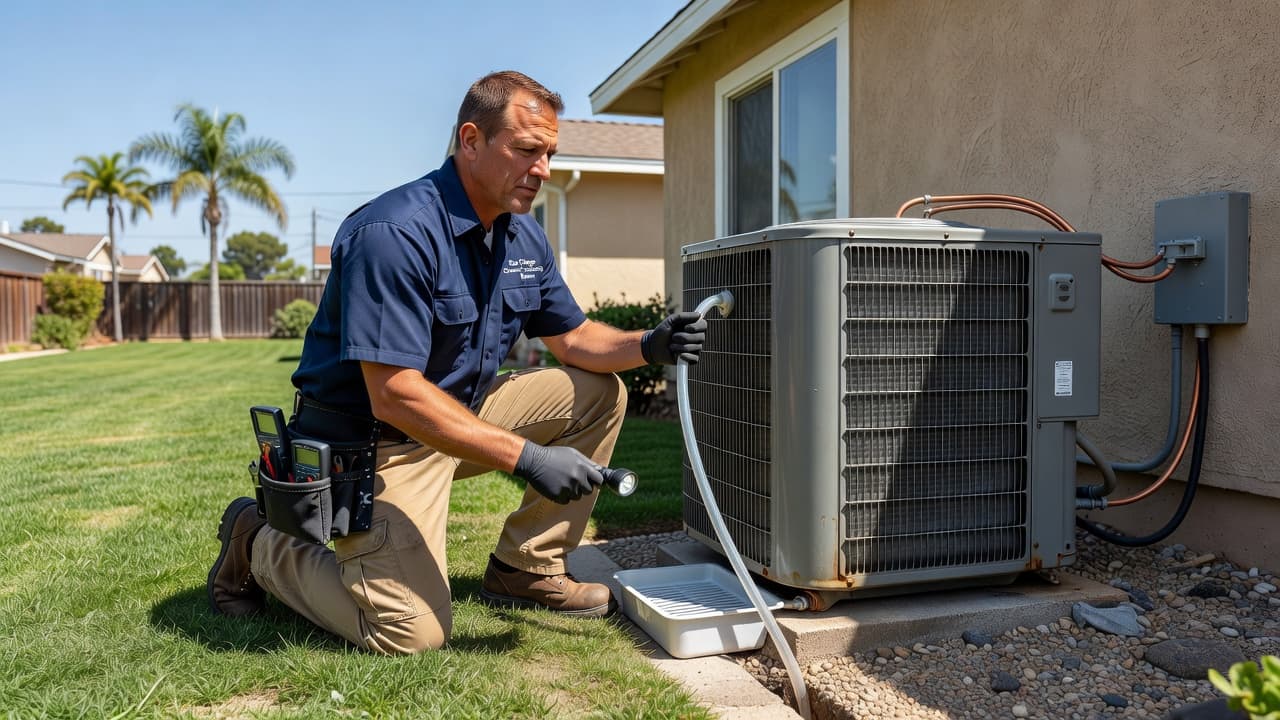
Many local systems also sit in attics, garages, and tight closets. Those spots collect dust fast. Once dust mixes with water, it forms a muddy film inside the line. Add algae growth, and the PVC pipe can clog like a sink drain.
Older homes can make things worse. A drain line may have a weak slope, extra bends, or a partial sag. Even a small low spot can hold dirty water. Over time, that standing moisture turns into slime, and the line plugs again.
If the line clogs more than once in a season, the blockage is often a symptom, not the whole problem.
That is why a quick suction at the pipe sometimes helps for a while, then the same leak returns a month later.
What repeated clogs usually point to
When you find yourself dealing with a clogged condensate drain, it often means the system itself is feeding the blockage. The drain line is only one component of the issue, and recurring problems suggest an underlying mechanical or maintenance concern.
This quick table highlights common patterns that homeowners in San Diego often experience.
| Symptom | Likely cause | Best next step |
|---|---|---|
| Standing water in the pan or near the air handler | Sludge, algae, or a blocked trap | Clear the line and inspect the pan |
| AC shuts off suddenly | Safety float switch triggered by backup water | Check for a clog and call for service if it returns |
| Musty odors near vents | Stagnant water in the pan or line | Clean the drain path and inspect the coil area |
| Clog returns after cleaning | Poor slope, dirty coil, or airflow issue | Have an HVAC technician inspect the full system |
The most common culprit is a mixture of dust and moisture. Return ducts pull in fine particles throughout the day, and some of that debris slips past the filter or enters the system during filter changes. Once it reaches the wet side of the system, it accumulates.
A dirty air filter can compound this problem. Restricted airflow may cause the evaporator coil to become too cold and freeze. When that ice melts, the pan experiences a sudden surge of water, which can lead to significant water damage if the system overflows. A drain line that was already slow will struggle to manage this excess volume.
Installation quality is also critical. A primary drain line requires a specific pitch to encourage gravity flow, while the secondary drain line serves as a crucial backup. If the pitch is incorrect or if the trap is poorly designed, water fails to move effectively, allowing debris to settle in the pipe rather than washing away.
Age also plays a role in system performance. Rust, insulation fragments, pet hair, and biological growth collect in the pan over time. In homes with heat pumps or high-efficiency equipment, condensate may form outside of the peak summer months, meaning the drain system works much harder than many people realize.
Repeated backups can also indicate that the evaporator coil requires professional cleaning. If the evaporator coil is dirty, the entire system runs less efficiently, creating conditions that accelerate moisture buildup. At that point, a comprehensive AC repair visit is a more effective solution than simply clearing the line.
Safe DIY steps before you call for AC repair
If you catch the problem early, there are a few safe things you can do yourself. These steps will not fix every case, but they can help with a simple blockage.
First, turn the thermostat off. Then, shut off power to the indoor unit if you can do so safely. Water and live equipment should never mix.
Next, check the drain pan and the visible pipe. If the pan is full, do not ignore it. That standing water can lead to significant water damage to nearby wood, drywall, or insulation.
A wet/dry vacuum or a shop vac is often the best homeowner tool for a mild clog. Find the drain line outlet outside the home, attach the vacuum for a minute or two, and pull out whatever is blocking the pipe. You may see dark slime, dirty water, or small bits of debris.
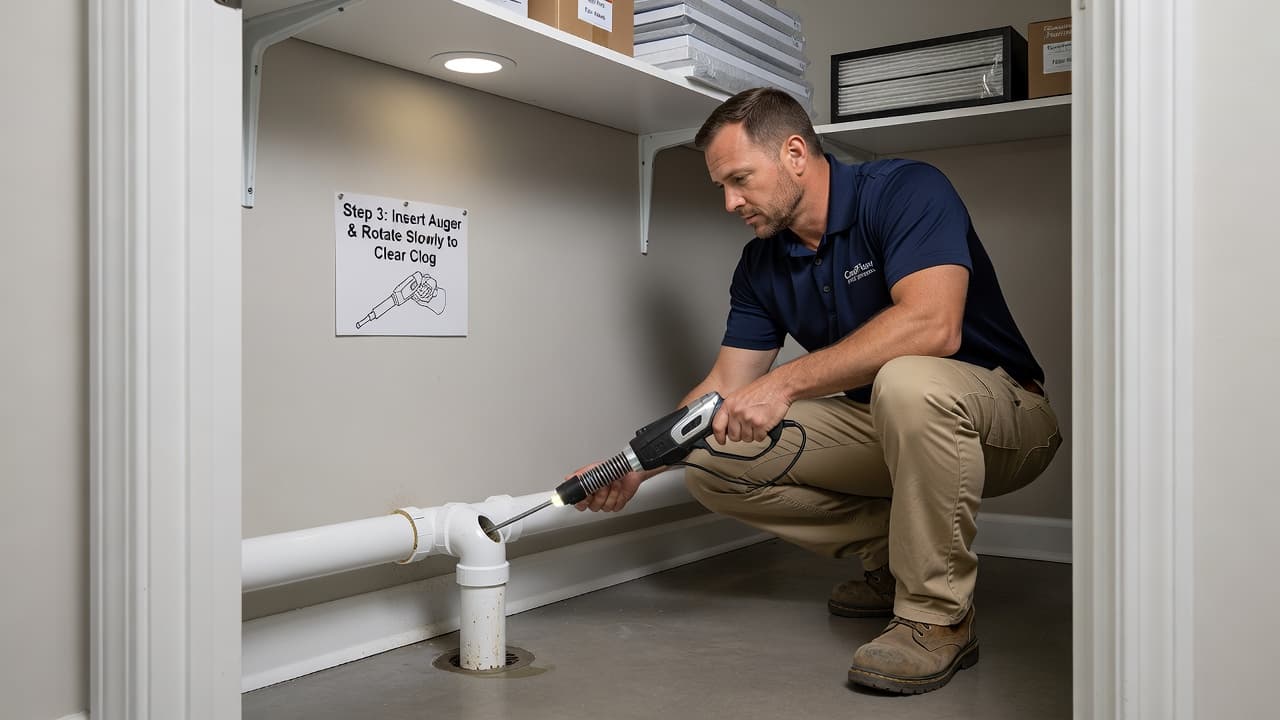
After that, pour a little warm water into the service opening or drain line access point if your setup has one. The water should move freely. If it backs up, the clog is still there or the line has a slope problem.
It is also smart to replace a dirty filter. Better airflow can reduce extra moisture and help prevent another backup.
A few DIY limits matter:
- Do not open sealed panels or reach inside the cabinet near electrical parts.
- Do not use high air pressure, because it can separate fittings or push a clog deeper.
- Do not rely on pouring bleach or distilled vinegar into the line as a permanent solution, as these can be ineffective against recurring sludge.
- Do not keep resetting the system if a float switch keeps shutting it down.
These steps are fine for a one-time issue. If the drain line clogs again soon, the home needs more than a quick cleanup.
When it’s time for an HVAC technician
Some drain line problems are simple. Others point to a larger system issue that needs trained eyes.
Call for a professional cleaning service if the line clogs again within a few weeks, if water is leaking through a ceiling, or if the AC keeps shutting off. A licensed HVAC technician can inspect the drain pan, trap, line slope, coil, and airflow in one visit. This comprehensive check is vital because a blocked condensate line is often tied to a secondary problem elsewhere in the system.
A high-quality service call should go beyond suctioning the pipe. The technician should investigate why debris keeps forming, why water is not draining fast enough, and whether the system is oversized, dirty, or poorly draining. In older homes, they may also look for cracked pans or a brittle PVC pipe that needs replacement. By addressing these underlying issues, the technician helps improve your overall cooling efficiency while ensuring your system remains reliable.
This is where regular maintenance pays off. Seasonal upkeep helps catch drain issues before they turn into costly water damage. It also provides an opportunity to inspect both air conditioning and heating performance, which is useful in North County homes that switch between modes throughout the year.
For homeowners in Escondido and nearby communities, recurring clogs are often cheaper to fix early than waiting until after drywall, flooring, or insulation gets wet.
Conclusion
A clogged AC drain line may seem like a minor nuisance, but it can quickly escalate into significant water damage if left unaddressed. In many San Diego homes, repeat backups occur because persistent issues like algae buildup, poor airflow, or improper drainage continue to trigger the same cycle of neglect.
The most important takeaway is that recurring ac drain line clogging usually indicates that your system requires a comprehensive professional inspection rather than another temporary fix. Do not wait for a small leak to compromise your flooring or drywall.
If your unit is leaking, shutting off unexpectedly, or backing up again, it is time to Book Online to have an expert address the root cause before the problem turns into an expensive repair for your home.
FAQs
How often should an AC drain line be cleaned?
For most homes, scheduling regular maintenance once a year is a smart baseline. If you live inland, run your system heavily, or have experienced clogs in the past, your line may require attention more frequently to keep everything flowing properly.
Can I use bleach in the drain line?
Many homeowners use bleach, but it is not always the best choice. Bleach can create harsh fumes and may not be ideal for every piping setup. A mixture of warm water and distilled vinegar is often a safer, more effective alternative for cleaning. If you are unsure, a professional technician can recommend the best cleaning solution for your specific system.
Why does my AC shut off when the drain line clogs?
Many systems are equipped with a safety float switch located in the drain pan or connected to the secondary drain line. When the drain becomes blocked and water rises too high, this switch automatically turns the unit off. This protective measure is designed to prevent overflow and potential property damage.
Is a clogged drain line an emergency?
It can become an emergency quickly if you notice standing water spilling into a ceiling, wall, or closet. If you see active leaks, shut the system off immediately and arrange for a professional inspection. While the underlying AC issue may be minor, ignoring the situation can lead to significant and expensive water damage inside your home.