

Why a Blank Thermostat Screen Happens in Escondido Homes
My Guy is Proud to Be "Your Guy" for Your Home
Few home problems feel more annoying than walking up to the wall and seeing a dark display. A blank thermostat screen can make it seem like your whole system died, especially when the intense Escondido heat is pushing your cooling equipment to the limit.
In many cases, the thermostat itself is not the true problem. The display often goes dark because it lost power from your HVAC system, a circuit breaker tripped, the batteries ran out, or a safety switch shut the unit down. Once you identify the specific origin of these power supply issues, the necessary fix becomes much clearer.
Key Takeaways
- Power loss is the primary cause: A blank thermostat screen is most often a symptom of lost power from your HVAC system or dead batteries, rather than a broken thermostat.
- Check the indoor unit first: Since many thermostats draw power from the furnace or air handler, ensure that access panels are fully closed and that safety switches have not been triggered by condensate clogs.
- Perform basic safety checks: Before requesting a service call, check your electrical panel for tripped breakers, replace any batteries, and look for disconnected power switches near the indoor equipment.
- Recognize when professional help is needed: If basic troubleshooting fails, or if you notice warning signs like burning smells, repeated breaker trips, or standing water, contact a qualified technician to avoid further system damage.
What a blank thermostat display usually means
A thermostat screen does not light up on its own. Most modern models require energy from either internal batteries or low-voltage power supplied by the indoor part of your heating and cooling system. Because of this, a dead display can indicate an issue with the thermostat itself, or it may point toward the furnace, air handler, wiring, or a critical safety device.
In many Escondido homes, the thermostat draws power from the indoor unit. If that unit loses power, the screen will go blank. The outdoor condenser may look normal from the yard, yet the thermostat inside appears dead. For this reason, a dark display often originates with the indoor equipment, such as the air handler, rather than the wall control itself.
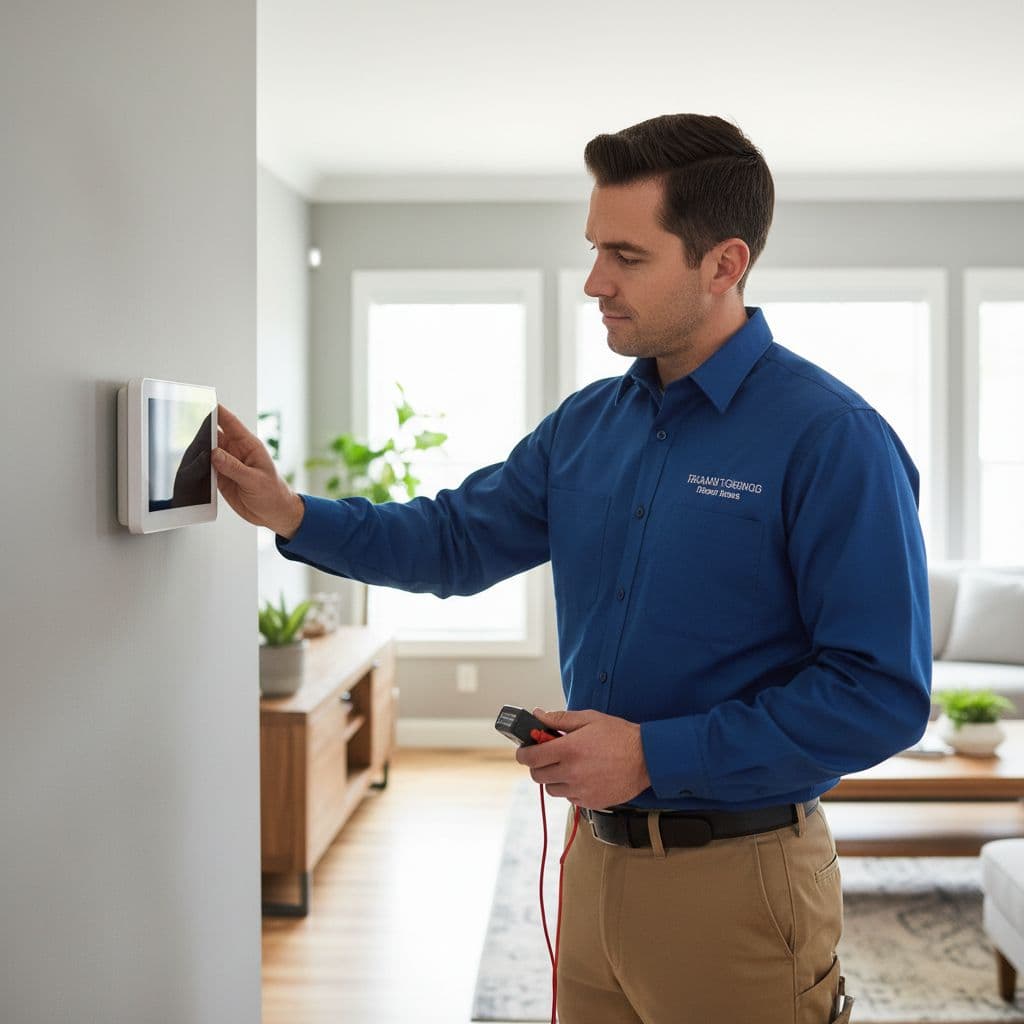
A few common issues frequently cause this problem. You may have dead batteries, or a tripped circuit breaker could be responsible. Sometimes, the furnace door is not seated correctly after a filter change, preventing the system from engaging. During heavy summer use, a clogged condensate drain can trigger a float switch, which acts as a safety switch to cut power to the thermostat. In older systems, a blown fuse on the control board is another common reason for a sudden loss of display.
This quick table shows the most common patterns homeowners see:
| What you notice | Likely cause | Safe first check |
|---|---|---|
| Screen went blank all at once | Tripped circuit breaker or power switch off | Check the electrical panel and nearby service switch |
| Screen faded, then died | Dead batteries | Replace batteries if your model uses them |
| Blank screen with water near unit | Condensate pan overflow or safety switch | Look for standing water or a full drain pan |
| Screen died after filter change | Air handler access panel not closed | Re-seat the access panel firmly |
| Screen stays blank and breaker trips again | Electrical fault in the system | Stop resetting and call for HVAC service |
The main point is simple: a blank screen often means lost power, not a ruined thermostat. That small detail saves homeowners a lot of guessing when troubleshooting their home comfort equipment.
Safe checks you can do before calling for HVAC service
You can rule out a few simple problems by following some basic troubleshooting steps without opening electrical compartments or touching wires. Start with these items, because many dark screens result from minor issues that are easy to overlook.
First, replace the batteries if your thermostat uses them. Some models rely on replacement batteries located behind the faceplate. Even if your system is hardwired, it may use batteries as backup power. In some cases, a hardwired unit might fail because the common wire has become loose or disconnected. If the screen illuminates after a battery swap, you have likely solved the problem.
Next, check your electrical panel. Look for switches labeled furnace, air handler, HVAC, or AC. If you find a tripped circuit breaker, reset it once. If it trips again, stop immediately. Repeated trips point to a deeper fault that requires professional attention.
Also, check the power switch near the indoor unit. In garages, closets, or attics, this switch often looks like a regular light switch, and someone may have bumped it by mistake. After that, make sure the furnace or air handler access panel is fully closed. Many systems include a furnace door switch that cuts power for safety. If the panel sits loose by even a little, the thermostat may go blank.
Then look around the indoor unit for signs of water. In Escondido’s long cooling season, condensate drain line clogs are common. When condensation cannot drain properly, a safety switch may shut the system off to prevent water damage.
If the thermostat screen is blank, the trouble often starts at the indoor unit, not the thermostat on the wall.
If your thermostat manual allows it, you can also try to reset the thermostat. Still, keep these efforts basic. Do not remove live panels, do not tug on wires, and do not keep flipping the breaker if the system refuses to stay on. If these steps do not restore your display, you might be dealing with an internal failure that requires professional repair.
Homeowners in Vista, San Marcos, and Fallbrook often run into the same issue after long summer cooling cycles. Meanwhile, the first chilly night of the year can expose old batteries or a loose furnace panel in homes that have not used their heating for months.
When the problem calls for AC repair or heating service
If fresh batteries, a secure panel, and a quick breaker check do not restore the screen, the issue often moves beyond DIY troubleshooting. At that point, your thermostat may be functioning perfectly, but it is simply not receiving the power or signals it needs from the system. Even a high-tech smart thermostat will remain blank if it lacks a consistent power supply.
A qualified HVAC technician will usually test the low-voltage circuit first. This diagnostic process often reveals a blown fuse or loose wiring on the control board. They will also inspect the c-wire connection to ensure the unit is receiving adequate power, or check for a failed transformer or a bad thermostat base. Whether you have a standard digital display or a modern smart thermostat, a power surge can sometimes damage these sensitive electronic components, making professional testing essential.
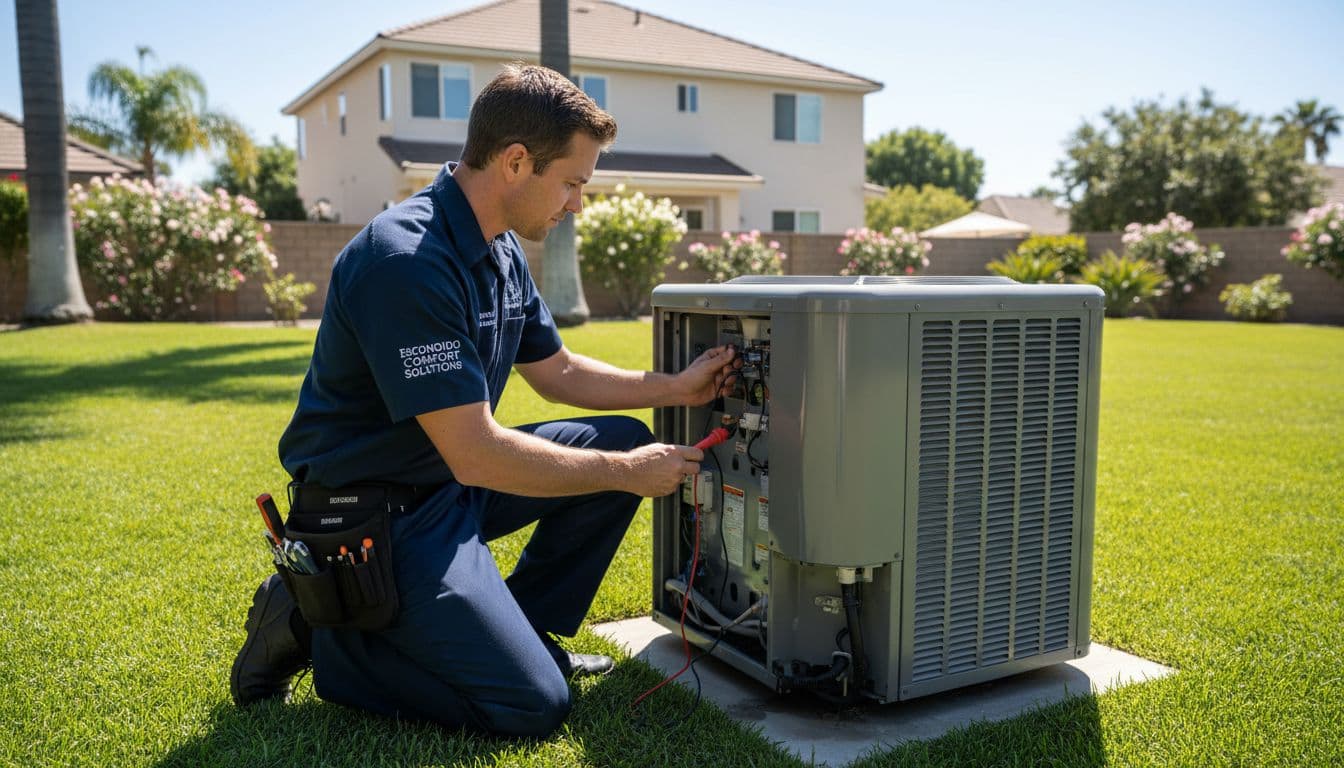
This matters because replacing the thermostat will not fix a power problem upstream. A new wall unit cannot overcome a failed transformer hidden in the air handler. In the same way, a control board fuse may continue to blow if there is a short circuit elsewhere in your system.
Summer service calls often turn into AC repair because the root cause is tied to the cooling equipment. A clogged drain line, a triggered float switch, or a low-voltage short can darken the display and stop the air conditioning simultaneously. In cooler weather, the same blank display may trace back to the heating side of the system, such as a furnace door switch, a blown fuse, or a tripped high-limit switch.
The smartest move is to request professional service when the blank screen is accompanied by other warning signs. Those signs include repeated breaker trips, water pooling around the indoor unit, a burning smell, buzzing noises, or a system that cycles on and off without reason. These symptoms indicate complex electrical issues that require expert attention.
Whether you are looking for HVAC help in Escondido, AC repair in Vista, or heating service in San Marcos, the pattern is often the same: the thermostat has lost the power feed from the equipment. The same holds true for many homes in Carlsbad, Oceanside, and Fallbrook, as local environmental factors, such as coastal salt air or intense inland heat, can accelerate the wear on these electrical components.
How to keep it from happening again
You cannot prevent every failure, but you can lower the odds of seeing a blank screen at the worst time. Regular upkeep does more here than most homeowners realize.
Start with simple habits. Replace thermostat batteries once a year if your model uses them. Change filters on schedule, because a dirty air filter can restrict airflow and add unnecessary stress to your heating and cooling equipment. After any filter change, double check that the equipment door is fully closed.
Drain care matters too. During Escondido summers, your AC removes a significant amount of moisture from indoor air. That water must leave through the condensate drain line. If this line clogs, the float switch may trigger a system shutdown to prevent water damage. A seasonal HVAC tune-up can catch these issues before they turn into a dark screen and an uncomfortable home.
Older homes need a little more attention. Attic heat, garage dust, and aging low-voltage wiring can all increase the chance of loose connections or worn parts. If your thermostat has gone blank more than once, ask for a full system check instead of another quick reset. Repeated symptoms usually point to a persistent underlying cause. Always check the display brightness settings as well, as some dimming modes can make a functioning screen appear as if it is powered off.
It also helps to pay attention after small home projects. Painting near the thermostat, changing the wall plate, or bumping the faceplate during cleaning can loosen a connection or disturb the batteries. None of these actions are dramatic, but they can be enough to interfere with the display.
Routine service does not only help maintain comfort. It helps catch the quiet problems, the kind that wait until the hottest week in Escondido to show up.
Frequently Asked Questions
Why does my thermostat go blank after I change the air filter?
This often happens because the access panel for the furnace or air handler was not seated firmly after the filter replacement. Many systems include a safety door switch that cuts all power to the HVAC system—and the thermostat—if the panel is not closed tightly.
Could a clogged drain line really make my thermostat screen go black?
Yes, if your AC system has a float switch installed to detect condensate overflows. When the drain line becomes clogged, the safety switch triggers to prevent water damage, which effectively cuts power to your thermostat to stop the cooling cycle.
Should I try to reset the thermostat if the screen is dark?
While you can attempt a reset if your manual suggests it, keep in mind that a blank screen is usually a power delivery issue. If the system is not receiving electricity from the furnace or air handler, no amount of button-pressing on the thermostat will bring the display back to life.
Is it safe to keep resetting a tripped circuit breaker?
No, you should never repeatedly reset a breaker that continues to trip. A recurring trip indicates an electrical fault or short circuit somewhere in your system, and forcing the power back on can lead to more extensive damage or safety hazards.
Final thoughts
Dealing with a blank thermostat screen can feel like a major system breakdown, but the issue often begins with a simple loss of power. Batteries, tripped breakers, panel switches, drain safety shutoffs, and low-voltage power issues are all common culprits. Occasionally, a minor software glitch might cause the display to freeze or go dark, though this is less common than mechanical failures.
That matters because it changes your next step. Start with the safe checks you can perform in just a few minutes. If the screen stays blank, a licensed HVAC professional can identify the underlying fault much faster than trial and error swaps. When the wall display goes dark, the best clue is often hidden inside the system that provides the low-voltage power to your unit.