

Furnace Blower Running After Heat Stops? What It Means
My Guy is Proud to Be "Your Guy" for Your Home
Your furnace burners have shut off, but air keeps circulating through your vents. If you are experiencing a furnace blower running Escondido residents often worry that this process is wasteful or indicates a system malfunction. While it can be frustrating to hear the fan active when the house is already warm, it is not always a sign of a breakdown.
Often, a furnace blower running after the heat stops is a normal part of your system’s operation. However, a fan that runs indefinitely may point to a thermostat setting, an airflow restriction, or a failed internal component. If the blower refuses to shut off despite these checks, it may be time to contact a professional for furnace repair Escondido homeowners trust to diagnose and fix the issue. The timing and specific conditions surrounding the problem are usually the best indicators of whether you need a simple adjustment or a mechanical repair.
Key Takeaways
- A blower often runs for a few minutes after a heating cycle to cool the furnace safely.
- Check whether your thermostat fan setting is on “ON” instead of “AUTO.”
- A dirty filter can cause overheating, which may keep the blower running, highlighting the importance of regular heating maintenance services.
- A stuck limit switch, relay, or control board typically requires professional HVAC service to diagnose and fix.
- Shut the system down immediately and contact a professional for emergency furnace repair if you smell gas, see smoke, or notice an electrical burning odor.
When a Furnace Blower Run-On Is Normal
A furnace does not stop all at once. When the thermostat reaches its set temperature, the burners turn off first. The blower then keeps moving air across the heat exchanger to carry the remaining heat into your home. This process is a vital part of a professional heat exchanger inspection, as it ensures that residual heat is safely distributed rather than trapped inside the unit.
This cool-down period protects the furnace from excessive heat. Many energy efficient heating systems run the blower for roughly 90 seconds to several minutes after the burners stop to maximize thermal output. The exact time varies by equipment model, thermostat settings, and how long the heating cycle lasted.
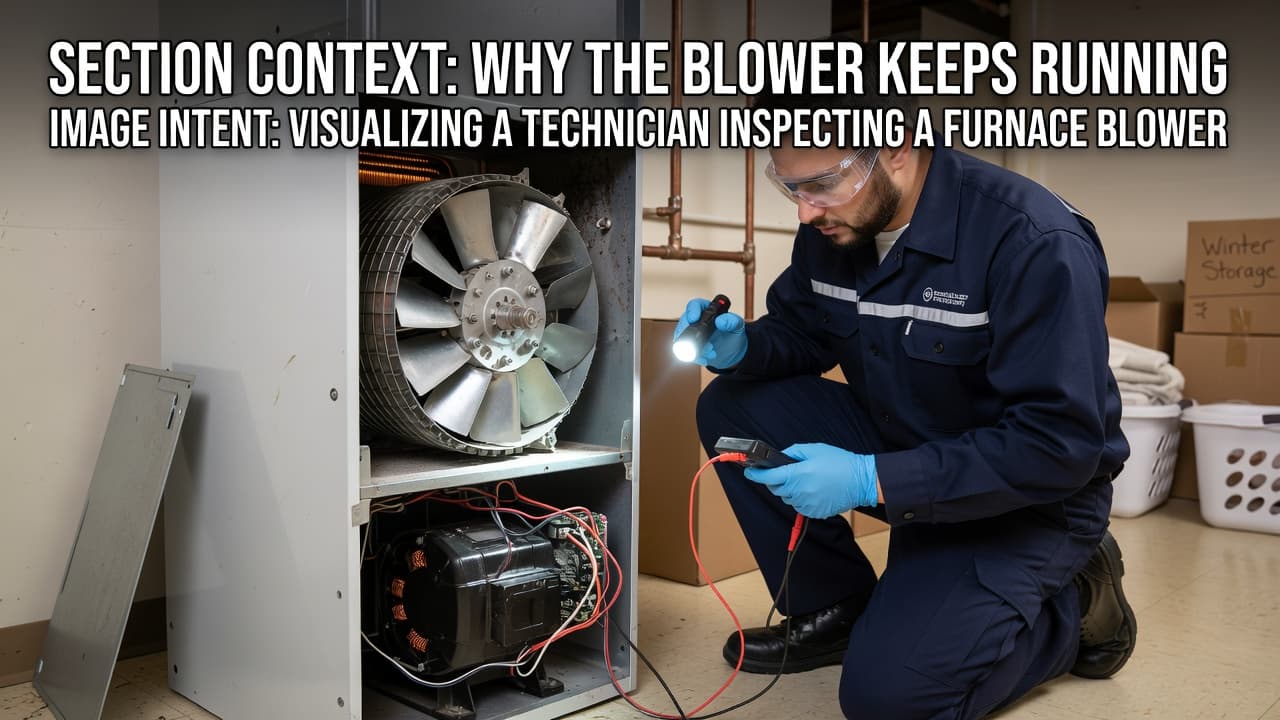
The air may feel lukewarm during this period. That is normal because the burners are off, yet the furnace cabinet still holds residual heat.
A short blower delay after the flame stops is part of normal furnace operation. A fan that runs for hours without a heating call is not.
In Escondido and throughout North County San Diego, homes often run heating on cool nights and air conditioning during warm afternoons. The same blower usually moves conditioned air for both systems. Therefore, a furnace blower issue can affect your A/C performance too.
Common Reasons a Furnace Fan Won’t Shut Off
If the blower keeps running long after the furnace cycle ends, start with the easy explanation. Then move toward the problems that require a trained technician.
The Thermostat Fan Is Set to “ON”
Most thermostats have a fan setting marked “AUTO” and “ON.” In AUTO mode, the fan runs only during a heating or cooling cycle, plus the brief cool-down period. In ON mode, it runs continuously.
Continuous circulation can help reduce hot and cold spots in some homes. Still, it uses electricity and can make a blower problem harder to spot. It is also important to consider that thermostat malfunctions can sometimes cause the fan to stay engaged even when the display indicates it should be off.
Check the thermostat before assuming the furnace has failed. Move the fan setting to AUTO, then wait several minutes. If the blower shuts down, the system is likely working as intended.
Some smart thermostats also allow scheduled fan circulation. Review the app settings if you use an Ecobee, Google Nest, Honeywell Home, or similar device. A programmed circulation schedule can run the fan for part of every hour.
A Dirty Air Filter Is Restricting Airflow
Your furnace needs a steady flow of return air. When a filter becomes packed with dust, pet hair, or construction debris, the blower can’t move enough air across the heat exchanger. Beyond mechanical strain, failing to change your filters regularly can lead to poor indoor air quality throughout your home.
As a result, the furnace can overheat. Its high-limit switch shuts off the burners, while the blower continues running to cool the equipment. You may notice short heating cycles, weak airflow, or air that feels hotter than usual before the flame cuts out.
Check the filter monthly during heavy heating or air conditioning use. Replace a disposable filter when it looks gray and loaded with debris. Also confirm that supply vents and return grilles aren’t blocked by furniture, rugs, or closed doors.
A restrictive filter with a high MERV rating can also cause problems if your system wasn’t designed for it. Use the filter type recommended by the furnace manufacturer or your HVAC technician.
The High-Limit Switch Is Stuck or Detects Overheating
The high-limit switch is a safety control inside the furnace. It monitors temperature near the heat exchanger. If temperatures climb too high, it stops the burners and tells the blower to run.
Sometimes the switch reacts to a real airflow issue. Other times, the switch itself fails and stays open. Either condition can leave you with a furnace blower that keeps running, even though the thermostat no longer calls for heat.
Don’t bypass or tape down a limit switch. That safety device helps prevent furnace damage and dangerous overheating. A technician should test the switch, inspect airflow, and identify why the system got too hot.
A Relay or Control Board Has Failed
The furnace control board coordinates the ignition sequence, burners, inducer, and blower motor. A relay on that board sends power to the blower. If the relay sticks closed, the blower may receive power nonstop.
Older furnaces may use a separate fan relay. Modern variable-speed furnaces can have electronic control boards and ECM blower modules. Either setup can fail due to electrical wear, moisture, pests, or a power surge.
A thermostat wire short can create similar symptoms. If the blower runs even after the thermostat is turned off, the control board or wiring becomes more likely. This repair requires electrical testing, not guesswork. For those needing professional HVAC services Escondido, local experts can test the controls safely and replace only the failed component.
The Blower Motor or Module Is Malfunctioning
A standard blower motor may run through a relay. A variable-speed motor uses an electronic module that controls its output. When that module fails, the blower can run at the wrong speed, refuse to shut down, or operate only intermittently. If you notice these symptoms, you might be looking at a blower motor repair or a deeper issue like ignition system failure within the unit.
Listen for warning signs such as scraping, humming, rattling, or a motor that starts and stops unpredictably. Weak airflow at several vents also deserves attention.
Because the blower supports both heating and cooling, a motor issue isn’t limited to winter. It can later show up as poor A/C airflow, frozen evaporator coils, or a need for air conditioning repair during a San Diego County heat wave.
Safe DIY Checks Before Calling for Furnace Service
Homeowners can rule out a few simple issues without opening the furnace or touching wiring. Before assuming you need a complex HVAC system inspection, start by turning the thermostat fan setting to AUTO and allowing several minutes for a normal blower delay. Performing these basic checks is a great way to maintain your equipment and can assist in lowering energy bills by ensuring your system runs efficiently.
Next, work through these basic checks:
- Replace a visibly dirty air filter with the correct size and type.
- Open closed supply vents and clear furniture away from return grilles.
- Confirm the thermostat is not following a fan schedule or circulation setting.
- Check for a tripped breaker if the furnace has acted erratically after a power outage.
- Look through the furnace sight glass, if your model has one, for a diagnostic light pattern. Use the code chart on the cabinet door, not internet guesses.
Avoid removing furnace panels while the power is on. Do not reset the furnace repeatedly, either. Repeated resets can hide an overheating problem and add stress to ignition components.
If the blower continues after the thermostat is off and the fan setting is AUTO, schedule professional HVAC service. A technician can check static pressure, temperature rise, safety switches, relays, and the blower motor circuit to diagnose the root cause of the issue.
Signs You Should Turn the Furnace Off
A constantly running fan is not always an emergency, but certain symptoms require a faster response to prevent further damage.
You should turn off the furnace at its service switch or circuit breaker if you smell electrical burning, see smoke, hear loud grinding, or notice the cabinet feels unusually hot. If you notice any of these signs, you should contact a professional for emergency furnace repair immediately.
Leave the home and call 911 or your gas utility right away if you smell natural gas. Do not use any switches, phones, lighters, or appliances while inside the building.
If your system is stuck in a cycle of repeated burner shutdowns, a blower that runs all night, or a furnace blowing cold air, you are likely wasting energy and putting unnecessary strain on your equipment. Addressing these issues with a prompt professional inspection usually costs less than waiting for a small control problem to damage the motor or the heat exchanger.
What a Technician Checks During a Blower Repair Visit
A NATE certified technician starts by confirming the thermostat setting and observing a full heating cycle. They check whether the burners shut down normally and measure the temperature difference between return and supply air.
Next, a licensed HVAC contractor will inspect the filter, blower wheel, motor, wiring, limit switch, capacitor where applicable, and control board. Electrical readings show whether the motor is receiving a constant command or running because its internal module has failed.
This process matters because several faults can create the same symptom. A proper diagnosis prevents unnecessary parts replacement and helps restore reliable heating. In the event that your current unit is beyond repair, your technician can provide professional advice regarding the furnace installation cost for a modern gas furnace replacement or discuss the benefits of a heat pump installation for your home in Vista, San Marcos, Carlsbad, Oceanside, Fallbrook, Poway, and nearby communities.
Final Thoughts
A furnace blower that runs briefly after the heat stops is typically a standard safety feature protecting your equipment. However, a fan that stays on indefinitely warrants attention, especially if the system experiences overheating, short cycling, or weak airflow.
Start by checking your thermostat settings and replacing the air filter. If these simple steps do not resolve the issue, it is time to let local heating specialists inspect your limit switches, wiring, motors, and control boards. For expert HVAC services Escondido residents trust to resolve these complications quickly, we are here to help.
If your furnace blower keeps running and you need a professional diagnosis or require same-day heating service to restore your home comfort, you can Book Online for prompt, reliable assistance.
Frequently Asked Questions
How long should a furnace blower run after heating stops?
Most furnaces run the blower for about 90 seconds to several minutes after the burners shut off. This moves leftover heat out of the heat exchanger. If the blower runs for 15 minutes or longer with no new heating cycle, check the thermostat fan setting and filter.
Can I turn off a blower that keeps running?
You can set the thermostat fan to AUTO and turn the thermostat to OFF. If the blower still runs and there are no danger signs, shut off power at the furnace service switch or breaker until a professional arrives for electric furnace repair. Do not shut the system down if you smell gas. Leave the home and call for emergency help instead.
Does a running furnace blower increase my electric bill?
Yes. The blower motor uses electricity whenever it runs. A variable-speed motor may use less power at low speed than an older permanent split capacitor motor, but unnecessary runtime still adds cost. Fixing the cause is an effective way of lowering energy bills and protects your HVAC system. Addressing these blower issues now also ensures your unit is ready for the cooling season, potentially preventing the need for more costly air conditioning repair later in the summer.