

Furnace Gas Valve Problems: When DIY Must Stop
My Guy is Proud to Be "Your Guy" for Your Home
When the thermostat calls for heat, your furnace can sound normal, then leave the house cold because the burners never light. Many furnace gas valve problems cause that pattern, but a dirty filter, weak flame sensor, blocked vent, or failed safety switch can look similar. Proper furnace repair starts by separating these lookalikes from a valve fault.
The gas valve controls fuel flow and serves as a safety valve. It isn’t a part to take apart, tap, or force open. Safe observation can guide furnace repair and show when professional service is needed. Stop before electrical or gas-side testing.
Key Takeaways
- Furnace gas valve problems can look like other faults. Dirty filters, flame sensors, blocked vents, safety switches, wiring, and control-board issues can all prevent ignition or cause short cycling.
- Start with safe, no-contact checks. Confirm the thermostat, breaker, filter, visible error code, supply registers, and return grilles before arranging furnace repair.
- Stop DIY troubleshooting before gas-side or live electrical work. Never bypass a safety switch, force or remove the valve, disconnect gas piping, or repeatedly reset a locked-out furnace.
- Power at the valve does not prove the valve is safe or functional. A technician must evaluate gas pressure, wiring, solenoids, burners, venting, and the full ignition sequence.
- Suspected gas leaks or combustion problems require immediate action. Leave the home, call emergency services or the gas utility from outside, and use a qualified technician for diagnosis and any gas valve replacement.
How a furnace gas valve works
The gas valve admits natural gas or propane to the burner assembly only after the furnace completes several safety checks. During furnace repair, a technician follows this sequence to distinguish an upstream lockout from an actual valve failure.
The thermostat calls for heat, the inducer clears combustion gases, and the pressure switch confirms airflow. These checks protect the combustion process before the control board starts ignition. The control board then sends a low-voltage signal to open the valve’s internal solenoids, fuel reaches the burners, and the flame sensor proves ignition.
The valve is one link in a safety chain
Many modern valves contain two safety solenoids and an internal pressure regulator. Together, the solenoids provide redundant fuel shutoff within the safety valve.
A problem anywhere earlier in the sequence can keep the valve closed, even when the valve itself is healthy. During furnace repair, that distinction helps a technician check upstream interlocks before condemning the valve.
For example, a clogged condensate drain can affect a pressure-switch circuit on a high-efficiency furnace. A tripped rollout switch or open high-limit switch can also stop the 24-volt signal before it reaches the gas valve.
Older pilot systems use different parts
During furnace repair, a technician first identifies whether the furnace uses a standing pilot light or electronic ignition. A standing-pilot furnace uses a different sequence from an electronic-ignition model. A thermocouple in the pilot flame creates a 20 to 30 millivolt signal that holds the pilot safety valve open.
A thermopile is larger and produces more power, often 300 to 750 millivolts. It can operate a millivolt gas valve and thermostat circuit. Neither part is common on a modern furnace with a hot-surface igniter, so identifying your ignition style matters before diagnosing the failure.
Common gas-valve failures and warning signs
Watch the furnace through its sight glass, if it has one, rather than removing panels while it runs. The order of events often gives an HVAC technician a better starting point than a general description of “no heat.”
A normal start ends with no flame
A hot-surface igniter may glow bright orange, followed by a click, but an ignition failure can leave the burners unlit. Possible causes include a closed fuel shutoff, safety valve issue, gas supply interruption, loose wiring, or a control-board fault. Furnace repair should confirm the cause before part replacement.
Repeated ignition attempts followed by a lockout are another warning sign. Don’t keep resetting the furnace to force more attempts. Repeated resets don’t repair the fault and can make the sequence harder to diagnose.
Short cycling doesn’t automatically mean a bad valve
A furnace that lights, runs briefly, and shuts down has a short cycling problem. A failing valve can cause inconsistent burner operation, but dirty filters, restricted return air, a dirty flame sensor, venting problems, and high-limit trips are more common causes.
This quick comparison helps separate observations from conclusions:
| What you notice | What it may indicate | Safe next step |
|---|---|---|
| Igniter glows but no burners light | Possible ignition failure, valve signal, or supply issue | Stop resets and schedule furnace repair diagnosis |
| Pilot light goes out or won’t stay lit | Thermocouple, thermopile, pilot flame, or safety valve issue | Leave the assembly alone; seek furnace repair if it repeats |
| Burners light, then stop within seconds | Flame sensor, venting issue, or limit trip | Check the filter and error code; seek furnace repair if it persists |
| Furnace runs briefly, then restarts or stops | Airflow restriction, limit trip, or control fault | Check the filter; schedule furnace repair if repeated |
| Gas odor or hissing sound | Possible gas leak | Leave immediately and call from outside |
| Yellow flame, soot, or sharp combustion odor | Possible combustion or venting problem | Stop using the furnace and seek prompt diagnosis |
A yellow, lazy burner flame, soot, or a sharp combustion odor also calls for prompt furnace repair. These symptoms need more than a replacement part guess.
Safe DIY checks before you touch anything
Homeowners can rule out simple causes before calling for furnace repair, without exposing themselves to gas or line-voltage hazards. Keep all furnace panels installed unless the owner’s manual gives a safe, routine instruction.
Start with the simple, no-contact checks
Confirm the thermostat settings: Heat should be selected, with a temperature above room temperature. Next, check that the furnace breaker is on and the filter isn’t packed with dust.
Look at the furnace display for a blinking diagnostic code, take a photo, and include it when requesting furnace repair. Also check that supply registers and return grilles aren’t blocked by furniture or rugs. If you can see the appliance shutoff handle without moving anything, don’t turn it unless you already know it was intentionally closed.
Never disconnect gas piping, remove the valve, bypass a safety valve or safety switch, jumper voltage to the valve, or spray lubricant into the burner area.
Multi-meter testing has a narrow boundary
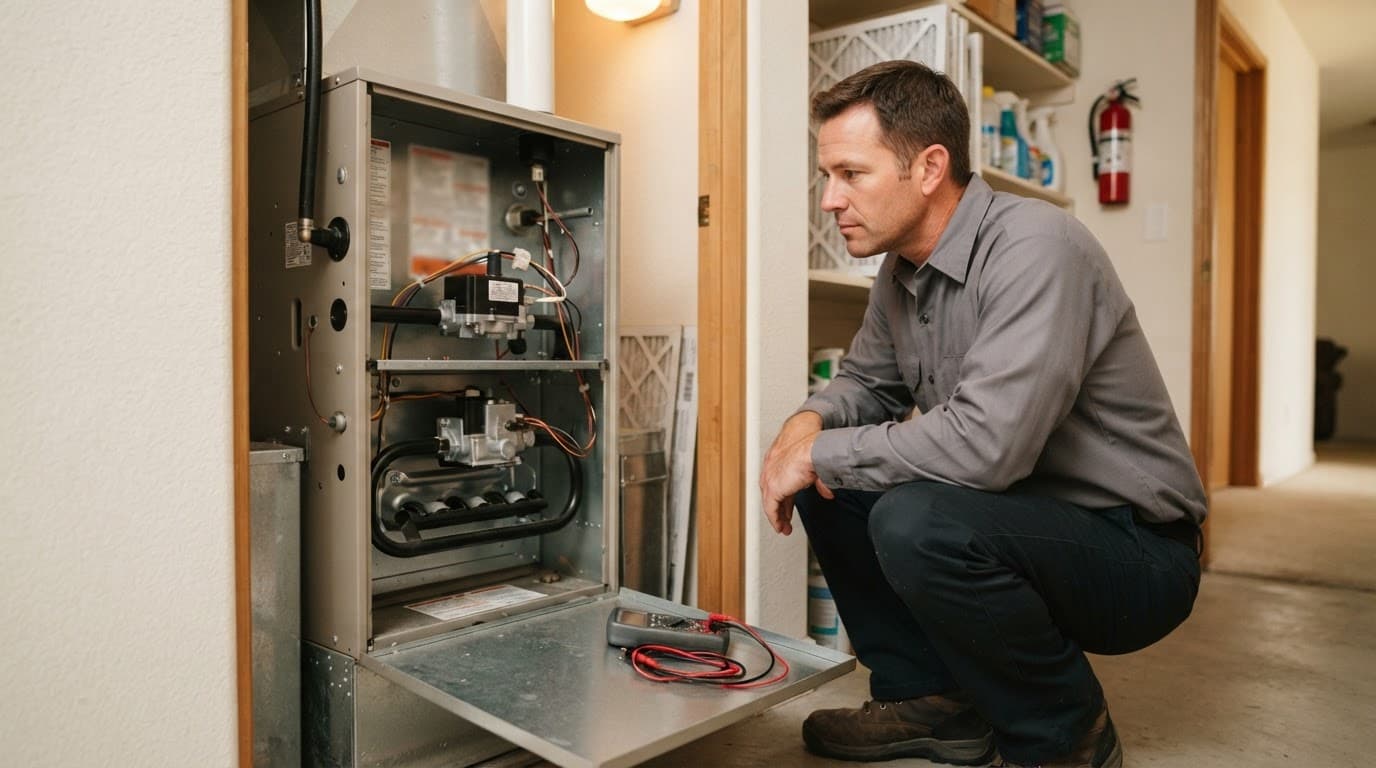
A multi-meter can confirm whether the valve receives power, but this diagnostic step is usually best left to furnace repair professionals. Only test low-voltage terminals when they are accessible without bypassing a door switch or touching exposed line-voltage wiring.
During a call for heat, a modern furnace should show about 24 VAC at the valve when the control system reaches the ignition stage. No voltage indicates a possible upstream voltage failure, such as an open limit switch or wiring problem, not proof of a valve fault. If the valve receives 24 volts but burners don’t light, stop troubleshooting.
A 24-volt reading shows that the control circuit called for gas. It does not prove that the valve, gas pressure, or burner system is safe to operate.
Turn off electrical power before changing meter settings. Never measure resistance or perform a continuity test on a live circuit; follow the manufacturer’s instructions. Some valve coils read between 10 and 50 ohms when de-energized, but the manufacturer’s specification decides whether that reading is acceptable. If these checks don’t identify the cause, stop and arrange furnace repair.
When DIY troubleshooting must stop
Gas appliances deserve a stricter boundary than many household repairs. Stop DIY furnace repair when a check involves fuel piping, defeating a safety valve, or working around live electrical parts. Call a trained technician for furnace repair instead.
Treat a suspected gas leak as an emergency
If you smell gas, hear a hissing sound, or feel dizzy or nauseated near the furnace, leave the home immediately. If you suspect a gas leak, don’t operate light switches, use a phone indoors, light a flame, start a vehicle nearby, or return to shut off the appliance.
Improper combustion or venting can allow carbon monoxide to build up, causing carbon monoxide poisoning. This concern relates to combustion or venting problems, not every no-heat call.
Call 911, the gas utility, or emergency services from outside the home. For an urgent no-heat issue without a gas odor, homeowners can arrange Escondido emergency HVAC service for prompt furnace repair.
Power at the valve, but no gas flow
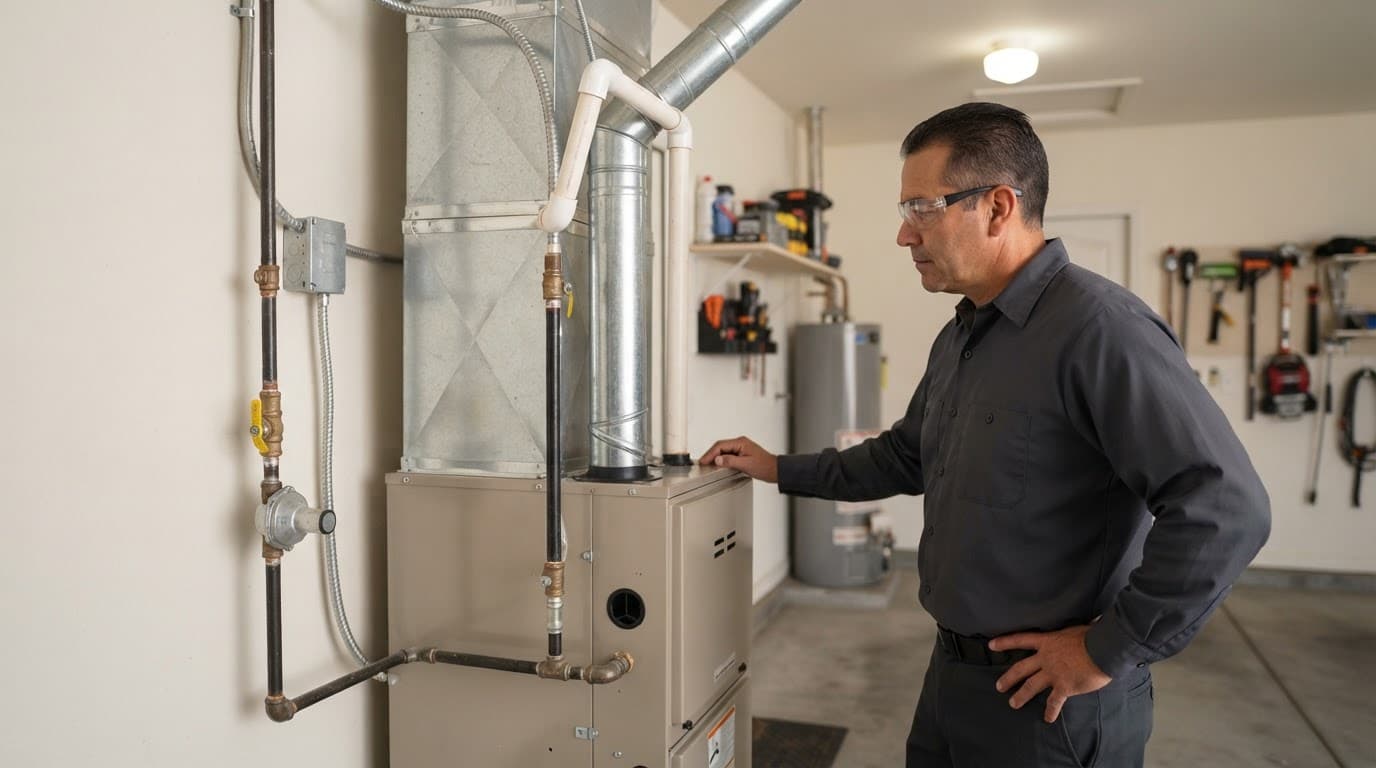
A valve that receives the correct signal may still stay closed because its solenoid coil has failed, its regulator has a problem, or gas pressure is out of range. Loose connectors and a restricted burner orifice can produce a similar result.
A furnace repair diagnosis must cover the full appliance, not just the valve. Gas valves are usually sealed and non-serviceable. When testing confirms a defective valve, a technician handling furnace repair may recommend gas valve replacement with a correctly matched part. Afterward, the technician completes this furnace repair by verifying gas type, inlet pressure, manifold pressure, ignition, burner flame, safety valve operation, and safety shutdown.
What professional gas valve replacement involves
A technician handling furnace repair should diagnose the entire ignition sequence before recommending gas valve replacement. That includes the control board, pressure-switch circuit, flame sensor, venting, wiring, gas type, and gas pressure. They should also verify inlet and manifold pressure, then confirm the manufacturer-approved part number.
Natural-gas systems often have inlet pressures in the 5 to 10.5 inches water-column range, but the approved setting comes from your furnace manufacturer. Honeywell, Emerson, Robertshaw, and other brands use model-specific valves. A look-alike from another brand or model can be unsafe if its gas type, pressure range, wiring, or safety valve requirements differ.
During furnace repair, the technician should test the approved safety valve and verify safe shutdown before returning the furnace to service.
Cost, age, and the rest of your system
Professional gas valve replacement commonly costs $300 to $800, depending on the furnace model, part availability, labor, and after-hours service. Most valves last roughly 10 to 20 years, though poor combustion conditions, restricted airflow, electrical faults, and missed preventive maintenance can shorten that span. A furnace repair estimate should account for the valve’s age and the condition of the rest of the system.
If your furnace is near the end of its expected life and has several repair needs, ask for clear furnace repair and replacement options. Homeowners can also schedule professional furnace repair in San Marcos when a no-heat issue needs a full diagnosis.
In many split systems, furnace repair also involves the indoor blower and ductwork shared with the A/C. Mention weak airflow during air conditioning service, and flag an intermittent heating issue during an AC repair visit.
A safer path to reliable heat
Gas-valve symptoms call for careful observation, not trial-and-error furnace repair. Check the thermostat, breaker, filter, and visible error code. Then stop if you find fuel flow concerns, exposed wiring, combustion issues, or a failed safety sequence.
Short cycling and repeated lockouts need diagnosis, not repeated resets. A professional furnace repair visit can test the safety valve and confirm whether replacement is needed, protecting your heating system and everyone at home.
If your system won’t ignite or keeps locking out, Book Online for professional furnace repair help.
FAQs about furnace gas valve problems
Can a broken furnace gas valve be repaired?
Most furnace gas valves are sealed components, so furnace repair usually means replacement rather than rebuilding. Internal repairs can alter fuel control and defeat the safety valve’s design. A qualified HVAC technician should handle furnace repair, install the exact approved replacement, and test the furnace afterward.
Why won’t a gas valve open when it has power?
Voltage proves the control board called for gas, but it doesn’t confirm the valve can open. An internal coil failure, faulty regulator, loose connection, incorrect gas pressure, or burner-side issue can still prevent ignition. Professional furnace repair testing identifies the failed part without guessing.
Does short cycling mean the gas valve is bad?
No. Short cycling often starts with airflow restrictions, a dirty flame sensor, venting trouble, or an overheating furnace. However, intermittent valve operation can also cause burner dropouts. Call for furnace repair if this continues, and record the timing, shutdown pattern, and error codes for the technician.