

Furnace Igniter Not Lighting? Fix the Glow-No-Flame Problem
My Guy is Proud to Be "Your Guy" for Your Home
A glowing igniter can make a furnace problem feel especially confusing. The furnace looks ready to start, yet the burners never catch and the house stays cold.
When a furnace igniter not lighting issue shows up as a glow without flames, the igniter may not be the failed part. Restricted gas flow, blocked burner openings, safety switches, or an electrical fault can stop the furnace before flames appear.
Start with safe checks, then use the furnace’s symptoms to narrow down the cause.
Key Takeaways
- A glowing igniter proves it is receiving power, but it does not prove gas reached the burners or that combustion began.
- Check the thermostat, power, air filter, gas supply, diagnostic codes, and burner sequence before replacing the igniter.
- If burners light and shut off within seconds, inspect the flame sensor rather than assuming the igniter failed.
- Never bypass pressure switches or test live gas components; gas smells, burner rollout, repeated lockouts, and venting faults require professional repair.
- Replace an igniter only with the exact specified part, and follow safe power-off procedures when testing or installing it.
What Should Happen During a Furnace Ignition Cycle
During a normal heating cycle, the ignition sequence follows a fixed order. First, the thermostat calls for heat. Next, the draft inducer motor starts and clears combustion gases from the heat exchanger.
A pressure switch confirms the draft inducer is moving air. Then, the hot surface ignitor glows bright orange, or a spark ignitor begins clicking. The ignitor element may be made from silicon carbide or silicon nitride. The control board opens the gas valve, gas reaches the gas burners, and the flame sensor confirms a stable flame.
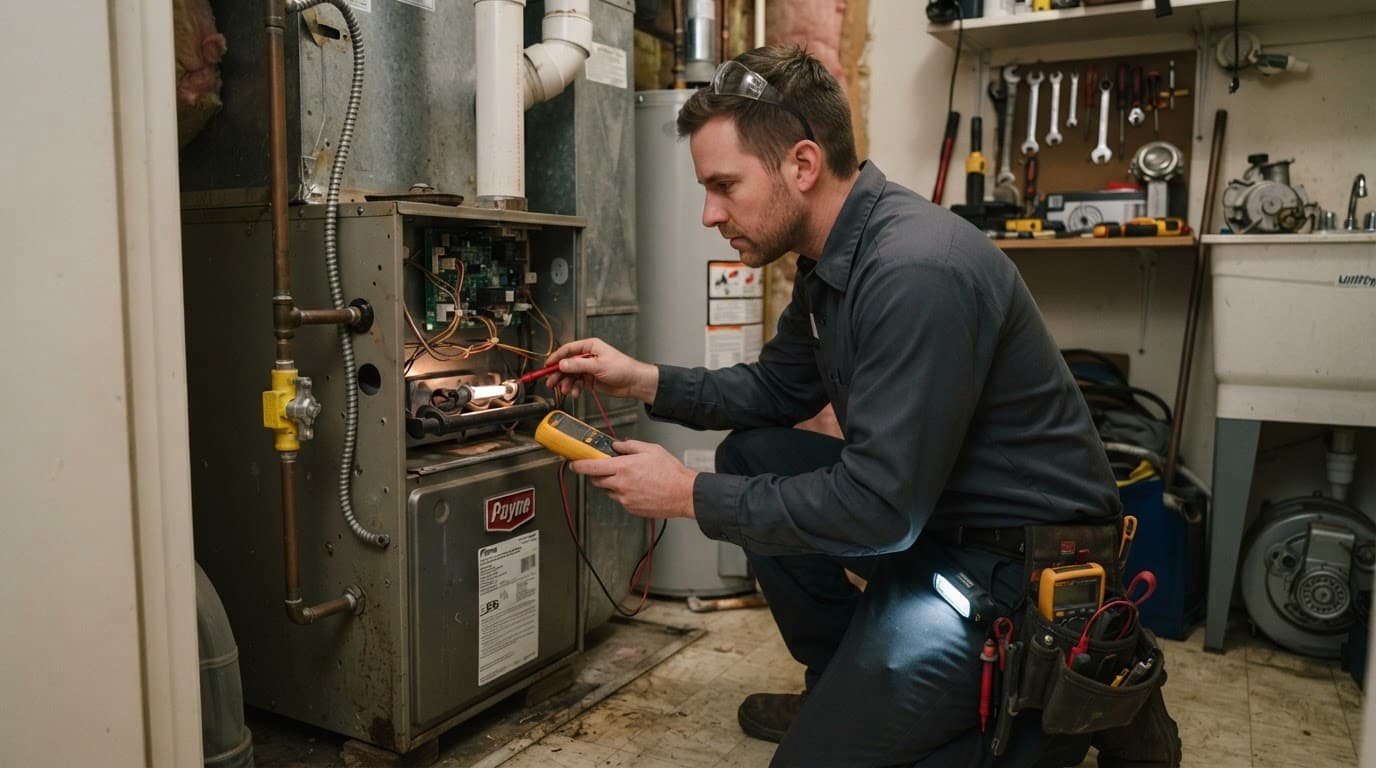
If the igniter glows but combustion doesn’t begin, the furnace has usually passed its early safety checks. Attention then shifts to fuel delivery, the burner assembly, or the furnace controls.
A furnace that lights briefly and shuts off after two to five seconds points somewhere else. In that case, a dirty flame sensor is the likely issue.
A glowing igniter proves it is receiving power. It doesn’t prove gas reached the burner ports or combustion began.
Safe Checks Before You Remove a Furnace Panel
Turn the thermostat to “heat” and set it at least five degrees above room temperature. Confirm the fan setting is on “auto,” not “on.” A blower motor running continuously can circulate cool air between calls for heat.
Then check the basics:
- Confirm the furnace service switch is on and the circuit breaker has not tripped. Reset a tripped breaker once. If it trips again, leave it off and call for service.
- Inspect the air filter. A packed filter can overheat the furnace and trigger a limit switch, even though it usually won’t stop the burners from lighting initially.
- Check the furnace’s gas supply shutoff. The handle should be parallel with the pipe when it is open.
- Look through the burner compartment’s viewing window, if your furnace has one. Watch the sequence without touching internal parts.
- Read the LED diagnostic codes inside the blower-door panel. Flash codes vary by model, even between furnaces from the same manufacturer.
Don’t use a match or lighter to test for gas. Also, don’t repeatedly reset the furnace after failed ignition attempts. Many units enter a safety lockout after several tries and require a power reset before another heating cycle.
If a carbon monoxide alarm sounds, leave the home and seek help from outside rather than troubleshooting indoors.
If you smell gas, leave the home, avoid switches and open flames, then call the gas utility or emergency responders from a safe location.
When the Furnace Igniter Glows but Burners Won’t Light
The timing of the failure matters more than the glow itself. These practical troubleshooting tips help separate a gas delivery issue from a flame-proving issue.
| What you see or hear | Likely area to inspect |
|---|---|
| Igniter glows, then shuts off with no flame | Gas supply, gas valve, burner ports, control board |
| Burners light, then go out within seconds | Dirty or failing flame sensor |
| Repeated clicking with no visible spark | Spark ignitor, electrode gap, ignition cable, control board |
| Blower runs but air stays cool | Thermostat fan setting, ignition lockout, limit switch, or failed heat cycle |
| Inducer starts but igniter never glows | Pressure switch circuit, condensate drain, igniter, or control board |
A closed gas valve is an easy check, but don’t force a valve that feels stuck. If other gas appliances also fail, the issue may be the home’s gas supply rather than the furnace.
Blocked ports in the gas burners or a dirty crossover channel can stop flame from spreading across the burner rack. Dust, rust flakes, and insect debris are common in equipment that sat unused through a mild Southern California winter. Delayed ignition, a small boom, or flame rollout from the burner area requires professional attention.
Condensate and pressure-switch problems can look misleading
High-efficiency furnaces create condensate during operation. A clogged drain trap, blocked tubing, or water in the pressure-switch line can prevent the draft inducer from establishing proper vent pressure. That can interrupt a heating cycle or create an intermittent lockout.
With power off, check for obvious loose hoses, kinks, or standing water around the condensate drain. Don’t bypass a pressure switch or jump its wires. That switch protects against unsafe venting conditions.
For a persistent furnace igniter not lighting problem, a technician can safely test pressure and venting. They can also check voltage at the valve and control board outputs. Those tests involve live electrical circuits and combustion components.
Clean the flame sensor Only When the Furnace Lights First
A flame sensor usually does not prevent first ignition. It verifies the flame after the burners light, and the furnace shuts down within seconds if it cannot detect that flame.
To clean it safely, turn off electrical power at the service switch or breaker. Remove the furnace panel and find the thin metal rod near the burners, usually held by one screw with a single wire attached.
Gently remove the sensor, then polish the metal rod with a clean, fine abrasive pad or fine-grit emery cloth. Wipe away residue with a dry cloth, reinstall it, and restore power. Avoid sanding the ceramic insulator, bending the sensor, or bypassing the furnace’s safety logic.
If the burners still shut down quickly after cleaning, the sensor may have failed, or the furnace may have a grounding or control board fault. That calls for professional HVAC diagnosis.
Testing and Replacing a Hot Surface Ignitor
A hot surface ignitor is fragile. Silicon carbide models often have a rough, dark gray appearance, while silicon nitride ignitors are typically stronger and more durable. Both can crack, develop an open circuit, or weaken with age.
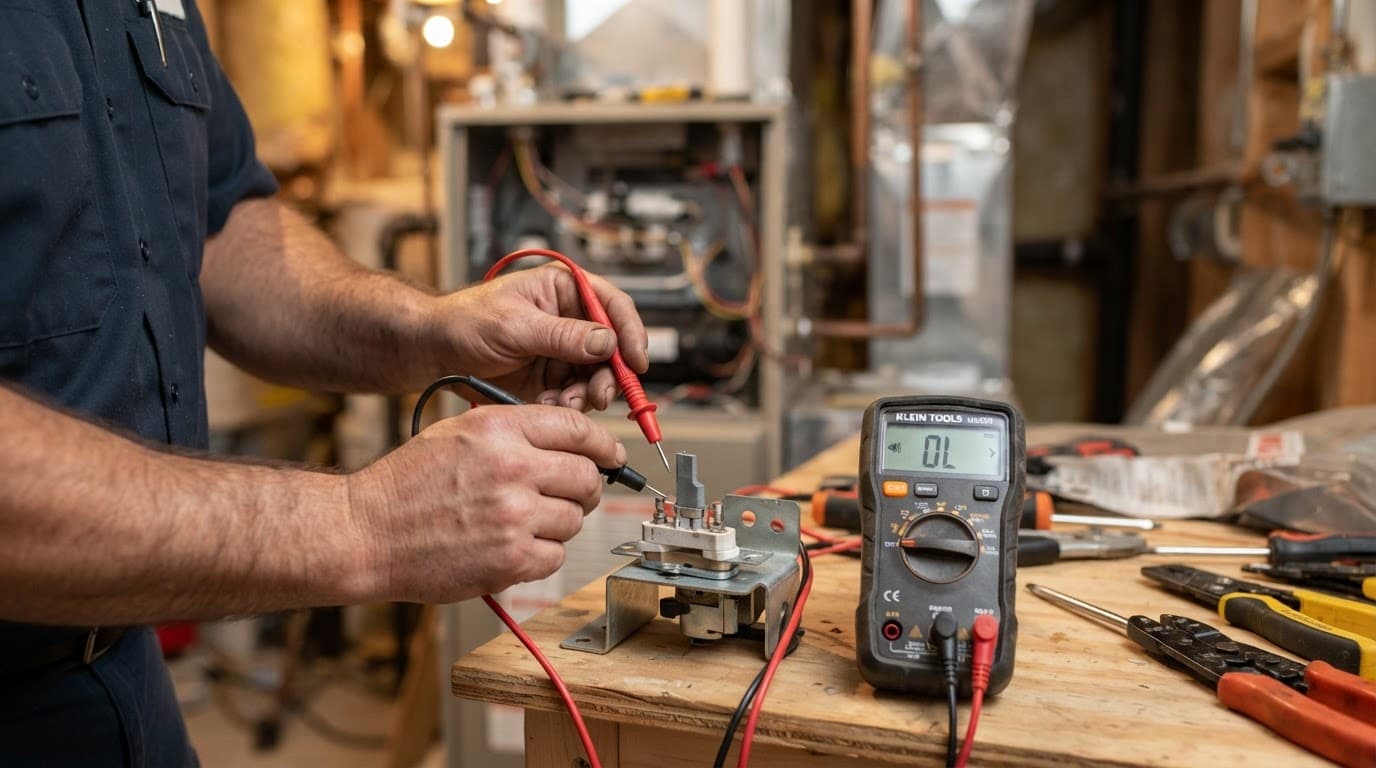
Turn off power before testing. Disconnect the ignitor plug, then use a standard multimeter set to resistance, marked with the omega symbol. Touch one probe to each ignitor terminal, not the glowing element itself.
Many silicon carbide ignitors measure roughly 40 to 90 ohms. Silicon nitride models often read closer to 10 to 20 ohms. However, the correct range depends on the exact part number, so the furnace wiring diagram or replacement-part specifications are the final reference. For silicon nitride, check the exact model’s resistance range before judging the reading.
Material comparison: silicon carbide is generally more fragile, while silicon nitride is usually more durable.
An “OL” reading usually means the ignitor is open and needs replacement. A visible crack also means replacement. Yet if the ignitor glows normally, don’t replace it before checking why gas is not reaching the burners.
DIY replacement can be safe when you can match the exact part, shut off power, and access the ignitor without disturbing gas components. Use OEM parts and verify the exact part number, because not every ignitor is interchangeable. A silicon carbide replacement must match the specified resistance range, while a silicon nitride replacement must match the furnace specification. Hold the new ignitor by its ceramic base. Skin oils can create hot spots on some ignitor surfaces, so avoid touching the element.
When to Call for Furnace Repair
Call for professional heating repair if you have a gas smell, repeated ignition lockouts, burner rollout, scorch marks, damaged wires, or a gas valve that does not open. A qualified professional should also handle failed pressure switches, venting faults, furnace electronics diagnostics, and live-voltage testing.
For homeowners who need expert furnace repair in Escondido, an HVAC technician can identify the failed part without guesswork. They can also verify safe combustion and carbon monoxide levels. San Diego HVAC services support year-round comfort because the same heating system may share components with air conditioning equipment.
Preventive care, including air filter changes and a preseason inspection, can help prevent failure and reduce avoidable breakdowns. Keep the furnace area clear and schedule service before the first cold stretch. Regular maintenance can identify airflow or ignition problems before they cause short cycling. AC repair and A/C maintenance matter in summer, but a complete HVAC visit should also check your furnace before winter.
Keep the Heat Safe and Reliable
A furnace that glows without lighting its burners has reached the ignition stage, but it still needs fuel flow and flame confirmation to heat your home. Start with power, filter, thermostat, and fuel-supply checks. Then watch whether the burners never light or ignite briefly before shutting down.
Avoid bypassing safety switches or testing live gas components yourself. A correct diagnosis protects both your furnace and your home.
If the furnace remains locked out or the burners won’t light, Book Online for dependable heating help.
Frequently Asked Questions
Why does my furnace click repeatedly without starting?
Repeated clicking often means a spark ignitor is trying to light the furnace. A dirty or damaged electrode, poor positioning, faulty ignition cable, or failing ignition module can prevent a flame.
Are silicon carbide and silicon nitride ignitors interchangeable?
Silicon carbide ignitors are often more brittle, while silicon nitride ignitors typically withstand repeated heating better. Their electrical requirements and mounting details can also differ. Choose the exact replacement specified for your furnace, whether it uses silicon carbide or silicon nitride.
Why is my furnace blowing cold air while the blower runs?
The thermostat fan may be set to “on,” so the blower runs continuously. Cold air can also follow a failed ignition attempt, a safety lockout, or an overheating limit switch caused by a clogged air filter.
Can a dirty filter stop a furnace from igniting?
A dirty filter usually does not stop the first ignition attempt. However, it can restrict airflow, overheat the furnace, and cause the burners to shut down during operation.
Does an older furnace with a pilot light have an ignitor?
Many older furnaces use a standing pilot light instead of an ignitor. If the pilot won’t stay lit, the issue may involve the thermocouple, pilot assembly, or gas supply.