

Furnace Pressure Switch Problems: Homeowner Checks
My Guy is Proud to Be "Your Guy" for Your Home
When a furnace starts, then shuts off before the burners light, its pressure switch may be stopping an unsafe ignition cycle. This fault can interrupt ignition before the burners light.
A pressure switch stuck open can be caused by a blocked vent, trapped water, damaged tubing, or a weak inducer motor. The small round switch is part of a larger draft system, so an open switch is a failed safety check, not proof that the switch itself is defective. A few safe checks can narrow down the cause, but don’t bypass this safety device or guess at a replacement.
Key Takeaways
- A pressure switch stuck open stops the furnace before ignition as a safety measure; it does not automatically mean the switch itself has failed.
- Common causes include blocked intake or exhaust vents, condensate drainage problems, damaged or water-filled tubing, and a weak inducer motor.
- Homeowners should limit troubleshooting to power-off visual checks of the filter, vent openings, tubing, condensate area, and access doors. Never bypass or jumper the pressure switch.
- If the fault returns, the furnace locks out, the inducer will not start, or gas or carbon monoxide is suspected, stop resetting the system and call a qualified HVAC technician for proper draft and electrical testing.
How furnace pressure switch problems interrupt ignition
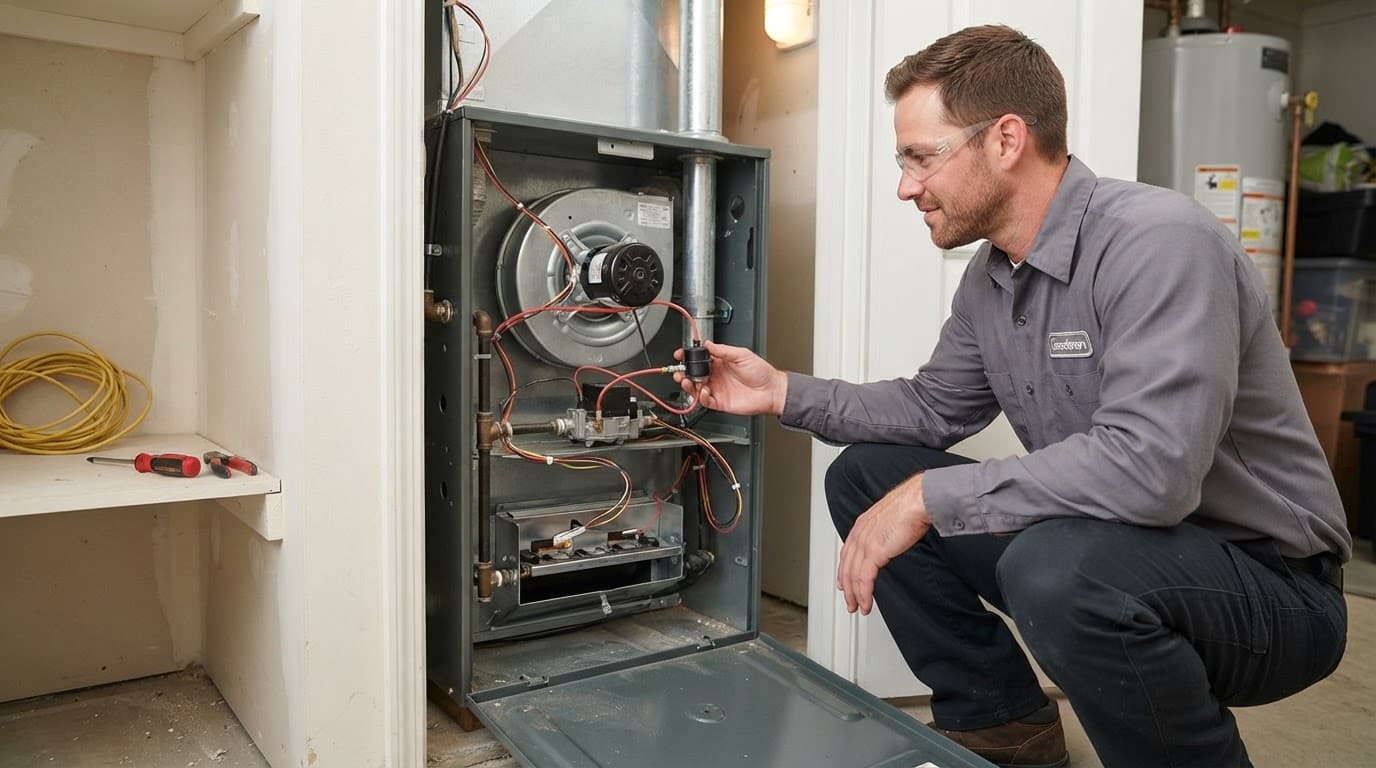
A furnace pressure switch is a normally open safety device. When the thermostat calls for heat, the control board begins the startup sequence by starting the inducer motor. This motor pulls combustion air through the heat exchanger and moves flue gases toward the exhaust vent.
As the inducer creates the required draft pressure, it produces negative pressure that closes the switch’s electrical circuit. After a brief preignition period, the control board authorizes the igniter and gas valve. If the switch stays open, the furnace stops the ignition sequence.
The normal startup sequence
A healthy heating cycle follows a clear order:
- The thermostat requests heat.
- The inducer starts.
- The switch closes.
- The igniter warms and the gas valve opens.
- The burners light, then the indoor blower starts.
A pressure switch stuck open interrupts this sequence before ignition. It doesn’t automatically mean the switch itself has failed.
A pressure-switch message identifies a failed safety check. It doesn’t identify the part that caused the failed check.
Signs you can see and hear
Many homeowners notice the inducer start with a low whirring sound, followed by a shutdown before the burners ignite. If the furnace reports pressure switch stuck open again, it confirms that the safety check wasn’t completed.
The furnace may repeat that attempt several times before entering lockout. Repeated failed attempts are short cycling, not a completed cycle that shuts down normally.
Other signs include a blinking error code on the furnace display, no warm air at the registers, or a furnace that runs only briefly. If burners light and then go out within seconds, a flame sensor may be the issue instead.
Common causes behind a pressure switch fault
Most furnace pressure switch problems begin with a draft or drainage restriction. The switch only responds to pressure, so it cannot tell the control board why the draft is weak. A pressure switch stuck open indicates insufficient draft pressure, but it doesn’t identify the failed component.
Check vent terminations and condensate drainage
Look at the outdoor intake and exhaust vent openings. Leaves, dirt, insect nests, landscaping debris, and damaged screens can restrict airflow and increase the inducer motor’s workload. Do not insert tools into the flue pipe or remove vent sections yourself.
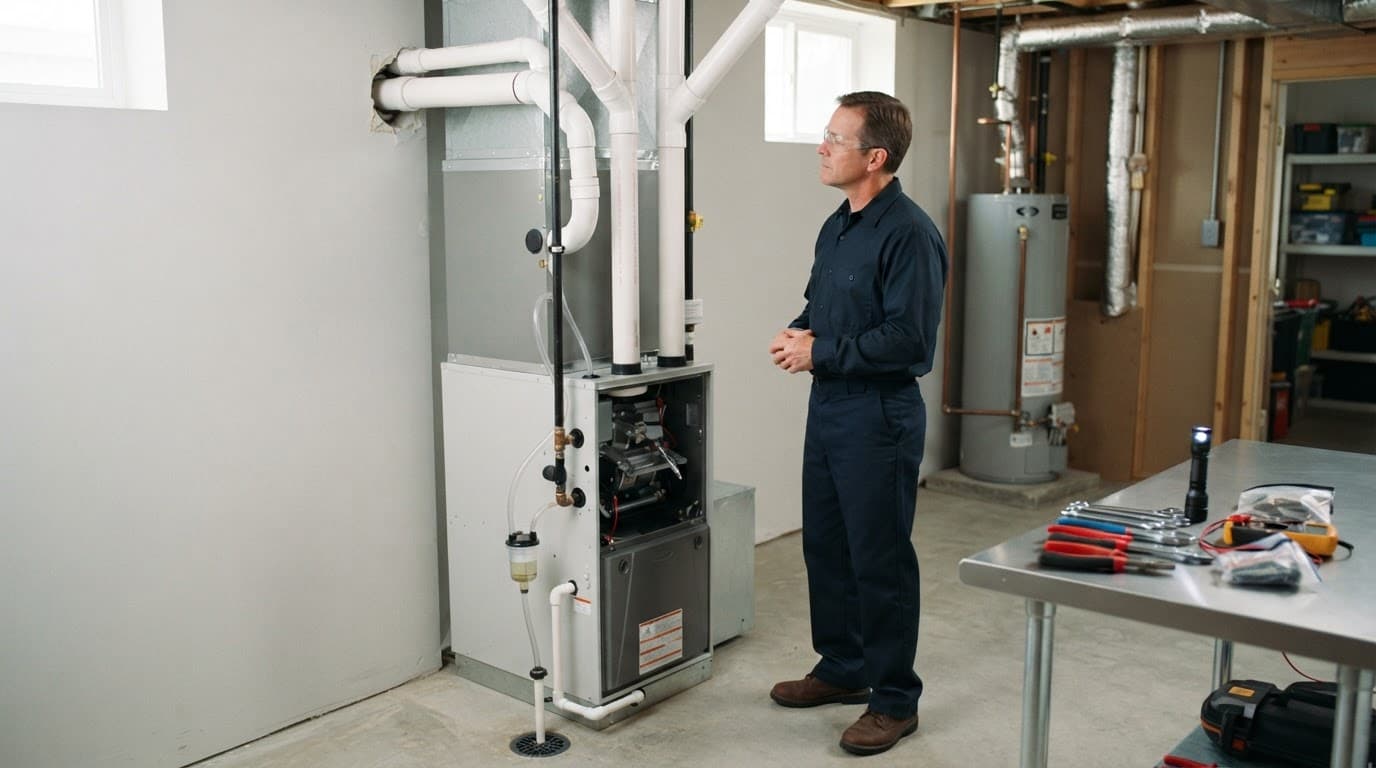
Most high-efficiency furnaces use PVC intake pipes and separate vent pipes for exhaust. They also produce condensate during operation. A blocked condensate drain or trap can send water toward the pressure tubing, where it may interfere with the draft signal.
Inspect tubing and the inducer motor
Small sections of rubber tubing connect the pressure switch to the inducer housing or collector box. Cracks, loose connections, pinches, or water inside the tubing can prevent the switch from closing.
The inducer motor also needs to produce enough draft. A slow motor, worn bearings, damaged inducer wheel, or blocked pressure port can trigger the same error code as a failed switch. This is why buying a replacement switch before confirming the cause is often a costly guess.
Safe DIY checks before calling for furnace service
Homeowners can inspect a few basic items without opening electrical compartments. First, turn off the furnace at its service switch and circuit breaker. Let the equipment cool before removing the access panel.
When a furnace pressure switch triggers a pressure switch stuck open message, limit the following inspection to visual checks.
Start with visible air flow and drainage issues
Use this short DIY inspection list:
- Check the air filter. A severely clogged filter can strain the system and contribute to heating problems, even though it is rarely the only cause of a pressure-switch code.
- Inspect the exhaust vent and intake openings from the ground. Remove loose leaves or debris around the opening, but don’t reach inside.
- Look for sagging, split, disconnected, or water-filled pressure tubing. Take a photo before touching anything so you can restore the setup correctly.
- Check the visible condensate drain area for standing water, overflow, or a blocked drain tube. Do not pour chemical drain cleaners into furnace components.
- Reinstall every access door firmly. Many furnaces will not run when a door switch remains open.
Afterward, restore power once and observe the startup cycle. If the same error code returns, stop resetting the furnace.
Know when to leave the repair to an HVAC technician
Do not jumper the pressure switch terminals, apply mouth suction to the tubing, or reach into or disassemble the flue pipe. If a fault code returns, stop resetting the furnace. The switch helps keep combustion gases where they belong.
Call for service if the inducer motor will not start, the vent system needs disassembly, water keeps returning to the condensate area, or the furnace repeatedly locks out. If you smell gas or a carbon monoxide alarm sounds, leave the home and call the gas utility or emergency services.
For recurring lockouts, call an HVAC technician and arrange heating repair in San Marcos with a qualified local provider instead of risking a bypass.
Testing a furnace pressure switch correctly
Live electrical testing and draft measurements belong to a trained HVAC technician. Still, knowing what these tests show helps you understand a diagnosis involving a pressure switch stuck open and avoid paying for an unnecessary part.
A multimeter checks the switch contacts
With power off, a technician disconnects and labels the pressure-switch wires. Because the switch is normally open, a meter should show an open circuit or “OL” before the inducer motor creates draft.
When the inducer runs and pressure reaches the switch rating, the contacts should close. A continuity test confirms contact behavior, but it doesn’t establish adequate draft. The switch may stay open because the vent, drain, tubing, or inducer can’t create enough pressure.
A manometer measures actual draft pressure
A manometer measures pressure in inches of water column. The technician connects a manometer to the proper pressure port, often with a tee in the tubing, then compares the live reading with the rating printed on the switch.
For example, a switch labeled “-0.70 in. wc” needs at least that level of negative pressure to close. A lower reading points toward an inducer, venting, or condensate issue. If the manometer reading meets the switch rating but the switch stays open, the technician checks the tubing, pressure port, wiring, and switch itself. A correct pressure result lets the technician continue the ignition diagnosis, but it doesn’t independently test the gas valve.
Read furnace error codes without guessing
A flashing LED can show an error code, but it only makes sense when matched to your furnace’s exact documentation. Use the model-specific troubleshooting guide inside the furnace door or installation manual, since it accounts for the control board and model version.
| Furnace brand family | What the pressure-related code may indicate |
|---|---|
| Carrier | Code 31 often relates to a pressure or draft safeguard issue. Code 23 on some models indicates the pressure switch did not open. |
| Trane and American Standard | Diagnostic flashes vary by model, so confirm the chart inside the cabinet. |
| Goodman and Amana | The board chart may distinguish between a pressure switch stuck open and a switch stuck closed. |
| Lennox, Rheem, and Ruud | LED or display messages depend on the exact model and board version. |
Write down the brand, model number, fault code, and sequence of startup sounds before calling. That information gives an HVAC service technician a better starting point.
Repair costs and maintenance that prevent repeat failures
A common replacement furnace pressure switch costs $20 to $75, depending on the furnace model. Single-stage and two-stage systems may use different configurations. Match the OEM part number instead of choosing a replacement switch by appearance, since a universal pressure switch may not fit correctly.
Professional repair costs also include diagnosis and labor. A recurring pressure switch stuck open condition needs diagnosis, not repeated part replacement. A restricted vent, blocked condensate drain, or failing inducer motor can make the final repair cost more than the switch alone.
Keep the draft system clean
Annual heating maintenance gives a technician time to inspect the inducer, tubing, and pressure ports. They should also check the vent pipes, flue pipe, exhaust vent, and condensate drain before a cold night exposes a problem. Replace filters on schedule and keep outdoor vent openings clear.
Routine care should cover the full comfort system. Your furnace and air conditioning equipment use different operating cycles. Furnace care supports a reliable heating cycle, while both systems need proper airflow and timely service. If your A/C also has recurring drainage issues, schedule AC repair in Escondido before water damage or shutdowns follow.
A safe restart begins with proper air flow
A furnace pressure switch error calls for a visual inspection of venting, tubing, drainage, and air movement before replacing parts. The safest homeowner checks are visual, simple, and performed with power off.
When the code keeps returning or the inducer cannot establish draft, professional testing protects your furnace and your household. Use Book Online to schedule a heating visit and get the actual cause fixed.
Frequently Asked Questions
Can a clogged condensate drain cause a furnace pressure switch stuck open condition?
Yes. On a high-efficiency furnace, a blocked drain can let condensate back up into the collector area or pressure tubing. That water can disrupt the draft signal and keep the switch open.
Why does the inducer motor affect the pressure switch?
The inducer motor creates the negative pressure that closes the switch. If it runs slowly, has a damaged wheel, or can’t move air through the vent system, the furnace won’t proceed to ignition.
Should I replace a pressure switch after seeing one fault code?
No. A single code can result from a blocked vent, loose tubing, a drain issue, or weak inducer performance. Replace the switch only after proper diagnosis confirms it has failed.