

Heat Pump Defrost Cycle Explained for San Diego Homes
My Guy is Proud to Be "Your Guy" for Your Home
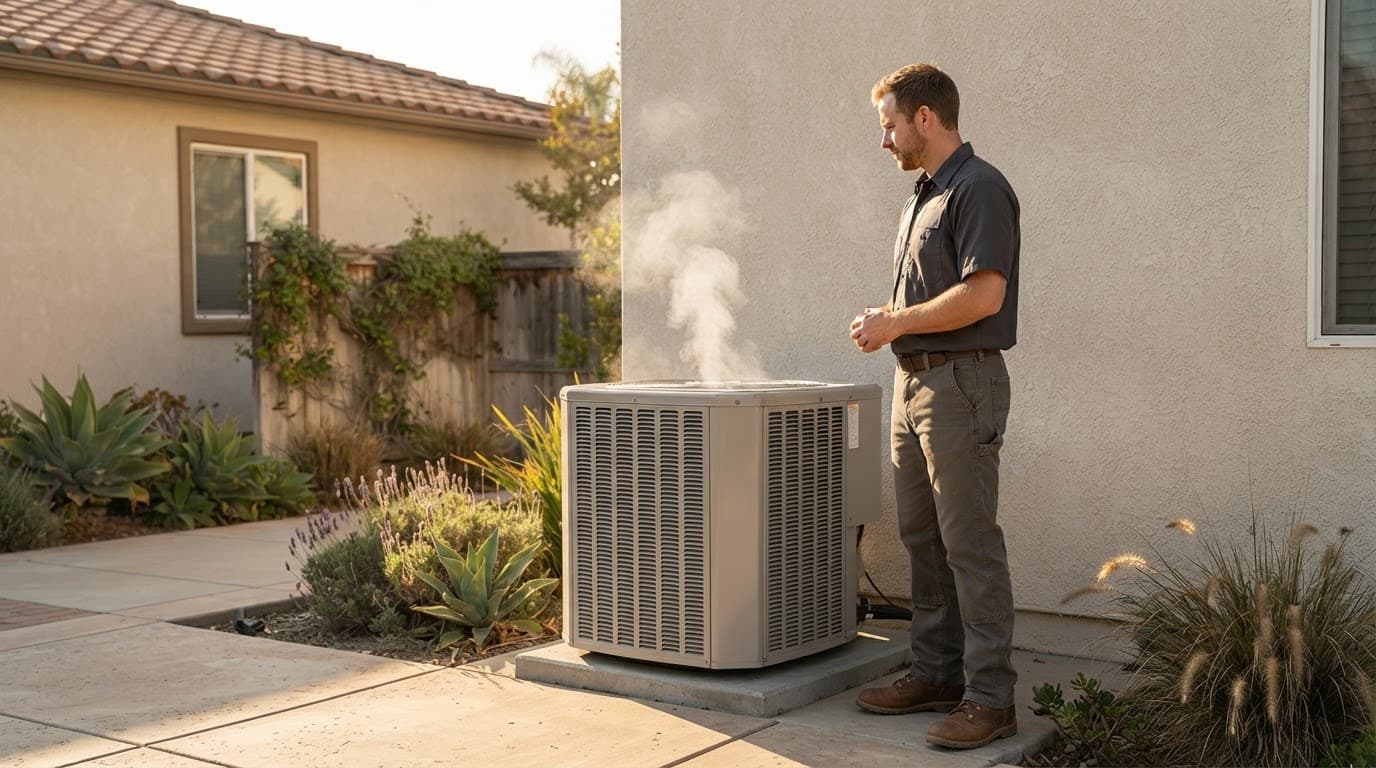
White vapor rising from your outdoor unit on a chilly morning can look alarming. In most cases, a heat pump defrost cycle is doing exactly what it should do.
Your system may pause heating and make a whooshing sound. In San Diego, it may briefly send cooler air through the vents while clearing frost in defrost mode. That behavior is usually normal, not an immediate sign of a breakdown. Knowing the difference can prevent an unnecessary service call or help you catch a repair early.
Key Takeaways
- A heat pump defrost cycle is a normal process that melts frost from the outdoor coil, even when San Diego temperatures remain above freezing.
- Brief vapor, dripping water, a stopped outdoor fan, and cooler indoor air can occur during a typical 5- to 15-minute defrost cycle.
- Repeated cycles within minutes, solid ice that remains after defrost, or backup heat that runs too often may indicate an airflow, sensor, refrigerant, control, or fan problem.
- Homeowners can replace dirty filters and clear debris around the unit, but should never chip ice, pour hot water on the coil, or test refrigerant and electrical components themselves.
- Turn off heating and request professional HVAC service if the system stays in defrost mode, remains iced over, or fails to restore normal heating.
How a Heat Pump Defrost Cycle Removes Frost
A heat pump gathers thermal energy from outdoor air, even when that air feels cold. In heating mode, the outdoor coil absorbs that energy. Refrigerant carries it indoors to the heat exchanger, which releases it inside your home.
However, the outdoor coil can become colder than the surrounding air. Moisture then condenses on its surface and freezes, causing frost buildup that limits airflow and makes the system work harder.
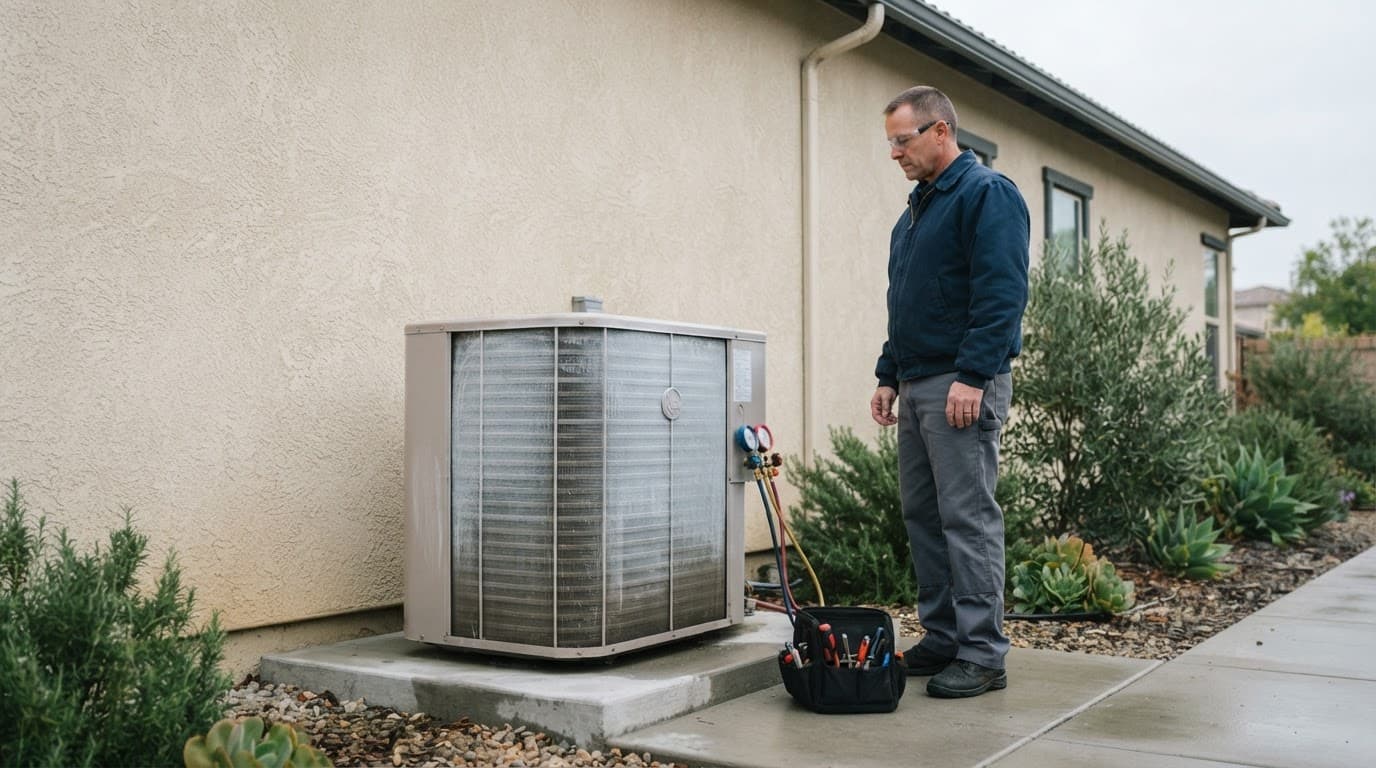
Frost can form even when temperatures stay above freezing
The temperature on the coil, not the temperature shown by your weather app, determines whether frost forms. On a damp 40-degree evening, the coil surface can still fall below 32 degrees.
Coastal fog, overnight humidity, and cool inland mornings can all create these conditions. That’s why a heat pump in San Diego can defrost even though the region rarely has hard freezes.
What the system does during defrost mode
When the defrost control detects the right conditions, the system enters defrost mode and temporarily shifts the reversing valve. This changes refrigerant flow, sending hot refrigerant through the outdoor coil to melt frost and ice.
The outdoor fan usually stops during this process. Meanwhile, the indoor air handler may activate auxiliary heat, often electric strip heat, to reduce the amount of cool air felt at the registers. After the outdoor coil warms enough, the heat pump defrost cycle ends and normal heating resumes.
Most cycles last about 5 to 15 minutes. Water may drip beneath the outdoor unit afterward, which is expected.
Why a Heat Pump May Defrost in Mild San Diego Weather
Cold weather is only part of the story. Ambient temperature alone doesn’t determine when defrost begins. Moisture levels, run time, airflow, and coil temperature also matter.
A foggy night in Carlsbad can create high relative humidity and leave moisture on an outdoor coil. If the coil stays cold during a long run, frost buildup may trigger a morning cycle. Inland communities such as Escondido and Poway may have cooler, damp mornings, but actual defrosting depends on coil conditions.
Timed controls and demand defrost work differently
Older heat pumps often use a timer mechanism and a defrost temperature sensor. After a set amount of compressor run time, the control checks whether the coil is cold enough for defrosting.
Newer demand defrost systems monitor coil conditions more closely. They initiate a cycle when frost is likely present instead of following a fixed schedule alone. This approach can reduce unnecessary cycling during mild weather.
A healthy unit should not enter defrost every few minutes. Repeated cycles that close together are not normal. Some systems limit starts to roughly 30 minutes apart, but that interval isn’t universal. Exact timing depends on the equipment model and its controls.
Normal Defrost Signs vs. Symptoms That Need HVAC Service
A short defrost event can seem dramatic, especially when you are standing near the outdoor unit. The sounds and vapor usually mean the system has entered defrost mode through normal refrigerant movement.
Signs your heat pump is operating normally
You may hear a click from the control board or a brief whoosh as the reversing valve changes position. The outdoor fan can stop, and a white cloud may rise as warm refrigerant melts frost from the outdoor coil.
Indoor air may feel less warm for a few minutes. If backup heat turns on, it helps cover that gap. Then the fan restarts, the vapor fades, and heating returns to normal.
A light, even layer of frost on the outdoor coil can be normal. Thick ice that remains after defrost is a repair issue.
When a defrost problem needs attention
A unit covered by solid ice cannot pull enough heat from the outdoor air. A failed defrost temperature sensor, faulty defrost control, stuck valve, low refrigerant charge, dirty coil, or failed fan motor can all contribute.
Use this quick guide to decide what to do next:
| What you notice | Safe homeowner response | What it may mean |
|---|---|---|
| Brief vapor and dripping water | Let one cycle finish | Normal defrost operation |
| Frost returns slowly in damp weather | Watch the next cycle | Often normal |
| Defrost repeats within minutes | Note the timing and call for help | Sensor or control issue |
| Coil is encased in ice | Turn off heating and request service | Airflow, refrigerant, or defrost failure |
For a San Diego HVAC service visit, write down the outdoor temperature, how long the cycle lasted, and whether the fan ran. That information helps an HVAC professional test the right components. If ice remains on the coil, arrange heat pump repair and maintenance rather than waiting for the problem to worsen.
Auxiliary Heat, Emergency Heat, and Dual-Fuel Systems
These terms appear on many thermostats, but they do different jobs. Confusing them can raise energy use or leave your home less comfortable.
Auxiliary heat supports normal operation
This backup source operates automatically in heating mode when the heat pump cannot meet demand alone. It may run on unusually cold mornings or when you raise the thermostat several degrees at once.
Electric strip heat is common, but it costs more to operate than the heat pump. A brief backup-heat period in defrost mode is normal. If backup heat runs for hours on mild days, ask for San Marcos heating repair to identify the cause.
Emergency heat is a manual backup setting
Emergency heat tells most heat-pump systems to stop using the compressor and rely on backup heat. That backup may be electric strips or a gas furnace, depending on the system.
Dual-fuel equipment pairs a heat pump with a gas furnace. During a defrost event, the controls may run the furnace for indoor comfort instead of electric strips. A Fallbrook furnace paired with a heat pump needs correct thermostat staging, so avoid changing installer settings unless a technician directs you.
Safe DIY Checks Before Calling for an HVAC Professional
Homeowners can handle a few simple checks. Leave refrigerant, wiring, sensors, controls, and component testing to a trained technician.
Clear airflow around the outdoor unit
Turn off power at the disconnect before clearing leaves, grass, dirt, and stored items. Keep the area clear according to the manufacturer’s clearance requirements.
Inside, replace a dirty air filter with the correct size and type. A restricted filter affects airflow across the indoor coil and can hurt heating performance. An Oceanside A/C heat pump also depends on clean filters during the cooling cycle.
Avoid damaging the outdoor coil
Do not chip ice with a screwdriver, knife, or metal tool. Avoid pouring hot water on the unit, using salt, or forcing the fan blades. These shortcuts can bend coil fins, damage electrical parts, or cause another freeze when the water cools.
If the system is completely iced over, switch the thermostat off and call for service. Regular maintenance through an HVAC maintenance membership can catch dirty coils, heat exchanger problems, and drainage issues before seasonal demand exposes them.
Keep Defrost From Becoming a Winter Breakdown
Frost can be normal during cold weather, even in San Diego, if the system clears it promptly. A heat pump shouldn’t stay iced over between cycles.
Watch for persistent ice, unusual noise, or backup heat that runs too often. An HVAC professional can help protect system efficiency and keep the equipment energy efficient.
If your heat pump is stuck, noisy, or covered in ice, Book Online for professional help. Prompt service protects heating comfort and helps prevent unnecessary strain.
Frequently Asked Questions
Why is my heat pump blowing cool air indoors during winter?
The system may be in defrost mode, and auxiliary heat may not have activated yet. Cool air should last only a few minutes. If it continues after defrost ends, the system may have an airflow, thermostat, or supplemental-heat problem.
Can my heat pump defrost above 32 degrees?
Yes. The outdoor coil can operate below freezing even when outdoor air stays above 32 degrees. Damp air and long heating run times make frost more likely.
What should I do if my heat pump stays in defrost mode?
If a cycle lasts longer than about 15 minutes, repeats often, or leaves solid ice behind, turn off the heating mode and request professional service. Cycle timing varies by model, but don’t keep resetting the thermostat in hopes the problem clears.
Does defrost mode mean my heat pump is broken?
No. Defrost is a normal automatic function. It becomes a concern only when cycles are unusually frequent, fail to end, or don’t remove frost from the outdoor coil.