

Mini Split Not Cooling Encinitas? DIY Checks
My Guy is Proud to Be "Your Guy" for Your Home
When your ductless mini split runs but the room still feels sticky, the cause may be simple. In many Encinitas homes, weak cooling starts with a setting change, a clogged filter, or blocked airflow.
Coastal air, summer dust, and long run times can wear on ductless air conditioning systems. Before you call for help, a few safe steps for DIY troubleshooting can tell you whether the fix is small or it is time for professional service.
Key Takeaways
- Check Basic Settings: Before assuming a mechanical failure, verify that your mini-split is set to cooling mode and that the temperature is set at least 3 to 5 degrees below the current room temperature.
- Prioritize Airflow Maintenance: Restricted airflow caused by dirty air filters, blocked return vents, or debris around the outdoor condenser is a leading cause of poor cooling performance and frozen coils.
- Perform a Simple System Reset: If the unit is unresponsive or acting erratically, try turning the system off with the remote and flipping the circuit breaker for five minutes to clear minor electronic glitches.
- Know When to Call a Pro: Avoid DIY repairs for refrigerant leaks, electrical buzzing, persistent water leaks, or units that continue to trip breakers; these symptoms require professional diagnostic tools and specialized expertise.
Why a mini-split in Encinitas can stop cooling
A ductless HVAC system has two jobs during summer: move heat out of the room and keep air moving across a cold indoor coil. When either step breaks down, the system may blow room-temperature air or cool only one corner of the space. This is often caused by blocked airflow from dirty filters or, in more serious cases, low refrigerant levels that prevent the unit from absorbing heat effectively.
Encinitas adds a few local stress points. Salt air can coat the outdoor unit. Dry spells bring dust. Meanwhile, homes near the beach often keep windows open longer, which makes the system work harder once the day heats up.
Many mini-splits also switch between air conditioning and heating. Because of that, one wrong button on the remote can leave the unit in fan, dry, or heat mode. The machine looks like it is running, but it never delivers the cold air you expect.
This same call shows up in nearby Carlsbad, San Marcos, and Escondido homes. Ductless systems are efficient, but they still need clean airflow, power, drainage, and a healthy refrigerant charge.
DIY checks before you call for A/C service
Start with the items you can see and reach safely. Leave sealed panels, wiring, and refrigerant lines to a pro.
Check the remote, mode, and temperature
First, confirm the unit is in cooling mode. A snowflake icon is common, but every brand is a little different. Adjust your remote control settings and thermostat settings to a temperature at least 3 to 5 degrees below the current room temperature, then wait several minutes.
Next, switch the fan speed from auto to high for a short test. If airflow suddenly improves, the unit may have been running at a low fan speed the whole time. Also check for a sleep timer, eco mode, or a schedule that changed the settings overnight.
If the screen looks weak or blank, replace the remote batteries. Some mini-splits will not respond well when the batteries are low.
Clean the filter and clear the air path
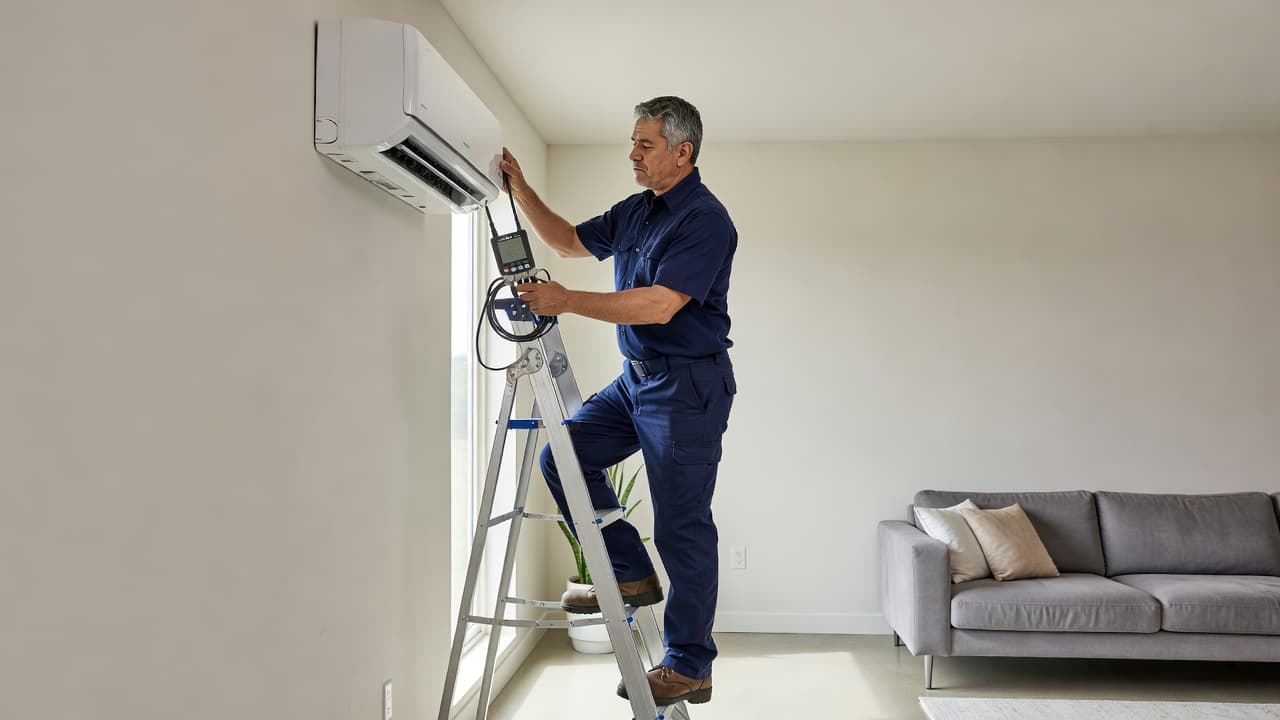
Dealing with dirty air filters is one of the most common DIY fixes. Open the front cover of your indoor air handler, remove the filters, and wash or vacuum them if the manufacturer allows it. Proper air filter cleaning is essential for performance, but ensure the filters dry fully before you put them back. If you consistently find dirty air filters, check them more frequently to maintain efficiency.
Then look around the unit. Curtains, tall furniture, and wall decor can block airflow. Louvers should move freely, and the return opening should not pull in dust from shelves or nearby fabrics.
Weak airflow often means the coil gets too cold. After that, moisture can freeze on the coil and reduce cooling even more.
If you see a frozen evaporator coil on the indoor unit or refrigerant line, turn the system off and let it thaw. Keep it off until you know why it iced up.
Check room conditions and zone settings
Mini-splits cool one zone at a time. Because of that, the room setup matters more than many homeowners expect. Afternoon sun through west-facing glass, doors left open, and hot appliances nearby can make a working unit feel weak.
Close blinds and windows for a test run. Keep the room set up the way you normally use it, then give the system 15 minutes. If cooling improves, the unit may be fine, but the heat load in that space is higher than usual.
If you have a multi-zone system, test the problem room by itself for a short period. One head with a sensor or control issue can change how the outdoor unit divides cooling capacity.
Look at power, the outdoor unit, and the drain
Now step outside. The outdoor condenser unit needs open space and clean fins to release heat. Remove leaves, weeds, and outdoor unit debris from around the system. If the coil looks dusty, a light rinse can help, but only if the power is off and the manual allows it.
Check the breaker only once. If it tripped, reset it one time. When it trips again, stop there. Repeated resets can hide an electrical problem.
Also inspect the condensate drain. Water dripping from the indoor head, musty smells, or random shutoffs can point to a clogged drain line. Some systems stop cooling when the drain safety switch trips.
A quick reset can help after a minor glitch:
- Turn the mini-split off with the remote.
- Shut off power at the disconnect or breaker for five minutes.
- Restore power and restart the system in cooling mode.
- Give it 10 to 15 minutes to respond.
This quick table helps match the symptom to the safe next step.
| What you notice | Likely cause | Safe DIY move |
|---|---|---|
| Unit runs, but airflow is weak | Dirty filter or blocked return | Clean filters and clear obstructions |
| Indoor unit drips water | Clogged drain | Stop use and inspect the drain path |
| Outdoor unit won’t start | Power issue | Check breaker once |
| Frozen evaporator coil | Airflow problem or low refrigerant | Turn it off and call for help |
If the simple checks do not change anything, the problem is probably past the DIY stage.
When a no-cooling mini-split points to ac repair
Some faults require specialized tools, precise testing, and the expertise of an HVAC professional. Refrigerant leak issues, failing capacitors, malfunctioning components, bad sensors, and compressor trouble all fall into this category. These problems often appear minor at first, but they tend to worsen quickly during warm weather.
Call for help if your unit is not blowing cold air despite having a clean filter and correct settings. You should also reach out if you hear buzzing, clicking, or a hard start from the outdoor unit. A sweet or chemical odor often indicates a refrigerant leak, which may necessitate a professional refrigerant recharge to restore proper cooling. Water stains on the wall can also signal that a drain issue is more complex than a simple clog.
Electrical issues deserve extra caution. Some older homes have busy circuits, and a ductless HVAC system may share power with other equipment. If the breaker trips whenever other appliances run, the mini-split may not be the only problem.
If your home uses both a ductless unit and a furnace, one system can sometimes mask the issues of the other. A homeowner might assume the whole-house system is failing when only the bedroom mini-split is underperforming. A clear diagnosis is essential, especially in homes that rely on separate equipment for heating and cooling.
This is when our professional repair services earn their keep. We can test refrigerant pressure, inspect sensors, clean coils, and confirm whether a repair makes sense for your specific unit. If your equipment is older, undersized, or showing signs of poor installation, it may be time to consult with experts about your ductless HVAC system options.
How to keep the same problem from coming back
Most mini-split cooling problems build slowly. Filters load up with dust, coils collect grime, and drain lines start to grow slime. Then, the first hot afternoon in Encinitas exposes the whole problem. Prioritizing regular maintenance is the most effective way to keep your system running smoothly throughout the year.
A simple habit helps. Check your units monthly for dirty air filters during heavy use. Keep the outdoor unit clear after windy days and listen for changes in sound, because a new rattle or buzz often starts before a full breakdown.
Coastal systems also benefit from a professional seasonal tune-up and consistent inspection. Salt, dust, and pollen do not care whether you live in Vista, Poway, Oceanside, or San Diego. That is why yearly air conditioning system checkups matter, even when the system seems fine.
If you recently had remodeling work, deep cleaning, or wildfire smoke exposure, inspect the filters sooner. Fine debris can clog a ductless system faster than most homeowners expect.
Conclusion
When you find that your mini split not cooling Encinitas home is becoming an issue, start with the safe basics. Wrong settings, dirty filters, blocked airflow, and a tripped breaker are common culprits, and you can check them in just a few minutes.
Once you spot ice, repeated breaker trips, leaks, or warm air that will not quit, stop troubleshooting. That protects the unit, your comfort, and your wallet.
If the easy fixes do not solve the problem, Book Online and get a technician to diagnose your ductless HVAC system before the next hot day hits.
FAQs
Why is my mini-split running but not cooling?
The most common causes include selecting the wrong mode, a buildup of debris causing blocked airflow, or dirty air filters. If these factors are not the issue, low refrigerant levels or a faulty temperature sensor are likely culprits.
Can I clean a mini-split filter myself?
Yes, homeowners can usually maintain their own systems. Turn the unit off, remove the dirty air filters, clean them according to the manufacturer manual, and allow them to dry completely before reinstalling. Avoid any maintenance tasks that require opening a sealed panel or accessing internal components.
Should I hose off the outdoor unit?
A light rinse can help if the manual allows it and the power is off. Do not use high pressure, and be careful not to bend the delicate fins. If the coil is greasy, heavily packed with debris, or hard to reach, call a professional for service.
When should I stop DIY work and call a technician?
Stop your troubleshooting efforts if you notice a frozen evaporator coil, detect an unusual odor, hear electrical buzzing, or find signs of water damage indoors. You should also schedule a professional visit if the circuit breaker keeps tripping or the unit still will not cool after performing basic checks.