

Why Your AC Smells Musty in Escondido Homes
My Guy is Proud to Be "Your Guy" for Your Home
When your AC kicks on and the room smells like a damp towel, something is off. A musty AC smell in Escondido homes usually points to moisture sitting where it shouldn’t.
That does not always mean a major breakdown. Still, it can signal mold growth, a clogged drain, dirty parts inside your central air conditioner, or airflow trouble that keeps your system from drying out properly.
The good news is that the smell often leaves clues. Once you know where to look, the problem gets easier to pin down.
Key Takeaways
- Moisture is the primary culprit: A musty AC smell in Escondido is almost always caused by trapped moisture, often settling on internal components like the evaporator coil, drain pan, or blower assembly.
- Common sources: The odor frequently originates from a clogged condensate drain, dirty coils that trap damp dust, or leaking ductwork that pulls in humid air from attics or crawlspaces.
- Identify the scope: A smell focused at one vent may indicate a local duct issue, while an odor emanating from every vent suggests the problem lies within the central air handler cabinet.
- Take simple steps, but avoid harsh chemicals: You can improve the situation by replacing dirty air filters and checking for standing water, but you should never spray bleach or household cleaners directly into your vents or system.
- When to call a pro: If the smell persists after a filter change, or if you notice other issues like short cycling or water stains, professional diagnostics are required to prevent mold growth and further system damage.
What a musty AC smell usually means
A musty odor almost always starts with moisture. Your air conditioning system removes humidity as it completes the cooling cycle to keep your home comfortable. That water should collect, drain away, and disappear. When it does not, damp dust and organic buildup can start to smell stale.
In many homes, the odor is strongest when the blower first turns on. That is because the fan pushes air across a wet surface, often the evaporator coil, drain pan, or nearby insulation. If the smell fades after a few minutes, the source may be small but still worth fixing.
This can also show up when you switch from heating season to cooling season. The indoor cabinet, blower, and duct system often handle both heating and cooling. So if dust and moisture sat there for weeks, the first instance of intense Escondido heat can bring that smell right back through the vents.
A quick comparison can help narrow it down:
| What you notice | Common source | What it can mean |
|---|---|---|
| Smell is worst at startup | Dirty evaporator coil or wet dust | Moisture is lingering on indoor components |
| One room smells stronger than others | Duct or vent issue | A local section may be damp or dirty |
| Odor comes with water near the unit | Clogged condensate drain | Water isn’t leaving the system |
| Smell stays all day | Mold growth or deeper HVAC issue | The problem is spreading through airflow |
Most of the time, the outdoor condenser is not the cause. The smell usually starts on the interior components of the HVAC system.
If the odor appears when the fan starts moving air, trapped moisture inside the system is the first thing to suspect.
Why Escondido homes run into this problem
Escondido does not feel muggy every day, but AC systems still pull water from the air. Even in a drier climate, a cooling system can create enough condensation to cause odor if drainage or airflow is poor.
The pattern is common in spring and early summer. Your system may sit idle for stretches, then suddenly work hard when temperatures rise. During that downtime, moisture can linger on the coil or in the drain pan. Once the AC starts again, the smell spreads fast.
Local conditions also play a part. Warm afternoons, cooler nights, and occasional coastal moisture moving inland can leave indoor air less dry than homeowners expect. The same issue shows up in nearby Vista, San Marcos, Carlsbad, Oceanside, and Fallbrook, especially in homes where tight indoor spaces trap humidity and negatively impact your indoor air quality.
Another factor is short cycling. If your unit is too large, or if airflow is off, it may cool the house too quickly and shut down before removing enough moisture. The home feels cool, but the air stays damp. That can feed a musty smell over time.
Older homes add another layer. In these properties, aging ductwork in attics, garages, and crawlspaces can pull in dusty air if leaks are present. Once that dust meets condensation, you get the stale smell many homeowners notice at the vents.
So while the odor may seem sudden, the cause often builds slowly. Water, dust, time, and weak airflow are enough to create a problem that smells bigger than it first looks.
Where the odor often starts inside your air conditioning system
Some parts are more likely than others to create that damp smell.
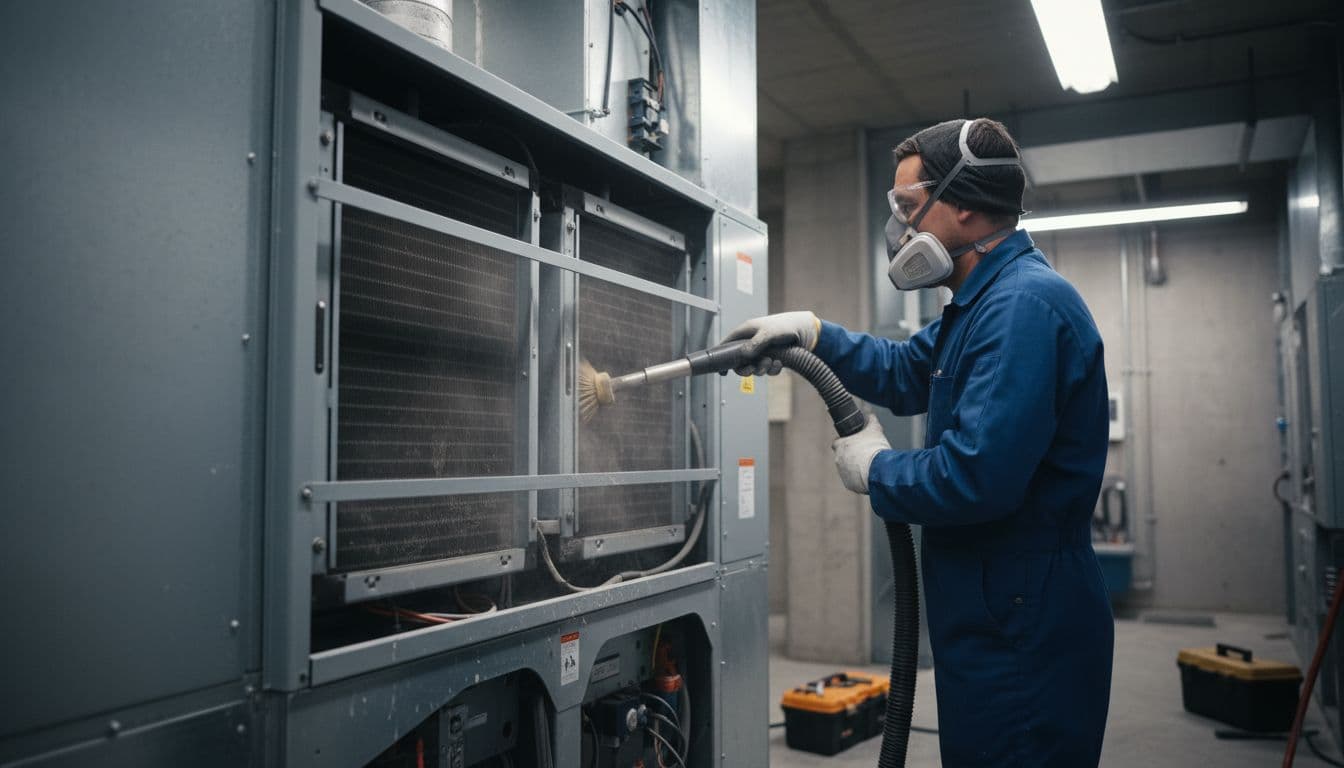
The evaporator coil and drain pan
This is the most common trouble spot. When your evaporator coil gets cold and warm indoor air passes over it, the process creates constant condensation during the cooling season. If dust accumulates on the evaporator coil, moisture clings to it longer. Over time, that damp layer collects grime and biofilm, leading to a musty, earthy smell that many homeowners describe as wet socks.
The drain pan located below the unit can also cause trouble. If a clogged drain line traps water instead of allowing it to flow away, that standing water quickly becomes a breeding ground for bacteria.
The filter, blower, and air handler cabinet
A dirty air filter does not always create a musty odor by itself, but it can certainly make the problem worse. Restricted airflow prevents the system from drying out properly, which gives moisture more time to stick around.
Meanwhile, the blower compartment can collect fine dust. If that dust gets damp, the smell spreads throughout your home every time the fan runs. In some systems, insulation inside the cabinet absorbs moisture, which can lead to the growth of mold or mildew that hangs on much longer than a simple filter issue. This is also where your indoor air quality begins to suffer, as mold or mildew spores or damp debris circulate through your home.
Ductwork and air vents
When one room smells worse than the rest, check the duct path to that area. Duct leaks can pull in humid air from your attic or garage. If that air is damp, the smell can settle into flexible duct lining or gather around your air vents.
Sometimes the odor is strongest at a single return grille, which may indicate that the return is pulling air past a damp spot in a wall cavity or attic run. In other cases, the supply vents themselves have surface growth from condensation. If the odor persists, professional air duct cleaning can often resolve issues related to trapped debris or microbial growth within the distribution system. Because several parts can cause the same odor, a thorough inspection is essential. The smell tells you moisture is present, but it does not always tell you exactly where.
What you can do before calling for AC repair in Escondido
Before you reach out for professional AC repair Escondido, there are a few safe checks you can perform as a homeowner. These steps may not resolve every mechanical fault, but they are helpful for ruling out the most obvious culprits.
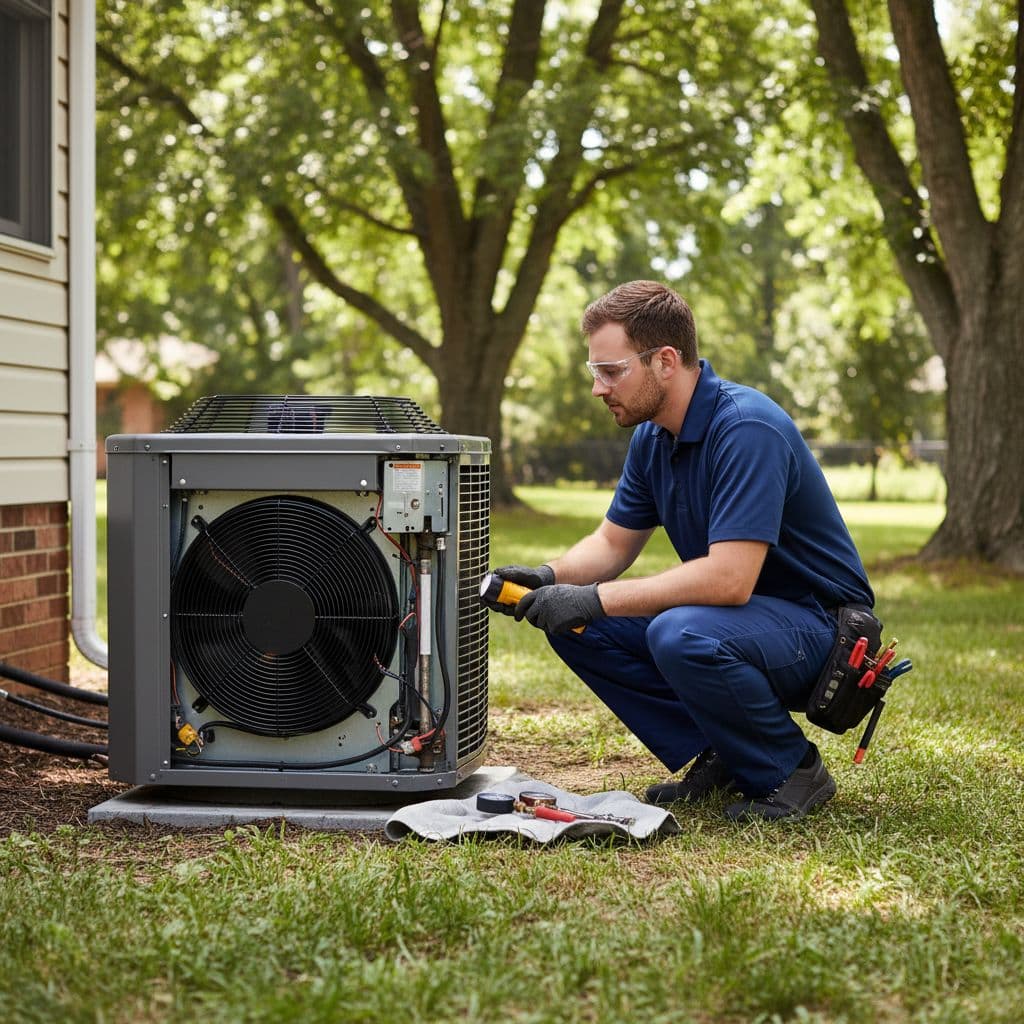
First, replace your air filter if it is dirty or past its expected lifespan. A clogged filter can trap unpleasant odors and significantly reduce airflow. Always use the correct size for your air conditioner and ensure it is installed in the proper direction.
Next, inspect the area around the indoor unit for standing water or damp spots. If you notice signs of water leaks near the air handler, furnace, or closet platform, turn the system off immediately and schedule service. A blocked condensate drain can lead to persistent odors and costly water damage.
Then, pay attention to where the smell is strongest. If every vent in your home emits a musty odor, the source is likely located within the indoor unit. If the smell is isolated to only one or two vents, the issue may be localized in a specific branch duct or the nearby vent area.
Finally, notice how your system operates. Weak airflow, short cycling, or rooms that feel cool but clammy can indicate a larger HVAC problem rather than just a dirty component.
A few things are better left alone. Do not spray perfume, bleach, or harsh household cleaners into your vents. This does not fix the root source and can damage internal components or worsen your indoor air quality. Additionally, do not continue running a system that smells progressively worse each day. Odors tied to trapped moisture rarely improve on their own.
If the smell persists after installing a fresh filter, or if it keeps coming back, it is time for professional AC repair. A technician can inspect the evaporator coil, clear the drain line, check the blower motor, measure airflow, and look for hidden moisture throughout the duct system.
When a musty smell points to a bigger HVAC issue
Sometimes the odor indicates more than a simple cleaning problem. If your air conditioning cools poorly, blows warm air, or cycles on and off in short bursts, the system may suffer from complex airflow or sizing issues. In these cases, the musty smell acts as a warning sign rather than the root cause. You should also listen for strange noises, which may suggest a struggling compressor, or check for signs of a refrigerant leak that could be impacting system performance.
Watch for water stains, frequent drain clogs, or allergy flare-ups when the AC runs. These symptoms often point to mold growth inside the cabinet or ductwork. If the same odor persists during the heating season, it suggests the source may be located within the shared blower assembly or the ducts themselves. Because these mechanical stresses force your unit to work harder, they often lead to unexpectedly high energy bills.
A recurring odor deserves immediate attention because moisture inside HVAC equipment can corrode internal parts over time. If the system struggles to maintain comfort or you notice these warning signs, a technician should perform comprehensive system diagnostics to identify the underlying failure. In many Escondido homes, addressing these issues through a timely repair is far more affordable than waiting for a complete breakdown, which could lead to an expensive emergency repair or even a high total replacement cost.
Frequently Asked Questions
Is it dangerous to keep running my AC if it smells musty?
While running the system is not immediately dangerous, it is generally discouraged because the odor suggests the presence of moisture and potentially mold. Continued use can cause the mold spores or damp debris to circulate throughout your home, potentially impacting your indoor air quality and aggravating allergies.
Can a dirty air filter really cause my AC to smell like a damp towel?
A dirty air filter can contribute to the problem by restricting airflow, which prevents the system from drying out properly between cooling cycles. When air cannot move efficiently, moisture lingers on the evaporator coil and internal surfaces, creating an ideal environment for musty odors to develop.
How often should I have my system checked to prevent these odors?
Scheduling professional HVAC maintenance at least once a year is the best way to prevent musty smells. A technician will clean the coils, clear the condensate drain lines, and inspect the internal components to ensure that moisture is being managed correctly before it leads to odors or microbial growth.
Why does the smell only happen when the AC first turns on?
The smell is often most noticeable at startup because the fan is blowing air across components that have been sitting damp while the system was idle. As the system continues to run, the movement of air may dilute the concentration of the odor, but the source of the moisture remains until it is properly cleaned or repaired.
Conclusion
A musty AC smell usually means that moisture is staying inside your system. In Escondido homes, that buildup often originates at the evaporator coil, drain pan, blower, or nearby ductwork.
While changing a filter is a good first step, it will not solve standing water or hidden microbial growth. If the odor persists, you may need a professional mold inspection to identify the source of the problem. Routine HVAC maintenance is the best way to prevent these issues from developing in the first place, and scheduling annual maintenance ensures your system stays clean and efficient year after year.
If the smell continues after you have checked the basics, consider professional HVAC deodorizing to refresh your system. When comfort, indoor air quality, and performance begin to slip, it is time to contact a professional for AC repair Escondido. Cool air should always smell clean. If your system is failing that test, it is asking for your attention.