

Central AC vs Mini-Splits in San Diego Homes
My Guy is Proud to Be "Your Guy" for Your Home
Choosing the right cooling system in San Diego often feels simple until you actually look at the needs of your house. Deciding between central ac vs ductless mini splits comes down to far more than just brand names or initial price tags.
A home in Carlsbad faces different cooling demands than one in Escondido or Poway, and the condition of your existing ductwork can swing the decision quickly. Whether you are installing a new central air conditioning system or opting for a ductless setup, the specific details of your home matter. If you want lower utility bills, steady comfort, and fewer regrets later, it is vital to compare these options with a focus on long term energy efficiency.
Key Takeaways
- Infrastructure is key: The existing ductwork in your home is the biggest factor; if you have well-sealed ducts, central AC is often the most cost-effective choice, while homes without ducts benefit significantly from the non-invasive installation of mini-splits.
- Zoning vs. centralization: Central systems offer consistent, whole-home cooling through a single thermostat, whereas ductless mini-splits provide superior room-by-room control, allowing you to prioritize cooling in specific areas like home offices or hot upstairs bedrooms.
- Energy efficiency and utility costs: Because mini-splits avoid the energy losses inherent in aging or leaky ductwork and allow for zone-specific usage, they are frequently more efficient for households that do not need to keep every room at the same temperature.
- Versatility in climate: In San Diego’s mild climate, mini-splits that function as heat pumps offer a dual-purpose solution for both cooling and supplemental heating, simplifying the HVAC setup for smaller homes or specific room additions.
How central AC and ductless mini-splits actually differ
A central air conditioning system cools the whole house through one network. This forced air system uses an outdoor compressor that works with an indoor coil, and a blower pushes cooled air through ducts into each room. In many homes, that same indoor setup also connects to a furnace, so your cooling and heating share major components.
A ductless mini split system skips the ducts entirely. These systems use an outdoor compressor and one or more indoor units mounted on walls or ceilings. Each indoor unit provides quiet operation and cools its own area, which gives you room-by-room control instead of one setting for the entire house.
This quick comparison makes the trade-offs easier to see.
| Feature | Central AC | Ductless mini-splits |
|---|---|---|
| Air delivery | Through ducts and vents | Directly from the indoor unit |
| Temperature control | Usually one or a few thermostats | Individual room zones |
| Best fit | Homes with solid ductwork | Homes without ducts, additions, hot spots |
| Appearance | Hidden vents | Visible indoor units |
| Heating option | Often paired with a furnace | Many models are heat pumps |
Advanced zoning control is a hallmark of the ductless mini split system, allowing you to customize comfort in every part of your home.
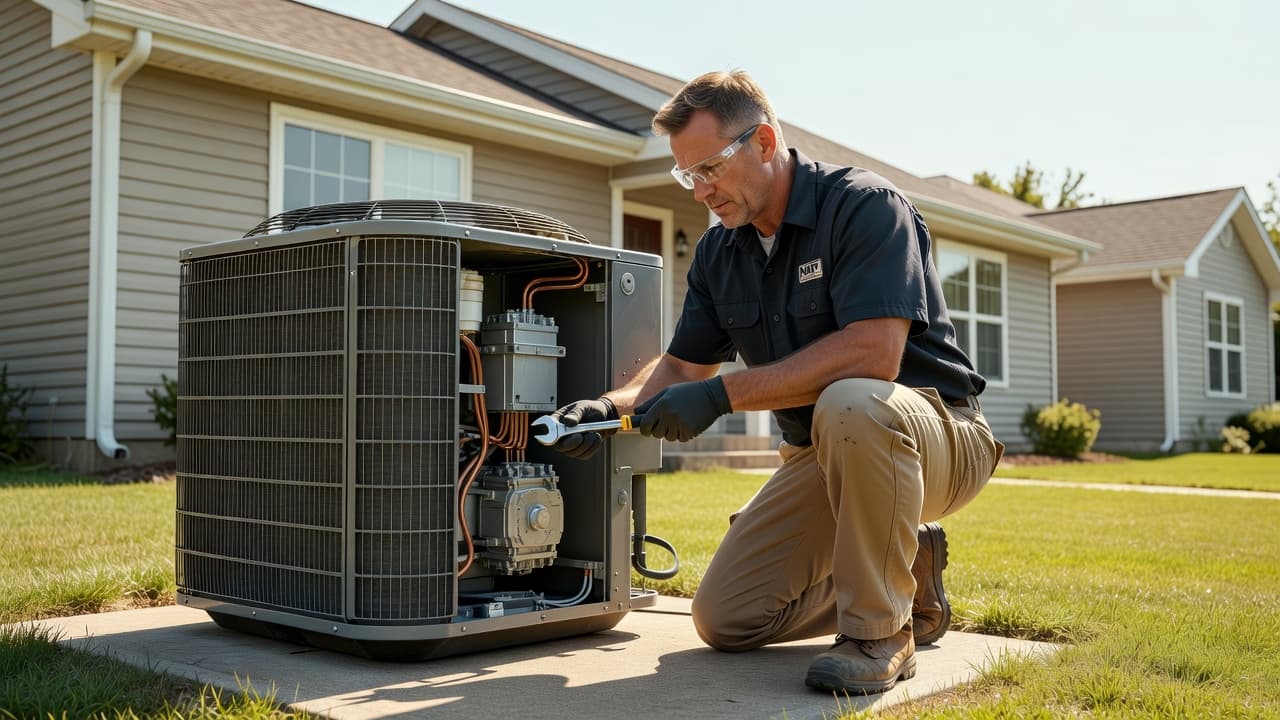
The biggest difference is how comfort gets distributed. Central systems treat the house as one connected space. Mini-splits treat it as a set of separate zones. That matters if one bedroom bakes every afternoon, or if your family uses only part of the house during the day.
If your current system is struggling, professional air conditioning services in Escondido can help you compare repair, replacement, and the condition of your existing ductwork before you commit. That matters because a strong central system with leaky ducts can still cool poorly, while a properly sized mini-split with a high-quality air handler can make one problem room feel completely different.
San Diego weather changes the math
San Diego County has mild weather for much of the year, but the cooling load is not the same everywhere. Coastal homes in Oceanside or Carlsbad often get marine air and cooler evenings. Inland neighborhoods such as Escondido, San Marcos, and Vista hold more afternoon heat, especially in summer.
That split makes zoning more valuable inland. If upstairs bedrooms run hot while the downstairs stays comfortable, a ductless mini split system provides excellent zoning control that allows you to target specific areas, effectively bypassing the limitations or inefficiency of existing ductwork. Central AC can still handle that, but only if the duct design, airflow, and return placement are right.
In many San Diego homes, the condition of the ductwork matters as much as the equipment itself.
Winter matters too, even here. Mornings can feel cold, and some inland homes still rely on a furnace for fast, familiar heat. On the other hand, many mini-splits function as a heat pump, providing both A/C and reliable heating from the same system. Because a heat pump can handle both roles, it simplifies the setup for homes with smaller heating demands.
The smartest choice looks at the house as a whole. Insulation, attic heat, sun exposure, window placement, and air leakage all affect comfort. That is why homeowners often benefit from complete heating and cooling solutions instead of judging systems by the outdoor unit alone, as a comprehensive approach is the best way to improve indoor air quality and maximize long term energy efficiency.
Cost, efficiency, and repair realities
Your total installation cost depends heavily on your current infrastructure. If your home features well-sealed, properly sized ducts, replacing a central system often carries a lower upfront cost than installing a whole-house ductless setup. However, if your house lacks ducts, or if your existing ductwork is damaged, dirty, undersized, or poorly routed, choosing a ductless system can save you from an expensive and intrusive renovation.
Operating costs follow a similar pattern. Because ductless systems avoid energy losses associated with leaky ducts and allow you to cool only the rooms currently in use, they often result in lower energy consumption. This is particularly advantageous for homeowners who work from home and do not need to cool the entire property. Central AC units can still be highly efficient, especially in modern, airtight homes, provided they have a high SEER rating. Regardless of the system type, prioritizing a high SEER rating is essential for long-term savings.
Repair realities also vary by technology. Central systems consolidate major components into one shared unit, which means a single failure can affect your entire home. Conversely, a ductless mini split system distributes the workload across multiple indoor heads, control boards, sensors, and drain lines. While this architecture provides more potential points of failure, it also ensures that a malfunction in one room does not necessarily disable cooling for the rest of the house.
Consistent annual maintenance is vital for both types of equipment. Central systems require frequent filter changes, coil cleaning, airflow checks, and periodic duct inspections. With mini-split units, you must ensure that every indoor head is cleaned and kept clear, which is a requirement some owners underestimate. In both cases, proper air filtration is critical, as dirty filters and blocked coils force your system to work significantly harder than it should.
DIY checks before calling for A/C repair
A few homeowner checks can save time before you book ac repair. Start with the basics: replace a dirty filter, check thermostat batteries, confirm the breaker has not tripped, and clear leaves or debris from around the outdoor unit. If you have a mini-split, wash the indoor filters according to the manufacturer instructions.
Still, do not open sealed panels or touch refrigerant lines. If the system freezes, short cycles, leaks water indoors, or blows warm air after you perform these basic checks, it is time for professional help. With hvac equipment, small symptoms often point to larger airflow or electrical issues.
Which system fits your home best
For many single-family homes in Poway, San Marcos, and newer parts of Vista, a central air conditioning system remains the most practical choice because the house is already equipped with usable ducts. If your family prefers one consistent temperature throughout the entire property and you do not mind cooling every room at once, central air remains a simple and familiar solution.
A ductless mini split system fits different situations. These units are ideal for older homes that lack ductwork, as well as for room additions, converted garages, and ADUs. If you are planning a home renovation, installing ductless technology can be significantly more efficient than trying to extend existing ductwork. They are also perfect for problem rooms that never seem to stay cool. They even support multi-zone cooling, allowing different household members to set their own temperatures so one person can sleep in a cool room while another remains warmer.
Aesthetics play a significant role in your decision. Some homeowners dislike the look of wall-mounted units inside their living spaces. Others prioritize the precision of zone control over the centralized thermostat control found in a standard system. It is important to be honest about your preference for an indoor unit early in the process, as this often becomes the deciding factor after price and efficiency.
Your existing equipment can also tip the scale. If you already have a working furnace and solid ducts, a simple replacement of the outdoor condenser and coil for a central unit may be the smoothest move. However, if your home in Fallbrook or an older part of San Diego never had ductwork, forcing a central system into the building can become expensive very quickly.
If a ductless setup sounds like a better fit, review mini split system services before planning a large retrofit. In many homes, the best answer is not the newest option or the cheaper quote. It is the system that matches the house you actually live in.
Final thoughts
The best choice usually comes down to two primary factors: the condition of your existing ductwork and how you utilize the individual rooms in your home. If your property is already set up for a central air conditioning system, this option often provides reliable, whole-home cooling and can help maintain better indoor air quality through integrated filtration. Conversely, if you want targeted temperature control or lack the space for ducting, a ductless mini split system offers superior efficiency with far less installation disruption.
When you want a professional second opinion on replacement, routine maintenance, or ac repair, you can Book Online.
FAQ
Is central AC cheaper than ductless mini-splits in San Diego?
Usually, a central air conditioning system costs less when the house already has functional, well-sealed ducts. Ductless systems often win when adding or replacing ductwork would be expensive. A single-zone mini-split can be affordable, but a whole-home multi-zone setup can cost as much as, or even more than, central air.
Do mini-splits provide enough heating for San Diego winters?
For many homes, yes. San Diego’s climate is mild enough that a ductless heat pump can provide reliable heating and air conditioning while offering excellent energy efficiency during the winter months. Still, some inland homeowners prefer a furnace for colder mornings or for heating larger homes more evenly.
Which system is better for one hot room or a new addition?
Ductless is usually the better fit for room additions. A mini-split cools that specific area directly by placing an indoor unit in the space, which avoids the need to rework the entire house ductwork. That is why they are common for garage offices, sunrooms, ADUs, and upstairs bedrooms that stay warm long after sunset.
Are mini-splits harder to maintain than central air?
They are not harder, but they are different. Central systems usually have one main filter and hidden ductwork to monitor. Mini-splits have multiple indoor units, and each one requires regular air filtration maintenance to keep the system clean. If you skip that simple task, performance drops quickly.
Should I repair my old system or replace it?
That depends on the age of the unit, how often it breaks down, and its overall condition. If your current setup has repeated breakdowns, weak airflow, or duct problems on top of equipment issues, replacement often makes more sense than another repair. A professional inspection should evaluate the condition of the outdoor compressor and the entire HVAC system to ensure you are getting maximum energy efficiency.