

AC Whistling Noise in San Marcos: DIY Checks
My Guy is Proud to Be "Your Guy" for Your Home
A sharp ac whistling noise in San Marcos can turn a quiet afternoon into a guessing game. The good news is that many of these sounds start with simple airflow issues, not a major mechanical breakdown.
If you are hearing an air conditioner whistling in your home, do not brush it off. That sound often means air is being forced through a tight gap, a clogged filter, or a blocked vent. A few safe DIY checks can help you figure out whether the fix is simple or whether it is time for professional ac repair San Marcos.
Key Takeaways
- Airflow is the Primary Culprit: Most whistling noises in your AC system are caused by air being forced through a restricted opening, such as a clogged filter, blocked vent, or a small gap in the ductwork.
- Perform Simple DIY Checks: Before calling a professional, inspect your air filters for dirt buildup, ensure all supply and return vents are unobstructed, and check for loose panels near the indoor HVAC unit.
- Avoid Closing Vents: Contrary to common belief, closing vents in empty rooms often backfires by increasing internal pressure, which can strain your blower and create persistent, high-pitched whistling sounds.
- Know When to Call for Help: If you have replaced your filter and cleared all vents but the noise persists—or if you notice warning signs like burning smells, ice accumulation, or water leaks—contact a professional HVAC technician to diagnose potential issues like duct leaks or a struggling blower motor.
What a whistling AC sound usually means
Most whistling noises come from one basic problem: moving air is under too much pressure. When your air conditioning system cannot pull or push air the way it should, the air squeezes through small openings and creates that high-pitched whistling sound. These airflow problems are the primary culprit behind the noise.
In San Marcos, dust buildup often makes this worse. Dirty air filters load up quickly in warm months, return vents collect debris, and vents get shut by accident when people try to cool only certain rooms. Even a slightly loose panel near the indoor hvac unit can whistle when the blower turns on.
This quick guide can help you narrow down the source:
| Where you hear it | Common cause | Safe first check |
|---|---|---|
| Return grille | Dirty filter or blocked return air | Replace filter and clear the area |
| Supply vent | Partly closed vent or dust buildup | Open the vent and wipe it clean |
| Indoor unit closet | Loose filter slot cover or cabinet gap | Check that the panel fits snugly |
| Wall or ceiling near ductwork | Small duct leak or loose connection | Look for visible gaps only |
A whistle near the return side usually points to restricted airflow. A whistle at one room vent may mean that vent is partly closed or the room pressure is off. If the sound seems to come from the indoor hvac unit, the filter rack, blower compartment, or cabinet seams may be involved.
The timing matters too. If the sound starts the second the fan kicks on, airflow is the likely issue. If it grows louder over days or weeks, the restriction or leak may be getting worse. Also, because the same duct system often handles both cooling and heating, the same noise can show up again when you run the furnace.
DIY checks before you call for AC repair
You don’t need tools for the first round of troubleshooting. Start with the safe, obvious items before assuming the system needs major HVAC work.
- Check the air filter first. Pull it out and look for gray buildup, pet hair, or a bowed shape. Replacing dirty air filters is a simple fix, as these dirty air filters are one of the most common reasons for a whistle when they restrict the system. If it is dirty, replace it with the same size and airflow rating.
- Walk through the house and open supply vents. People often close supply vents in guest rooms or home offices, hoping to push more cool air elsewhere. That can raise pressure in the duct system and create noise. Make sure furniture, rugs, and curtains aren’t causing blocked vents, as this restricts the return of air.
- Look at the main return grille. If it’s covered with dust, clean the grille and make sure nothing is parked in front of it. Large furniture near a return can make the system pull air through a smaller opening, which often sounds like a tea kettle.
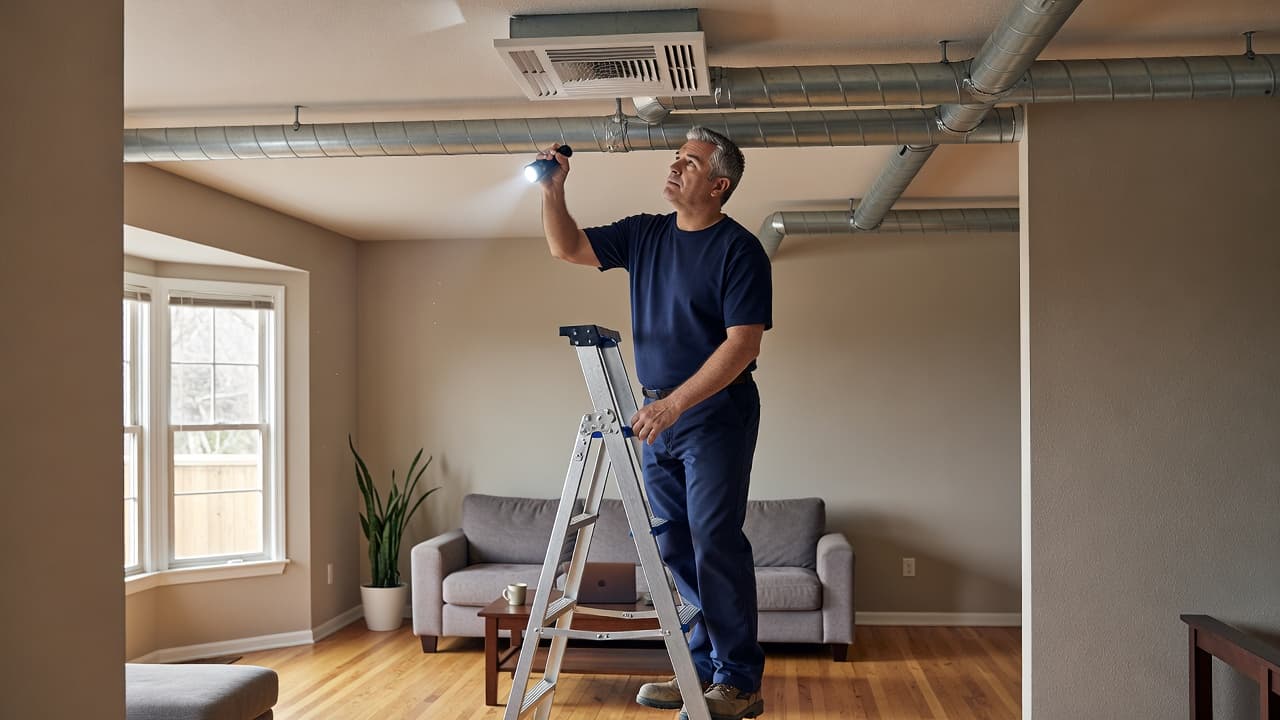
Whistling often starts at a vent, return grille, or loose duct connection. 4. Check accessible ductwork and vent edges. You don’t need to crawl deep into a hot attic. But if you can safely see exposed ductwork in a garage, closet, or utility area, look for loose foil tape, leaky ducts around boots, or disconnected flex duct. If you find a clear air leak at a vent boot, that may be the source. 5. Listen to the indoor and outdoor parts separately. Set the thermostat fan to “on” for a minute. If the whistle happens with the indoor fan alone, the issue is likely on the airflow side, not the outdoor unit. If the sound changes only when cooling starts, the problem may be larger.
One more easy check helps in two-story homes and hallway-heavy layouts. Keep interior doors open for a test cycle. A closed door can trap air in one room and raise pressure, which may cause a vent or door gap to whistle.
Turn the system off and contact a professional HVAC technician if the whistle comes with ice, a burning smell, water leaks, or repeated breaker trips.
If these checks don’t change the sound, the problem may be deeper than a basic DIY fix related to airflow obstructions. At that point, professional AC repair services in San Marcos can track down hidden duct issues, blower problems, or pressure imbalances without guesswork.
When a whistling sound points to a larger HVAC problem
Some whistles are simple, but others are a warning that your system is struggling. When the sound persists even after you have installed a new filter and verified that all vents are open, the next step is discovering why the airflow is restricted.
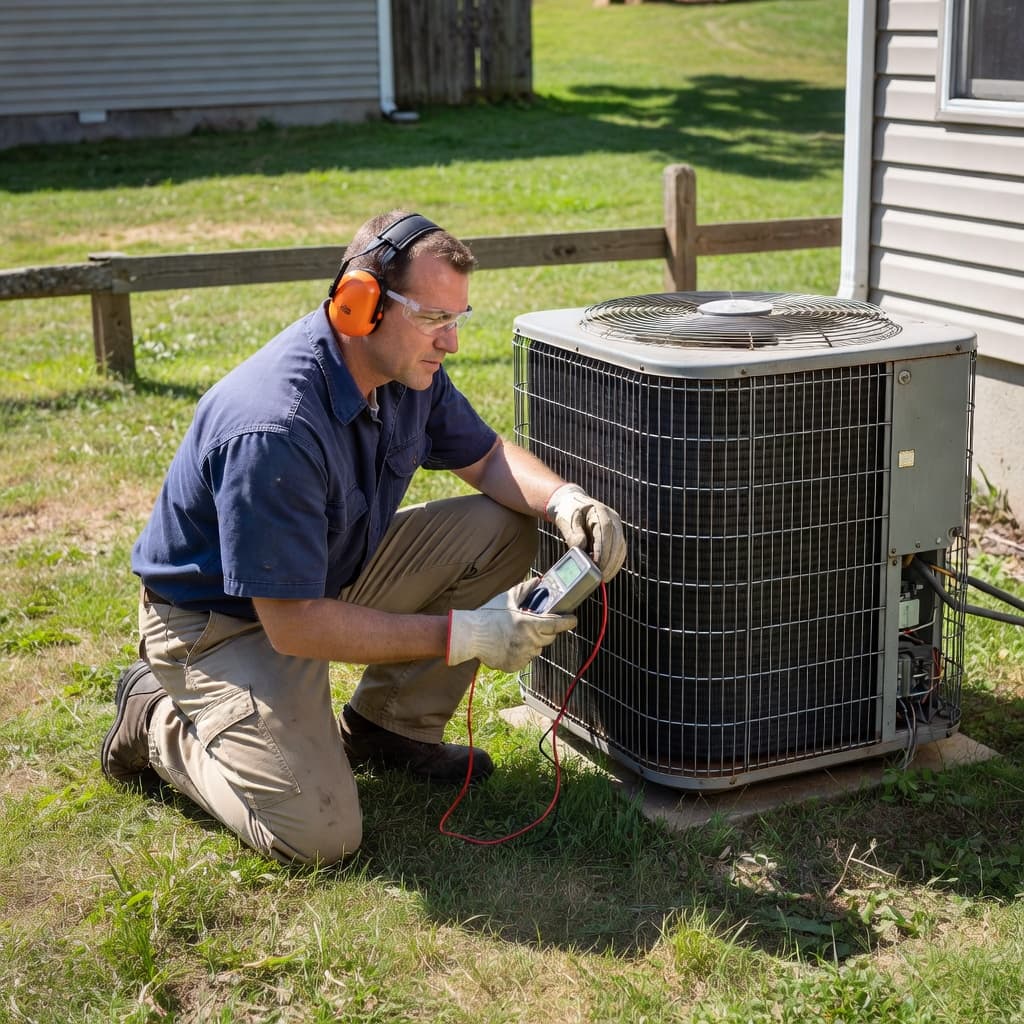
A persistent whistle can point to a blower, duct, or pressure problem that needs testing.
A strained blower motor, a dirty evaporator coil, or poorly sized ductwork can all create these unusual AC noises. In older homes, remodeled spaces, or areas with recent additions, the ductwork may never have been properly balanced, and a persistent whistle is often the first clue. Furthermore, if you notice a hissing sound, it could potentially indicate a refrigerant leak that requires immediate professional attention.
Watch for these red flags while the system runs:
- Airflow feels weak even though the system sounds loud or busy.
- The house cools slowly or blows warm air.
- The sound persists in both cooling and heating modes.
- Your energy bills increase suddenly without a clear reason.
That third point is important because if the same whistle occurs when the furnace runs in the winter, the outdoor unit is likely not the source. While the compressor is located in the outdoor unit, it can be significantly impacted by internal pressure issues caused by airflow restrictions. Instead, the shared blower motor, return duct, filter cabinet, or indoor coil area are more likely the culprits.
Ignoring these sounds can eventually lead to complete system failure. A trained technician can measure static pressure, inspect the blower wheel, and check for hidden leaks. Investing in regular maintenance is the best way to catch these issues early, as professional testing beats replacing expensive components that are not actually broken. That is where reliable heating and cooling solutions make sense for your home.
How to keep the whistle from coming back
Most homes do not need much to stay quiet. They simply require clean airflow and regular attention before small restrictions turn into noisy disruptions.
Start with the filter. Check it every month during heavy summer use and replace it when it looks loaded. Homes with pets, construction dust, or frequent fan use may need changes more often to prevent recurring airflow problems.
Also, keep return and supply vents clear year-round. Do not close several vents to force air into one room. That trick usually backfires. It can make the AC louder, reduce comfort, and strain both your cooling and heating performance.
Consistent regular maintenance helps too. A professional spring tune-up can catch blower, coil, and airflow issues before the peak heat arrives in San Marcos. For more complex issues, scheduling a professional air conditioning service San Marcos TX provides the expert support needed to keep your system running smoothly. Then, when cooler weather returns, your furnace uses the same air path with fewer surprises.
If a whistle starts after a remodel, new flooring, or moving large furniture, check the vents first. Small changes inside the house can change how air moves through the entire system.
A quieter system starts with better airflow
When you notice an ac whistling noise in San Marcos, remember that the sound is rarely random. In most homes, it indicates that air is struggling to move through a restriction, a gap, or a pressure imbalance. Checking for a clean filter, ensuring your vents are open, and taking a quick listen around the indoor unit often provide the answers you need.
If the whistling persists after you have completed these safe DIY checks, it is wise to have a professional test the system before minor issues lead to significant wear. You can Book Online when you are ready to get the noise investigated and your hvac unit running quietly once again.
FAQ
Can a dirty filter cause my AC to whistle?
Yes, and it is a common culprit. Dirty air filters restrict the system, leading to low return airflow. When the filter is clogged, the blower pulls harder through any small opening it can find, creating a high-pitched whistle at the return grille, filter slot, or nearby vent.
Why does my A/C whistle more at night?
The house is quieter, so you notice the sound more. Also, cooler evening conditions can change how long the system runs and how the blower ramps up. The source is still usually restricted airflow or a small air leak.
Should I close vents in empty rooms to save money?
Usually, no. Closing too many return vents or supply registers can raise pressure inside the duct system and make whistling worse. It can also reduce comfort and strain the blower. Most homes work better when vents stay open unless a professional has balanced the system.
Can the furnace make the same whistling noise?
Yes. Your furnace, heating system, and summer cooling cycle often share the same blower and ducts. If the whistle happens in both seasons, focus on the filter, return side, cabinet gaps, or ductwork. However, if the noise is coming from the outdoor unit, it may be unrelated to the ductwork and could stem from refrigerant lines, fan blades, or the compressor.
When should I stop DIY checks and call for help?
Stop if you see ice, smell something hot, find water around the unit, or lose cooling. Call for help if the whistle continues after you install a clean filter and verify that all vents are open. Persistent noise usually means the system needs professional airflow testing or expert ac repair San Marcos.