

SEER2 Ratings in San Diego for Home Cooling
My Guy is Proud to Be "Your Guy" for Your Home
Shopping for a new air conditioner can feel like decoding a label at the hardware store. If you are comparing systems in San Diego County, SEER2 ratings San Diego are among the most important metrics to consider, as they indicate how efficiently a system cools your home throughout the season.
Still, the highest rating on the page is not always the smartest buy. Your ductwork, insulation, indoor equipment, and local weather all shape how that number impacts your energy efficiency and overall monthly energy bills. To get the best performance from your HVAC system, you first need to understand what that SEER2 number actually tells you.
Key Takeaways
- SEER2 is just one factor: While SEER2 ratings measure cooling efficiency, the actual performance in your home depends heavily on ductwork, insulation, and system sizing rather than just the number on the brochure.
- Location dictates demand: San Diego’s diverse climate means homes in hot inland areas like Escondido may benefit more from high-efficiency systems compared to coastal homes that experience milder temperatures.
- Prioritize matched systems: Always ensure the indoor and outdoor equipment are properly matched; pairing a high-efficiency condenser with an old or incompatible furnace will prevent you from achieving the rated efficiency.
- Process over branding: A high-quality installation, verified by a professional load calculation (Manual J), is more important for comfort and savings than simply choosing the most expensive unit available.
- Maintenance is essential: While regular cleaning and filter changes won’t change your system’s official SEER2 rating, they are critical for ensuring your equipment operates as close to its design efficiency as possible.
What SEER2 actually measures
SEER2 stands for Seasonal Energy Efficiency Ratio 2, which is the updated version of the Seasonal Energy Efficiency Ratio. It replaced the older SEER test method for new residential cooling equipment in 2023, after the U.S. Department of Energy updated how systems are tested.
The newer method puts equipment under more demanding conditions, including higher external static pressure. In plain terms, it tries to reflect real airflow resistance more closely. That is important because your air conditioning system does not run in a perfect lab. It runs with ducts, filters, bends, registers, and all the other components found in an actual house.
A higher SEER2 rating means the system can deliver more cooling for the electricity it uses over a typical season. However, it does not promise the same bill savings in every home. Two houses can install the same unit and get different results if one has leaky ducts, poor attic insulation, or an oversized system.
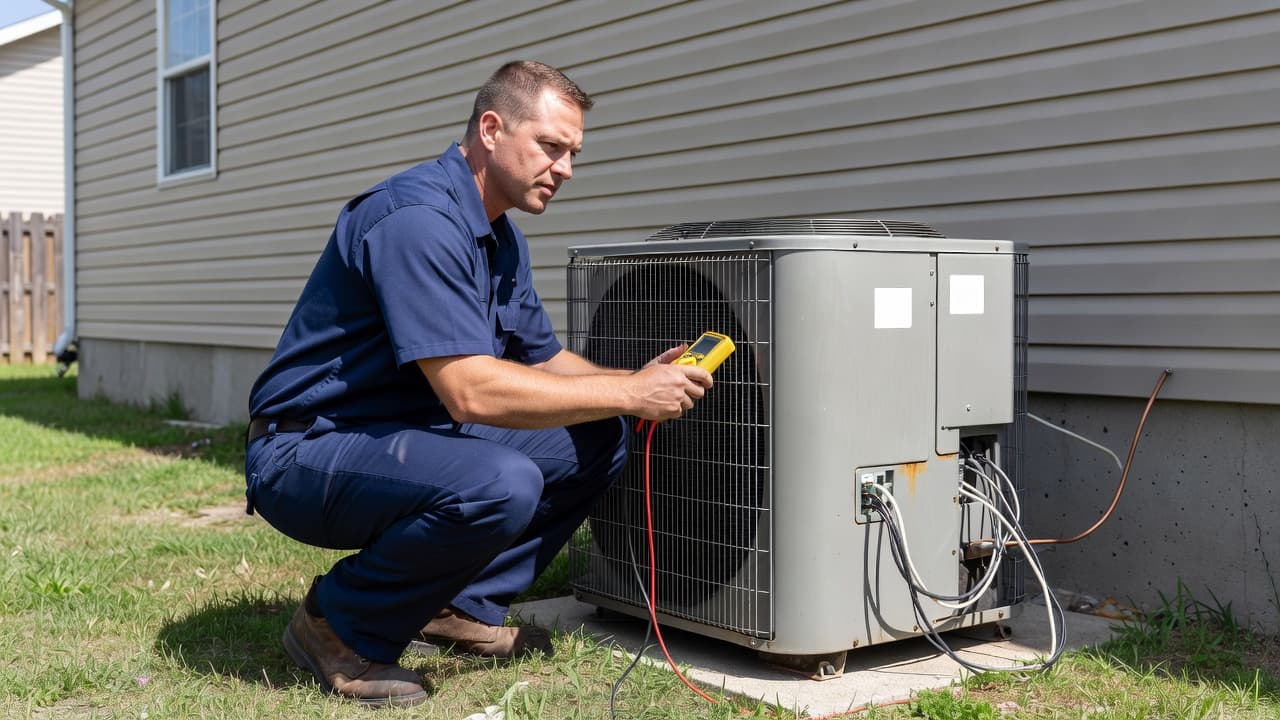
A system’s efficiency on paper only tells part of the story.
You may also see SEER2 listed beside EER2 ratings on some equipment sheets. SEER2 looks at seasonal performance, while EER2 focuses more on steady performance under hotter conditions. For San Diego homeowners, both can matter, but SEER2 is usually the first number people compare. If you are installing a heat pump instead of a standard air conditioner, you will also need to look at HSPF2 ratings to understand the heating efficiency of your new system.
Why SEER2 matters in San Diego, but not the same way everywhere
San Diego County has a split personality when it comes to cooling. Homes in coastal areas like Carlsbad and Oceanside often get marine air and milder afternoons. Meanwhile, inland communities such as Escondido, San Marcos, Poway, and Fallbrook can heat up fast and stay warm into the evening.
Because of that, the best SEER2 ratings in San Diego depend on where you live and how your house holds heat. A west-facing home with older windows may need more runtime than a shaded coastal home, even if both have the same square footage. Ceiling height, attic insulation, and duct location also change the math. For homes in coastal areas, salt-air corrosion can impact the lifespan of a system regardless of its efficiency rating, so regional factors are just as important as the equipment specs.
If your home is on SDG&E, efficiency can feel personal during summer billing cycles. Even a mild cooling season adds up when electricity costs drive up your monthly energy bills. That is why many homeowners look beyond the sticker price and ask how long they will stay in the house, how often they run the air conditioner, and whether comfort matters as much as raw savings.
In San Diego County, the right efficiency rating is the one that fits your house, not the highest number in a brochure.
That point gets missed in a lot of HVAC estimates. A premium variable-speed system can be a great fit for one home and an expensive mismatch for another.
How to compare cooling systems without getting lost in sales talk
Start with the installer’s process, not the brand badge. If an HVAC contractor gives you a price without measuring your home, checking airflow, or reviewing duct condition, treat that as a red flag.
A solid estimate should include a load calculation, often called Manual J. It should also show the matched indoor and outdoor combination, because the published efficiency depends on the full setup. Ask for the AHRI matched-system rating so you know the SEER2 number applies to the actual equipment package, not just the outside unit.
This quick comparison helps put common options in context.
| System type | Common SEER2 range | Often makes sense for | Main tradeoff |
|---|---|---|---|
| Basic single-stage units | About 14 to 15 | Smaller budgets, milder cooling demand | Less even temperatures |
| Two-stage or better mid-range systems | About 16 to 18 | Many inland homes, longer summer runtime | Higher upfront cost |
| Variable-speed compressor systems | 18+ | Homes that need quieter, steadier comfort | Highest purchase price |
The takeaway is simple. Mid-range equipment often hits a sweet spot, while premium systems make more sense when you want stronger humidity control, quieter operation, or longer daily runtime. Keep in mind that total installation costs vary based on system complexity and the specific needs of your home.
You should also compare the company behind the quote. A team that offers reliable air conditioning and heating help can look at system sizing, duct performance, and indoor comfort together, which usually leads to a better result than swapping boxes on spec alone.
DIY checks before you call for ac repair
SEER2 ratings do not fix airflow problems, dirty coils, or thermostat mistakes. Before you schedule professional ac repair or assume you need a full system replacement, performing a few simple checks can help you maintain optimal energy efficiency.
- Replace a clogged filter. A packed filter chokes airflow and forces your system to work harder, which often leads to your monthly energy bills spiking during peak summer months.
- Clear debris from the outdoor unit. Leaves, weeds, and overgrown plants trap heat around the condenser and prevent proper cooling.
- Check thermostat settings. Make sure it is in cooling mode, the schedule makes sense, and the batteries are fresh if your model uses them.
- Open supply vents and keep interior doors from blocking airflow, especially in bedrooms that feel warmer than the rest of the house.
These steps will not change the official SEER2 rating of your unit, but they can help your current system perform closer to its design specifications. They can also reveal when the issue is a matter of basic maintenance instead of major equipment failure.
If you see ice on the refrigerant line, hear hard starting, or smell something electrical, stop there and call a professional. A homeowner can handle simple upkeep, but refrigerant and electrical work require trained hands.
When a new cooling system should include the furnace or air handler
A central air conditioner does not work alone. In many homes, the outdoor condenser pairs with an indoor coil and a furnace blower. If you decide to install a high-efficiency AC or a modern heat pump, pairing it with an old, dirty, or undersized furnace can significantly diminish your system performance. Furthermore, any new installation must comply with California Title 24 energy standards to ensure your home meets local efficiency requirements.
This is where homeowners often get confused. The condenser might be advertised at one SEER2 level, but the actual installed result can be much lower if it is paired with incompatible indoor components. That is one reason a low-cost quote can end up costing you more in the long run.
If your current setup cools poorly, requires frequent ac repair, or has a furnace nearing the end of its life, a full-system quote is usually the best approach to compare. On the other hand, if your indoor equipment is newer and already properly matched to your current setup, you may not need to replace every component at once.
Thinking about the full HVAC system is also vital for year-round comfort. If your blower is weak, your cooling will suffer in July, and your heating performance will lag in January. A modern heat pump is an excellent solution for efficient, year-round climate control. Homeowners who want to review both sides of their setup should consider expert furnace and heating services at expert furnace and heating services before finalizing their decision. Choosing ENERGY STAR certified equipment can also help your new system qualify for additional local incentives.
The right SEER2 choice fits your house
A rating sticker is useful, but it is not the whole story. When considering SEER2 ratings San Diego residents should focus on balancing efficiency, installation quality, airflow, and the way the home handles summer heat.
If you are comparing quotes, ask better questions. Ask how the system was sized, how the ducts were checked, and whether the indoor equipment supports the efficiency being promised. You can often offset the higher upfront price of a high-efficiency AC or heat pump by utilizing the Inflation Reduction Act to qualify for federal tax credits and local utility rebates. These financial incentives make it much easier to upgrade your home comfort while maximizing your long-term annual energy savings.
If you want a second opinion before replacing your air conditioning system, or if your current A/C still might have life left, Book Online.
FAQs
Is a higher SEER2 rating always worth it in San Diego?
No. It often helps, especially inland where systems run longer, but payback depends on runtime, electric rates, duct condition, and how long you will stay in the home. A mid-range or single-stage unit can be the better value if your cooling demand is modest.
Can I replace only the outdoor unit and keep my old furnace?
Sometimes, yes, but you need a proper equipment match. The indoor coil, blower, and furnace all affect final performance. If the indoor side is too old or incompatible with a new heat pump, the installed efficiency may fall short of the advertised SEER2 rating.
Do ductless systems use SEER2 too?
Yes. Many ductless mini-split systems carry SEER2 ratings, and some post high numbers because they avoid the energy losses common in traditional ductwork. They can be a highly efficient option for room additions, older homes, and spaces where central ductwork is hard to upgrade.
Will maintenance raise my system’s SEER2 rating?
Maintenance will not change the official rating on the nameplate. It can, however, help the system run closer to the level it was built to deliver. Clean filters, clear coils, and correct airflow often improve comfort and reduce wasted energy.
Should homeowners in Escondido choose a different SEER2 level than homeowners in Oceanside?
Often, yes. Escondido usually sees hotter inland afternoons and longer cooling cycles than coastal areas like Oceanside. Because of that, higher efficiency equipment may make more sense inland, while coastal homeowners may get solid value from a simpler system if the home is otherwise efficient.
Do these ratings apply to heating efficiency as well?
While SEER2 measures cooling, heating efficiency for a heat pump is measured using HSPF2 ratings. If you are looking to replace your entire system, checking both your cooling SEER2 and your heating HSPF2 ratings is essential to ensuring your heat pump provides year-round savings and performance.