

Sinking AC Pad Escondido: Causes and Fixes
My Guy is Proud to Be "Your Guy" for Your Home
Your outdoor air conditioner should sit level, solid, and dry. When it starts leaning, the issue isn’t cosmetic. A sinking AC pad Escondido homeowners notice can strain refrigerant lines, disrupt drainage, and leave an expensive outdoor condenser less stable than it should be.
Soil movement, water runoff, and an undersized air conditioner pad often cause the trouble. Catching it early usually keeps the repair smaller and helps protect your cooling system through the next hot spell.
Key Takeaways
- A pad usually sinks because soil settlement, soil compaction, or heavy saturation occurs below it.
- Even a slight tilt can stress refrigerant lines, electrical lines, and the compressor.
- Heavy rain, roof runoff, and poor grading often speed up settlement around an outdoor unit.
- Homeowners can improve drainage and clear debris, but lifting a condenser requires an HVAC contractor.
- A stable, level air conditioner base supports safer operation and makes future AC service easier.
Why a Sinking AC Pad Escondido Homes Experience Matters
An outdoor condenser unit is heavy. Depending on its size, it can weigh well over 100 pounds before the equipment starts vibrating during a cooling cycle. That weight needs firm, evenly compacted soil below the pad.
When the ground gives way, one side drops. The condenser may tilt toward the house, sink at one corner, or appear lower than the surrounding dirt. A sinking AC pad Escondido properties deal with often traces back to the ground, rather than a defect in the concrete or composite pad itself.
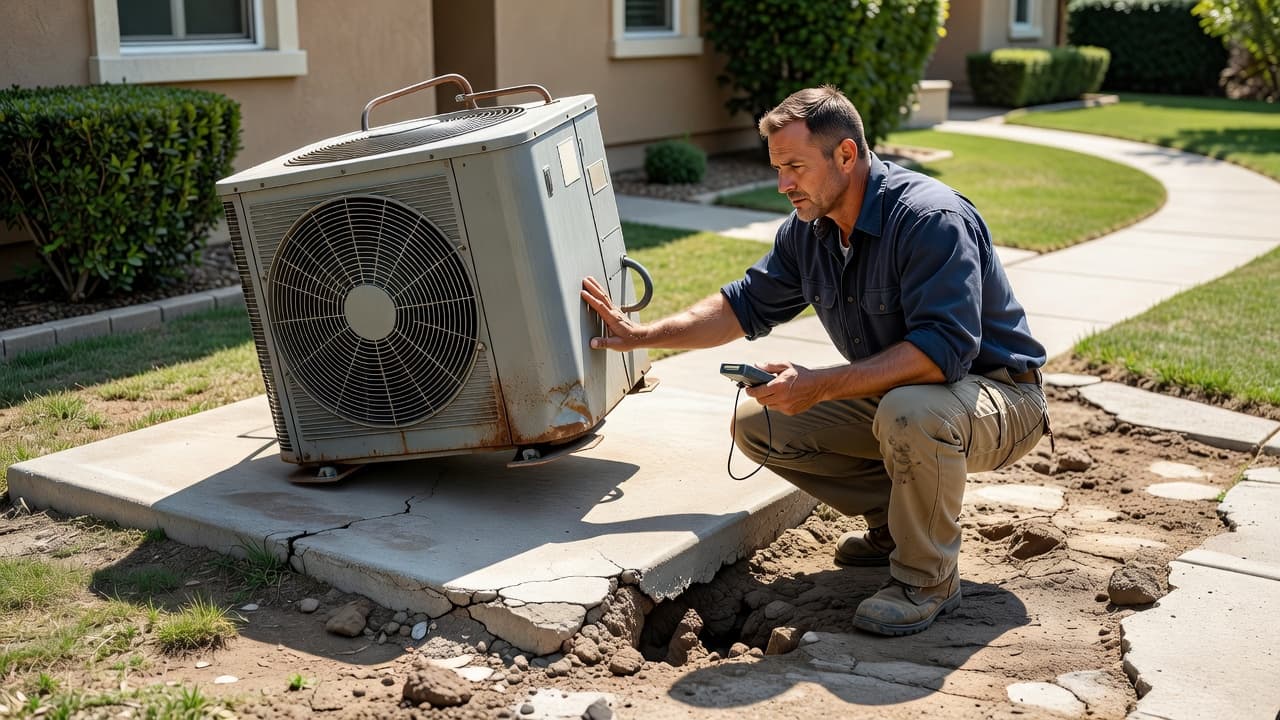
Several conditions can cause that ground to shift:
- Loose or poorly compacted fill soil settles under the unit’s weight, especially after a recent installation or landscaping project.
- Water pooling near the foundation softens soil and can cause soil erosion that carries fine particles away from beneath the pad.
- Roof runoff or a leaking gutter concentrates water in one small area during storms.
- Roots and burrowing animals can disturb soil below or beside the equipment.
- A pad placed directly on dirt lacks a stable gravel base and has little resistance to seasonal movement.
In Escondido, long dry periods can harden and shrink certain soils. Then, heavy rain can quickly saturate the same area. That cycle can leave the ground uneven beneath an A/C unit, often resulting in a sunken concrete slab that destabilizes the entire setup. Heat also causes the metal cabinet to expand and contract, while normal compressor vibration adds small, repeated movements over time.
A pad doesn’t need to crack before it becomes a problem. A unit that sits out of level can put stress on parts that were never meant to carry its weight.
What a Tilted Condenser Can Do to Your System
A mild tilt may not stop cooling today. Still, it can turn into a repair issue because the unit’s lines and connections move with it.
Copper refrigerant lines run from the outdoor condenser to the indoor coil. Those lines have some flexibility, but they can kink, rub against siding, or develop stress at a joint if the condenser continues to settle. Damaged insulation can also expose the suction line to heat, which hurts system efficiency and risks broken pipes and tubing over time.
The electrical disconnect and electrical lines deserve attention too. If the equipment pulls away from the wall, wiring may become taut. A technician should inspect those connections instead of anyone attempting to reposition the unit while it remains energized.
Water drainage presents another concern. During cooling, the indoor evaporator coil creates condensate that should leave through a clear drain line. Although the outdoor pad doesn’t control that drain, widespread grading problems often affect both areas. Wet soil around the condenser can point to drainage issues worth checking throughout the system.
A tilted cabinet may also affect the compressor’s internal oil circulation, leading to compressor strain and mechanical wear. Modern units can tolerate some variation, but manufacturers generally require an unlevel compressor to be corrected. Ignoring a visible lean can shorten equipment life and make an eventual AC repair in Escondido more involved.
Look for these warning signs:
- The pad has dropped below the nearby soil or has a widening gap underneath.
- The condenser cabinet leans, rocks, or no longer looks square against the home.
- Copper lines appear pulled tight, bent, or pressed against a sharp edge.
- Water gathers around the unit after irrigation or rain.
- You hear new rattling, buzzing, or vibration while the system runs.
Turn the system off and request service if you see damaged wiring, a crushed refrigerant line, or a unit that seems unstable.
Safe DIY Steps Before You Call for Help
Routine air conditioner maintenance around an outdoor unit is safe for homeowners. However, do not slide, lift, or prop up a condenser yourself. The cabinet is awkward, the refrigerant lines can tear, and electrical hazards remain even when the thermostat is off.
Start by looking at how water moves around the equipment. A garden hose or sprinkler head should never spray the condenser directly. Redirect irrigation so it doesn’t soak the soil beneath the air conditioner pad. Next, clean leaves, mulch, and loose soil away from the cabinet. Keep the unit’s lower vents clear so it can breathe.
Check the roofline above the condenser. A gutter overflowing onto one corner of the pad can cause more harm than a month of normal rain. Water pooling in this area often accelerates settling. Clear simple gutter debris if you can work safely. If a downspout ends beside the unit, add an appropriate extension to direct water away from the pad and house.
You can also check if you can level air conditioner equipment using a carpenter’s level across the top of the pad, not across the fan grille. Take a photo and note which direction it leans. That record helps a technician see whether the problem is active or long-standing.
Avoid these common DIY moves:
- Don’t place loose bricks, wood blocks, or pavers under one side of the unit.
- Don’t dig beneath a loaded pad to “see what’s underneath.”
- Don’t disconnect refrigerant lines or electrical conduit.
- Don’t cover the condenser with a tarp while it operates.
A loose shim may shift under vibration. Worse, it can create a sudden tipping hazard. Outdoor equipment needs a properly prepared base, not a quick prop.
How Professionals Relevel and Support an AC Unit
An experienced HVAC contractor first checks whether the system can be safely lifted. They inspect the refrigerant lines, electrical connections, pad condition, and the surrounding grade. If the lines have limited slack or show damage, the work may require additional repairs.
For a minor settlement, the technician may use concrete leveling techniques to raise the condenser and address a sunken concrete slab. To lift sunken pad sections safely, they rebuild and compact the base, often deciding to pack sand or gravel that drains well and supports the pad evenly. The goal is a firm platform that stays level without trapping water.
When the old pad has cracked, warped, or become too small for the condenser, concrete pad replacement makes more sense. Composite equipment pads are common because they resist rot and are easier to handle than poured concrete. However, even the best pad will settle if installers place it on loose soil.
If the condenser is aging and needs major work, homeowners may want to discuss air conditioning services in Escondido before investing in several separate repairs. A professional repair evaluation lets a qualified HVAC contractor assess the pad, system condition, electrical setup, and cooling performance during the same visit.
A level base also matters when planning future replacement. New equipment may have a different footprint, and the pad needs room for stable placement and proper service clearance. In homes that use a heat pump, the outdoor unit supports both cooling and heating, so pad problems can affect comfort year-round. A traditional furnace may remain indoors, but its blower still depends on the outdoor system during AC season.
Keep Soil and Water Away From the Pad
The best long-term fix often starts with the yard. The soil should slope away from the home and outdoor equipment, rather than forming a shallow bowl around the condenser. Water should have a clear path away from the pad to prevent drainage issues from threatening your setup.
After major rain, walk outside and check the area before the ground dries. Notice where downspouts drain, where mulch has washed away, and whether the pad sits in a puddle. Those details can reveal how ground shifting and soil erosion caused the equipment to move out of place.
Keep shrubs trimmed back and avoid stacking soil against the pad. Landscaping crews sometimes add mulch or fill dirt around a condenser, which can hide a sinking corner until you can no longer keep a level air conditioner running without strain. Maintain the manufacturer’s clearance around the cabinet so airflow stays open.
Regular maintenance also catches small changes. During routine air conditioner maintenance in Vista, San Marcos, Carlsbad, Oceanside, Fallbrook, Poway, San Diego, or Escondido, ask the technician to check the condenser’s level and the condition of its base.
A Stable Pad Protects More Than Appearance
A leaning condenser is a warning that the support below it has changed. Water control, compacted material, and a level reset stop that movement from placing extra strain on the rest of the system and your overall cooling system.
Addressing a sinking AC pad Escondido homeowners find early can prevent damaged lines and avoidable breakdowns during hot weather. If the unit has shifted or rocks in place, Book Online for a professional repair inspection before another season puts more weight on the problem.
Frequently Asked Questions
Can I run my AC if the outdoor pad is sinking?
You may be able to run your outdoor condenser briefly if the unit remains stable and cooling normally. However, turn it off if the tilt is obvious, the cabinet rocks, or the refrigerant lines look stressed. Continued operation can worsen damage from vibration or movement.
How level does an outdoor AC unit need to be?
Your system needs to be a level air conditioner operating according to the manufacturer installation requirements. A small visual difference still deserves inspection because the soil may continue settling. A technician can measure the tilt and determine whether the base needs rebuilding.
Does a concrete AC pad need replacement after it sinks?
Not always. If you are dealing with a sunken concrete slab that remains intact and large enough, a technician may reset it or use concrete leveling to restore stability. Cracked, undersized, or severely warped pads usually need replacement for reliable support.
Will gravel stop an AC pad from sinking?
Compacted gravel improves drainage and creates a more stable base. It won’t correct poor grading, roof runoff, or loose soil beneath the gravel when you try to lift sunken pad installations. It helps to pack sand or gravel correctly, but the entire base needs proper preparation before the condenser goes back in place.